TL;DR
- To reshine granite countertops, clean it thoroughly, fix any etching with a granite polishing powder, buff dry with a microfiber cloth, then seal with a quality impregnating sealer.
- Most dull granite just needs a good clean and a light polish.
- Deep scratches or acid etching that ate into the surface need professional diamond polishing, which runs about $200 to $600 for a full kitchen.
Why does granite lose its shine in the first place?
Granite is a hard igneous rock, usually rating 6 to 7 on the Mohs hardness scale [1], and its polished face still dulls faster than most people expect. Three things cause it.
The most common is soap film. Dish soap, all-purpose sprays, and even some cleaners sold as stone-safe leave a thin residue with every wipe. That film doesn't etch the stone. It scatters light instead of reflecting it cleanly, so the counter looks chalky and flat.
The second is acid damage. Citrus juice, vinegar, tomato sauce, wine, and a few common household cleaners are acidic enough to etch polished granite, worse on stones with higher calcium content. Etching isn't a stain sitting on top. It dissolves the crystal structure right at the surface and leaves a dull, slightly rough patch that no amount of cleaning fixes. You can spot it because the damage looks frosted against the shine around it.
Third is plain abrasion. Dragging pots, cutting boards, and ceramic mugs across the same stretch over and over. This one is slow but real. A scratch through polished granite bounces light at the wrong angle and reads as a dull streak.
Figure out which category you're dealing with and the fix picks itself. Soap film needs cleaning. Etching needs polishing powder or a professional grind. A scratch you can catch with a fingernail usually needs a pro.
What supplies do you need to reshine granite at home?
For most dull granite, which means film buildup and light haze, you need almost nothing.
- A pH-neutral stone cleaner, or a few drops of dish soap in water (used sparingly, then rinsed fully)
- A granite polishing powder or cream, ideally one based on tin oxide or cerium oxide
- Several clean microfiber cloths, lint-free if you can get them
- A granite impregnating sealer for after the polish
- Optional: a low-speed variable-speed drill with a felt buffing pad if you're covering a big area
Skip anything labeled a "vinegar hack" or "baking soda scrub." Vinegar is acidic (pH around 2.4) [2], baking soda is mildly alkaline, and both break down the sealer. Used repeatedly, they etch the stone. The volume of bad DIY advice on this one topic is genuinely staggering.
Tin oxide powder is the traditional choice for granite and fabricators have used it for decades. Cerium oxide works too and shows up a lot in automotive glass polishing. Both are safe on granite. Either runs $15 to $40 for a small can at a stone supply house or online, and one can does a typical kitchen twice.
The sealer matters more than most homeowners realize. An impregnating (penetrating) sealer soaks into the pores and protects from inside the stone instead of sitting on top like a topcoat. The Marble Institute of America, now part of the Natural Stone Institute, recommends impregnating sealers for granite over topical coatings [3]. Topical coatings peel, yellow, and trap moisture underneath.
Step-by-step: how to reshine granite countertops yourself
Work these in order. Skipping the clean before you polish is the single most common mistake, because it drags grit across the surface while you buff.
Step 1: Strip the surface clean (20 to 30 minutes)
Mix a few drops of pH-neutral dish soap into warm water. Wipe the whole counter, then rinse with a clean wet cloth two or three times until no soap residue is left. Dry it right away with a microfiber cloth. If there's heavy grease near the stove, hit it first with 70 percent isopropyl alcohol on a cloth to cut the film, then rinse. Let the surface dry fully, at least 15 minutes.
Step 2: Test a small area
Pick a hidden spot (inside a cabinet corner, or the strip behind the faucet) and test your polish there first. Apply a little, work it in, and watch for any color or finish change you didn't expect. Some very dark granites, especially absolute black (which is often gabbro or diabase, not true granite), show white residue if the polish isn't worked all the way in.
Step 3: Apply polishing powder or cream
Dampen the surface slightly. Sprinkle a little powder, or squeeze a dime of cream, onto a damp microfiber cloth. Work small circles across a 12-inch section with moderate pressure. You're not scrubbing. You're burnishing. The powder is a very fine abrasive that levels microscopic surface irregularities and clears the haze that scatters light. Move through sections roughly 12 to 18 inches square, overlapping slightly, until the whole surface is done.
Step 4: Buff dry
With a clean, dry microfiber cloth, buff the polished area to a shine. It should look noticeably glossier than when you started. Streaking or white residue means the powder wasn't fully worked in. Go back over it with a slightly damp cloth, then re-buff dry.
Step 5: Apply impregnating sealer
Once the surface is clean, polished, and bone dry, apply your sealer per the label. Most impregnating sealers want 10 to 15 minutes to soak in, then get wiped off before they cure on top. Don't let sealer dry on the surface. It leaves a hazy film that's a pain to remove. Let it cure for the time listed (often 24 hours) before heavy use.
The whole job for a standard kitchen takes about 90 minutes of hands-on work, plus drying time.
How do you fix dull spots and etching that won't buff out?
If you've done the steps above and matte, frosted patches remain, that's acid etching that went past surface haze and into the stone. Polishing powder clears haze. It can't replace material, and etching removed material. To bring shine back there, you have to grind away a thin layer of stone until you reach undamaged crystal underneath.
The pro process uses diamond abrasive pads in steps, wet-grinding from something like 50 grit up through 200, 400, 800, 1500, and 3000, then finishing with a polishing compound. The whole sequence is called honing and polishing, and it's the same thing a fabricator's CNC or a hand-held grinder with wet diamond pads does when prepping a slab.
You can buy diamond hand pads at stone supply houses and try this yourself on small spots. The risk is visible transition lines if you don't feather the edge of your work. For a spot smaller than a dinner plate, a patient homeowner with diamond pads can get a decent result. For anything larger, or on a color that shows every variation (solid blacks, uniform whites), hire a stone restoration contractor. They can grind and repolish a whole counter to one even finish.
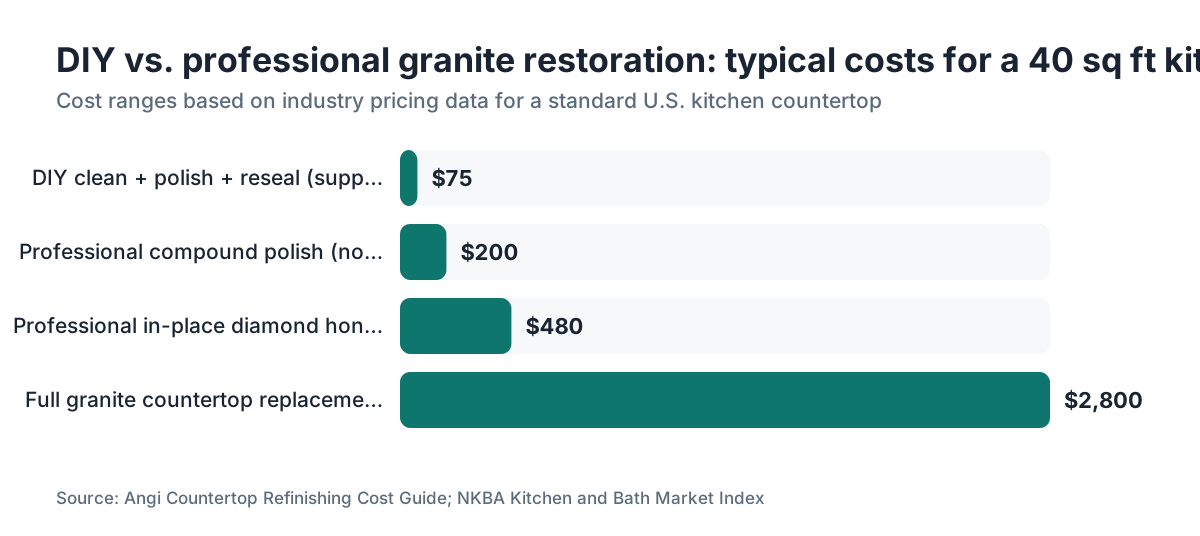
Professional in-place polishing and re-honing runs roughly $8 to $15 per square foot, which puts a typical 40-square-foot kitchen in the $320 to $600 range [4]. Pricing swings a lot by region and by how much work the surface needs.
One honest note. If the etching is deep or covers most of the top, sometimes it makes more sense to price new countertops than to restore. A quick fabricator estimate takes 15 minutes and gives you a real comparison. If your fabricator runs countertop software like SlabWise to build quotes, you can often get a digital estimate the same day.
Can you reshine granite with household products like olive oil or vinegar?
No. This suggestion comes up constantly on home improvement forums, and it's genuinely bad advice.
Olive oil and other cooking oils do make granite look shiny for about 20 minutes. They fill the surface texture with a reflective liquid. But oil never bonds to stone. It attracts grease, grabs dust, and eventually goes rancid down in the pores. Pulling rancid oil back out of granite is a real problem that needs a poultice.
Vinegar is worse. Vinegar is acidic, as covered above. The Natural Stone Institute warns plainly against acidic cleaners on natural stone [3]. A single wipe of undiluted vinegar can micro-etch some granites, and repeated use will absolutely dull the polish.
Windex and other ammonia-based cleaners are a bad idea too. Ammonia breaks down impregnating sealers over time, which means resealing more often and dulling faster.
The only household product that's actually safe for granite is warm water with a tiny bit of pH-neutral dish soap, rinsed off completely every single time. That's the whole list.
How often should you reseal granite to maintain its shine?
Sealing and shining are related but not the same. A sealer protects the pores from staining liquids. It doesn't add gloss on its own, but a well-sealed surface stays cleaner, so the polish you laid down lasts longer.
Most stone industry groups say to test and reseal granite every one to three years, depending on the stone's porosity and how hard the kitchen gets used [3]. The water test settles it in a minute: put a few drops of water on the surface and wait. If it beads, the sealer is still working. If it soaks in and darkens the stone within a few minutes, reseal [5].
Some dense granites (absolute black, Blue Pearl) are so tight they barely absorb sealer at all and can go five or more years between coats. Lighter, more porous stones like Colonial White or Kashmir White may want annual sealing.
The polishing step is a lighter cadence. Most homeowners get good results doing the full polish and reseal once a year as a kitchen refresh, plus a quick dry-microfiber buff every week or two during normal cleaning. That weekly buff takes 90 seconds and keeps soap film from ever building up.
What are the best granite polish products on the market?
There's no single best, because different problems call for different products. Here's an honest breakdown based on what stone pros actually reach for.
| Product Type | Best For | Approx. Cost | Notes |
|---|---|---|---|
| Tin oxide polishing powder | Surface haze, minor etching | $15-$35 | Traditional pro choice, needs water and elbow grease |
| Cerium oxide powder | Surface haze, slight scratch removal | $20-$40 | Slightly finer than tin oxide, good for high-gloss finishes |
| Pre-mixed polishing cream | Small areas, ease of use | $12-$25 | Convenient, higher cost per square foot |
| Diamond hand pads (set) | Deeper etching, localized spots | $30-$80 per set | Needs technique, risk of halo if not feathered |
| Impregnating sealer | Post-polish protection | $20-$60 | Applies after polish, pick water-based for indoor use |
Brands that supply the fabrication trade (Tenax, Akemi, Miracle Sealants) tend to be more consistent than generic hardware-store products. Miracle Sealants is one that stone installers commonly stock and hand to homeowners.
A word on granite polishing sprays. Some are fine for a quick shine between deep cleans, but many carry silicone or acrylic that builds up over time and causes the exact hazy look you're trying to kill. If you're going to spray regularly, pick a stone-specific brand and confirm the label says safe for natural stone.
When should you call a professional stone restoration company?
Be honest with yourself. Call a pro when:
- Etch marks cover more than a few square inches, especially on a uniform color where any inconsistency in your grind will show
- There are deep scratches you can catch with a fingernail dragged across the surface
- The stone has a honed (matte) finish you want made polished, or a polished finish you want made honed. Either direction needs systematic diamond grinding
- Old repairs left visible transition lines you want blended out
- The counter was refinished with a topical coating (like a spray-on epoxy) that's peeling and needs stripping before repolishing
For everyday haze and maintenance polishing, doing it yourself is fine and saves real money. But chasing deep etch damage with DIY diamond pads on a color like a Calacatta Gold-pattern granite or Black Galaxy can turn a moderate problem into an obvious one fast.
When you get quotes, ask flat out whether they'll be grinding in place on your slab or only using hand-applied compounds. In-place grinding with diamond pads and a polisher is the only method that actually removes material and restores a true factory polish on damaged areas. Compound-only treatments are closer to a deep clean with a shine boost. Both have a place. You just want to know which one you're paying for.
Does reshining work on all granite colors and finishes?
Most polished granite takes home polishing well. The exceptions are worth knowing before you start.
Absolute black / premium black. Many slabs sold as absolute black granite are actually gabbro or diabase, different igneous rocks with a finer grain [9]. These show white residue or micro-scratches much more readily than typical granite. Go easy on abrasive polishes. A cream polish with no coarse grit is the right call.
Leathered or brushed finishes. These are textured on purpose. A standard polishing powder partly fills the texture and changes the look. Leathered granite usually just wants cleaning and a light wipe with stone-safe mineral oil to keep its appearance, not polishing.
Honed granite. If the surface is matte by design, don't try to shine it with powder. You'll get uneven glossy patches against the matte field, and fixing that means a full professional honing to reset a uniform surface.
Factory resin treatments. Some porous granites are resin-treated at the factory to fill surface pores. Over time those resins yellow or cloud. Polishing powder often won't help, and aggressive polishing can pull resin out of the pores unevenly. A stone pro can tell you whether re-resin is an option or whether replacement is the smarter spend.
For caring for other stone types, the guides on how to clean quartzite countertops and how to clean stone countertops cover the overlap and the differences that matter.
How do you maintain granite shine long-term after polishing?
The polish you put in today lasts longer if you change a few habits.
Switch to a pH-neutral cleaner for daily wiping. Anything below pH 7 (acids) or aggressively above it (harsh alkalines) degrades the sealer and eventually dulls the stone. The EPA's Safer Choice program flags pH-neutral cleaners (roughly pH 6 to 8) as the right pick for surfaces sensitive to chemical wear [10].
Use cutting boards. Every knife pass across bare granite adds micro-scratches to the polish. Granite is harder than most knives, but repeated passes still leave marks.
Blot spills fast. Red wine, tomato, citrus, and coffee won't etch well-sealed granite in the ten seconds it takes to notice them, but overnight is a different story. Thin-sealer spots can drink up staining liquid.
Put felt pads under decorative items and heavy appliances. A cast iron skillet dropped hard in the same spot, or a ceramic jar dragged daily across the same line, will grind the polish off that spot in time.
Run the water bead test every six months. Thirty seconds. It tells you whether the sealer still works before you ever get a stain.
And every 12 to 18 months, run the full clean, light polish, and reseal cycle above. That routine keeps most granite looking nearly as good as install day for decades. Granite is one of the more durable kitchen countertop materials out there, and it pays back consistent maintenance.
For fabricators quoting granite: customers ask about long-term maintenance cost during the sale all the time. A clean one-page maintenance sheet handed over at install (or generated from your quoting workflow in a tool like SlabWise) builds trust and cuts callbacks.
Is dull granite ever a sign of deeper damage you should fix before selling a home?
Yes, and buyers' home inspectors sometimes flag it. Badly etched or scratched granite drags on perceived value, and in a competitive market, fresh or freshly refinished countertops move the first impression.
The National Association of Home Builders tracks kitchen features by buyer demand, and granite countertops land in the top tier of what buyers want. Their 2023 "What Home Buyers Really Want" survey found 85 percent of buyers rated granite or natural stone countertops as desirable or essential [6].
If you're prepping to sell, the rough math runs like this. Professional stone restoration is $320 to $600 for a kitchen. Full granite replacement runs roughly $40 to $100 per square foot installed [7], so a 40-square-foot kitchen is $1,600 to $4,000. Restoration almost always wins on cost if the granite is structurally sound, meaning no cracks running through the stone.
One exception. If the granite is a dated color or pattern that turns buyers off (think early-2000s desert brown with gold flecks), restoration fixes the shine but not the taste problem. There, compare restoration cost against replacement cost and honest buyer perception before deciding.
For a wider look at countertop options and their relative costs, the granite countertops guide covers price ranges and comparisons across surface types.
Frequently asked questions
How do I make granite countertops shiny again without buying special products?
Clean the surface with warm water and a tiny amount of pH-neutral dish soap, rinse it completely clean, and buff dry with a microfiber cloth. Film buildup from residue is the most common cause of dull granite, and a thorough rinse-and-buff often restores surprising shine. For actual etching or surface damage, you'll need a polishing powder. Water and soap alone can't rebuild material the acid removed.
Can you use car polish or car wax to shine granite countertops?
Some car polishes use abrasives similar to granite polishing compounds, but the carriers and additives are formulated for painted metal, not stone. They can leave residue in granite pores or degrade the sealer. Use a product made specifically for natural stone. The price difference is small and the risk isn't worth it.
How long does a DIY granite polish job take?
Plan about 90 minutes of active work for a typical 30 to 40-square-foot kitchen, plus 24 hours of sealer cure time before heavy use. The cleaning and polishing steps each run about 30 to 45 minutes depending on how thoroughly you work. Rushing the dry-down between steps causes streaking and residue, so build in the wait time.
Will polishing granite countertops yourself void a warranty?
Almost certainly not. Natural stone slabs don't carry manufacturer warranties the way engineered quartz does. The fabricator's warranty, if any, usually covers installation defects (cracks from poor support, seams that separate) rather than surface maintenance. Using pH-neutral cleaners and stone-specific polishes won't affect coverage. Check your installation contract if you're unsure what it covers.
What's the difference between polishing granite and honing granite?
Honing uses coarser diamond abrasives to create a flat, matte or satin finish with no high gloss. Polishing uses progressively finer abrasives and finishing compounds to build the reflective, mirror-like surface most people picture with granite. Both need systematic diamond grinding. The polishing powder you apply at home is a surface-level buffing product, not the same as a full machine polish or hone.
Can you reshine granite that has been sealed with an epoxy coating?
If someone put an epoxy or topical coating over the granite, that coating is what you see, not the stone. Polishing powder won't do much to it. If the coating is yellowing or peeling, a stone restoration pro has to strip it first, usually with a chemical stripper or light machine grinding, before repolishing the stone underneath. Don't try to chemically strip coatings yourself without identifying the product first.
How do you remove a hazy film from granite countertops?
Hazy film is almost always dried soap residue, hard-water mineral deposits, or old sealer buildup. Try a dedicated stone cleaner or a 50/50 mix of isopropyl alcohol and water on a microfiber cloth, which cuts residue without harming the stone or sealer. If that doesn't clear it, a light application of polishing cream will. Rinse and buff dry after.
Does granite need to be resealed after polishing?
Yes. Polishing removes or disturbs any sealer on or near the surface. Always reseal after polishing to protect the work you just did and keep the stone from drinking up stains. Give the polishing step time to dry fully (usually 15 to 30 minutes) before applying sealer so the two products don't interfere with each other.
What is the water test for granite sealer, and how do you do it?
Place about a tablespoon of water on the granite and leave it undisturbed for 15 minutes. If the water still beads after 15 minutes, the sealer is working. If it soaks in and darkens the stone, the sealer has degraded and it's time to reseal. The Natural Stone Institute recommends this test as the simplest way to check sealer performance on a schedule.
How much does professional granite polishing cost?
Professional in-place polishing and re-honing typically runs $8 to $15 per square foot, putting a 40-square-foot kitchen at roughly $320 to $600. Price varies by region, the extent of damage, and whether the contractor uses machine diamond polishing (which restores a true factory finish) or just hand-applied compound. Get quotes from at least two restoration companies and ask which method each one uses.
Can dull granite be caused by hard water, and how do you fix it?
Yes. Hard water leaves calcium and magnesium deposits on granite that look white and chalky. These sit on top of the sealer rather than damaging the stone, so they're relatively easy to remove. A product made for mineral deposit removal on stone (pH-neutral, not an acid-based limescale remover) dissolves them. Never use CLR or similar acidic limescale products on granite.
What household cleaners are safe to use on granite every day?
Warm water with a tiny amount of pH-neutral dish soap, fully rinsed off after each use, is the safest daily option. Isopropyl alcohol at 70 percent is safe for periodic grease cleanup. Avoid anything acidic (vinegar, lemon juice, most bathroom cleaners), anything ammonia-based (Windex), and abrasive powders like Comet. Dedicated stone cleaners from stone-industry suppliers are a step up from dish soap for daily use.
How do you restore shine to granite near the sink where it always looks dull?
The area around the sink dulls faster because it gets more soap, more mineral-heavy water, and more physical use. Start with a thorough clean using isopropyl alcohol to cut soap scum, then run the full polish and reseal on that section. Going forward, dry that zone after each use instead of letting mineral-laden water evaporate on it. You may need to reseal that spot annually even if the rest of the counter is fine for two years.
Is it worth reshining granite on a countertop that's more than 20 years old?
Usually yes, if the stone is structurally intact (no through-cracks, no separated seams, solid substrate). Granite itself doesn't degrade with age. What ages is the surface polish and the sealer. Professional restoration can bring a 25-year-old granite counter back to near-original condition for a fraction of replacement cost. The exceptions are severe damage, a style you actively dislike, or deep staining that won't poultice out.
Sources
- U.S. Geological Survey, Mineral hardness and the Mohs scale: Granite is a hard igneous rock rating roughly 6 to 7 on the Mohs hardness scale
- USDA Agricultural Research Service, pH of common foods and chemicals: Vinegar has a pH of approximately 2.4, making it acidic enough to etch stone surfaces
- Natural Stone Institute, Care and Maintenance of Natural Stone: The Natural Stone Institute recommends impregnating sealers over topical coatings for granite and warns against using acidic cleaners on natural stone
- Angi, Countertop Refinishing Cost Guide: Professional in-place stone polishing costs approximately $8 to $15 per square foot, or $320 to $600 for a typical kitchen
- Natural Stone Institute, Residential Stone Care FAQ: The water bead test: if water absorbs into the stone within 15 minutes, the sealer needs to be reapplied
- National Association of Home Builders (NAHB), What Home Buyers Really Want 2023: 85 percent of buyers rated granite or natural stone countertops as desirable or essential in the 2023 NAHB buyer preference survey
- National Kitchen and Bath Association (NKBA), Kitchen and Bath Market Index: Granite countertop installation costs range from approximately $40 to $100 per square foot installed, depending on stone grade and region
- Marble Institute of America (now Natural Stone Institute), Dimension Stone Design Manual: Impregnating sealers penetrate stone pores and protect from within, unlike topical coatings which sit on the surface and can peel or yellow
- U.S. Geological Survey, Igneous rocks overview: Some slabs sold as absolute black granite are actually gabbro or diabase, igneous rocks with different mineral compositions and finer grain
- Environmental Protection Agency, Safer Choice program: pH-neutral cleaners (roughly pH 6 to 8) are the recommended choice for surfaces sensitive to chemical degradation, including natural stone
Last updated 2026-07-09