TL;DR
- Stone suppliers routinely mark up slabs 30 to 60% over their own landed cost, and most will negotiate if you come prepared.
- The biggest wins come from bundling volume, buying slow-moving lots, paying early, and shopping competing distributors before you call your primary rep.
- Fabricators who negotiate consistently report saving 10 to 25% on material.
Why do stone suppliers have so much pricing flexibility?
Slab pricing is nothing like buying a commodity on an exchange. There's no posted spot price for a 3cm Calacatta Gold slab the way there is for copper or lumber. Distributors buy containers of stone from quarries and processing plants, mostly in Brazil, Italy, Turkey, India, and China, then mark them up based on what the local market will bear. That markup usually runs 30 to 60% over their landed cost, sometimes more for exotic material [1].
Most distributors are sitting on slow-moving inventory, so they have real incentive to deal. A slab in the yard costs them money every month: insurance, warehouse space, forklift operators, and interest on the capital tied up in the stone. Slab inventory turns slowly. The Natural Stone Institute has noted that distributors commonly hold 60 to 120 days of inventory, which means an exotic lot that isn't moving is genuinely painful for them [2].
Competition is the other reason the flexibility exists. In most mid-to-large metro areas, a fabricator can reach four to eight distributors within a reasonable haul distance. Suppliers know you have options. They price aggressively to win relationships, especially with fabricators who buy every month.
Homeowners have less room than fabricators, but not zero. If you're buying a full slab or asking a fabricator to source a specific stone, understanding this pricing layer helps you ask smarter questions and spot when you're being overcharged.
What are the most effective tactics for negotiating slab prices?
Bundle multiple jobs into one purchase order. This is the single highest-impact move for fabricators. Three kitchen jobs starting in the next three weeks? Buy all the stone at once. Distributors price by the bundle the same way any wholesale business does. Going from one slab to five or ten in a single order can shift you from retail pricing to a 15 to 20% discount tier almost automatically.
Get at least two competing quotes before calling your primary supplier. Call a second and third distributor, get real prices in writing or by email, then call your main rep and tell them what you found. You don't need to be aggressive. Something like: "I've been buying from you guys for two years and I want to keep it here, but I got a quote from [Competitor] at $X per square foot. Can you match it or get close?" That script works. Reps have discretion on pricing, and they'd rather shave margin than lose a repeat customer.
Ask about slow-moving lots specifically. Any distributor with a yard has stone that's been sitting six months or longer. They rarely volunteer it. Ask: "What lots have been here the longest? I'm open to slightly different material if the price is right." You'll often get quality stone at 20 to 35% below current pricing just because the distributor wants it gone [3].
Offer early payment or cash. Net-30 is standard in the industry. Offer to pay at pickup or within five business days and you save them weeks of receivables plus the small percentage points of credit card processing or factoring cost. Some distributors give 3 to 5% off for that. Sounds small. It compounds across a year of buying.
Buy remnants directly from the distributor. Large distributors accumulate cut remnants from display pieces, broken lots, and samples. For small jobs, a fabricator willing to work with remnants can cut material cost hard. For a homeowner with a bathroom vanity or a small island topper, this is worth asking about directly.
Time purchases around container arrivals. Distributors often discount new containers for the first 30 to 60 days to move them fast and recover capital. Ask your rep when new containers are landing. Fresh inventory gives you better slab selection and sometimes introductory pricing.
How much can you realistically save on slab costs?
The honest answer: it depends on the material, the market, and how disciplined you are. There's no peer-reviewed study on countertop negotiation discounts (nobody has good data on this), but the ranges fabricators report are consistent and worth acting on.
Commodity materials like standard granite leave thinner room, because distributors already price them tight against each other. You might get 5 to 10% on a single job, closer to 12 to 18% as a volume buyer.
Premium and exotic stone is different. Rare marble, quartzite, and engineered stone from smaller brands carry higher markups and wider negotiating room. Fabricators who buy consistently from one distributor and push proactively report saving 15 to 25% against list over a year [3].
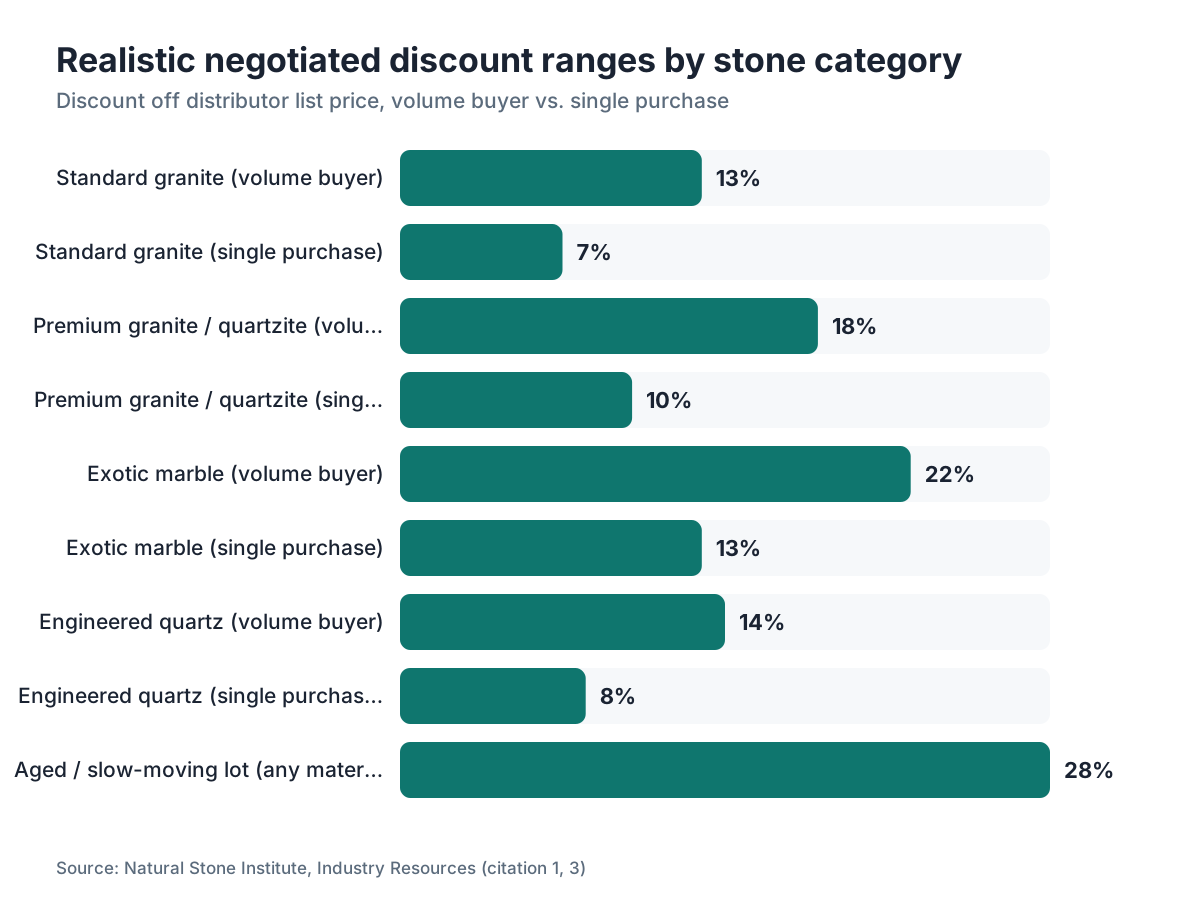
The table below gives rough ranges by material category and buyer type:
| Material Category | Typical List Markup Over Cost | Realistic Negotiated Discount (Volume Buyer) | Realistic Negotiated Discount (Single Purchase) |
|---|---|---|---|
| Standard granite | 30 to 40% | 10 to 15% | 5 to 8% |
| Premium granite / quartzite | 40 to 55% | 15 to 20% | 8 to 12% |
| Exotic marble | 45 to 65% | 18 to 25% | 10 to 15% |
| Engineered quartz (major brands) | 35 to 50% | 10 to 18% | 5 to 10% |
| Slow-moving / aged lot (any material) | Varies | 20 to 35% off current ask | 20 to 35% off current ask |
These are illustrative ranges built from distributor pricing structures, not controlled data. Your local market may run tighter or looser depending on how many distributors operate nearby.
Does volume buying actually move the needle for small fabricators?
Yes, but you have to define volume in a way that fits your shop size. A small fabricator doing 20 to 30 jobs a month doesn't have the raw purchasing power of a regional shop doing 150. You don't need to match the big guys. You need to be predictable.
Distributors value reliable repeat customers more than one-time big orders. Commit to buying 80% of a specific material from one distributor for six months and that's worth something to them, even if your monthly spend is modest. Ask for an annual pricing agreement in writing. Some distributors, especially regional ones, will lock in pricing for 90 to 180 days in exchange for a volume commitment.
Buying groups and purchasing cooperatives help too. The Marble Institute of America (now merged into the Natural Stone Institute) has noted that small fabricators who pool purchasing often reach pricing closer to large-shop rates [2]. If you're not part of a regional fabricator group, look into one, especially if you share material preferences with nearby shops who aren't direct competitors.
For homeowners, the volume angle works differently. Doing a full kitchen, two bathrooms, and a laundry room? Ask your fabricator to quote all the material together rather than piece by piece. The combined square footage might bump them into a better pricing tier with their distributor, and a good fabricator passes some of that through.
What should you know about how distributors set slab prices?
Understanding the supply chain helps you negotiate smarter. Most decorative stone sold in North America travels a path like this: quarry or processing plant (often overseas) to an importer or national distributor to a regional distributor to a fabricator to the homeowner. Each handoff adds margin.
The U.S. imports roughly 900 million to 1.3 billion dollars' worth of natural stone products a year, with granite, marble, and travertine making up the bulk of that volume [4]. Import costs move with container shipping rates, currency exchange (particularly the dollar against the Brazilian real, the Euro, and the Chinese yuan), and tariff classifications.
Section 301 tariffs on Chinese goods hit certain engineered stone products starting in 2018, at rates from 7.5% to 25% depending on the specific HTS code [5]. This matters at the table: when a distributor tells you prices went up because of tariffs, that's often real, but it doesn't mean the full tariff got passed through, or that their margin didn't also widen over the same period. Fair question to ask: how did their landed cost change versus their list price?
Engineered quartz pricing carries trade actions too. In 2019 the U.S. International Trade Commission recommended antidumping duties on quartz surface products from India and Turkey, with rates varying a lot by manufacturer [6]. Those duties have kept affecting import pricing. If a distributor carries quartz from those origins, the duty structure is part of their cost basis and part of the negotiation context.
For granite countertops specifically, Brazil is the dominant import source, and the dollar-to-real exchange rate has a real effect on landed costs. A fabricator who watches currency trends can sometimes anticipate when distributor costs are falling and push for lower pricing before the distributor passes those savings through on their own.
How do you build a supplier relationship that earns better pricing over time?
One-time negotiation is fine. Structural pricing improvement over years is better. The fabricators who consistently pay less than their competitors for the same material usually aren't the ones who fight hardest on every invoice. They're the ones their reps trust and want to keep.
Pay your invoices on time, every time. Sounds obvious. But slow-paying accounts get deprioritized when inventory is tight. A rep who knows you'll pay in 15 days will hold a slab for you. One who's chasing your 60-day invoice won't.
Bring your rep information, more than orders. See a material trend coming? Share it. Notice another distributor carrying a product you'd rather buy from your primary supplier? Say so. Reps influence what their yard stocks. Being a source of market intelligence makes you a valued account instead of a transaction.
Ask for an introduction to the rep's manager or the purchasing director once you have an established relationship. The rep has discretion up to a point, but deeper discounts and custom pricing agreements often need sign-off one level up. A rep who likes working with you will make that introduction without being asked.
Tracking material costs across jobs is where good software earns its keep, because it lets you show a distributor exactly how much stone you've bought over a quarter or a year. SlabWise generates that purchase history automatically, and that history is real ammunition in a pricing conversation.
If you're sourcing marble countertops or quartzite and you fall for a particular lot, ask the distributor to reserve the full lot for your exclusive use at a committed price. Some will do it for a small deposit. It locks in your cost and kills the risk of a price bump before your jobs ship.
Are there times when you should NOT negotiate on slab price?
Yes. A few situations where pushing on price is a mistake.
Tight timeline. Negotiating risks losing your slab to another buyer. If a material is in short supply or you need it in five days, pay the ask and move on. The two percent you might save isn't worth the job falling behind.
A distributor already thin on margin. Pushing harder damages the relationship for almost no gain. Learn to read it. Reps who normally have room to move will tell you straight when they genuinely don't. Respect that and they'll work harder for you next time.
High-visibility jobs where quality is the point. Buying from a secondary supplier you barely know to save a few dollars can backfire hard. A slab with hidden fissures, inconsistent thickness, or calibration problems costs far more in labor and rework than any material discount saves. For a showpiece kitchen countertop, stick with a supplier whose quality control you trust.
And when you're a homeowner buying direct from a distributor (some allow it, most don't), be realistic. You're not a volume customer and the rep knows it. The better move for homeowners is to ask your fabricator to pass through any discount they get, or to gather quotes from two or three fabricators who source differently.
How do you handle remnant pricing and what's a fair deal?
Remnants are underused. A remnant in the fabricator's yard is a slab piece that's already been cut, often with one or two usable portions left. In the distributor's yard, a remnant might be a display slab damaged on one corner, or the tail end of a lot that didn't sell cleanly.
Remnant pricing has no formula. Some distributors price them at 40 to 60% of full-slab cost per usable square foot. Others just want them gone and will deal. The trick is knowing the usable yield before you agree on a price. A remnant that looks like 20 square feet might only give you 14 after cracks, staining, and edge damage.
For fabricators, keeping a remnant inventory and marketing it to customers pays off. A homeowner doing a small bathroom vanity is happy to get marble countertops or quartzite at remnant pricing. The fabricator turns scrap into revenue instead of paying to haul it away.
For homeowners, ask your fabricator directly: "Do you have any remnants that might work for this project?" Good fabricators track their remnant stock. A bathroom vanity, a laundry room folding counter, or a small island can often be covered by remnant material at a fraction of a new slab.
Curious about cheaper countertop options in general? Laminate countertops and formica countertops are worth knowing as budget benchmarks, even if stone is your preference.
What's the best way to compare quotes from multiple stone distributors?
Comparing distributor quotes is harder than it looks, because the same stone description can mean different things. "3cm Calacatta" from one distributor might be a tighter, whiter book-matched lot from a specific quarry face. From another it's a looser, more yellow-veined material from a different extraction. Price comparison only works when you're comparing the same thing.
When you get quotes, ask for the bundle or lot number, country of origin, processing plant (if they know it), and the slab count and average slab size in the lot. Visit the yard when you can. Looking at the actual slabs and comparing them across distributors is the only reliable way to know if you're pricing equivalent material.
Engineered stone like quartz is easier, because brand and product name are fixed specs. A quote for Silestone Calacatta Gold 3cm from two distributors is genuinely comparable. Push hard on price there, because the product is identical.
Fabricators should document their comparisons. Keep a spreadsheet of quote dates, distributor names, lot numbers, price per square foot, and slab dimensions. Over time that builds a real database of market pricing in your area, which is powerful negotiating information. If a distributor knows you track this, they'll be more careful about padding quotes.
Shop management software that folds material costs into job quotes (which is what SlabWise does for fabricators) makes this tracking automatic instead of a manual chore. Running a demo is worth the hour if you're doing more than a handful of jobs a month.
Can homeowners negotiate slab prices directly, or only through their fabricator?
Most stone distributors are trade-only, meaning they sell only to fabricators and don't open their yards to homeowners. It's common enough that you should assume it unless told otherwise. In that model, your negotiating happens at the fabricator level.
A small number of distributors run hybrid showrooms where homeowners can select slabs and then have a fabricator pick them up and install them. In those cases you can negotiate directly, and the tactics above apply. But understand that a distributor talking to a homeowner knows you're a one-time buyer. The relationship lever doesn't exist. Your best move is to come in with a specific budget, show you've done research, and ask directly whether there's a better price on material that's been in inventory a while.
The more practical approach for homeowners is choosing a fabricator who is transparent about material cost versus labor and markup. Some fabricators show you the stone cost and their fabrication cost separately. Others give a single per-square-foot installed price that bundles everything. If your fabricator shows the material line, you can have a real conversation about sourcing. If everything is bundled, you're negotiating the total and trusting them to find good value on the stone.
Comparing stone to other options? Reading up on countertop installation costs and kitchen countertops as a category gives you better benchmarks before you start the conversation.
What are common mistakes that kill your negotiating position?
Letting urgency show. If a rep knows you need the material Friday, you have no room to work with. Always negotiate before you're on a tight schedule. Buy common materials ahead of need and keep a small buffer in your yard when cash flow allows.
Negotiating without market data. Walking in and saying "I want a better price" with nothing behind it gives the rep nothing to take upstairs. Come with a competitor quote, or a specific number based on what you've paid before.
Fragmenting your purchases too much. Spreading small orders across six distributors keeps you in single-buyer pricing with all of them. Concentrating purchases with two or three suppliers, and being open about your total buy, works far better.
Focusing only on price per square foot. The true cost of a slab purchase includes delivery, damage in transit, slab size consistency (which affects yield), and quality issues that create rework. A slab that costs 8% less but has thinner calibration or hidden fissures can cost more in the end. Judge total value, not the line price.
Being difficult to work with. Reps are people. If you're the customer who always has a complaint, argues every invoice, and asks for favors without giving anything back, you'll get the worst pricing tier the moment the market tightens. Goodwill in good times gets rewarded when inventory is scarce.
Frequently asked questions
How much of a discount can I realistically expect when negotiating slab prices?
For a single purchase with no prior relationship, 5 to 12% is a realistic target on most materials. Volume buyers with an established relationship can reach 15 to 25% off list on premium stone. Slow-moving or aged inventory is where the biggest one-time discounts appear, sometimes 25 to 35% off current ask. The actual number depends on material category, your local market, and how prepared you come to the conversation.
Do stone suppliers negotiate with homeowners, or only with fabricators?
Most distributors are trade-only and won't sell directly to homeowners. Some hybrid showrooms do allow homeowner purchases. In the trade-only model, your negotiating happens at the fabricator level. Ask your fabricator if they can pass through any volume discount on material, or choose a fabricator who quotes material and labor separately so you can see what the stone actually costs.
What's the best time of year to buy stone slabs at a lower price?
Late fall and winter (October through February in most U.S. markets) tend to see softer demand, which gives buyers more room to negotiate. Container arrivals are another good timing signal. Ask your distributor rep when new containers are landing; distributors often discount fresh inventory in the first 30 to 60 days to recover capital quickly. Avoid peak spring and summer buying season if price is your priority.
Is it worth buying remnant slabs from a distributor or fabricator?
Often yes, especially for smaller projects. Remnant pricing typically runs 40 to 60% of full-slab cost per usable square foot, though it varies. The key is confirming usable yield before agreeing on price. A remnant with edge damage or hidden cracks may yield much less than it appears. For bathroom vanities, laundry rooms, or small islands, remnants are a legitimate way to get premium stone at a significant discount.
How do tariffs on imported stone affect slab prices and negotiations?
Section 301 tariffs on Chinese goods have affected engineered stone products at rates between 7.5% and 25% since 2018. Antidumping duties on quartz from India and Turkey, recommended by the ITC in 2019, also affect pricing for those origins. When distributors cite tariffs as a reason for price increases, ask specifically how their landed cost changed versus their list price. The two don't always move in proportion.
What information should I bring to a slab pricing negotiation?
Bring a competing quote in writing, your documented purchase history with the distributor (total spend over the past 6 to 12 months), and a specific target price or budget. Knowing the lot numbers and slab counts you're interested in shows you've done homework. For fabricators, a purchase commitment for multiple jobs over a defined period is the strongest card. Vague requests for "a better deal" give reps nothing to take to their manager.
Can I negotiate on engineered quartz the same way as natural stone?
Yes, but the dynamics differ. Engineered quartz from major brands (Silestone, Caesarstone, Cambria, MSI) is a fixed specification, so price comparisons across distributors are apples-to-apples. That makes it easier to get competing quotes and negotiate. Distributor margin on branded quartz is typically 35 to 50% over cost. Volume commitments and early payment discounts work here the same way they do for natural stone.
Should I tell my current supplier I'm getting quotes from competitors?
Yes, with some care in how you frame it. You don't need to be aggressive or threaten to leave. Saying you've received a competitive quote and you'd prefer to keep the business with your primary supplier is both honest and effective. Most reps would rather match a competitor's price than lose a repeat account. Lying about a competing quote or inventing one is a short-term play that erodes trust when discovered.
What's the difference between a fabricator's material markup and the distributor's markup?
Distributors mark up their landed cost (import price plus freight, duties, and warehouse costs) typically 30 to 60% before selling to fabricators. Fabricators then add their own markup on material, often 15 to 30%, before quoting homeowners. So the stone you pay for in a finished job has traveled through at least two markup layers. Understanding this helps you ask better questions about where savings are actually possible at each step.
How do I know if I'm being overcharged for stone by my fabricator?
Ask for a quote that separates material cost from fabrication cost. Reputable fabricators will do this. You can then cross-check the material price against distributor pricing in your market. If your fabricator is charging $80 per square foot for material that costs $45 to 55 per square foot at a local distributor, that's a significant markup worth discussing. Some markup is fair; fabricators absorb handling and transport risk. But 50 to 80% material markup is on the high end.
Are there buying groups or cooperatives for small fabricators to get better slab pricing?
Yes. The Natural Stone Institute supports fabricator education and networking that sometimes extends to group purchasing arrangements. Regional trade associations and local fabricator networks occasionally organize group buys. If no formal group exists in your area, an informal arrangement with one or two non-competing fabricators to consolidate orders with a single distributor can achieve similar volume pricing benefits.
How do I negotiate an annual pricing agreement with a stone distributor?
Start by documenting your purchase history and projecting your forward volume. Approach the distributor's sales manager (more than your rep) with a specific proposal: committed monthly or quarterly volume in exchange for fixed pricing for 90 to 180 days. Distributors benefit from predictable revenue and cash flow. Offer early payment terms as part of the package. Get any agreed pricing in writing, including what triggers a price review if costs change.
Does the country of origin affect how much room there is to negotiate on slab price?
Indirectly, yes. Material from countries with favorable exchange rates relative to the dollar may have lower landed costs, giving distributors wider margins and more room to deal. Brazilian granite, for example, has historically been affected by the real-to-dollar exchange rate. Italian marble tends to carry tight margins because demand is strong and importers pay premium prices at the source. Knowing where your stone comes from helps you understand the cost structure you're negotiating against.
Sources
- Natural Stone Institute, Stone Industry Education resources: Distributor markups on decorative stone typically range 30 to 60% over landed cost depending on material category and market conditions
- Natural Stone Institute, Industry Overview: Decorative stone distributors commonly hold 60 to 120 days of inventory, creating pressure to move slow-moving lots
- Natural Stone Institute, Fabricator Business Resources: Fabricators who buy consistently and negotiate proactively report saving 15 to 25% compared to list pricing over a year
- U.S. Geological Survey, Mineral Commodity Summaries: Stone (Dimension): The U.S. imports roughly $900 million to $1.3 billion worth of natural stone products annually, with granite, marble, and travertine representing the bulk of volume
- Office of the United States Trade Representative, Section 301 Tariffs on China: Section 301 tariffs on Chinese goods, including certain engineered stone products, range from 7.5% to 25% depending on HTS code, effective starting 2018
- U.S. International Trade Commission, Quartz Surface Products from India and Turkey: In 2019, the USITC recommended antidumping duties on quartz surface products from India and Turkey, with rates varying by manufacturer and affecting import pricing
- U.S. Census Bureau, U.S. International Trade Data: Import data showing Brazil as a dominant source of granite and Italy as a key source of marble and travertine entering the U.S. market
- U.S. Geological Survey, Mineral Commodity Summaries 2024: Dimension stone import and export values and volume data for granite, marble, and other decorative stone categories
- Small Business Administration, Negotiating with Suppliers: Early payment offers and volume commitments are recognized strategies for securing supplier discounts in wholesale trade
Last updated 2026-07-11