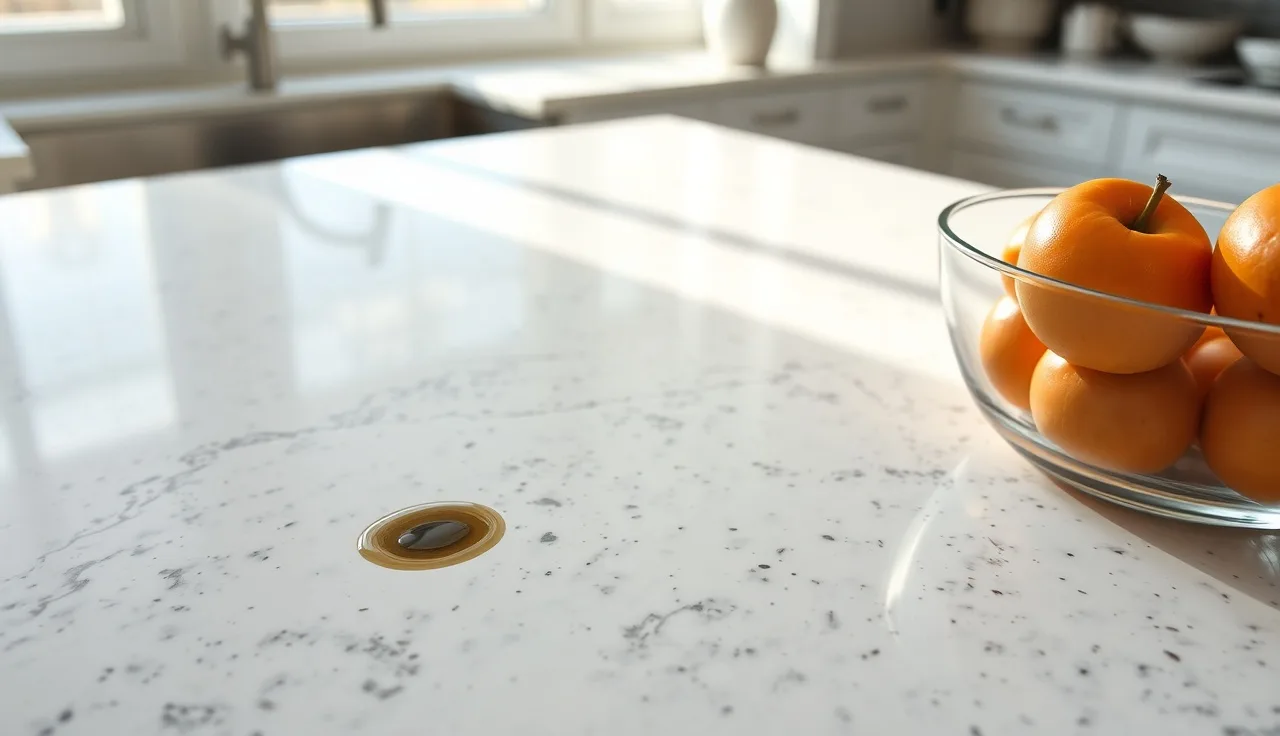
TL;DR
- Most granite stains come out with a poultice: an absorbent powder like baking soda or diatomaceous earth mixed with the right solvent.
- Oil stains need acetone.
- Water-based stains need hydrogen peroxide.
- Spread the paste, cover it with plastic wrap, wait 24 to 48 hours, then scrape and rinse.
- Reseal afterward so the next spill doesn't set.
Do granite countertops stain?
Yes, granite stains. It's a porous igneous rock, and how much it drinks depends on color and origin. Dense, dark granites like Absolute Black shrug off most spills. Lighter stone with big feldspar crystals can soak up oil, wine, or coffee in minutes if nobody sealed it.
The industry loves to call granite low-maintenance. Next to marble, fair enough. Marble etches the second acid touches it; granite doesn't etch that way. But granite absorbs liquid, and no marketing line changes that. The Marble Institute of America (now the Natural Stone Institute) has said for decades that "all natural stone is porous to some degree" and that sealing slows absorption without stopping it [1].
So here's the honest version. Sealed granite resists stains well. Unsealed granite, or granite where the sealer wore off two years ago, stains fast. Leave a puddle of olive oil on the counter overnight and you may find a dark shadow in the stone the next morning that takes real work to pull back out.
How do you know what kind of stain you're dealing with?
Identify the stain before you touch it with anything. The wrong solvent spreads it or drives it deeper, and now you've got a bigger problem than you started with.
Run this quick check:
- Oil-based stains (cooking oil, grease, butter, cosmetics): dark, often with a slightly wet-looking center even after the surface dries. Sometimes a faint smell.
- Water-based / organic stains (coffee, tea, wine, juice, food): usually brownish or reddish, often with a tide-ring edge.
- Rust stains: orange or reddish-brown, often circular, usually under a metal can, pan, or iron skillet.
- Ink or dye stains: a sharp, defined color that matches whatever spilled.
- Hard water or mineral deposits: white or gray haze sitting on the surface, not down in the stone. These aren't really stains. They're mineral buildup on top.
- Etch-like dullness: matte or lighter than the surface around it. That points to a sealer problem or mild surface damage, not a stain.
The split between surface deposits and true penetrating stains changes everything. Hard water buildup sits on top and comes off with a pH-neutral descaler or a wet pumice stone used very gently [2]. A penetrating oil stain lives inside the stone and needs a poultice to draw it out.
What is a poultice and why does it work?
A poultice is a paste: absorbent powder mixed with a solvent. You spread it over the stain, cover it with plastic wrap, and let it dry slow. As it dries, capillary action pulls the staining material up out of the stone and into the paste. Scrape it off, rinse, and the stain is gone or a lot fainter.
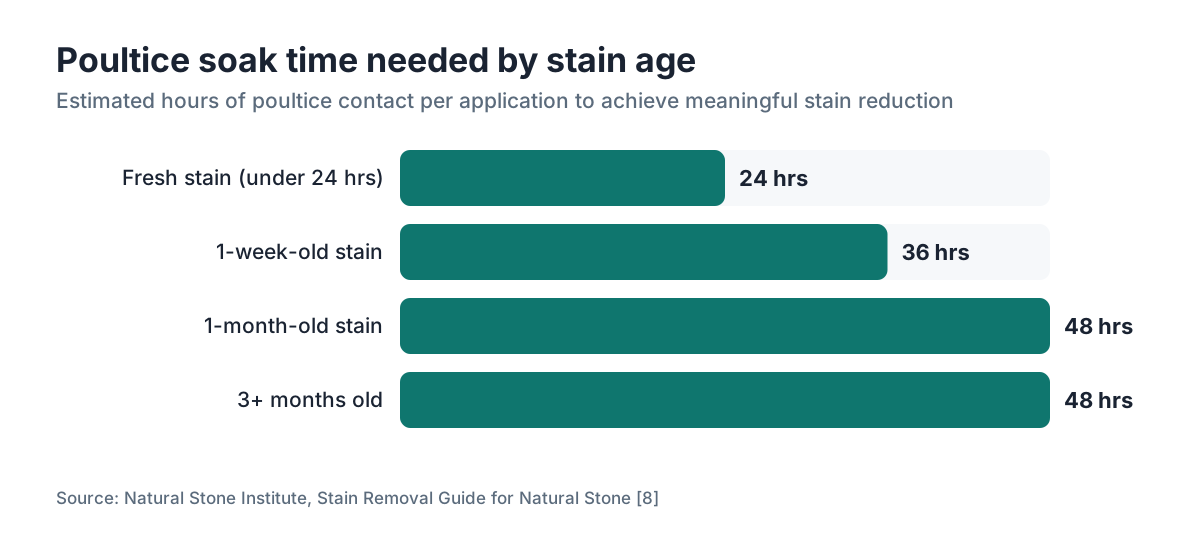
This is the method stone restoration pros use and the one the Natural Stone Institute recommends [8]. It's slow. Figure 24 to 48 hours. But it reaches stains that surface cleaners never will.
The powder can be diatomaceous earth, kaolin clay, talc, or plain baking soda. The solvent depends on the stain:
| Stain Type | Poultice Powder | Solvent |
|---|---|---|
| Oil, grease, butter | Diatomaceous earth or baking soda | Acetone or mineral spirits |
| Coffee, tea, wine, juice | Diatomaceous earth or baking soda | 12% hydrogen peroxide + a few drops of ammonia |
| Rust | Diatomaceous earth | Commercial rust remover (iron-specific, like Iron Out) |
| Ink | Diatomaceous earth | Acetone or lacquer thinner |
| Mold / mildew | Diatomaceous earth or baking soda | Diluted bleach (exterior use only, test first) |
Grocery-store baking soda works fine for most poultices. Diatomaceous earth is what restoration contractors reach for because it soaks up more, but it isn't magic. You can buy food-grade or filter-grade diatomaceous earth online for a few dollars a pound [9].
Step-by-step: how to remove stains from granite countertops with a poultice
This covers oil and organic stains, the two you'll actually run into.
What you need:
- Baking soda or diatomaceous earth
- Acetone (for oil) or 12% hydrogen peroxide (for organic stains)
- Plastic wrap
- Painter's tape
- A plastic scraper or old credit card
- Distilled water
- A soft cloth
- Stone sealer for afterward
Step 1: Clean the surface. Wipe the stained area with warm water and a few drops of dish soap. Rinse well. Let the stone dry all the way. A poultice on a wet surface does nothing.
Step 2: Mix the poultice. Combine powder and solvent to a thick peanut-butter consistency. Baking soda plus acetone for oil. Baking soda plus hydrogen peroxide for wine or coffee. It should hold its shape without running. Work acetone in a ventilated room; it needs airflow, and so do mineral spirits [10].
Step 3: Apply generously. Spread the paste about a quarter-inch thick over the stain, out past the edges by an inch.
Step 4: Cover with plastic wrap. Lay wrap over the paste and tape the edges with painter's tape. This slows drying, and slow drying is the whole point. The longer the paste stays damp, the more it draws out.
Step 5: Wait 24 to 48 hours. Don't peek early. Deep or stubborn stains sometimes need a second round.
Step 6: Remove and rinse. Once dry, the paste turns hard or crumbly. Lift it with a plastic scraper. Never metal. Rinse with distilled water and wipe dry.
Step 7: Judge it, then repeat if needed. One application often fades a stain without killing it. Repeat up to three times. If the third round doesn't finish the job, call a stone restoration pro before you try anything harsher.
Step 8: Reseal. The solvents strip sealer along with the stain. Once the stone is clean and dry, put down a penetrating impregnating sealer. That's your protection against the next spill [3].
How to get rust stains out of granite
Rust is the hardest stain to beat at home. It comes from three places: iron minerals inside the stone itself, metal cans left sitting on the counter, or cast iron cookware.
The fix is a poultice powder mixed with a dedicated rust remover. Products with oxalic acid, like Bar Keepers Friend, handle fresh surface rust. For rust that's soaked into the stone, use a poultice with a stone-safe iron remover like Iron Out or something labeled for natural stone.
Do not reach for muriatic acid. It can wreck the finish and change the stone's color for good. Plenty of DIY advice online pushes acid cleaners for rust on stone. For polished granite, that advice is usually wrong.
If the rust is bleeding out of iron minerals inside the granite, you may never fully clear it. Some slabs, especially those with visible pyrite or magnetite, rust from the inside over years. A stone pro can tell you whether the iron came from the counter or from something you set on it, which decides whether removal is even possible.
What cleaners should you never use on granite?
This list matters more than people think. The wrong cleaner dulls the finish, strips sealer, and leaves the stone wide open to the next stain.
Keep these off granite:
- Vinegar: the acetic acid won't etch granite like it etches marble, but it eats sealer over time and dulls a polished surface with repeated use [4].
- Bleach: occasional diluted use on mold is sometimes fine for exterior or unpolished stone, but regular bleach strips sealer and can shift the color.
- Ammonia-based cleaners (most glass sprays): these strip sealer too, one wipe at a time.
- Abrasive scrubbers: steel wool, scouring pads, and gritty powders scratch a polished surface.
- Citrus cleaners: same acid problem as vinegar.
- Generic multi-surface sprays: most carry surfactants or off-balance pH that build up and dull the shine.
For daily cleaning, warm water and a few drops of dish soap is genuinely enough [3]. Dry the surface after. If you want a bottled product, get one labeled pH-neutral and made for natural stone [7]. Granite Gold, Black Diamond, and Weiman all make stone-specific cleaners that clean without chewing up the sealer.
How does sealing affect stain resistance?
Sealing is the best thing you can do to keep stains from happening. A penetrating impregnating sealer soaks in and fills the pores, slowing absorption enough that you can wipe a spill before it sets.
The water test tells you where you stand: pour a tablespoon of water on the surface. Beads up? Sealer's working. Soaks in and darkens the stone within a few minutes? Reseal now. Most fabricators say reseal every one to three years depending on use and porosity, though some dense granites go longer [3].
No sealer makes granite stain-proof. Sealer buys time, nothing more. Seal the counter and then leave red wine sitting twelve hours and you'll still have a stain.
For new counters or freshly cleaned stone, a good penetrating sealer takes about an hour to apply (two coats with a dry spell between) and costs $20 to $50 for a bottle that covers a typical kitchen. Doing it yourself is easy. Professional sealing usually comes bundled with fabrication and install, so ask your fabricator, because a lot of them include it. If you're collecting quotes, tools like SlabWise show itemized quotes that break out sealing and other finishing steps, so you know what you're paying for.
How long does it take to remove a granite stain?
Fresh beats old, every time. A coffee spill from this morning may lift with one 24-hour poultice. A stain that's been there for months has bonded with minerals in the stone and can take three or more rounds plus professional help.
Rough timeline:
- Fresh stain (under 24 hours): one poultice, 24 to 48 hours. Good odds of full removal.
- Week-old stain: two to three applications, 3 to 6 days total. Expect partial improvement after the first round.
- Month-old or older stain: multiple applications, plus possible professional wet grinding and repolishing if it's deep. Budget several days to a week of DIY, then a pro visit if it's still there.
Old set oil stains fight the hardest, because oil polymerizes over time and grips the stone tight. Rust in porous granite also worsens with age. If a stain has been sitting more than a few weeks and poulticing isn't moving it, call a restoration pro before you escalate to anything aggressive on your own.
When should you call a professional stone restoration company?
Three poultice rounds with no real change? Stop and call a pro. Same if you see:
- The stain spreading or darkening after treatment
- Etching or dullness that wasn't there before
- A rust stain that comes back within days (the iron is inside the stone)
- Cracks or pitting near the stained area
Professional restoration means wet grinding, honing, and repolishing with diamond abrasive pads. For bad staining, a technician can shave off a thin surface layer so the stain goes with it. That's more common on marble than granite, but it happens.
Expect $200 to $600 for professional stain removal and repolishing on a kitchen counter, depending on the area and your region. Still far cheaper than replacement, which runs $1,500 to $4,500 or more for a typical kitchen in granite countertops [5].
How do you remove granite countertops? (The physical removal process)
This comes up two ways: you're pulling the counter yourself during a remodel, or you're a fabricator on a swap job. Either way the process is specific enough that shortcuts break stone.
Granite is heavy. A one-inch slab weighs roughly 18 pounds per square foot [6]. A typical 30-square-foot kitchen counter runs around 540 pounds. Two people minimum, three is better.
Tools needed: oscillating multi-tool or utility knife, putty knife, pry bar, silicone cutter or heat gun, suction cup handles, safety glasses, work gloves.
Step 1: Disconnect everything. Shut off the water supply lines. Disconnect the sink, cooktop, and anything else that pierces the top.
Step 2: Cut the caulk and silicone. Run a utility knife or oscillating tool along every caulked seam: the wall edge, the front lip, around the sink cutout. Granite usually sits in silicone, not construction adhesive, so cutting the silicone is normally enough to break the bond.
Step 3: Check for mechanical fasteners. Some installers run screws through the cabinet top plate into corbels or glued plywood underlayment. Find them before you lift.
Step 4: Apply heat if needed. If the silicone won't let go, a heat gun on low softens it. Don't cook it. Fast temperature swings crack granite.
Step 5: Lift from the front. Set suction cups near the front edge, lift a little while a second person pushes from the back to break the seal. Move the slab to sawhorses or a padded surface.
Step 6: Handle carefully. Carry slabs flat or supported along the longest dimension. Carrying a slab upright on its narrow edge risks a break, especially at any cutout.
For full install context, see our guide to countertop installation.
If you're keeping the stone for reuse, protect it from point loads (anything that concentrates weight on a small spot). Set it on padded sawhorses spaced no more than 24 inches apart.
How to prevent granite countertop stains in the first place
Prevention is cheaper and simpler than removal. The habits that protect granite aren't complicated.
Seal on schedule. Do the water test once a year. Reseal when the water stops beading.
Wipe spills right away. Nothing sits. Oil and wine can penetrate unsealed or aging-sealed granite in under ten minutes on a warm surface.
Use trivets under metal. Cast iron, steel cans, and metal pots left on the stone cause rust staining over time, even on sealed granite.
Use cutting boards. Granite won't dull your knife's effect on the counter, but food residue left on the surface can stain if you don't wipe it.
Skip harsh cleaners. Vinegar, citrus cleaners, and bleach all degrade sealer. Stick to pH-neutral soap and water for everyday work.
For how care differs across natural stone, the guides on how to clean quartzite countertops, how to clean soapstone countertops, and how to clean stone countertops cover adjacent materials with their own rules.
And if staining has become a recurring headache and granite feels like more upkeep than you signed up for, that's a fair conversation to have. Materials like quartz (Cambria countertops) are non-porous and don't stain the same way. Corian and laminate countertops also resist stains and are worth a look if porosity keeps biting you.
Frequently asked questions
How do you remove a granite countertop without breaking it?
Cut every silicone seam with an oscillating multi-tool or utility knife first. Then use suction cup handles to lift from the front while a second person pushes from the back to break the seal. Carry the slab flat, supported every 24 inches or less. Granite weighs about 18 pounds per square foot, so a 30-square-foot counter runs around 540 pounds. Bring enough people and don't rush.
Do granite countertops stain easily?
It depends on the stone and the sealer. Dense, dark granites resist staining well. Light-colored or coarser-grained granites are more porous and stain faster. A properly applied penetrating sealer gives you time to wipe spills before they absorb, but no sealer makes granite stain-proof. Unsealed granite can stain within minutes from oil or wine.
Can I use baking soda to remove stains from granite?
Yes. Baking soda is the standard DIY poultice powder. Mix it with acetone for oil-based stains or with 12% hydrogen peroxide for organic stains like coffee, tea, or wine. Apply about a quarter-inch thick over the stain, cover with plastic wrap taped at the edges, and leave it 24 to 48 hours. Scrape off the dried paste, rinse with distilled water, and repeat if needed.
What removes oil stains from granite countertops?
A poultice made from diatomaceous earth or baking soda mixed with acetone. The acetone dissolves the oil, and the powder absorbs it out of the stone as the paste dries. Cover with plastic wrap to slow drying, which increases how much oil the poultice pulls out. One 48-hour application often reduces fresh oil stains a lot; older stains may take two or three rounds.
Will vinegar damage granite countertops?
Vinegar won't etch granite the way it etches marble, but regular use degrades sealer over time and can dull a polished finish. Avoid vinegar, citrus-based cleaners, and bleach for routine cleaning. Warm water with a few drops of dish soap is genuinely enough for daily maintenance. If you want a dedicated product, use one labeled pH-neutral and formulated specifically for natural stone.
How long does a granite stain poultice take to work?
The paste needs 24 to 48 hours to dry completely. Pulling it off early cuts its effectiveness. Fresh stains often respond to a single application. Older or deeper stains may need two or three rounds, each with its own 24 to 48 hour wait. If three full applications haven't moved the stain, consult a stone restoration professional rather than trying stronger chemistry on your own.
How do you remove rust stains from granite?
Use a poultice powder mixed with a rust remover formulated for natural stone, such as one containing oxalic acid. Bar Keepers Friend can work on fresh surface rust. For deeper rust, mix a stone-safe iron remover like Iron Out into a paste. Avoid muriatic acid, which can damage the finish permanently. Rust from iron minerals inside the stone may not fully resolve without professional grinding.
Can you remove old set stains from granite?
Sometimes, but old stains are harder. Apply a poultice three times with 24 to 48 hours per application before you judge the result. Oil stains that have had months to polymerize grip the stone tightly. Rust stains get worse as the iron oxidizes deeper. If DIY poulticing doesn't make a clear difference after three attempts, a stone restoration professional can wet-grind and repolish the surface, removing the stained layer.
How do I know if my granite countertop needs to be resealed?
Pour a tablespoon of water on the surface and watch for 3 to 4 minutes. If it beads and stays on top, the sealer is still working. If it soaks in and the granite darkens, the sealer has worn off and you need to reseal. Most fabricators recommend resealing every one to three years depending on how porous the stone is and how heavily you use the counter.
How do you remove granite countertops that are glued down?
Most granite sits in silicone, not hard adhesive, so cutting the silicone seam with an oscillating multi-tool is usually enough to release it. Heat from a low-setting heat gun softens stubborn silicone. If the installer used construction adhesive or epoxy, release is harder. A flat pry bar and patient wedging work on small sections, but aggressive prying risks cracking the slab at cutouts or thin spots.
Is it safe to use hydrogen peroxide on granite countertops?
12% hydrogen peroxide, used as part of a poultice for organic stains, is generally safe on granite. Don't use it daily as a surface cleaner; repeated exposure can gradually lighten some stones and degrades sealer over time. Salon-grade 30% or 40% peroxide is too strong for stone. Stick to the drugstore 3% version or the 12% found at beauty supply stores when making a poultice for a coffee or wine stain.
What is the best daily cleaner for granite countertops?
Warm water with a small amount of dish soap, applied with a soft cloth and followed by a dry wipe. That's genuinely all you need most days. For a commercial product, choose one explicitly labeled pH-neutral and formulated for natural stone. Brands like Granite Gold, Weiman Stone, and Black Diamond Stoneworks make suitable options. Avoid multi-surface sprays, vinegar-based cleaners, and anything with citrus extracts.
How do I remove hard water stains from granite countertops?
Hard water stains are mineral deposits sitting on the surface, not inside the stone, which makes them different from true penetrating stains. A pH-neutral stone-safe descaler applied with a soft cloth usually removes them. A wet pumice stone used very gently can work on stubborn buildup. Avoid vinegar or acidic descalers, which degrade granite sealer. After removing the deposits, reseal if the water test shows absorption.
How much does professional granite stain removal cost?
Expect to pay roughly $200 to $600 for professional stain removal and repolishing on a kitchen countertop, depending on the size of the affected area, the stain type, and your region. Jobs that require wet grinding down to a fresh surface layer cost more than simple chemical treatment. That's significantly cheaper than countertop replacement, which typically runs $1,500 to $4,500 or more for a standard kitchen.
Sources
- Natural Stone Institute, Care and Cleaning for Natural Stone: All natural stone is porous to some degree; sealing slows absorption without stopping it entirely
- University of Minnesota Extension, Cleaning Stone Surfaces: Hard water mineral deposits on stone surfaces respond to pH-neutral descalers rather than acidic cleaners
- Natural Stone Institute, Fabrication and Installation Standards: Penetrating impregnating sealers applied per manufacturer instructions should be renewed every one to three years depending on porosity and use
- Marble Institute of America (Natural Stone Institute), Technical Bulletin: Cleaning Agents: Acidic cleaners including vinegar degrade stone sealers and can dull polished surfaces over repeated use
- U.S. Bureau of Labor Statistics, Consumer Expenditure Survey (home improvement cost benchmarks): Professional granite countertop replacement costs typically range from $1,500 to $4,500 or more for a standard kitchen
- Occupational Safety and Health Administration (OSHA), Stone Fabrication eTool: Material Weights: One-inch-thick granite slab weighs approximately 18 pounds per square foot
- Environmental Protection Agency (EPA), Safer Choice program: pH-neutral cleaning formulas are recommended for porous building materials to avoid surface degradation
- Natural Stone Institute, Stain Removal Guide for Natural Stone: Poultice method using absorbent powder and appropriate solvent is the standard recommended approach for removing penetrating stains from natural stone
- OSHA, Silica in Construction eTool: Diatomaceous earth is a commonly used absorbent powder in stone restoration poultice applications
- U.S. Consumer Product Safety Commission (CPSC), safe use of household chemicals: Acetone and mineral spirits require adequate ventilation during use; both are effective solvents for oil-based stains in stone poultice applications
Last updated 2026-07-09