TL;DR
- Honed quartz is engineered stone with a matte or satin surface instead of a polished gloss.
- It costs roughly $60 to $120 per square foot installed, depending on brand and thickness.
- The finish hides glare and gives a softer, more natural look.
- The catch: it shows fingerprints and cooking oils faster than polished quartz, so you wipe it more often.
What is honed quartz, and how is the finish made?
Honed quartz is the same engineered stone as polished quartz, just stopped short of the mirror buff. Quartz countertops are roughly 90 to 94% ground natural quartz bound with polymer resins and pigments, pressed into slabs under heat and pressure [1]. The polished version gets buffed to a high gloss at the factory. Honed slabs go through that same process, then the surface gets ground back with progressively finer abrasives and stopped before the final buff. You end up with a flat, low-sheen surface. Some people call it matte, some call it satin, depending on how far the manufacturer takes the grinding.
The sheen level varies by brand. Some honed finishes keep a slight glow you'd call satin. Others are nearly dead flat. Cambria offers both polished and matte finishes across many of its patterns, and its finish guide describes honed as a "smooth, non-reflective surface." [2] Silestone, Caesarstone, and MSI each use their own terms, but the underlying process is the same.
Here's something worth knowing if you run a shop. A polished slab can be honed in-house using wet-polishing pads stepped down in grit, typically ending around 400 to 800 grit instead of the 1500 to 3000 grit used for full polish. Some shops do this as a custom order. The result matches a factory hone closely, but the economics depend on your labor rate and whether the customer bought a standard-format slab. If the brand doesn't make a factory hone in the pattern you want, in-shop honing is a real option.
How does honed quartz look compared to polished quartz?
Polished quartz throws light back at you. It makes colors pop and patterns look crisp, sometimes almost three-dimensional. Under LED under-cabinet lighting or a bright window, it can read nearly mirror-like. That's the appeal. It's also unforgiving. Water spots, grease prints, and small scratches all get amplified by the gloss.
Honed quartz reads softer. Same pigments, but the colors look slightly more muted, closer to how natural stone looks freshly cut but not yet polished. A white honed quartz looks chalky and cool. A dark charcoal honed quartz looks almost like blackboard slate. If you're building a room around linen, wood, or unlacquered brass, honed fits better than polished.
The tradeoff is fingerprints. A matte surface scatters light instead of reflecting it, so an oily hand print shows up as a diffuse film that can actually be more visible in certain lighting than the same smear on gloss. People with kids notice it. People who cook a lot notice it. Polished quartz usually wipes clean in one pass. Honed sometimes needs two.
If you're weighing this against marble countertops, a honed finish on quartz is the closest engineered-stone match to honed marble, which has been standard in European kitchens for decades. The difference is that marble is porous and reacts to acids. Honed quartz does neither.
What does honed quartz cost compared to polished?
Honed quartz usually runs $5 to $20 per square foot more than the polished version of the same slab, when both come from the same manufacturer. That premium exists because honed slabs get made in smaller volumes and the extra grinding step adds time. Installed quartz across all finishes runs roughly $50 to $150 per square foot in most U.S. markets, with the range driven by brand tier, edge profile, thickness, and regional labor [3].
If your fabricator hones the slab in-house instead of ordering it factory-honed, expect a similar surcharge, usually $10 to $20 per square foot on top of the polished slab cost.
Brand drives the number more than anything else. A builder-grade quartz in a honed finish might land at $60 to $75 installed. A premium designer brand like Cambria or Caesarstone in honed can reach $100 to $130 installed before edge upgrades [2][3]. Those figures assume a standard eased or beveled edge. A waterfall island in a 2 cm honed slab pushes the price up fast.
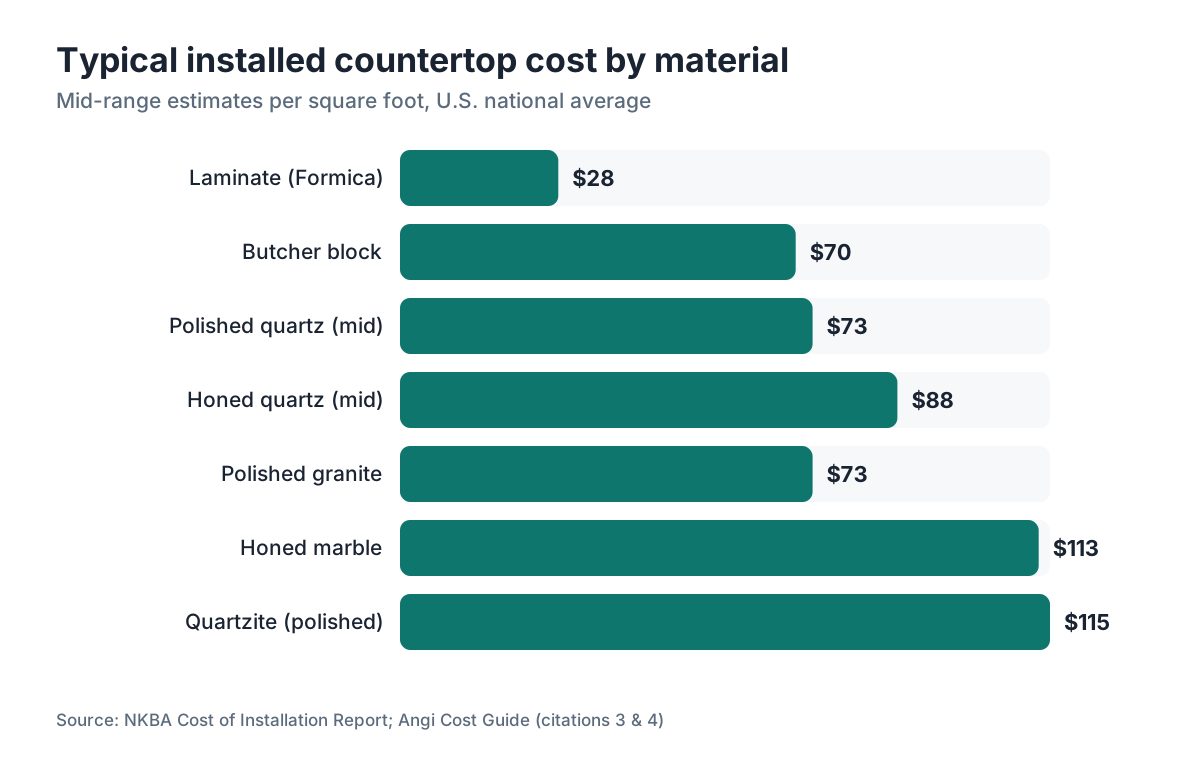
Here's how honed quartz stacks up against other common countertop materials on installed cost:
| Material | Typical installed cost (per sq ft) |
|---|---|
| Laminate (Formica) | $15, $40 |
| Butcher block | $40, $100 |
| Polished quartz (mid-range) | $55, $90 |
| Honed quartz (mid-range) | $65, $110 |
| Polished granite | $45, $100 |
| Honed marble | $75, $150 |
| Quartzite (polished) | $80, $150 |
Those ranges come from national fabricator surveys and NKBA cost-of-installation reporting, and individual quotes swing by region and shop [3][4]. Get at least three local quotes before you commit.
Is honed quartz harder to clean than polished quartz?
Yes, a little. Not dramatically, but enough to matter in some households. The physical cleaning is identical. The visual patience required is not.
Polished quartz has a sealed, non-porous surface, and the glossy layer sheds surface grease easily. Wipe with a damp cloth, done. Honed quartz has the exact same non-porous resin-bound structure, so it doesn't absorb liquids either. The standard care advice from Caesarstone and Cambria is the same for both: mild soap, warm water, soft cloth [2][5]. No sealing required. Wine, coffee, and acids won't penetrate a honed surface any more than a polished one.
What changes is how oils and residue read. Because the honed surface scatters light instead of reflecting it, a thin smear of cooking oil or a hand print that would look faintly shinier on polished quartz shows up as a distinct matte-on-matte contrast on honed. It's not a stain. It wipes off. You just do it more often.
For fabricators advising customers: recommend microfiber over paper towels. Paper towels leave fine lint that's visible on very dark honed surfaces. Also tell them to skip heavy wax-based cleaners, which leave a film on matte finishes that's harder to remove than on gloss.
The product-by-product cleaning breakdown is the same as for other stone. The how to clean stone countertops guide covers what to use and what to avoid.
Does honed quartz scratch or chip more easily?
No. Engineered quartz rates 7 on the Mohs hardness scale whether the surface is polished or honed [1]. The finish doesn't touch the underlying hardness, so honed quartz shrugs off knives and ceramic dishes at the same level as polished.
What the finish changes is how a scratch looks if one happens. On gloss, a scratch breaks the mirror sheen and jumps out at you. On a honed surface, a light scratch is harder to spot because there's less contrast between the scratched zone and the matte area around it. So honed is a bit more forgiving with minor surface marks.
Chipping at edges is the same risk either way. Quartz is brittle at thin sections, and square or mitered edges chip more readily than eased or bullnose profiles. That's a fabrication and edge-profile question, not a finish question.
Heat matters, and it matters equally for both. Quartz makers universally warn against setting hot pots directly on the surface. The polymer resin can discolor or crack under sudden thermal shock. A trivet costs two dollars. Use it [5].
What are the best honed quartz options by brand?
Several major quartz brands make factory-honed or matte finishes. Here's what's actually on the market as of mid-2025.
Cambria offers a dedicated matte finish across a big chunk of its collection. The website lists it as "honed" and notes availability on most designs. Cambria's lifetime warranty covers the finish [2].
Caesarstone has offered matte options under names like "Rough" and "Honed" depending on the collection. Availability shifts by market and year, so check current distributor stock before you promise anything.
Silestone by Cosentino sells matte finishes across several collections. Its newer HybriQ technology uses a higher share of recycled material, and several of those slabs come in matte [6].
MSI offers honed finishes in a subset of its Q Premium Natural Quartz line, often priced below the European brands.
Vicostone, a Vietnamese manufacturer with heavy U.S. distribution, offers matte finishes on several patterns and tends to price competitively.
For fabricators, lead time is the practical headache. Distributors rarely stock honed slabs in volume. Polished slabs sell faster, so they restock faster. Honed slabs are often special-order with 2 to 6 week lead times. Tell customers that at the quote stage, not the week of install. Software that tracks slab availability and lead-time data by supplier, like the tools at SlabWise, makes that conversation faster and kills surprises at delivery.
If a customer wants a pattern that only ships polished, in-shop honing is the fallback. It works well on quartz, and the result reads as a factory hone to most eyes. Price it accordingly.
How does honed quartz compare to honed granite or honed marble?
They look similar: matte, soft, tactile. The differences live in maintenance and durability.
Honed granite countertops need sealing because granite is porous, and a honed granite surface is even more porous than a polished one since the grinding opens the pores slightly. Plan on sealing once or twice a year, depending on the stone and the sealer. Honed quartz needs no sealing, ever [7].
Honed marble is gorgeous. It also etches. Marble is calcium carbonate, and acids, even the weak ones in lemon juice, vinegar, or tomato sauce, react with the stone and leave dull marks. Those aren't cleanable. They're chemical damage. On polished marble, etches show as dull spots against the gloss. On honed marble, they can blend in, which is one reason some people prefer honed marble in kitchens, but the etching still happens. Honed quartz doesn't etch because the resin binder is inert to kitchen acids [1][8].
Honed quartzite sits somewhere in between, depending on the specific stone. Some quartzites are dense and nearly acid-resistant. Others have calcite veining that etches like marble. The how to clean quartzite countertops guide explains how to tell which type you've got.
For a kitchen that gets used hard, honed quartz beats honed marble and honed granite on maintenance. For a designer look where you'll accept some upkeep, honed marble still has a warmth and variation that engineered stone can't fully copy.
Is honed quartz a good choice for bathrooms?
Yes, and often better than in kitchens. Bathrooms see less grease and food acid. The main messes are toothpaste, makeup, and soap scum, all of which wipe off matte quartz easily. The fingerprint problem that bugs some kitchen users barely registers in a bathroom.
The matte finish reads spa-like and calm in a bathroom. Paired with vessel sinks, a freestanding tub, or wall-mount faucets, a honed quartz vanity looks intentional and expensive without the maintenance headaches of honed marble.
Thickness is worth a thought. Bathroom vanity tops with integrated sinks are typically 2 cm (about 3/4 inch) quartz. A bathroom island or a full slab behind a freestanding tub might step up to 3 cm (about 1.25 inches). The honed finish is available in both thicknesses from most brands.
What should fabricators know about templating and installing honed quartz?
Installing honed quartz is nearly identical to polished: same adhesives, same substrate requirements, same overhang rules. A handful of details need extra attention, and OSHA silica rules apply the same as any quartz job, so wet-cut and ventilate when you fabricate [9].
Surface protection during template and install matters more. The matte surface shows scuffs from suction cups and handling gear faster than polished. Padded cups, clean pads, and careful placement all count. Some fabricators run blue painter's tape over suction-cup contact points. Small habit, avoids an angry callback.
Edge-to-face finish matching is the one that burns people. When you machine the edge profile, the edge has to match the surface finish. A polished edge on a honed face looks wrong. Blend the edge by hand with the right-grit pads. Factory-honed slabs often specify a honed edge as part of the order, so confirm it before you cut.
Adhesive squeeze-out cleanup on honed quartz uses the same chemistry as polished, but be careful not to abrade the surrounding surface. Use a plastic scraper before you reach for solvent.
Seams show more on honed slabs. The matte surface doesn't visually blend a seam the way a reflective surface does. Book-matching or planning seam placement carefully earns back the extra templating time.
Quote honed jobs with a small labor adder for all this. Nothing dramatic, but 15 to 30 minutes of extra care per install is real, and it comes straight out of margin if you don't price it. Quoting tools built for stone fabrication, like SlabWise, let you bake finish-specific labor adjustments into your quote templates so honed jobs don't bleed.
How do you maintain honed quartz long-term?
Daily care is boring on purpose: warm water and a little dish soap on a microfiber cloth. Wipe, rinse, dry. Caesarstone's published guidelines say to avoid abrasive cleaners and pads, bleach-heavy products, and anything with a pH above 10 or below 4 [5]. Those limits apply to honed and polished alike.
For stubborn buildup, a little isopropyl alcohol on a cloth works well. Skip acetone on the open surface. It can discolor the resin binder if it sits, though brief contact is usually fine for spot adhesive removal.
Here's the mistake people make on honed quartz: they reach for finishing waxes or polishing creams thinking it'll help. It won't. Those products are built to buff gloss, and they leave a patchy sheen on a matte finish that looks worse than doing nothing. If a honed quartz surface has years of heavy wear and you want it refreshed, the right move is a stone restoration professional who can re-hone it with the proper pads. It's rare, but it's possible.
No sealing. Ever. Quartz is non-porous by design. Sealing it does nothing except leave a film you'll have to clean back off.
Is honed quartz worth the extra cost?
For most people, yes, if the look is what you're after. Just don't expect it to fix a maintenance problem. People sometimes pick honed thinking it hides imperfections better than polished. It hides some (glare, light scratches) and reveals others (fingerprints, oil). If you already wipe counters often and you love the matte look, honed quartz is a genuine upgrade. If you're chasing a lower-maintenance surface, polished quartz is actually easier to keep looking clean day to day.
The $5 to $20 per square foot premium is real but modest inside a full remodel, where countertops might run $3,000 to $8,000 for an average kitchen. The honed upcharge usually lands around $200 to $600 on a typical job. Not nothing, but not the number that should decide anything.
Honed quartz earns its keep in one place above all: rooms built around a natural, understated look with matte hardware, textured tile, and organic materials. Polished quartz looks out of place there. Honed belongs.
For fabricators, honed jobs price higher, take a bit more care, and pull in design-forward customers who already know what they want. That's a good customer to have. Put real honed samples in your display and you'll see more of them.
Frequently asked questions
Does honed quartz need to be sealed?
No. Quartz uses a polymer resin binder that makes the slab non-porous regardless of finish. Sealing adds nothing and can leave a patchy film on a honed surface. Major brands including Caesarstone and Cambria state plainly that no sealing is required. Skip the sealer and keep your money.
Will honed quartz show fingerprints more than polished?
Yes, noticeably more on darker colors. The matte surface scatters light, so oily residue reads as a contrast-y smear instead of a subtle sheen. Light and medium colors in honed are far more forgiving. Dark honed quartz in a busy kitchen needs wiping several times a day if prints bother you. It's the main real-world drawback of the finish.
Can a polished quartz countertop be changed to honed?
Yes. A stone restoration pro or a skilled fabricator can hone a polished quartz surface in place using wet-polishing pads stepped down to 400 to 800 grit. It's more involved than a cleaning and runs roughly $10 to $25 per square foot in labor, but it's a real option if you already own polished quartz and want matte. Results compare closely to a factory hone.
Is honed quartz good for outdoor kitchens?
Most quartz manufacturers say plainly that their products are not rated for outdoor use. The polymer resin can degrade under prolonged UV exposure, causing color shift and surface breakdown. For a matte stone look outside, consider honed porcelain tile or a natural stone like granite with proper sealing. Check the specific brand's outdoor policy before you specify anything.
How do honed quartz and honed marble compare in a kitchen?
Honed quartz is more practical. Both look similar in photos, but marble is calcium carbonate and etches from acids like lemon juice, vinegar, and tomato. Those etches are chemical damage, not surface dirt, and they can't be cleaned off, only re-honed. Quartz resin resists acids. If you cook a lot and want matte, honed quartz is the lower-maintenance pick by a wide margin.
What colors work best in a honed quartz finish?
Warm whites, warm grays, and concrete-look tones do best, because fingerprints and light oils show least on lighter neutrals. Very dark honed quartz (charcoal, black) is dramatic and photographs beautifully but demands daily attention. Veined patterns in honed tend to look more natural and less manufactured than the same pattern in polished, which is a point in honed's favor if you want a stone-like look.
How much does it cost to install honed quartz in an average kitchen?
An average U.S. kitchen has roughly 30 to 40 square feet of countertop. At $65 to $110 per square foot installed for mid-range honed quartz, a typical kitchen runs $2,000 to $4,400 for the countertops alone. Edge upgrades, sink and cooktop cutouts, and backsplash work all add to that. Get local quotes, because regional labor rates swing widely.
Does honed quartz come in the same patterns as polished quartz?
Not always. Most brands offer honed on a subset of their full catalog, usually the most popular or design-forward patterns. If you want a specific pattern honed, check with the brand directly or ask a fabricator whether in-shop honing is doable. Some patterns ship only in polished from the manufacturer.
Is the warranty different for honed quartz?
It varies by brand. Cambria's lifetime warranty covers its matte finish products. Caesarstone's warranty terms generally apply across finishes, but read the fine print on 'finish changes over time' language, which can exclude normal wear on matte surfaces. Always get the warranty document for the specific honed product rather than relying on the brand's general warranty page.
Can honed quartz be repaired if it gets chipped or cracked?
Small chips can be filled with a color-matched epoxy or acrylic filler by a fabricator or stone repair specialist. On a honed surface, the repair can show slightly more than on polished, because the flat, non-reflective surface makes texture differences easier to spot. Cracks through the full thickness usually mean slab replacement. You prevent most of this with proper cabinet support and by avoiding heavy point loads.
What cleaning products should I avoid on honed quartz?
Avoid abrasive scrubbers, steel wool, and cleansers with bleach above 3 to 5%. Also avoid very high or very low pH products: oven cleaners, heavy-duty degreasers, and concentrated acidic descalers can damage the resin binder over time. Caesarstone's care guide specifically calls out avoiding bleach-heavy and high-pH products. Mild dish soap and warm water handle about 95% of kitchen messes.
How does honed quartz hold up in a bathroom versus a kitchen?
Bathrooms are easier on honed quartz than kitchens. Less grease, less heat, less heavy use. The main bathroom challenges are soap scum and makeup residue, both of which wipe off with mild cleaner. The matte finish is popular for spa-style bathrooms paired with organic textures and matte fixtures. Most designers find honed quartz performs better long-term in bathrooms than in heavy-use kitchens.
What thickness should I choose for honed quartz countertops?
The two standard thicknesses are 2 cm (about 3/4 inch) and 3 cm (about 1.25 inches). For kitchens, 3 cm is the common choice because it has better edge presence and skips the build-up strip at the edge. For bathroom vanities, 2 cm is common and costs less. The honed finish is available in both from most major brands.
Sources
- U.S. Geological Survey, Mineral Resources Program, Industrial Minerals: Quartz: Quartz rates 7 on the Mohs hardness scale; engineered quartz slabs are approximately 90 to 94% ground quartz bound with polymer resins.
- Cambria, Surface Finish and Care Information: Cambria describes their honed finish as a 'smooth, non-reflective surface' and covers it under their lifetime warranty.
- National Kitchen and Bath Association (NKBA), Cost of Installation Industry Report: Installed quartz countertops in U.S. markets run roughly $50, $150 per square foot, with ranges driven by brand tier, edge profile, and regional labor.
- HomeAdvisor (Angi), Countertop Installation Cost Guide: National average installed cost for quartz countertops is broadly reported in the $55, $150/sq ft range depending on material grade and complexity.
- Caesarstone, Care and Maintenance Guidelines: Caesarstone published care guidelines state to avoid abrasive cleaners, bleach-heavy products, and anything with pH above 10 or below 4; heat protection via trivets is required.
- Silestone by Cosentino, HybriQ Technology and Surface Finishes: Silestone's HybriQ technology uses recycled materials; several collections are available in matte surface finishes.
- Natural Stone Institute, Stone Comparisons: Quartz vs. Natural Stone: Engineered quartz is non-porous and does not require sealing; natural stone including honed granite and marble requires periodic sealing.
- U.S. Environmental Protection Agency, Indoor Air Quality Guidance: Polymer-resin binders used in engineered stone are generally considered inert to common household acids at kitchen-use concentrations.
- OSHA, Occupational Exposure to Respirable Crystalline Silica in Fabrication (Standard 1926.1153): Fabricators cutting or grinding engineered quartz must follow OSHA silica exposure standards; wet-cutting and ventilation are required.
- MSI Surfaces, Q Premium Natural Quartz Product Line: MSI offers honed finishes on a subset of their Q Premium Natural Quartz line at competitive price points versus European quartz brands.
Last updated 2026-07-10