TL;DR
- Butcher block countertops take food-grade mineral oil, hardwax oil, tung oil, varnish, or polyurethane.
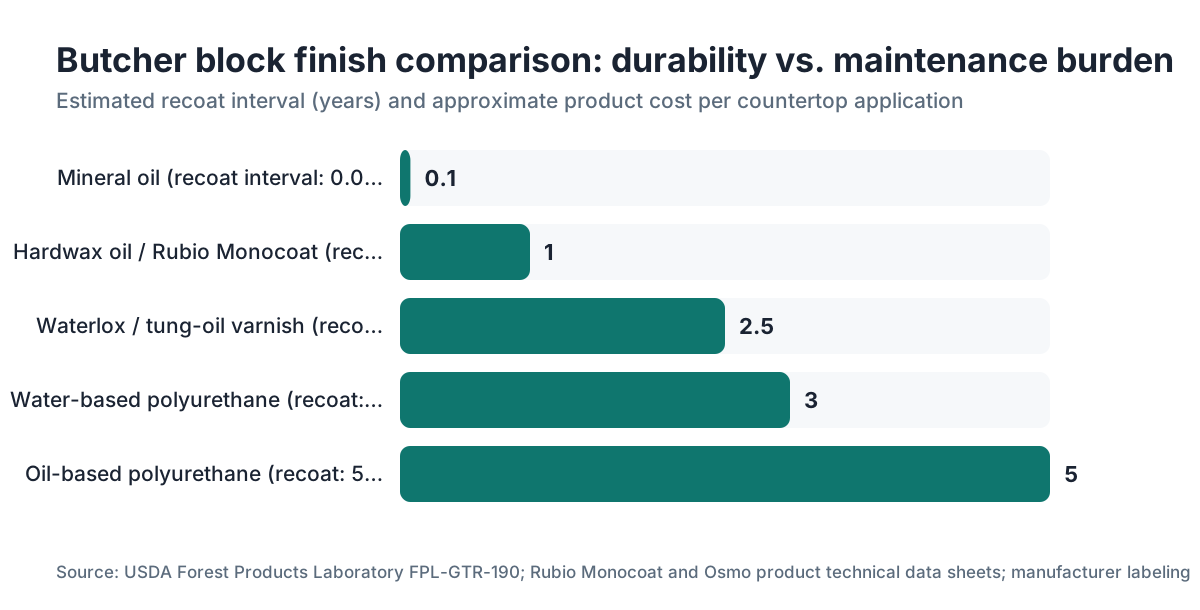
- Mineral oil is the cheapest and most forgiving but needs a coat every one to three months.
- Polyurethane lasts three to five years but can't be spot-repaired.
- The right finish depends on one question: will you cut directly on the wood, or just set a coffee maker on it?
What are the main options for finishing butcher block?
Five finish categories matter for butcher block: penetrating oils, hardwax oils, wiping varnishes (Danish oil blends), film-forming varnishes, and polyurethane. Each one works differently at the wood surface, and that difference drives every other decision you'll make.
Penetrating oils (mineral oil, pure tung oil, linseed oil) soak into the grain instead of forming a layer on top. The wood looks natural and matte. The catch is that the protection wears out and you reapply, sometimes monthly when the countertop is new [1].
Hardwax oils, sold under brands like Rubio Monocoat and Osmo Polyx, are a newer category. They penetrate like oil but leave a thin wax layer that beats plain oil on water resistance. One coat usually does it, which is a real benefit.
Film-forming finishes, meaning alkyd varnish and polyurethane, cure into a hard shell on top of the wood. Strong water resistance, the longest recoat intervals (three to five years), and one nasty failure mode. If the surface chips or scratches through, the film traps moisture underneath and the wood can mold or rot from the inside out.
Here's the honest framing. Penetrating finishes are forgiving and easy to repair but ask for more upkeep. Film-forming finishes are tougher on the surface but catastrophic when the film fails. Pick the failure mode you'd rather live with.
Which butcher block finishes are actually food-safe?
Food-grade mineral oil is the safest bet, full stop. The FDA regulates food contact surfaces under 21 CFR Part 178, which covers indirect food additives including surface lubricants and release agents. White mineral oil meeting USP standards is explicitly permitted for food contact surfaces under 21 CFR 178.3570 [2]. Pure tung oil that has fully cured is also widely considered food-safe, though the FDA's stance is less direct since tung oil sits under naturally-derived materials.
Polyurethane is a different story. Once fully cured (typically 30 days for consumer-grade products), it's considered inert and non-toxic. The problem was never the cured film. It's the uncured product, which off-gasses solvents and isocyanates during application and curing [7]. So the practical question is whether you cut directly on the surface. If you never cut on the block and it works as a regular countertop with a separate cutting board, cured polyurethane is fine [3].
Avoid these on any surface that touches food directly: boiled linseed oil (it contains cobalt or manganese naphthenate driers), and any varnish that lists petroleum-based dryers or solvents with no food-safe rating on the label. Washington State University Extension puts it plainly: boiled linseed oil contains heavy-metal siccatives and is not recommended for food-contact wood [9].
The FDA Food Code 2022 says food contact surfaces must be "durable, nonabsorbent under normal use conditions, and resistant to pitting and chipping" (Section 4-101.11) [8]. Bare oiled wood clears that bar with regular maintenance.
The simple rule. If you'll ever cut on the wood, use mineral oil, food-grade beeswax, or a finish labeled food-safe after cure. If the countertop is decorative and you always use a cutting board on top, any fully-cured finish works.
How do you prep butcher block before applying any finish?
Prep is where most people lose. Buy the best finish made and you'll still get a bad result if the wood isn't ready.
Start by sanding. New butcher block from a home center usually comes sanded to about 120-grit, which isn't fine enough for a smooth finish. Sand with 120-grit to clear mill marks or shipping damage, then 150, then 180. For a film-forming finish like polyurethane, finish at 180 or 220. For an oil finish, 180 is plenty since the grain is meant to stay open [4].
Sand with the grain on face-grain boards. On end-grain blocks (the checkerboard pattern on a classic butcher block), you can sand any direction since all the grain faces up, but a random-orbit sander followed by hand-sanding in a circular motion reads cleaner.
After sanding, vacuum well, then wipe with a tack cloth or a barely damp rag. Let the wood dry completely, at least an hour in a dry shop. Leftover moisture fights oil penetration and can cloud a varnish coat.
Existing scratches or stains on an older top? Start at 80-grit to cut them out, then step up through 120, 150, and 180. Deep gouges or burns may want a cabinet scraper first.
One test before you start: check for an existing finish. Rub a little mineral spirits in a hidden spot. If the wood darkens and the spirits soak in, you've got bare or oil-finished wood. If the surface beads or goes milky white, there's an old film finish that has to be stripped or sanded off before anything new goes on [5].
How do you apply mineral oil to butcher block countertops?
Mineral oil is where most people start, and for active food-prep surfaces, it's what most finishing pros back long-term. The process is simple. The first conditioning phase just takes patience.
Buy food-grade or USP-grade mineral oil. The bottle in the pharmacy laxative aisle (Fleet or store brand) is identical to the stuff sold as "butcher block oil" at three times the price. A quart runs under $10 and covers a full countertop several times over [1].
Apply the first coat generously with a clean cloth or paper towel, working it into the grain. Let it soak 20 to 30 minutes, then wipe off the excess. Let the top sit overnight. Coat again the next day, and again the day after. For a new countertop, five to seven daily coats fully condition the wood. After that, monthly or quarterly coats keep the protection up.
You'll know the wood is saturated when it stops drinking oil between coats. At that point, anything you apply just sits on top and has to be wiped off.
Finish the conditioning phase with a beeswax paste or a mineral-oil-and-beeswax blend like Howard Butcher Block Conditioner. The wax fills the grain and shrugs off water better than oil alone.
How do you apply polyurethane to butcher block?
Polyurethane gives you the toughest surface of any DIY option, and it demands the most care going on. Oil-based poly is harder and more water-resistant than water-based; water-based dries faster and smells less.
After prepping and sanding to 180-grit, apply a thin first coat with a foam roller or a natural-bristle brush for oil-based, a synthetic brush for water-based. Thin the first coat about 10% with the right solvent (mineral spirits for oil-based, water for water-based) so it penetrates and grips. Let it dry fully, then sand lightly with 220-grit to knock down dust nibs. Vacuum and tack-cloth again.
Apply a second full-strength coat. Most countertops want three coats total. Sand with 220-grit between coats two and three. Sand the final coat with 320-grit and buff with a fine Scotch-Brite pad if you want satin instead of gloss.
Full cure takes 30 days for oil-based polyurethane, even though it feels hard within 24 to 48 hours. Go easy during that window. Water, cleaners, and heat all damage an incompletely cured film.
Polyurethane is not easily spot-repairable. Scratch through it three years from now and you generally sand the whole surface back down and start over. That's the trade you make for the longer maintenance interval.
How does hardwax oil compare to regular oil and polyurethane?
Hardwax oil is the middle-ground finish pros reach for when a client wants something between the constant upkeep of mineral oil and the commitment of polyurethane. Rubio Monocoat Oil Plus 2C and Osmo Polyx-Oil are the two most-specified in professional fabrication.
Rubio Monocoat uses a reactive chemistry that bonds to the wood fibers in a single coat. It doesn't sit on top like polyurethane, and it doesn't soak in and vanish like plain mineral oil. You get a matte or satin surface that's more water-resistant than oiled wood and far easier to spot-repair than a film. Scratch or stain a section, scuff it lightly, wipe on a little more product [6].
Osmo Polyx-Oil is a hardwax oil built on plant oils (sunflower, soybean, thistle) and paraffin wax. It's labeled safe for children's toys after curing, which tells you plenty about the food-contact profile. Two coats are typical, versus one for Rubio.
It costs more than mineral oil. Rubio Monocoat runs about $40 to $60 for a 350ml tin, enough for roughly 100 square feet in one coat [6]. Osmo Polyx runs a bit cheaper. Both sell online and at specialty woodworking stores.
For a kitchen that sees real daily use where the owners won't re-oil every month, hardwax oil is what I'd recommend. It's the most honest split of durability and repairability you can buy.
What's the difference between face-grain, edge-grain, and end-grain finishing?
Grain orientation changes how much finish the board drinks and how fast it wears. That's the whole difference. The steps stay the same.
Face-grain (also called flat-grain) butcher block shows wide, flat planks running horizontally. It's the most common style from home centers like Home Depot. Face-grain is the easiest to finish because the grain is relatively tight and doesn't swallow oil. It also shows knife marks fastest if you cut directly on it.
Edge-grain boards show the growth rings along the plank edge. This is the most common professional style. The tighter grain resists water better than face-grain and hides knife marks better. Finishing is the same.
End-grain boards are the traditional butcher block pattern: the log is cut perpendicular to its length and the cut ends are arranged in a grid. End-grain is extremely porous and drinks oil fast. Budget a lot more product for conditioning, since an end-grain block can absorb two to three times as much oil as an edge-grain board of the same area [4]. The upside: end-grain is self-healing to a point, because the fibers close over knife cuts instead of splitting along the grain.
Same finishing steps for all three. The difference is quantity of product and how often you maintain it, with end-grain asking the most of you.
How often do you need to re-finish or re-oil butcher block?
Here's the number people most underestimate before they buy. Mineral oil, once conditioned, needs a fresh coat roughly every one to three months depending on how hard the surface works. A quick test: drop a few beads of water on the surface. Bead up, you're fine. Sink in and darken the wood right away, it's time to oil [1].
Hardwax oil wants a maintenance coat about once a year, or whenever the surface looks dry or water stops beading. Most makers sell a maintenance product you apply without stripping the old finish.
Polyurethane needs the least routine attention. A well-applied three-coat system typically holds three to five years before high-use areas show real wear. When it goes, you sand and recoat rather than just adding product.
Varnish lands between the two: inspect annually, plan on a light recoat every two to three years.
The real-world answer is that most homeowners under-maintain their butcher block no matter what's on it. An oil-finished top ignored for a year can dry out, crack, and turn into a food-safety problem. A polyurethane top ignored for five years will peel and look terrible but won't threaten food safety the same way. Know yourself. If monthly maintenance won't happen, lean toward polyurethane or hardwax oil.
Can you use butcher block countertops near a sink, and what finish is best there?
Water is the enemy, and the sink is where butcher block dies most often. Near an undermount or drop-in sink, polyurethane is the better choice because it builds a continuous waterproof shell. Coat the underside of the countertop and the inside of the sink cutout edges before installation, heavier than the top surface [3].
Think about the failure map. The underside where the countertop meets the cabinet, the ring around the sink cutout, and the back edge at the backsplash are all high-moisture zones. Let those dry out or let the finish fail there first, and water gets into the end grain at the edges. The wood swells, cracks, and eventually rots.
Hardwax oil is a fair second choice near a sink if you stay diligent about monthly maintenance and keep the edges and underside well-oiled. Plain mineral oil alone by a sink is asking for it.
Home Depot and other retailers sell pre-finished butcher block that often shows up with only a light factory oil coat. With a Home Depot butcher block panel or any store-bought slab, check what the factory applied and whether it plays nice with your plan. Most arrive with mineral oil, and adding polyurethane over an oiled surface means stripping the oil completely first, since film finishes won't stick to an oiled substrate [5].
Run a bead of clear 100% silicone caulk along all sink joints regardless of finish. That's good practice, and it's cheap insurance.
How do you refinish butcher block countertops that are already damaged?
This is one of the best reasons to pick wood over stone. You can sand a damaged butcher block back to bare wood and start fresh, an option you don't get with granite countertops or marble countertops.
Light scratches and a dull, dry oil finish: clean, sand lightly with 220-grit, apply a fresh oil coat. One session fixes most cosmetic gripes.
Deeper gouges, burns, or stains: sand with 80-grit to cut out all the damaged wood, working the full surface so you don't dish out a low spot. Step up through 120, 150, and 180, then refinish from scratch. Each full sand-down removes real wood, but a solid butcher block top (typically 1.5 to 2 inches thick) handles refinishing many times over its life.
Failed polyurethane, specifically areas peeling or blistering with water under the film: remove all the old finish first. A random-orbit sander with 60 to 80-grit discs does most of the work. Chemical strippers help in tight spots, but neutralize them fully before any new finish goes on.
Hardwax oil is the easiest to spot-repair. Scuff the damaged area with 220-grit, clean it, apply product to just that section. Match the sheen and it's nearly invisible.
If you're a fabricator quoting custom butcher block, SlabWise can help you calculate material usage and finishing costs while building estimates, so refacing and refinishing jobs don't eat your margin.
One practical note: pull the top off the cabinets for a full refinish if you can. Sanding in place throws dust everywhere, and you can't finish the underside or edges properly without access.
How long does finishing butcher block countertops take from start to finish?
Timeline rides entirely on which finish you choose. Mineral oil is the longest calendar time and the least labor. Polyurethane is the opposite: fast to apply, slow to cure.
Mineral oil conditioning: the first coat takes 30 minutes to apply, then you let it sit overnight. A full schedule of five to seven coats runs five to seven days, but most of that is waiting. Active labor is maybe two hours total.
Hardwax oil: sand, clean, apply one or two coats with wait time between. Total calendar time is typically two to three days, with two to four hours of hands-on work.
Polyurethane: three coats with sanding between each, plus the 30-day full cure. Calendar time from first coat to full use is about five to seven days for the coating, then 30 days of careful use before it fully hardens. Active labor is three to five hours.
Varnish (alkyd or oil-modified): similar to polyurethane on application. Full cure is usually faster, 14 to 21 days.
The most common mistake is rushing. Slap on a second coat before the first has dried, or set the countertop back in service before the finish cures, and you get adhesion failures and a tacky surface that grabs every dust particle in the room.
Is finishing butcher block different from finishing other wood countertop styles?
Butcher block is a construction method (glued-up wood strips) more than a species, so the finishing approach barely changes across maple, walnut, teak, or bamboo. A few species-specific notes matter.
Maple, the most common species, has tight grain and takes oil evenly. Walnut has open grain pores and may want a grain filler before a film finish if you're after a truly smooth surface. Teak carries natural oils that fight varnish and polyurethane adhesion; wipe the surface with naphtha before any film finish to strip those oils and get a proper bond [4].
Bamboo, technically a grass, finishes much the same way. It's dense, so it drinks less oil than maple and needs fewer conditioning coats.
Comparing wood to non-wood is where the real contrast shows. Stone kitchen countertops in quartz or granite need no surface finishing after fabrication, just sealing every one to three years for porous stones. Wood asks for ongoing attention regardless of finish. That's not a strike against butcher block. It's an honest description of the relationship you're signing up for. People who love wood countertops tend to enjoy the maintenance rather than resent it.
If you're weighing low-maintenance alternatives, laminate countertops need no finishing and have gotten a lot better on looks and durability, for what that's worth.
What products should you avoid on butcher block?
A handful of products actively wreck butcher block, and most of them are the ones people instinctively grab.
Bleach and bleach-based cleaners top the list. They dry out wood fibers, and repeated use turns the surface rough and gray. A dilute 3% hydrogen peroxide solution is a safer sanitizer for wood.
Silicone spray lubricants (WD-40, generic silicone spray) are almost impossible to clean out of wood, and the contamination permanently blocks any future finish from bonding. One accidental spray can ruin a surface for refinishing.
Olive oil, vegetable oil, and other cooking oils go rancid inside the wood. The smell is foul and the rancid oil becomes a food-safety issue. The only oils that belong here are non-drying mineral oil and properly processed tung oil.
Boiled linseed oil sold at hardware stores contains metallic driers (usually cobalt or manganese compounds) that speed the cure. It's not food-safe and has no place on any surface that touches food [9].
Strong alkaline chemistry (heavy-duty degreasers, oven cleaners) raises wood grain and strips oil finishes fast. Keep it away.
And the dishwasher. Never put a butcher block board or panel in water, and never let water stand on it. Even the best finish swells and warps under prolonged water contact. Wipe up standing water the moment you see it.
Frequently asked questions
Can I put polyurethane over mineral oil on butcher block?
No. Polyurethane won't bond to an oiled surface. The oil sits in the wood pores and blocks the mechanical and chemical grip the film needs. To switch from oil to poly, sand the countertop back to bare wood first, removing all the oil, then build the polyurethane system from scratch. Skip that step and the film will peel.
What is the most durable finish for a butcher block countertop?
Polyurethane is the most durable surface finish for water, abrasion, and daily wear. A correctly applied three-coat oil-based system can hold three to five years without recoating. The trade-off is that when it fails, you strip it completely. Hardwax oil (Rubio Monocoat, Osmo) is the most durable penetrating finish and much easier to repair when it takes damage.
How do I seal butcher block countertops around a sink?
Apply polyurethane to all four edges of the sink cutout and the underside before installation. Seal the joint between countertop and sink with 100% silicone caulk after setting. Mineral oil alone isn't enough near a sink. Re-inspect the caulk line every year and replace it if you see gaps or discoloration, which signals water is getting through the seal.
Is tung oil food-safe for butcher block?
Pure tung oil, once fully cured (typically 30 days), is widely considered food-safe by finishing professionals. The catch is products labeled 'tung oil finish' that are actually blended with varnish, mineral spirits, and driers. Read the label. If it lists anything past tung oil itself, it may carry additives that don't belong on food-contact surfaces. Real pure tung oil is sold by companies like Real Milk Paint Co.
How do I finish the underside of a butcher block countertop?
Finish the underside to prevent uneven moisture absorption, which causes warping. Use the same finish as the top, though the underside needs fewer coats. For oil finishes, two coats on the bottom is standard. For polyurethane, at least one full coat on the underside and inside all cabinet-facing edges before installation keeps the moisture balance even and stops the top from bowing over time.
What grit sandpaper should I use before finishing butcher block?
For oil and hardwax oil finishes, finish sanding at 180-grit. For polyurethane and varnish, 180 to 220-grit gives the film a good surface to grip without coarse scratches showing through. Always sand with the grain on face-grain and edge-grain boards. Between coats of a film finish, sand with 220 to 320-grit to knock down dust nibs, not to remove material.
Can you use Danish oil on butcher block countertops?
Danish oil is an oil-and-varnish blend, and most commercial versions carry driers that may not be food-safe before full cure. Once fully cured (4 to 6 weeks) many formulations are inert, but the FDA food-contact case is less clear than for straight mineral oil. For decorative-only tops where you won't cut on the surface, Danish oil gives a nice low-build finish with some film protection. Avoid it on active cutting surfaces.
How do I remove dark water stains from butcher block?
Light gray water stains on oil-finished butcher block usually respond to sanding with 120 to 150-grit, then re-oiling. Black stains mean an iron-tannin reaction or mold below the surface, and they need more aggressive sanding to reach clean wood. For stubborn black stains, a dilute oxalic acid solution (wood bleach) applied before the final sand and refinish neutralizes the iron-tannin reaction without harming the surrounding wood.
What's the difference between Rubio Monocoat and regular oil for butcher block?
Regular mineral oil penetrates the wood but doesn't react with it chemically, so it wears out and needs frequent reapplication. Rubio Monocoat Oil Plus 2C uses a reactive molecular formula that bonds to the wood fibers in a single layer. It's more water-resistant than mineral oil, doesn't build up with repeated coats, and can be spot-repaired without refinishing the whole surface. It costs more upfront but cuts long-term maintenance frequency.
How do you finish the edges of a butcher block countertop?
Edges and end grain drink finish faster than the face and need extra coats. For oil finishes, apply two or three extra coats to the edges before you do the main surface. For polyurethane, brush or roll the edges first, let them tack up slightly, then do the face so it blends into the edge coat without runs. End-grain edges are especially porous; pre-seal them with a thinned first coat to curb absorption.
Can I use Waterlox on butcher block countertops?
Yes. Waterlox Original is a tung-oil-based varnish commonly used on butcher block and hardwood floors. The manufacturer states it is food-safe after full cure. It beats plain oil on water resistance and gives a low-sheen finish. It needs three to four coats and good ventilation during application because of the solvent content. Full cure takes about 30 days. It's a well-regarded choice for heavy-use tops where you don't want the plasticky look of polyurethane.
How much does it cost to finish a butcher block countertop?
Mineral oil costs $8 to $15 per quart and covers a typical 25-square-foot countertop through full conditioning. Hardwax oil like Rubio Monocoat runs $40 to $60 for a small tin covering about 100 square feet. A quart of oil-based polyurethane costs $20 to $35, enough for three coats on a standard top. Hiring out professional finishing typically adds $100 to $300 in labor on top of the fabrication cost.
Does butcher block need to be sealed before or after installation?
Apply finish before installation whenever you can. You can finish all six sides, the inside of the sink cutout, and any edge profiles far more easily on sawhorses than in place. For oil finishes, run the full conditioning cycle before install. For polyurethane, apply at least two coats before install, then a third touch-up coat after. Finishing in place means crawling around cabinets and fighting drips that are hard to fix.
Sources
- University of Georgia Extension, 'Cutting Boards and Food Safety': Food-grade mineral oil is the recommended finish for wood cutting surfaces; reapplication frequency depends on use intensity and water exposure
- U.S. Food and Drug Administration, 21 CFR Part 178, Indirect Food Additives: Adjuvants, Production Aids, and Sanitizers: White mineral oil meeting USP standards is listed as permitted for use on food contact surfaces under 21 CFR 178.3570
- USDA Forest Service, Forest Products Laboratory, 'Wood Handbook: Wood as an Engineering Material' (General Technical Report FPL-GTR-190): Film-forming finishes on wood form a surface layer that can trap moisture if the film is breached, potentially causing subsurface degradation
- USDA Forest Products Laboratory, 'Finishing of Wood' chapter in Wood Handbook FPL-GTR-190: Teak and other oily tropical species require surface preparation with naphtha before film-forming finishes to ensure adequate adhesion; end-grain surfaces absorb significantly more finish than face or edge grain
- USDA Forest Products Laboratory, Wood Handbook FPL-GTR-190, finishing chapter on adhesion over previously finished wood: Existing oil contamination in wood pores prevents film-forming finish adhesion; surfaces must be sanded to bare wood before applying polyurethane or varnish over previously oiled substrates
- Rubio Monocoat USA, Oil Plus 2C Product Technical Data Sheet: Rubio Monocoat Oil Plus 2C covers approximately 322 to 538 square feet per liter in a single coat and bonds molecularly to wood fibers through a reactive chemistry mechanism
- U.S. Consumer Product Safety Commission, guidance on finishes containing isocyanates: Uncured polyurethane products contain isocyanates that off-gas during application and curing; inhalation risk is present until full cure is complete
- FDA Food Code 2022, Section 4-101.11, Characteristics of Materials for Food Contact Surfaces: Food contact surfaces must be made of safe materials that are durable, nonabsorbent under normal use conditions, and resistant to pitting and chipping; wood surfaces used for cutting must meet these criteria
- Washington State University Extension, 'Safe Use of Wood Cutting Boards': Boiled linseed oil contains heavy-metal siccatives and is not recommended for use on food-contact wood surfaces
- USDA Agricultural Research Service, research on antibacterial properties of wood surfaces: Solid wood surfaces have demonstrated natural antibacterial properties in laboratory conditions; proper cleaning and oiling maintain the surface integrity that supports this characteristic
- Environmental Protection Agency, Safer Choice program standard for finishes and lubricants: EPA Safer Choice certification exists for a category of wood finish products including some bio-based oils and hardwax oils that meet ingredient safety standards
Last updated 2026-07-09