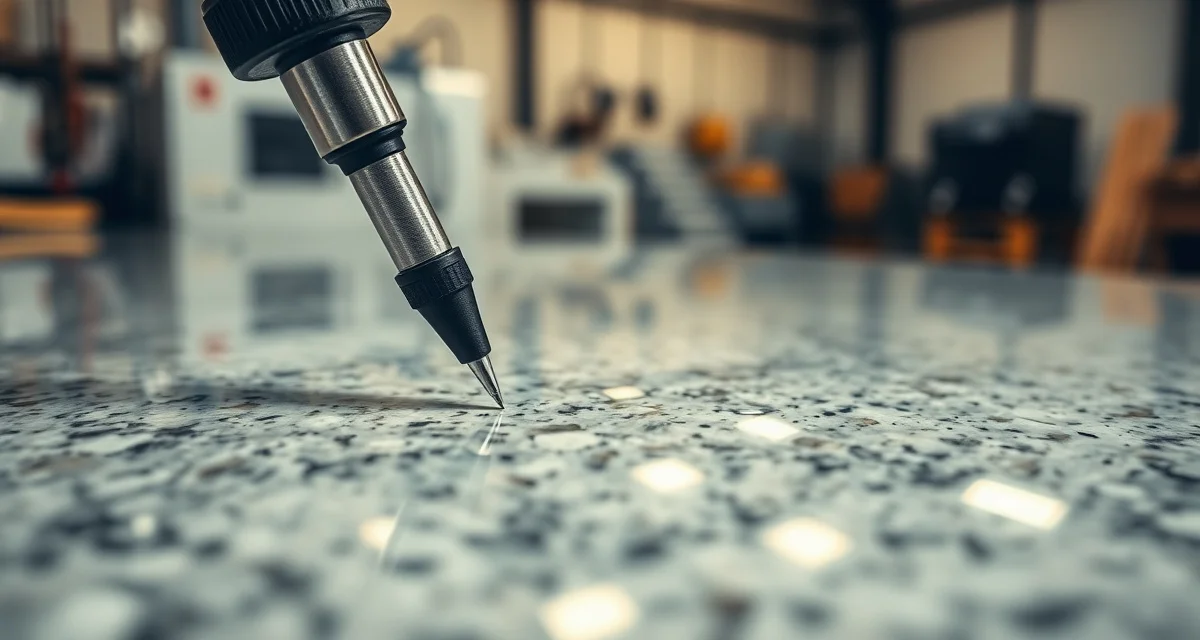
What Is Touch Probe? Definition & Guide
Quick Definition
A touch probe is a precision measurement instrument that records the exact position of a physical stylus tip when it contacts a surface. In countertop fabrication, touch probes are used in two contexts: as part of a digital templating system (capturing the dimensions of a kitchen or bathroom for countertop fabrication) and as part of a CNC machine (verifying workpiece position and tool alignment). Touch probes provide physical contact measurement, which is especially useful for measuring edges, corners, and surfaces where laser measurement may struggle.
TL;DR
- A touch probe measures position by making physical contact with a surface via a stylus
- Used in two fabrication contexts: jobsite templating and CNC machine calibration
- Accuracy: ±0.001"-0.005" depending on the device
- Provides reliable measurement on edges, corners, and reflective surfaces where lasers may struggle
- Some digital templating systems combine touch probe with laser measurement
- CNC touch probes verify slab position, thickness, and tool length before cutting
- Reduces setup errors on CNC machines, preventing off-position cuts and material waste
- Typical CNC touch probe cost: $500-$3,000; templating systems: $15,000-$35,000
Touch Probes in Digital Templating
How It Works
A templating touch probe is mounted on an articulated arm or portable coordinate measurement device. The operator touches the stylus tip to key points on walls, cabinets, and surfaces. Each contact point records a precise 3D coordinate.
Calculate your material waste savings
See exactly how much slab material and money you could save with optimized cutting layouts.
Try the free Waste CalculatorThe points are connected in software to create the countertop template - a digital outline of the installation space with all critical dimensions, cutout locations, and reference points.
Where Touch Probes Excel
- Tight corners: The physical stylus reaches into corners that lasers can't see
- Edge detection: Physical contact confirms the exact location of a cabinet edge or wall surface
- Reflective surfaces: Laser measurements can be unreliable on glass, polished metal, or glossy surfaces; touch probes are unaffected
- 3D features: Measuring the depth of an apron front sink recess, the height of a windowsill, or the angle of a non-standard wall
Touch Probe vs. Laser for Templating
| Factor | Touch Probe | Laser |
|---|---|---|
| Accuracy | ±0.001"-0.005" | ±1/16" (±0.063") |
| Speed | Slower (point by point) | Faster (sweep measurement) |
| Corner access | Excellent | May miss tight corners |
| Reflective surfaces | Unaffected | Can cause false readings |
| Operator contact required | Yes (physical touch) | No (standoff measurement) |
| Range | Limited to arm reach | Up to 50+ feet |
Many modern templating systems combine both technologies - using laser for fast, broad measurements and touch probe for precise detail work.
Touch Probes on CNC Machines
Purpose
On a CNC router or bridge saw, a touch probe serves a different but equally important role: verifying the position and dimensions of the stone slab before cutting begins.
What CNC Touch Probes Measure
| Measurement | Purpose |
|---|---|
| Slab position on table | Confirms the slab is where the CNC program expects it to be |
| Slab thickness | Verifies actual thickness matches the programmed cutting depth |
| Surface flatness | Detects warping or unevenness that could affect cut quality |
| Reference point location | Confirms the zero point (origin) for the cutting program |
| Tool length | Measures each tool's actual length for accurate depth control |
How CNC Touch Probing Works
- Before cutting, the CNC program initiates a probing routine
- The touch probe (mounted in the spindle via tool changer) descends toward the slab surface
- When the probe contacts the surface, it records the Z-height
- The probe moves to reference points on the slab edge to confirm X and Y position
- The CNC controller compares actual positions to the programmed positions
- Any offsets are applied automatically before cutting begins
This process takes 1-3 minutes but prevents misaligned cuts that would waste material - potentially saving thousands of dollars on a single expensive slab.
Error Prevention
Without touch probe verification:
- A slab that's 1/4" off-position from where the operator placed it gets cut in the wrong location
- A slab that's 29mm thick instead of the assumed 30mm gets a profile cut that's too deep
- A warped slab surface produces uneven cutting depth across the piece
With touch probe verification, all these issues are caught and corrected before the first cut.
Types of CNC Touch Probes
Mechanical (Kinematic) Probes
The most common type. A spring-loaded stylus deflects upon contact, triggering a signal to the CNC controller. Simple, reliable, and relatively inexpensive ($500-$1,500).
Strain Gauge Probes
Use strain sensors to detect contact force. More sensitive than mechanical probes, capable of measuring with lower contact force - important for fragile materials like thin porcelain.
Optical (Laser) Probes
Non-contact measurement using a laser. These don't physically touch the surface, which prevents any risk of marking soft materials. More expensive ($2,000-$5,000+) but useful for polished or sensitive surfaces.
Benefits for Fabrication Shops
Reduced Material Waste
Touch probe verification catches positioning errors before cutting. On a $3,000 quartzite slab, a single prevented miscut justifies the cost of the probe many times over.
Faster CNC Setup
Automated probing is faster than manual measurement and positioning checks. The CNC runs the probing routine automatically - no operator measurement, calculation, or guesswork.
Consistent Quality
Every job starts with verified positioning, regardless of which operator loaded the slab. This removes operator-dependent variability from the cutting process.
Slab Thickness Compensation
Natural stone varies in thickness across the slab. Touch probing can map the surface and adjust cutting depth in real-time, ensuring consistent edge profiles even on slabs that are 1-2mm thicker on one end than the other.
What is a touch probe in countertop fabrication?
A precision measurement instrument that records position when a physical stylus contacts a surface. Used for both digital templating and CNC machine calibration.
How accurate are touch probes?
CNC touch probes achieve ±0.001"-0.005". Templating touch probes are typically ±0.005", more accurate than laser-only systems.
Why use a touch probe instead of a laser for templating?
Touch probes excel at measuring tight corners, edges, and reflective surfaces where lasers may struggle. Many systems combine both technologies.
What does a CNC touch probe do?
It verifies the position, thickness, and surface flatness of a stone slab on the CNC table before cutting begins - preventing misaligned cuts and material waste.
How long does CNC touch probing take?
1-3 minutes per slab, depending on the number of reference points checked. This time investment prevents far more costly cutting errors.
Do all CNC machines have touch probes?
No. Touch probes are optional accessories on most CNC routers. They're standard on higher-end machines but may need to be purchased separately for mid-range equipment.
Can a touch probe detect a warped slab?
Yes. By measuring the surface at multiple points, the probe can map unevenness and the CNC can adjust cutting depth to compensate.
How much does a CNC touch probe cost?
$500-$3,000 for mechanical probes; $2,000-$5,000+ for optical (non-contact) probes.
Is a touch probe the same as a laser templater?
No. A touch probe is a physical contact measurement device. A laser templater uses laser distance measurement. Some templating systems combine both technologies in a single unit.
Does touch probing slow down production?
The 1-3 minute probing routine adds minimal time to each job and prevents costly errors that would take hours to fix. Net effect is faster production.
Can touch probes measure tool length?
Yes. CNC touch probes are commonly used to measure tool length and verify that each tool is correctly seated in the spindle before cutting.
Should fabrication shops invest in a CNC touch probe?
Yes, especially if the shop works with premium materials where a single miscut is expensive. The ROI from prevented material waste typically justifies the investment within months.
Measure Right, Cut Right, Every Time
Accurate measurement is the foundation of every successful fabrication job. SlabWise builds on that accuracy with template verification, optimized nesting, and quality checks that ensure your measurements translate into perfectly fitted countertops.
Start your 14-day free trial →
Try These Free Tools
- Nesting Optimizer -- AI-powered slab layout that maximizes yield considering vein direction and defects.
- Defect Mapping -- Upload a slab photo and AI maps every fissure, pit, and color issue.
- Value Engineering -- Find dollar-quantified suggestions to save material without cutting margin.
Sources & Further Reading
- Natural Stone Institute - Fabrication Guidelines and Best Practices
- International Surface Fabricators Association - Waterjet Cutting Technology Standards
- ASTM International - Standard Guide for Abrasive Waterjet Machining
- OSHA - Safety Guidelines for Waterjet Operations