What Is SlabSmith? Definition & Guide
Quick Definition
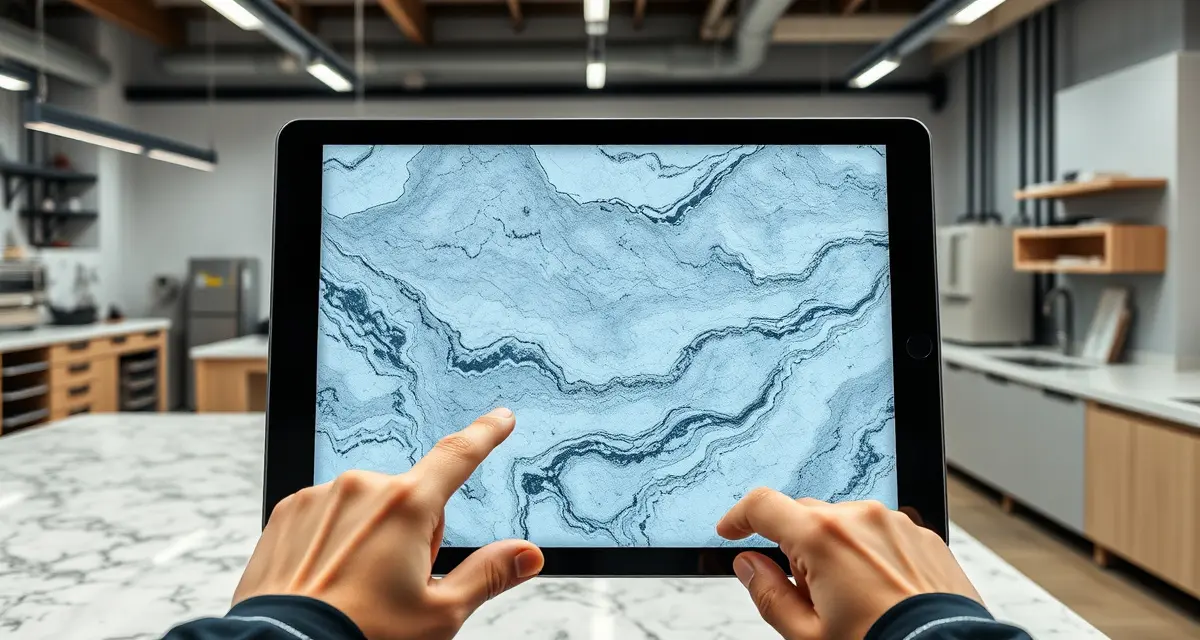
SlabSmith is a software tool used by countertop fabrication shops to photograph stone slabs, create high-resolution digital images, and then virtually lay out countertop pieces on those slab images. This allows fabricators and customers to see exactly how the veining, color, and pattern of a specific slab will look on the finished countertop - before any cutting begins. It's widely used for natural stone (granite, marble, quartzite) where each slab has a unique appearance.
TL;DR
- SlabSmith creates high-resolution digital images of individual stone slabs
- Fabricators overlay template outlines on the slab image to show exact piece placement
- Customers see a realistic preview of how their countertop will look before fabrication
- Reduces customer dissatisfaction and remake requests from "that's not what I expected"
- Pricing: approximately $3,000-$6,000 for software, plus subscription fees
- Works alongside (not instead of) Alphacam - SlabSmith handles visualization, Alphacam handles CNC
- Most valuable for natural stone; less critical for solid-color or minimally patterned quartz
SlabSmith: See the Countertop Before You Cut the Stone
The Problem SlabSmith Solves
Natural stone is unique by definition. Every granite slab, every marble slab, every quartzite slab has different veining, color distribution, and pattern. When a customer selects a marble slab at the distributor, they see the whole slab. But the finished countertop uses specific portions of that slab - and the pieces are arranged across an L-shaped kitchen, an island, a bar top.
Calculate your material waste savings
See exactly how much slab material and money you could save with optimized cutting layouts.
Try the free Waste CalculatorWithout SlabSmith, the customer has no way to know:
- Which part of the slab their kitchen peninsula comes from
- How the veining will flow across seams
- Whether that dramatic vein in the center of the slab lands on their island or ends up as waste
This uncertainty causes problems. After installation, the customer says "I thought the veining would flow differently" or "I expected the dark area to be on the island, not the perimeter." At that point, the fabricator faces a difficult conversation - and potentially a $1,500-$4,000 remake.
How SlabSmith Works
Step 1: Photograph the Slab
SlabSmith uses a calibrated camera setup (or a scanning system) to capture a high-resolution image of each slab. The slab is typically photographed standing upright on an A-frame or lying flat, under controlled lighting to ensure color accuracy.
The resulting image is scaled to exact dimensions, so the digital representation matches the physical slab precisely.
Step 2: Import Template Outlines
Digital template files (DXF from the LT-2D3D or Proliner) are imported into SlabSmith. These outlines represent the exact shape of each countertop piece.
Step 3: Lay Out Pieces on the Slab
The fabricator (or a dedicated layout specialist) arranges the template outlines on the slab image. They can:
- Position pieces to capture specific veining patterns
- Rotate pieces to align grain direction
- Adjust seam locations to match veining across joints
- Identify waste areas and plan remnant usage
Step 4: Customer Approval
The layout is exported as a PDF or image file and sent to the customer for approval. The customer sees exactly which pieces come from which part of the slab, how seams align, and what the overall look will be.
Step 5: Fabrication
Once approved, the layout guides the CNC programming - the Alphacam programmer knows exactly where each piece sits on the slab, reducing setup time and eliminating guesswork at the saw.
When SlabSmith Matters Most
| Material Type | SlabSmith Value | Reason |
|---|---|---|
| Exotic granite | Very High | Dramatic veining, high material cost ($40-$80/sq ft) |
| Marble | Very High | Visible veining, customer expectations are precise |
| Quartzite | High | Unique patterns, premium pricing |
| Standard granite | Moderate | Some variation, but less dramatic |
| Solid-color quartz | Low | Minimal variation between slab areas |
| Marble-look quartz | Moderate | Veining exists but is more predictable than natural |
The ROI case for SlabSmith is strongest on high-value natural stone jobs where material costs $30-$80/sq ft at wholesale. A single avoided remake on an exotic granite kitchen pays for the software several times over.
SlabSmith vs. Other Layout Tools
| Tool | Function | Relationship to SlabSmith |
|---|---|---|
| SlabSmith | Slab visualization and piece layout | Primary tool for visual layout |
| Alphacam | CNC toolpath programming | Uses SlabSmith layouts for piece positioning |
| SigmaNEST | Nesting optimization | Focuses on yield optimization, less on visual layout |
| SlabWise | Full fabrication platform (inventory, nesting, verification) | Can complement or partially overlap with SlabSmith's nesting |
SlabSmith and Alphacam serve different purposes and are typically used together. SlabSmith answers "where on the slab should each piece go?" while Alphacam answers "how should the CNC machine cut each piece?"
Setting Up SlabSmith in Your Shop
Camera equipment: SlabSmith works best with a dedicated photography station. Many shops build a fixed camera mount above their A-frame slab storage area. A DSLR camera with appropriate lens and consistent lighting produces the best images.
Processing time per slab: Photographing and processing a slab takes approximately 10-20 minutes per slab. For a shop receiving 20-40 slabs per week, this is 3-13 hours of photography time weekly - a meaningful labor investment.
Who operates it? In smaller shops, the owner or office manager handles SlabSmith photography and layouts. In larger operations, a dedicated layout specialist manages the process. Some shops train their templaters to handle layouts, connecting the field measurement to the slab placement process.
Maximizing Your SlabSmith Investment
Photograph every natural stone slab upon arrival. Don't wait until the job is scheduled. Photographing slabs when they arrive at your shop means you have digital images ready for customer selection meetings and layout immediately when the template comes in.
Use layouts for upselling. Showing a customer their countertop laid out on SlabSmith feels premium. Shops that include SlabSmith layouts in their sales process report 10-20% higher close rates on natural stone versus blind selection.
Connect layout to inventory and scheduling. SlabSmith handles the visual layout, but it doesn't manage your full job pipeline. SlabWise connects slab inventory, template verification, and production scheduling - so when your SlabSmith layout is approved, the job is already verified, the slab is reserved, and the production slot is booked. This prevents the common scenario where a customer approves a layout, but the slab gets used on another job in the meantime.
How much does SlabSmith cost?
SlabSmith pricing starts at approximately $3,000-$6,000 for the software license, plus annual subscription or maintenance fees. Camera equipment is additional.
Does SlabSmith replace Alphacam?
No. SlabSmith handles slab visualization and piece layout. Alphacam handles CNC toolpath programming. Most shops use both tools together.
What camera do I need for SlabSmith?
SlabSmith works best with a DSLR camera (Canon or Nikon are common choices) with a wide-angle lens and consistent lighting setup. Some shops use specialized slab scanning systems instead.
How long does it take to photograph a slab?
Photographing and processing a single slab typically takes 10-20 minutes, depending on your setup and workflow efficiency.
Is SlabSmith worth it for quartz fabrication?
For solid-color or minimal-pattern quartz, SlabSmith provides limited value since there's little visual variation across the slab. For marble-look quartz with prominent veining, it can help with customer expectations and seam alignment.
Can customers use SlabSmith themselves?
SlabSmith is a professional tool designed for fabricator use. The layouts are exported as images or PDFs for customer review and approval, but the software itself is operated by the fabrication shop.
Does SlabSmith help reduce waste?
Yes. By allowing precise piece placement before cutting, SlabSmith helps fabricators optimize slab usage and identify usable remnants. However, dedicated nesting software or platforms like SlabWise provide more sophisticated yield optimization.
How does SlabSmith handle multiple slabs for one job?
SlabSmith can manage layouts across multiple slabs for large jobs. The operator assigns pieces to different slabs and can visualize how the complete project will look with material from different slab sections.
Can SlabSmith show seam alignment?
Yes. One of SlabSmith's key features is showing how veining and pattern will align across seam locations, which is critical for natural stone installations where seam visibility is a customer concern.
Does SlabSmith work with the LT-2D3D and Proliner?
Yes. SlabSmith imports DXF files from both the LT-2D3D and Proliner, as well as from other sources that produce standard DXF/DWG template files.
Connect SlabSmith Layouts to Your Full Workflow with SlabWise
SlabSmith shows you where to cut. SlabWise makes sure the template is verified, the slab is reserved, the customer is updated, and the production schedule is set - so nothing falls through the cracks between layout approval and installation day.
Start your 14-day free trial at SlabWise.com
Try These Free Tools
- Nesting Optimizer -- AI-powered slab layout that maximizes yield considering vein direction and defects.
- Defect Mapping -- Upload a slab photo and AI maps every fissure, pit, and color issue.
- Value Engineering -- Find dollar-quantified suggestions to save material without cutting margin.
Sources & Further Reading
- Natural Stone Institute - Fabrication Guidelines and Best Practices
- International Surface Fabricators Association - Waterjet Cutting Technology Standards
- ASTM International - Standard Guide for Abrasive Waterjet Machining
- OSHA - Safety Guidelines for Waterjet Operations