What Is Diamond Blade? Definition & Guide
Quick Definition
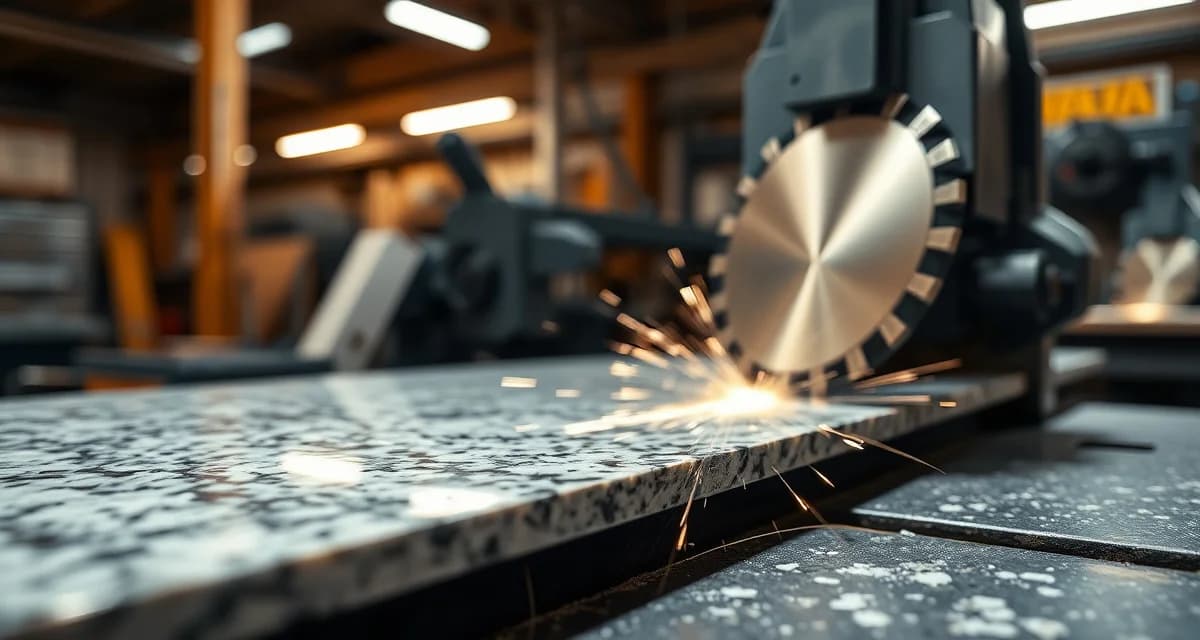
A diamond blade is a cutting tool made with industrial-grade diamond particles embedded in a metal matrix (bond), used to cut through hard materials like granite, quartz, marble, porcelain, and other stone surfaces. In countertop fabrication, diamond blades are mounted on bridge saws, CNC routers, and hand tools to make the primary cuts that shape slabs into finished countertop pieces. The diamond particles do the cutting; the metal bond holds them in place and wears away gradually to expose fresh diamonds as the blade is used.
TL;DR
- Diamond blades use industrial diamond particles in a metal bond to cut stone
- The primary cutting tool in countertop fabrication (bridge saws, CNC, hand tools)
- Different bonds and segment designs for different materials (granite, quartz, porcelain)
- Must be used with water cooling (wet cutting) for dust suppression and blade longevity
- Blade diameter, segment height, and bond hardness determine performance and life
- Typical bridge saw blade: 14"-20" diameter, costs $150-$1,000+
- Proper blade selection reduces cutting time, waste, chipping, and tool costs
- Dull or wrong-type blades cause material damage, slower cuts, and increased safety risk
How Diamond Blades Work
Diamond is the hardest known natural material (Mohs 10). When embedded in a metal matrix and spun at high speed against stone, the exposed diamond particles grind through the material like microscopic chisels.
Calculate your material waste savings
See exactly how much slab material and money you could save with optimized cutting layouts.
Try the free Waste CalculatorThe Cutting Process
- Diamond exposure: The blade's metal bond holds diamond particles at the cutting surface
- Grinding action: As the blade spins (typically 2,000-3,500 RPM for bridge saws), the diamonds scratch and fracture the stone
- Bond wear: The metal matrix gradually wears away, exposing fresh diamond particles beneath
- Swarf removal: Water flow flushes cut material from the kerf (the slot cut by the blade)
The key engineering challenge is matching the bond wear rate to the material being cut. If the bond is too hard, diamonds stay buried and can't cut. If the bond is too soft, diamonds fall out before doing useful work.
Types of Diamond Blades for Fabrication
Segmented Blades
The most common type for countertop fabrication. The diamond-bearing edge is divided into segments separated by gullets (gaps). These gullets help with:
- Heat dissipation
- Water flow to the cutting zone
- Debris removal from the kerf
Continuous Rim Blades
The diamond edge forms a continuous ring with no gullets. These blades produce the smoothest, cleanest cuts with minimal chipping - ideal for marble, porcelain, and materials prone to edge damage. However, they run hotter than segmented blades and remove material more slowly.
Turbo Blades
A hybrid design with a serrated continuous rim. Turbo blades cut faster than continuous rim blades while producing a cleaner edge than segmented blades. They're a good middle ground for shops cutting a variety of materials.
Blade Selection by Material
Choosing the right blade for the material is critical for cut quality, speed, and blade life.
| Material | Recommended Blade Type | Bond Hardness | Segment Design | Notes |
|---|---|---|---|---|
| Granite (hard) | Segmented | Soft bond | Wide gullets | Soft bond wears faster to expose fresh diamonds |
| Granite (soft) | Segmented | Medium bond | Standard | Medium bond balances wear and diamond retention |
| Quartz (engineered) | Segmented or turbo | Medium-hard bond | Fine diamond grit | Engineered stone is abrasive and wears bonds quickly |
| Marble | Continuous rim | Hard bond | Fine grit | Minimizes chipping on soft, brittle material |
| Porcelain | Continuous rim | Hard bond | Very fine grit | Porcelain chips easily; needs slow, clean cuts |
| Quartzite | Segmented | Soft bond | Aggressive design | Very hard material; needs aggressive diamond exposure |
The Bond Paradox
This is counterintuitive: hard materials need soft bonds, and soft materials need hard bonds.
- Hard stone (granite, quartzite) dulls diamonds quickly, so the bond must wear fast to expose fresh diamonds → use a soft bond
- Soft stone (marble, limestone) doesn't wear diamonds as quickly, so the bond can last longer → use a hard bond
Using the wrong bond for your material is the most common blade selection mistake.
Diamond Blade Sizes and Specifications
Bridge Saw Blades
| Specification | Typical Range |
|---|---|
| Diameter | 14"-20" (16" most common) |
| Arbor hole | 50mm or 60mm |
| Segment height | 10-15mm |
| Segment width | 2.5-3.5mm |
| RPM range | 2,000-3,500 |
| Price range | $150-$1,000+ |
CNC Router Bits
CNC machines use smaller diamond-tipped tools (router bits, core drills, profile wheels) rather than large circular blades. These tools range from $30 to $500+ depending on size and type.
Hand Tool Blades
Portable angle grinders use 4"-7" diamond blades for on-site cutting and edge work. These blades cost $20-$150 and have shorter lifespans than larger bridge saw blades.
Maximizing Diamond Blade Life
Use Adequate Water
Water cooling is the single biggest factor in blade life. Insufficient water causes overheating, which damages the metal bond and reduces diamond retention. Wet-cut blades last 3-5 times longer than dry-cut blades.
Match Feed Rate to Material
Pushing the blade through material too quickly overloads the diamonds and accelerates wear. Too slowly wastes time and can cause the blade to glaze (the bond hardens and diamonds stop cutting). Find the optimal feed rate for each material.
Keep the Blade Straight
Side pressure (twisting the blade in the cut) accelerates wear unevenly and can warp the blade core. Guide the material straight through the blade, or ensure the bridge saw tracks straight.
Dress the Blade When Needed
If a blade glazes over (diamonds are present but the bond is too smooth to cut), cutting a few passes through an abrasive dressing stick reopens the bond surface and restores cutting action.
Track Usage
Record blade hours and the materials cut. Over time, this data reveals the true cost-per-cut for each blade type and helps optimize purchasing decisions.
Blade Costs and ROI
Diamond blades are a significant ongoing expense for fabrication shops. A busy shop may spend $500-$2,000+ per month on blades. Selecting the right blade for each material and maintaining proper cutting practices can reduce blade costs by 20-30%.
| Expense Factor | Poor Practice | Best Practice | Savings |
|---|---|---|---|
| Blade life | 50 cuts/blade | 150+ cuts/blade | 3× longer life |
| Cut quality | Re-work 10% of cuts | Re-work <2% | Reduced waste |
| Cutting speed | Slow, glazed blade | Optimal feed rate | Faster throughput |
| Material damage | Frequent chipping | Clean, smooth cuts | Less material waste |
What is a diamond blade?
A cutting tool with industrial diamond particles embedded in a metal bond matrix, used to cut hard materials like granite, quartz, marble, and porcelain in countertop fabrication.
How does a diamond blade cut stone?
The exposed diamond particles grind through the stone as the blade spins. The metal bond wears gradually, exposing fresh diamonds to maintain cutting performance.
Why do hard materials need soft-bond blades?
Hard materials dull diamonds quickly. A soft bond wears faster, exposing fresh diamonds to maintain cutting speed. A hard bond on hard material would trap dull diamonds beneath the surface.
How long does a diamond blade last?
Depends on the material, blade quality, and cutting practices. A bridge saw blade may last 50-200+ cuts. Wet cutting with proper feed rate maximizes blade life.
Should diamond blades always be used wet?
In countertop fabrication, yes. Wet cutting cools the blade, suppresses silica dust, flushes debris, and extends blade life by 3-5 times. Dry cutting is a safety violation for silica-containing materials.
What size diamond blade does a bridge saw use?
Most bridge saws use 14"-20" diameter blades, with 16" being the most common size.
How much do diamond blades cost?
Bridge saw blades: $150-$1,000+. CNC bits: $30-$500+. Hand tool blades: $20-$150. Price varies by size, quality, and intended material.
Can one diamond blade cut all materials?
Technically yes, but performance will be poor. Different materials require different bond hardness and segment designs for optimal cutting speed, quality, and blade life.
How do you know when a diamond blade needs replacing?
Signs include: slower cutting speed, increased chipping, visible segment wear below minimum height, blade wobble, or burn marks on cut material.
What causes a diamond blade to glaze?
Cutting soft materials with a blade designed for hard materials (bond too hard). The bond doesn't wear, so fresh diamonds never expose. Dressing the blade with an abrasive stick can restore cutting action.
Are expensive diamond blades worth it?
Often yes. Higher-quality blades with better diamond distribution and bond engineering last longer and produce cleaner cuts, reducing the total cost-per-cut despite a higher purchase price.
Do diamond blades work on porcelain slabs?
Yes, but porcelain requires continuous-rim blades with fine diamond grit and slow cutting speeds to prevent chipping and cracking.
Cut Smarter, Waste Less
Diamond blade performance affects every job's profitability. SlabWise helps fabrication shops reduce waste across the entire workflow - from optimized slab nesting that minimizes cuts to template verification that prevents costly re-work.
Start your 14-day free trial →
Try These Free Tools
- Nesting Optimizer -- AI-powered slab layout that maximizes yield considering vein direction and defects.
- Defect Mapping -- Upload a slab photo and AI maps every fissure, pit, and color issue.
- Value Engineering -- Find dollar-quantified suggestions to save material without cutting margin.
Sources & Further Reading
- Natural Stone Institute - Fabrication Guidelines and Best Practices
- International Surface Fabricators Association - Waterjet Cutting Technology Standards
- ASTM International - Standard Guide for Abrasive Waterjet Machining
- OSHA - Safety Guidelines for Waterjet Operations