What Is Engineered Stone? Definition & Guide
Quick Definition
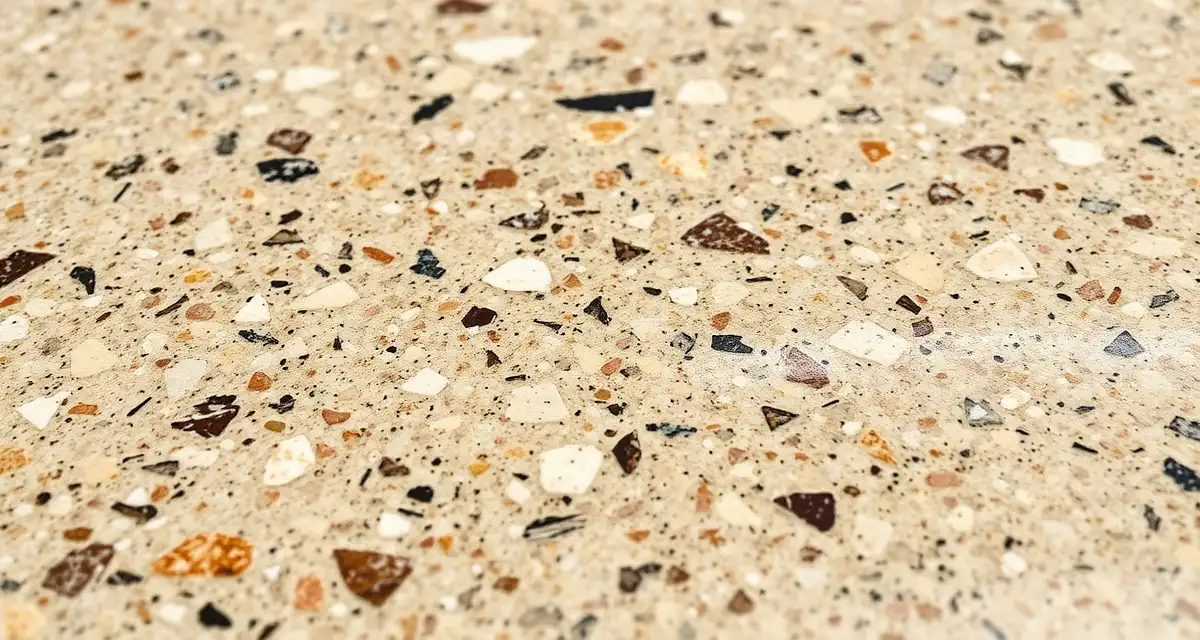
Engineered stone is a manufactured countertop material made by combining crushed natural minerals (typically quartz, marble, or granite) with polymer resins, pigments, and other additives. The mixture is compacted under high pressure and heat to form dense, non-porous slabs. Engineered stone is designed to offer the appearance of natural stone with more consistent color, improved stain resistance, and lower maintenance requirements. The most common type is engineered quartz, which dominates the US countertop market.
TL;DR
- Engineered stone is a manufactured composite of natural minerals + resin binders
- Most common type: engineered quartz (90% quartz + 10% resin/pigments)
- Non-porous, doesn't require sealing, resists stains and bacteria
- Consistent color and pattern within production lots
- Not heat-resistant - resin component limits tolerance to ~300°F
- Fabricated with the same CNC and diamond tools as natural stone
- Silica dust exposure is a serious occupational hazard during fabrication
- Accounts for 35-40% of US countertop market
Types of Engineered Stone
Engineered Quartz
The dominant category. Made from 90-94% ground quartz crystals bound with polyester or acrylic resin. Brands include Caesarstone, Cambria, Silestone, and MSI.
Calculate your material waste savings
See exactly how much slab material and money you could save with optimized cutting layouts.
Try the free Waste CalculatorCharacteristics: Extremely hard (Mohs 7), non-porous, available in hundreds of colors and patterns, some mimicking natural marble.
Engineered Marble
A newer category that uses crushed marble (rather than quartz) as the primary mineral. The result has the look and feel of marble with better stain resistance, though it's softer than quartz-based products.
Characteristics: Softer than engineered quartz, more authentic marble appearance, improved stain resistance vs. natural marble.
Recycled Glass Surfaces
Some manufacturers create engineered stone using recycled glass as the primary aggregate instead of quartz. These products have a distinctive appearance with visible glass fragments.
Characteristics: Unique aesthetic, environmentally positioned, less consistent availability.
Porcelain-Based Engineered Surfaces
While technically a ceramic product rather than stone, ultra-compact surfaces like Dekton (Cosentino) are sometimes grouped under the engineered stone umbrella. They're made by sintering natural minerals at extremely high temperatures.
Characteristics: UV-resistant, heat-resistant, very thin (12mm available), scratch-resistant.
Engineered Stone vs. Natural Stone
| Factor | Engineered Stone | Natural Stone |
|---|---|---|
| Origin | Factory-manufactured | Quarried from the earth |
| Pattern consistency | Consistent within lots | Every slab is unique |
| Porosity | Non-porous | Porous (requires sealing) |
| Maintenance | Minimal (no sealing) | Regular sealing needed |
| Heat resistance | Low (~300°F) | High (granite, quartzite) |
| Color options | Hundreds of engineered colors | Limited to natural colors |
| Uniqueness | Repeatable | One-of-a-kind |
| Price range | $50-$150/sq ft installed | $40-$250/sq ft installed |
| Environmental impact | Manufacturing energy + mining | Mining + transportation |
Why Homeowners Choose Engineered Stone
- Predictability: They see a sample and know the installed product will match
- Low maintenance: No annual sealing, easy cleaning
- Stain resistance: Non-porous surface won't absorb wine, coffee, or oil
- Design range: Options that don't exist in nature (pure white, specific patterns)
Why Some Prefer Natural Stone
- Uniqueness: No two slabs are identical
- Heat tolerance: Granite and quartzite handle hot pots without damage
- Perceived value: Natural stone carries luxury connotations
- Longevity: Natural stone has centuries of proven durability
Fabrication Process for Engineered Stone
Engineered stone is fabricated using the same equipment and general techniques as natural stone, with some specific considerations.
Cutting
CNC routers and bridge saws with diamond blades cut engineered stone slabs to template specifications. Wet cutting is mandatory - not optional - because cutting engineered quartz generates fine crystalline silica dust that poses serious health risks.
Edge Profiling
All standard edge profiles can be machined on engineered stone. The resin content makes the material slightly less prone to chipping during edge work compared to natural stone, but aggressive tool speeds can cause heat buildup that discolors the resin.
Seaming
Engineered stone seams require color-matched adhesive and tight tolerances. For veined patterns (like marble-look quartz), seam alignment is critical - the manufactured pattern must flow across the joint convincingly.
Polishing
Factory-applied finishes are standard. Fabricators polish CNC-cut edges and seam joints to match the factory finish. Different finishes (polished, honed, leathered) require specific polishing procedures.
Sink Cutouts
Undermount, drop-in, and apron-front sink cutouts follow the same procedures as natural stone. Cutout corners must be radiused (not sharp) to prevent stress cracking in the resin matrix.
Health and Safety Concerns
Crystalline Silica Exposure
Engineered quartz contains 90%+ crystalline silica. Cutting, grinding, and polishing this material releases fine silica dust that, when inhaled over time, causes silicosis - a progressive, irreversible lung disease.
OSHA's permissible exposure limit (PEL) for respirable crystalline silica is 50 micrograms per cubic meter over an 8-hour time-weighted average. Fabrication shops must:
- Use wet cutting methods for all operations
- Maintain effective dust collection and ventilation systems
- Provide workers with properly fitted respirators when needed
- Conduct regular air monitoring
- Provide worker medical surveillance
Several countries (Australia, Israel) have banned or restricted certain engineered stone products due to silicosis concerns among fabrication workers.
Responsible Fabrication
The silica risk is manageable with proper controls. Shops that invest in wet processing equipment, dust collection, and worker training can fabricate engineered stone safely. The risk arises when shops cut corners on safety equipment or allow dry cutting.
Market Position
Engineered stone (primarily quartz) is the largest single category in the US countertop market. Market drivers include:
- New home construction where builders specify quartz as the standard upgrade
- Kitchen remodeling where homeowners replace dated laminate or tile with quartz
- Commercial applications where consistency and low maintenance are priorities
- Rental properties where durability and easy care justify the investment
For fabrication shops, engineered stone typically accounts for 40-60% of their job volume, making efficient quartz fabrication essential for profitability.
What is engineered stone?
Engineered stone is a manufactured countertop material combining crushed natural minerals (usually quartz) with polymer resins and pigments to create dense, non-porous slabs.
Is engineered stone the same as quartz countertops?
Quartz countertops are the most common type of engineered stone, but the category also includes engineered marble, recycled glass surfaces, and some ultra-compact materials.
How is engineered stone different from natural stone?
Engineered stone is factory-made with consistent patterns. Natural stone is quarried with unique, one-of-a-kind characteristics. Engineered stone is non-porous; natural stone requires sealing.
Is engineered stone durable?
Very. It resists scratches, stains, and bacteria. However, it's not heat-resistant - the resin can scorch at temperatures above 300°F.
Does engineered stone need to be sealed?
No. The resin binder makes engineered stone non-porous, so it doesn't absorb liquids and doesn't need periodic sealing.
Can engineered stone be fabricated with normal stone tools?
Yes. CNC machines, diamond blades, waterjets, and standard polishing equipment all work on engineered stone. Wet cutting is mandatory for silica dust control.
Why is silica dust a concern with engineered stone?
Engineered quartz contains 90%+ crystalline silica. Cutting it dry generates fine particles that cause silicosis when inhaled. Wet cutting and proper ventilation are essential.
How much does engineered stone cost?
$50-$150 per square foot installed, depending on the brand, pattern, and complexity of the installation.
What brands make engineered stone?
Major manufacturers include Caesarstone, Cambria, Silestone (Cosentino), MSI, LG Viatera, Hanstone, and Vicostone.
Can engineered stone patterns be vein-matched?
Yes. Veined engineered quartz patterns need alignment at seams, similar to natural stone. The manufactured pattern should flow across the joint for a professional result.
Is engineered stone environmentally friendly?
It depends on the perspective. The manufacturing process uses energy and mining, but the product is durable (reducing replacement frequency), and some manufacturers incorporate recycled content.
What finishes are available for engineered stone?
Polished (high gloss), honed (matte), leathered (textured), and concrete (slightly rough) are the standard options from most manufacturers.
Fabricate Engineered Stone Smarter
Engineered stone is your shop's bread and butter. SlabWise helps fabricators optimize quartz slab layouts, verify templates, and manage the quoting process - reducing material waste by 10-15% and turning quotes around in 3 minutes instead of 20.
Start your 14-day free trial →
Try These Free Tools
- Cost Calculator -- Get instant countertop cost estimates by material, edge profile, and square footage.
- Compare Materials -- Side-by-side material comparison with pricing, durability, and maintenance ratings.
- Edge Profile Selector -- Browse edge profiles with cost impact and visual previews.
Sources & Further Reading
- National Kitchen & Bath Association - Cabinet Frame Construction Standards
- International Surface Fabricators Association - Support Frame Requirements for Stone Installation
- Natural Stone Institute - Structural Framing Guidelines for Natural Stone Applications
- ASTM International - ASTM C1242 Standard Guide for Selection, Design, and Installation of Dimension Stone Attachment Systems