What Is Container Load? Definition & Guide
Quick Definition
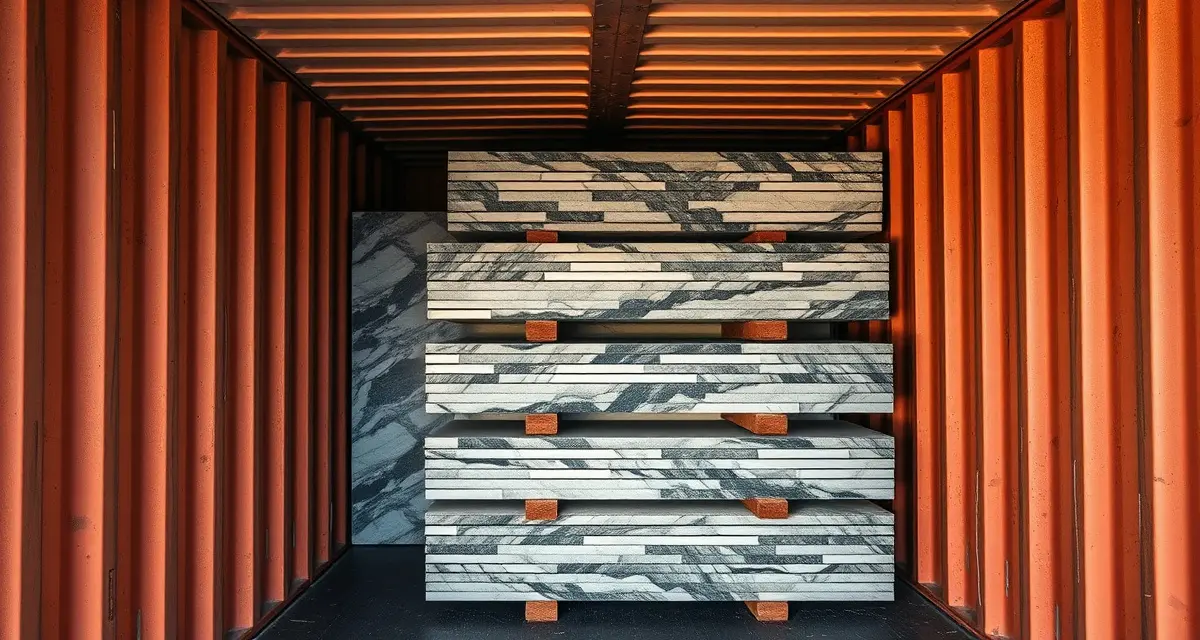
A container load is a full shipping container of stone slabs transported from a quarry or processing facility to a distributor or directly to a fabrication shop. In the stone industry, this almost always refers to a 20-foot or 40-foot intermodal shipping container packed with slab bundles. A standard 20-foot container holds approximately 8-12 bundles (40-80 slabs) weighing up to 44,000 pounds. Direct container purchasing from overseas quarries can reduce material costs by 25-45% compared to buying from domestic distributors - but it requires significant upfront capital, storage space, and careful material selection.
TL;DR
- A container load is a full shipping container of stone slabs, usually 20-foot or 40-foot
- A 20-foot container holds roughly 8-12 bundles (40-80 slabs, 800-2,000+ sqft)
- Maximum weight: approximately 44,000 lbs for a 20-foot container
- Direct import pricing is 25-45% below domestic distributor rates
- Requires $15,000-$50,000+ in upfront capital per container depending on material
- Transit time from overseas quarries: 4-8 weeks (India, Brazil) to 6-10 weeks (Italy)
- Only practical for shops with sufficient volume, storage space, and cash flow
- SlabWise inventory management tracks container shipments from purchase order to yard placement
How Container Loads Work in the Stone Industry
The Import Path
Most natural stone used in US countertop fabrication originates from Brazil, India, Italy, Spain, Turkey, or China. The typical path from quarry to fabrication shop looks like this:
Calculate your material waste savings
See exactly how much slab material and money you could save with optimized cutting layouts.
Try the free Waste Calculator- Quarry extraction - Blocks are cut from the mountainside
- Processing facility - Blocks are sawn into slabs, polished, and bundled
- Container packing - Bundles are loaded into shipping containers at the processing facility
- Ocean freight - Containers ship to US ports (typically Houston, Miami, Newark, Savannah, Long Beach)
- Customs clearance - Container clears US Customs and Border Protection
- Domestic transport - Trucked from port to distributor warehouse or directly to fabrication shop
- Unloading - Bundles offloaded with forklift and placed on A-frame racks
Direct Import vs. Distributor Purchase
| Factor | Direct Import (Container) | Distributor Purchase |
|---|---|---|
| Cost per sqft | 25-45% lower | Full retail/wholesale rate |
| Minimum purchase | Full container ($15K-$50K+) | Single slab ($200-$2,000) |
| Selection method | Photos/video of blocks before cutting | See physical slabs in person |
| Lead time | 6-12 weeks | Same day to 1 week |
| Quality risk | Higher - limited inspection before arrival | Lower - inspect before buying |
| Storage requirement | Significant yard space | Only for purchased slabs |
| Cash flow impact | Large upfront investment | Smaller, frequent purchases |
Container Sizes and Capacities
20-Foot Container (Standard for Stone)
The 20-foot container is the most common size for stone slab shipments because of weight limitations. Stone is extremely heavy, and a 40-foot container filled entirely with 3cm granite would exceed the legal road weight limit.
| Specification | Value |
|---|---|
| Internal dimensions | 19'4" L x 7'8" W x 7'10" H |
| Maximum payload | ~44,000 lbs (20 metric tons) |
| Typical slab count (3cm granite) | 40-60 slabs |
| Typical slab count (2cm marble) | 60-80 slabs |
| Approximate square footage | 800-1,500 sqft |
| Bundle count | 8-12 bundles |
40-Foot Container
Used less frequently for stone but sometimes packed with lighter materials like 2cm slabs or engineered quartz, where volume limits are reached before weight limits.
| Specification | Value |
|---|---|
| Internal dimensions | 39'5" L x 7'8" W x 7'10" H |
| Maximum payload | ~58,000 lbs (but road weight limits apply) |
| Typical use | Lighter materials, mixed shipments |
| Approximate square footage | 1,200-2,500 sqft |
The Economics of Container Buying
Cost Breakdown for a Typical Container
Using Brazilian granite as an example:
| Cost Component | Approximate Amount |
|---|---|
| Stone material (FOB quarry) | $8,000-$18,000 |
| Ocean freight | $2,500-$5,000 |
| Customs duties and fees | $500-$1,500 |
| US port handling | $300-$800 |
| Inland trucking (port to shop) | $800-$3,000 |
| Insurance | $200-$500 |
| Total landed cost | $12,300-$28,800 |
If the container holds 1,000 sqft of material, the landed cost is $12.30-$28.80 per sqft. That same material at a domestic distributor might sell for $18-$45 per sqft. The savings are real - but so is the upfront commitment.
Break-Even Analysis
A shop needs to use or sell the entire container within a reasonable timeframe to justify the capital tied up in inventory. Sitting on $25,000 worth of stone for 12 months isn't cheaper than buying from a distributor as needed - the carrying cost (storage space, capital tied up, damage risk) erodes the savings.
General rule: Container buying makes financial sense when your shop uses 2+ containers worth of a specific material per year. Below that volume, distributor purchases are usually more practical.
Risks of Direct Container Import
Quality Uncertainty
When buying direct from an overseas quarry, you're selecting material based on photos and videos of the raw blocks - not the finished slabs. The slabs might have more pitting, veining variation, or surface defects than expected. Reputable quarries mitigate this risk with detailed photography, but it's never the same as inspecting physical slabs.
Damage in Transit
Stone is heavy and rigid. Despite careful packing, slabs can crack or chip during the rough ocean voyage and subsequent trucking. A typical container might have 3-5% of slabs arrive with some level of damage. Factor this into your cost calculations.
Material Mismatch
The block photos showed golden veining, but the finished slabs are more brown. This happens because the block exterior doesn't always represent the interior. Once the slabs are cut and on a ship, there's no returning them economically.
Cash Flow Pressure
A $25,000 container payment due before the stone leaves the quarry is a significant cash outlay for a small or mid-size shop. If the material sells slowly, that capital is locked up when it could be funding operations.
Customs and Regulatory Complications
Import duties, anti-dumping tariffs (particularly on Chinese quartz), inspection delays, and documentation errors can hold a container at port for days or weeks - and every day of port storage (demurrage) costs money.
Who Should Buy by the Container
Good Candidates
- Shops processing 50+ jobs per month with consistent material preferences
- Multi-location operations that can split a container across sites
- Shops with established relationships with overseas quarries
- Fabricators with adequate yard space (at least 2,000+ sqft of covered storage)
- Businesses with sufficient cash flow to handle $15,000-$50,000 purchases
Not Yet Ready
- Small shops doing fewer than 20 jobs per month
- New fabricators still learning which materials their market prefers
- Shops without forklift equipment rated for bundle weights
- Operations with limited storage space
What is a container load of stone?
A container load is a full shipping container (typically 20 feet) packed with stone slab bundles, shipped from an overseas quarry or processing facility to a US distributor or fabrication shop.
How many slabs fit in a container?
A standard 20-foot container holds 40-80 slabs depending on thickness and material. At 3cm thickness, granite typically fits 40-60 slabs. At 2cm, marble can fit 60-80 slabs.
How much does a container of stone cost?
Total landed cost ranges from $12,000-$50,000+ depending on material type, origin, freight rates, and current duties. Brazilian granite is typically on the lower end; Italian marble and quartzite run higher.
How much can I save by buying a full container vs. from a distributor?
Direct import saves 25-45% per square foot compared to domestic distributor pricing. However, this requires larger upfront investment and carries more risk.
How long does it take for a stone container to arrive?
Ocean transit from Brazil or India is typically 4-8 weeks. From Italy or Spain, 6-10 weeks. Add 1-2 weeks for customs clearance and inland trucking.
What is FOB pricing for stone?
FOB (Free On Board) pricing means you're paying for the stone at the quarry or port of origin. You're responsible for freight, insurance, customs, and delivery costs from that point forward.
Can I inspect slabs before buying a container?
Not physically in most cases. Quarries provide photos and sometimes video of the blocks before cutting. Some offer photos of finished slabs before shipping. Building a relationship with a trusted quarry reduces quality risk over time.
What happens if slabs arrive damaged?
Document all damage immediately upon unloading (photos with time stamps). File claims with the shipping company and/or insurance. Expect 3-5% of slabs to arrive with some level of damage on a typical container.
Is direct import worth it for a small shop?
Usually not until you're processing enough jobs to use at least 2 containers of a specific material per year. Below that volume, the cash flow burden and storage requirements outweigh the per-sqft savings.
What is demurrage, and how does it affect container costs?
Demurrage is the daily fee charged when a container sits at the port beyond the free days allowed. Rates are $100-$300+ per day, so customs delays can add significant unplanned costs.
Can I split a container with another shop?
Some importers and buying groups arrange container splits, where two or more shops share a container to reduce individual costs while still getting below-distributor pricing.
How do I track container shipments?
Most ocean carriers provide online tracking. SlabWise's inventory management tracks containers from purchase order through arrival, linking every slab to its container, lot, and bundle for full traceability.
Track Every Slab From Container to Customer
Managing container purchases means tracking dozens of slabs from overseas quarries through your yard to the finished installation. SlabWise inventory management follows every slab from purchase order to customer delivery - recording container numbers, lot data, bundle IDs, photos, and rack locations so you always know exactly what you have.
Start your 14-day free trial →
Try These Free Tools
- Cost Calculator -- Get instant countertop cost estimates by material, edge profile, and square footage.
- Compare Materials -- Side-by-side material comparison with pricing, durability, and maintenance ratings.
- Edge Profile Selector -- Browse edge profiles with cost impact and visual previews.
Sources & Further Reading
- National Kitchen & Bath Association - Cabinet Frame Construction Standards
- International Surface Fabricators Association - Support Frame Requirements for Stone Installation
- Natural Stone Institute - Structural Framing Guidelines for Natural Stone Applications
- ASTM International - ASTM C1242 Standard Guide for Selection, Design, and Installation of Dimension Stone Attachment Systems