What Is Slab Bundle? Definition & Guide
Quick Definition
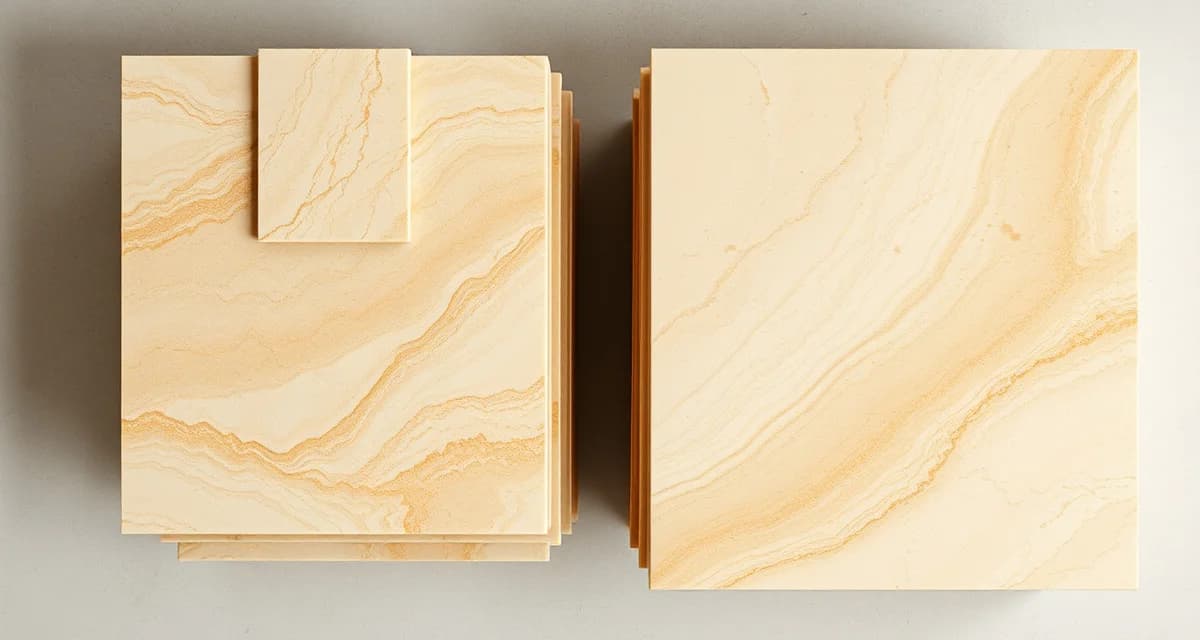
A slab bundle is a group of stone slabs that were cut sequentially from the same block of raw stone. A typical bundle contains 4 to 10 slabs, and because they come from the same block, slabs within a bundle share nearly identical color, veining, and pattern characteristics. When a fabricator needs multiple slabs for a large job - or needs to guarantee consistent appearance across a kitchen - selecting slabs from the same bundle ensures the material will match. Bundle buying is also the primary way fabricators purchase stone from distributors and importers.
TL;DR
- A slab bundle is a set of 4-10 slabs cut sequentially from the same stone block
- Slabs within a bundle share very similar color, veining, and pattern characteristics
- Bundles are the standard unit of purchase from stone distributors and importers
- A typical granite bundle weighs 4,000-8,000 lbs and contains 800-1,200 sqft of material
- Buying by the bundle costs 15-30% less per sqft than buying individual slabs
- Proper bundle tracking is critical for inventory management - knowing which slabs belong together affects job matching
- SlabWise slab inventory management tracks bundles, lots, and individual slabs with photos
How Slab Bundles Are Created
The Block
It all starts with a massive block of natural stone, quarried from a mountain or hillside. A raw stone block typically measures 8-10 feet long, 5-6 feet tall, and 5-6 feet deep. It weighs 20,000-40,000 pounds.
Calculate your material waste savings
See exactly how much slab material and money you could save with optimized cutting layouts.
Try the free Waste CalculatorThe Cutting
The block is transported to a processing facility where a gang saw or wire saw cuts it into individual slabs. Each cut is typically 2cm (3/4") or 3cm (1-1/4") thick, producing anywhere from 8 to 20+ slabs depending on block size and thickness.
The Bundle
The slabs are kept in the order they were cut and grouped into bundles of 4-10 slabs. They're separated by wooden strips or foam padding and bound together for transport. This sequential grouping is important because adjacent slabs from the same block have the most similar appearance.
The Numbering
Each slab in a bundle gets a sequential number (1 of 8, 2 of 8, etc.). The bundle itself gets an identifier linked to the block, quarry, and lot it came from. This tracking system allows fabricators to find matching slabs months or years after the original purchase.
Why Bundles Matter for Fabricators
Color Consistency
Natural stone varies. Even within the same quarry, blocks cut 10 feet apart can look noticeably different. Slabs within a bundle, however, come from the same block and show minimal variation. For a large kitchen that requires two or three slabs, pulling from the same bundle ensures the countertops look like a single continuous piece of stone.
Bookmatching
When two adjacent slabs from a bundle are placed side by side and one is flipped, their veining patterns create a mirror image - known as bookmatching. This is a premium technique for islands, feature walls, and large vanities, and it's only possible with consecutive slabs from the same bundle.
Pricing Advantage
Distributors price bundles lower per sqft than individual slabs because selling an entire bundle is more efficient than selling slabs one at a time. Depending on the material and distributor, bundle pricing can be 15-30% below individual slab pricing.
| Buying Method | Typical Pricing | Best For |
|---|---|---|
| Individual slabs | Full per-sqft rate | One-off small jobs, remnant matching |
| Partial bundle (3-5 slabs) | 5-15% below individual | Mid-size jobs, short-term inventory |
| Full bundle | 15-30% below individual | Large jobs, inventory stocking |
| Container load (multiple bundles) | 25-45% below individual | High-volume shops, direct import |
Inventory Efficiency
Buying bundles ensures you have matching material on hand. A shop that buys individual slabs risks running out of a specific color mid-project and scrambling to find a match. Bundle buying builds consistent inventory.
Slab Bundle Sizes and Weights
| Material | Slabs Per Bundle | Avg Slab Size | Bundle Weight | Approx Sqft Per Bundle |
|---|---|---|---|---|
| Granite (3cm) | 5-8 | 55" x 110" | 5,000-7,000 lbs | 200-350 sqft |
| Marble (2cm) | 6-10 | 55" x 110" | 4,000-6,000 lbs | 250-420 sqft |
| Quartzite (3cm) | 4-7 | 55" x 110" | 5,000-7,500 lbs | 170-300 sqft |
| Quartz (engineered) | 5-8 | 55" x 120" | 5,000-7,000 lbs | 230-370 sqft |
| Porcelain slab | 8-12 | 60" x 126" | 3,000-5,000 lbs | 350-550 sqft |
Granite and quartzite bundles are the heaviest due to material density. Handling bundles requires a forklift rated for at least 8,000 lbs and proper A-frame or bundle racks for storage.
Bundle Management in Your Shop
Receiving and Inspection
When a bundle arrives, inspect every slab before signing the delivery receipt. Check for:
- Cracks, chips, or edge damage from transport
- Color consistency within the bundle
- Correct dimensions and thickness
- Slab count matching the purchase order
Document defects immediately - claims against the distributor are much harder to process after you've signed for delivery.
Storage
Store bundles on A-frame racks or bundle carts designed for the weight. Keep slabs from the same bundle together and in order. Once slabs get separated and scattered around the yard, the tracking advantage of bundle purchasing disappears.
Inventory Tracking
Every slab should be recorded with:
- Bundle identifier
- Slab number within the bundle
- Material name and color
- Dimensions and thickness
- Location in your yard or warehouse
- Photos (both sides)
- Condition notes
Allocation
When a job requires a specific material, allocate slabs from the same bundle to that job. This prevents situations where a salesperson sells a slab to one customer while a fabricator pulls it for a different job.
Bundle vs. Lot vs. Container
These terms are related but describe different groupings:
| Term | Definition | Typical Size |
|---|---|---|
| Bundle | Slabs from one block, cut sequentially | 4-10 slabs |
| Lot | Multiple bundles from the same quarry shipment | 10-50+ slabs (2-8 bundles) |
| Container | Full shipping container of stone, may include multiple lots | 20-30+ slabs, 40,000-50,000 lbs |
Slabs within a bundle match closely. Slabs within a lot are similar but not identical. Slabs from different lots can look noticeably different even if they're the "same" material name.
What is a slab bundle?
A slab bundle is a group of 4-10 stone slabs that were cut sequentially from the same block of raw stone. Slabs within a bundle share nearly identical color, veining, and pattern characteristics.
How many slabs are in a bundle?
Typically 4-10, depending on the block size, slab thickness, and material. Granite bundles commonly contain 5-8 slabs at 3cm thickness.
Why do slabs within a bundle look alike?
Because they were cut from the same block of stone. Adjacent slabs in a bundle are literally the next slice from the same piece of rock, so their mineral composition and veining patterns are nearly identical.
Is it cheaper to buy a full bundle than individual slabs?
Yes. Bundle pricing is typically 15-30% less per square foot than individual slab pricing because it's more efficient for the distributor to sell entire bundles.
What is bookmatching, and how does it relate to bundles?
Bookmatching is placing two consecutive slabs from a bundle side by side with one flipped, creating a mirror-image veining pattern. This technique requires slabs from the same bundle.
How much does a slab bundle weigh?
Depending on the material, a bundle weighs 4,000-8,000 pounds. Granite and quartzite bundles at 3cm thickness are the heaviest.
How should I store slab bundles?
On A-frame racks or bundle carts rated for the weight, with slabs from the same bundle kept together and in order. Each slab should be separated by wooden strips or foam padding.
What's the difference between a bundle and a lot?
A bundle is slabs from one block. A lot is a group of bundles from the same quarry shipment. Bundles within a lot are similar but not as closely matched as slabs within a single bundle.
How do I track slab bundles in inventory?
Record each slab with its bundle identifier, slab number, material, dimensions, photos, and yard location. Inventory software makes this much easier than spreadsheets at scale.
Can I buy part of a bundle?
Some distributors will sell partial bundles (usually 3+ slabs), but at a higher per-sqft price than a full bundle purchase. Others require full bundle purchases.
Why is it important to keep bundle slabs together?
Because splitting a bundle across your yard makes it nearly impossible to find matching slabs when you need them. Organized bundle storage maintains the color-matching advantage you paid for.
What happens if one slab in a bundle is damaged?
Document the damage, file a claim with the distributor, and adjust your inventory count. The remaining slabs in the bundle are still usable and still match each other.
Track Every Slab From Bundle to Installation
Losing track of which slabs belong to which bundle costs you money in mismatched jobs and wasted search time. SlabWise's slab inventory management records every bundle, photographs every slab, and shows your team exactly where each piece is stored - so matching material is always at your fingertips.
Start your 14-day free trial →
Try These Free Tools
- Cost Calculator -- Get instant countertop cost estimates by material, edge profile, and square footage.
- Compare Materials -- Side-by-side material comparison with pricing, durability, and maintenance ratings.
- Edge Profile Selector -- Browse edge profiles with cost impact and visual previews.
Sources & Further Reading
- National Kitchen & Bath Association - Cabinet Frame Construction Standards
- International Surface Fabricators Association - Support Frame Requirements for Stone Installation
- Natural Stone Institute - Structural Framing Guidelines for Natural Stone Applications
- ASTM International - ASTM C1242 Standard Guide for Selection, Design, and Installation of Dimension Stone Attachment Systems