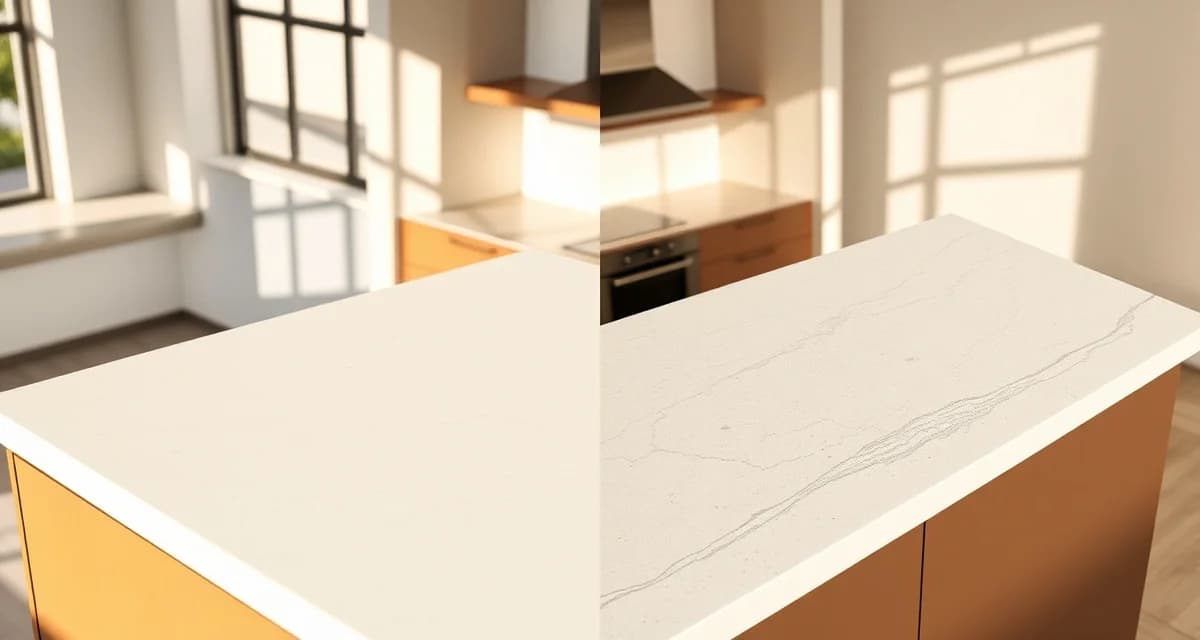
Quartz vs Porcelain Countertops: 2026 Comparison
Quartz and porcelain are two of the most popular engineered countertop materials in 2026, and they are increasingly competing for the same customers. Quartz is the established market leader. Porcelain slabs are the fast-growing challenger. This comparison breaks down where each material wins and where it falls short.
TL;DR
- Quartz dominates market share but porcelain slabs are the fastest-growing countertop category
- Porcelain handles heat far better --- no scorching, even from a 500F pan --- while quartz can burn above 300F
- Porcelain works outdoors; quartz does not (UV causes yellowing)
- Quartz has a wider color and pattern range and more established brand options
- Porcelain is thinner (12mm-20mm common) vs. quartz's standard 2cm-3cm
- Both are non-porous and never need sealing
- Pricing is converging --- both run $50-$150/sq ft installed depending on brand and style
- Porcelain can chip on edges more easily than quartz
Side-by-Side Comparison
| Feature | Quartz | Porcelain Slab |
|---|---|---|
| Composition | 90-94% ground quartz + polymer resin | Clay, feldspar, silica fired at 2,200F+ |
| Installed Cost (per sq ft) | $50-$150 | $55-$120 |
| Sealing Required | Never | Never |
| Heat Resistance | Low (resin scorches above 300F) | Excellent (withstands 500F+) |
| Scratch Resistance | High | High |
| UV Resistance | No (yellows outdoors) | Yes |
| Outdoor Use | No | Yes |
| Stain Resistance | Very High | Very High |
| Thickness Options | 2cm, 3cm | 6mm, 12mm, 20mm, 30mm |
| Edge Profile Options | Wide variety | Limited (due to thinness) |
| Chip Resistance | High | Moderate (edges are vulnerable) |
| Weight | Heavy | Lighter (at thinner profiles) |
| Repair | Difficult | Very Difficult |
Heat Resistance: Porcelain's Biggest Advantage
The most important practical difference between these two materials is how they handle heat.
Calculate your material waste savings
See exactly how much slab material and money you could save with optimized cutting layouts.
Try the free Waste CalculatorQuartz contains polymer resin (typically 6-10% of the slab). That resin softens and can scorch or discolor at temperatures above 300F. A hot pan from the stove or oven placed directly on quartz can leave a permanent white or brown mark. This is the #1 complaint from quartz countertop owners.
Porcelain is fired at 2,200F+ during manufacturing. It contains no resin, no organic binders, nothing that can burn. You can place a 500F pan directly on porcelain without any damage. Period.
For kitchens where someone cooks seriously --- and does not want to worry about reaching for a trivet every time --- porcelain has a clear edge.
UV Stability: The Outdoor Question
Quartz should not be installed outdoors. UV exposure causes the resin to break down over time, leading to yellowing, fading, and surface degradation. Every major quartz manufacturer explicitly excludes outdoor use from their warranties.
Porcelain is completely UV-stable. It will not fade, yellow, or degrade in direct sunlight. This makes porcelain the material of choice for outdoor kitchens, pool surrounds, and covered patio installations.
If your project includes any outdoor countertop surfaces, porcelain is the winner by default.
Appearance and Design Options
Quartz Aesthetics
Quartz has a significant advantage in color and pattern variety. After decades of development, quartz manufacturers offer:
- Hundreds of colors from dozens of brands
- Realistic marble, granite, and concrete looks
- Solid colors for modern and commercial designs
- Consistent slab-to-slab color matching
- Full range of edge profiles (bullnose, ogee, waterfall, mitered, etc.)
Major brands include Cambria, Silestone, Caesarstone, MSI, LG Viatera, and many others. The selection is enormous.
Porcelain Aesthetics
Porcelain slab design has improved dramatically in recent years. Digital printing technology allows manufacturers to create highly realistic reproductions of marble, stone, wood, and concrete. Leading brands include:
- Dekton (by Cosentino) --- wide pattern range including marble and concrete looks
- Neolith --- known for realistic stone and wood finishes
- Laminam --- large-format slabs with natural stone appearance
- SapienStone --- Italian-manufactured with high-end patterns
The main aesthetic limitation of porcelain is edge profiles. Because porcelain slabs are thinner (often 12mm or 20mm), the range of possible edge treatments is narrower than quartz. Mitered edges can create a thicker appearance, but options like bullnose and ogee are not practical on thin porcelain.
Fabrication and Installation Differences
Quartz Fabrication
- Standard tooling works well --- most fabrication shops handle quartz daily
- Predictable cutting and polishing behavior
- 2cm and 3cm thicknesses are industry standard
- Full range of edge profiles possible
- Seaming and joining is well-established
- Heavy: a 3cm quartz slab weighs about 20-25 lbs per square foot
Porcelain Fabrication
- Requires specialized tooling and techniques
- Different blade types than stone or quartz
- Thinner material is more fragile during handling and transport
- Limited edge profile options
- Seaming requires specific adhesives and methods
- Lighter weight, especially at thinner profiles
- Not all fabrication shops have porcelain experience
This fabrication difference matters for both homeowners and shop owners. If you are a homeowner, make sure your fabricator has porcelain experience before committing. If you run a shop, investing in porcelain capabilities positions you for growing demand.
Shops that cut both quartz and porcelain benefit from slab nesting software that works across material types. SlabWise helps optimize material usage regardless of whether you are cutting quartz, porcelain, or natural stone --- saving 10-15% on material waste.
Cost Comparison
Quartz Pricing (Installed)
- Budget quartz (MSI, Allen + Roth): $50-$75/sq ft
- Mid-range quartz (Silestone, Caesarstone standard): $75-$110/sq ft
- Premium quartz (Cambria, Caesarstone premium): $100-$150/sq ft
Porcelain Pricing (Installed)
- Standard porcelain slabs: $55-$80/sq ft
- Mid-range (Dekton standard, Neolith standard): $75-$100/sq ft
- Premium (Dekton premium, specialty patterns): $100-$120/sq ft
A 40-square-foot kitchen typically costs:
- Quartz: $2,000-$6,000
- Porcelain: $2,200-$4,800
Prices are converging. A few years ago, porcelain was notably more expensive. As production scales up and more fabricators gain experience, porcelain pricing is becoming competitive with mid-range quartz.
Durability in Daily Use
Stain Resistance
Both materials are non-porous and resist stains exceptionally well. Coffee, wine, oil, and other common kitchen substances wipe off both quartz and porcelain without issue. Neither requires sealing.
Scratch Resistance
Both materials resist scratches well in normal kitchen use. Porcelain has a slight edge in hardness, but neither material will be scratched by knives or typical kitchen activity.
Chip Resistance
This is where quartz has an advantage. Quartz's resin binder gives it some flexibility and impact absorption. Porcelain, especially at thinner profiles, can chip if hit on an edge by a heavy object. A dropped cast-iron skillet is more likely to chip a porcelain edge than a quartz edge.
Long-Term Durability
Both materials last 25-30+ years with normal use. Neither degrades, fades (quartz indoors), or deteriorates over time. The main long-term risks are:
- Quartz: heat damage (cumulative exposure can cause discoloration near stovetops)
- Porcelain: edge chipping from impacts
Health and Safety Considerations
Silicosis risk during fabrication is an increasingly important topic. Both quartz and porcelain generate silica dust during cutting:
- Quartz contains 90-94% silica and has been the primary focus of silicosis regulation in the fabrication industry
- Porcelain also contains silica (from clay and feldspar) but at lower concentrations than quartz
Both materials require proper dust control, wet cutting, and respiratory protection during fabrication. Several states have tightened regulations specifically targeting quartz fabrication, which is one factor driving some shops to expand their porcelain offerings.
Best Uses for Each Material
Choose Quartz When:
- Indoor kitchens and bathrooms are the only installation areas
- You want maximum edge profile options --- bullnose, ogee, waterfall, etc.
- Brand selection and color range matter --- quartz has more options
- Your fabricator is more experienced with quartz than porcelain
- Budget spans the full range --- quartz has options from $50 to $150/sq ft
Choose Porcelain When:
- Outdoor kitchens or UV-exposed areas are part of the project
- Heat resistance is a priority --- no trivet needed
- A thinner, more modern profile fits the design (12mm or 20mm)
- You want a truly zero-maintenance surface without any weaknesses
- The fabricator has porcelain experience and proper tooling
Is porcelain better than quartz for kitchen countertops?
It depends on your priorities. Porcelain offers better heat resistance and UV stability. Quartz offers more color choices, edge profile options, and wider fabricator availability. Both are non-porous and low-maintenance. For most indoor kitchens, either works well.
Can you put hot pans on porcelain countertops?
Yes. Porcelain countertops can handle hot cookware directly without any damage. This is one of porcelain's strongest selling points compared to quartz, which can scorch at temperatures above 300F.
Do porcelain countertops chip easily?
Porcelain can chip on edges if struck by a heavy object, especially at thinner profiles (12mm). The surface itself is very durable, but edges are the weak point. Proper edge treatment and reasonable care prevent most chipping issues.
Are porcelain countertops more expensive than quartz?
Pricing is similar. Porcelain typically runs $55-$120/sq ft installed, while quartz ranges $50-$150/sq ft installed. A few years ago porcelain was pricier, but costs are evening out as the product becomes more widely available and fabricated.
Can quartz countertops go outdoors?
No. Quartz manufacturers specifically exclude outdoor installation from their warranties. UV exposure causes the resin to yellow and degrade over time. Use porcelain, granite, or sintered stone for outdoor countertops instead.
Which is easier to repair, quartz or porcelain?
Neither is easy to repair. Quartz chips can sometimes be filled with color-matched resin. Porcelain chips are harder to fix invisibly. For both materials, prevention (careful handling, no heavy impacts on edges) is the best strategy.
Is porcelain a good countertop material?
Yes. Porcelain has proven itself as a serious countertop material over the past decade. It is non-porous, heat-resistant, UV-stable, scratch-resistant, and stain-resistant. The main limitations are edge chipping vulnerability and more limited edge profile options compared to quartz.
What brands make porcelain countertops?
The major porcelain slab brands include Dekton (by Cosentino), Neolith, Laminam, SapienStone, and Lapitec. Each offers different sizes, thicknesses, and design options.
How thick are porcelain countertops?
Porcelain countertops come in several thickness options: 6mm (with backing for wall applications), 12mm, 20mm, and 30mm. The 12mm and 20mm options are most common for countertops, often with mitered edges to create a thicker appearance.
Do porcelain countertops need to be sealed?
No. Porcelain is non-porous and never requires sealing. This is one of the easiest aspects of porcelain ownership --- there is zero ongoing sealant maintenance.
Get Your Countertop Estimate
Both quartz and porcelain are strong choices for modern kitchens. The right pick depends on whether you need outdoor durability, heat resistance, or maximum design flexibility.
Compare pricing for both materials using our countertop cost calculator. Fabricators working with both quartz and porcelain can start a free 14-day SlabWise trial to optimize material nesting across all material types.
Try These Free Tools
- Cost Calculator -- Compare material costs instantly across different countertop options.
- Compare Materials -- Side-by-side material comparison with pricing, durability, and maintenance.
- Kitchen Visualizer -- Let customers preview countertop materials in their actual kitchen.
Sources & Further Reading
-
Natural Stone Institute - Technology and Software Solutions for Stone Fabricators
-
International Surface Fabricators Association - Fabrication Software and Digital Tools
-
National Kitchen & Bath Association - Technology Integration in Countertop Design
-
Marble Institute of America - Digital Fabrication and Software Standards