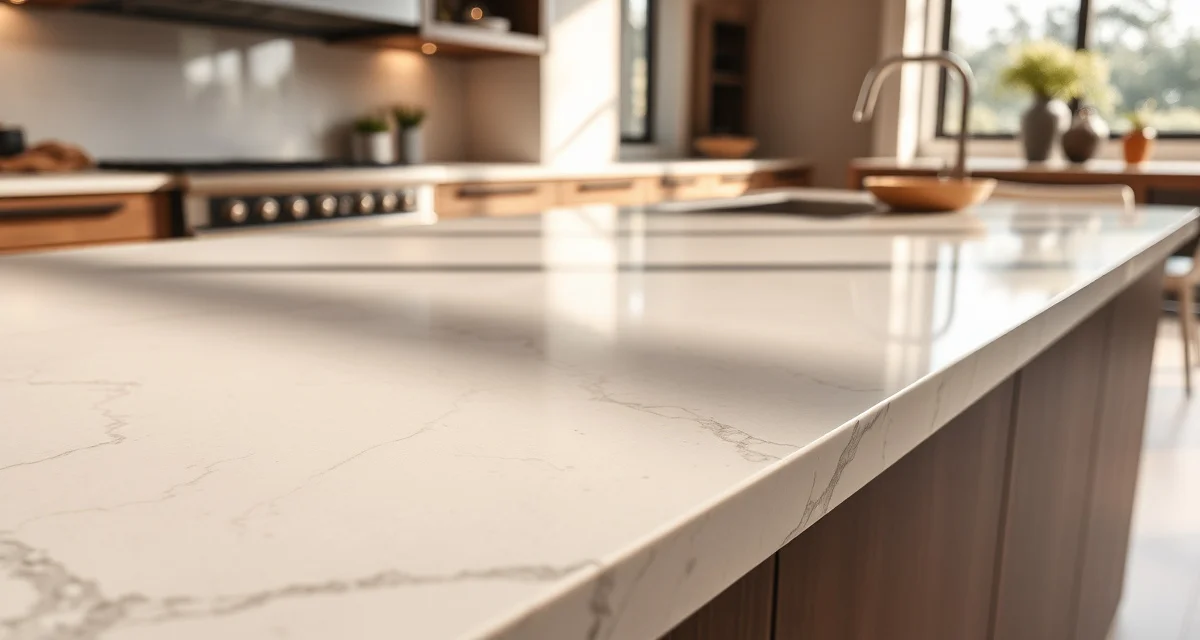
Porcelain Slab Countertops Guide: The Fast-Growing Alternative in 2026
Porcelain slab countertops are large-format engineered surfaces made from a mixture of clays, feldspars, silica, and mineral pigments that are pressed and fired at temperatures exceeding 2,200 degrees Fahrenheit. The result is an ultra-dense, non-porous material that resists heat, stains, scratches, and UV damage. Unlike traditional porcelain tiles, countertop-grade porcelain comes in full-size slabs up to 126" x 60", allowing for minimal seams and a continuous surface appearance. Prices range from $50 to $120 per square foot installed.
TL;DR
- Porcelain slabs cost $50-$120/sq ft installed; average kitchen runs $3,000-$6,500
- Fired at 2,200+ degrees F, making them heat-proof, UV-resistant, and non-porous
- Zero maintenance: no sealing ever required
- Thinner than natural stone (6mm-20mm typical vs. 20mm-30mm for granite)
- Available in marble, concrete, wood, metal, and solid color looks
- Major brands: Dekton (Cosentino), Neolith (TheSize), Lapitec, Laminam
- Fabrication requires specialized tooling different from natural stone
- Best for: outdoor kitchens, modern interiors, and low-maintenance lifestyles
How Porcelain Slabs Are Made
The manufacturing process (often called sintering) involves:
Calculate your material waste savings
See exactly how much slab material and money you could save with optimized cutting layouts.
Try the free Waste Calculator- Raw material blending: Clays, feldspars, quartz sand, and recycled minerals are mixed with pigments
- Compaction: The mixture is pressed at 5,000-25,000 tons of force (brand-dependent)
- Firing: Slabs are kiln-fired at 2,200-2,400 degrees F for controlled duration
- Surface treatment: Digital printing, texturing, or polishing to achieve the desired appearance
- Quality control: Dimensional accuracy, color consistency, and structural integrity testing
The extreme heat and pressure create a material with near-zero porosity and exceptional hardness. Modern digital printing technology has dramatically improved the realism of porcelain surfaces, producing marble, granite, and concrete looks that are difficult to distinguish from natural stone at first glance.
Major Porcelain Slab Brands
| Brand | Parent Company | Max Slab Size | Thickness Options | Price Range |
|---|---|---|---|---|
| Dekton | Cosentino (Spain) | 126" x 56" | 8mm, 12mm, 20mm, 30mm | $55-$120/sq ft |
| Neolith | TheSize (Spain) | 126" x 60" | 6mm, 12mm, 20mm | $60-$110/sq ft |
| Lapitec | Lapitec (Italy) | 118" x 60" | 12mm, 20mm, 30mm | $65-$120/sq ft |
| Laminam | Laminam (Italy) | 118" x 59" | 5mm, 12mm, 20mm | $50-$100/sq ft |
| SapienStone | Iris Ceramica (Italy) | 126" x 60" | 12mm, 20mm | $45-$90/sq ft |
Porcelain Countertop Costs in 2026
Price by Finish and Style
| Category | Price per Sq Ft (Installed) | Examples |
|---|---|---|
| Solid colors | $50-$70 | Basic whites, grays, blacks |
| Concrete looks | $55-$80 | Industrial gray, warm concrete |
| Marble looks | $65-$100 | Calacatta, Statuario, Carrara reproductions |
| Natural stone looks | $70-$110 | Granite, quartzite, onyx reproductions |
| Premium/specialty | $90-$120 | Metallic, book-matched, textured |
Full Kitchen Cost Breakdown (40 sq ft)
| Component | Cost Range |
|---|---|
| Porcelain slab material | $1,600-$3,600 |
| Fabrication | $600-$1,200 |
| Edge treatment | $300-$700 |
| Sink cutout | $200-$350 |
| Installation | $450-$800 |
| Subtop/support structure | $200-$500 |
| Total | $3,350-$7,150 |
Note: Thinner porcelain slabs (6-12mm) require a subtop (plywood or honeycomb core) for structural support, adding $200-$500 to the project.
Performance Characteristics
Heat Resistance
Porcelain is fired at 2,200+ degrees F during manufacturing, so no household heat source can damage it. You can place hot pans, baking sheets, and even a blowtorch directly on porcelain without scorching, discoloring, or cracking.
Scratch Resistance
Porcelain rates 6-7 on the Mohs scale depending on the brand and surface treatment. Polished finishes scratch more visibly than matte or textured finishes, even though the underlying hardness is the same.
Stain and Chemical Resistance
| Substance | Effect on Porcelain |
|---|---|
| Red wine | No stain, wipes clean |
| Lemon juice/vinegar | No etching or staining |
| Cooking oil | No absorption |
| Bleach | No damage |
| Acetone | No damage |
| Permanent marker | Wipes off with solvent |
| Turmeric | No staining |
UV Resistance
Unlike quartz (which fades in sunlight), porcelain is completely UV-stable. This makes it the top choice alongside natural stone for outdoor kitchen countertops, pool surrounds, and sun-exposed indoor areas.
Maintenance
- Daily: Wipe with any household cleaner
- Sealing: Never required
- Annual: Nothing - porcelain is genuinely maintenance-free
Fabrication Guide for Shops
Why Porcelain Fabrication Is Different
Porcelain requires different tooling, techniques, and knowledge than natural stone:
- Brittleness: Despite its hardness, porcelain is brittle and chips easily if mishandled
- Thinness: 6-12mm slabs flex and can snap if not properly supported
- Cutting: Requires porcelain-specific diamond blades (natural stone blades will chip the material)
- Adhesive: Seams use specific flexible adhesives rather than standard stone epoxy
- Edge treatment: Limited edge profiles compared to natural stone
Cutting Requirements
| Tool | Specification |
|---|---|
| Bridge saw blade | Porcelain-rated continuous rim diamond blade |
| Feed rate | 30-60 in/min (slower than granite) |
| Water flow | Heavy - prevents micro-chipping |
| CNC router bits | Porcelain-specific diamond electroplated bits |
| Support | Full slab support bed required (no cantilever) |
Edge Treatment Options
Porcelain's thinness means edge profiles work differently:
| Edge Style | Method | Appearance |
|---|---|---|
| Mitered | Two pieces joined at 45 degrees | Thick slab look (12mm becomes 24mm) |
| Laminated | Thin strip bonded to edge | Thicker appearance without miter |
| Square/raw | Exposed porcelain edge | Modern, minimal look |
| Metal channel | Aluminum or stainless steel edge strip | Industrial aesthetic |
| Subtop reveal | Visible plywood or contrasting material below | Design statement |
Most customers choose mitered edges for a 20-30mm thick appearance when using 12mm slabs.
Common Fabrication Mistakes
- Using natural stone blades: Will cause micro-chipping along cut lines
- Cutting without full support: Thin slabs snap under their own weight
- Over-tightening sink clips: Porcelain cracks at point loads; use adhesive mounting instead
- Applying standard stone seam epoxy: Must use flexible adhesives that accommodate thermal expansion
- Rushing cutouts: Sink and cooktop cutouts need slow, careful routing with proper support
Profitability Considerations
Porcelain fabrication margins can be lower than natural stone if shops aren't prepared:
- Tooling costs: Porcelain-specific blades and bits cost 20-40% more
- Breakage risk: A broken porcelain slab during fabrication is a total loss (it can't be repaired)
- Training: Crews experienced only with natural stone need specific porcelain training
- Handling: Thin slabs require vacuum cup lifters and full-support A-frames
Shops that invest in proper training and tooling report comparable margins to granite work.
Pros and Cons Summary
Pros
- Zero maintenance (truly none - no sealing, no special cleaners)
- Heat-proof for hot pans
- UV-resistant for outdoor use
- Stain-proof against all household substances
- Consistent color and pattern (important for large projects)
- Lighter weight than natural stone (easier installation)
- Eco-friendly manufacturing (many brands use recycled content)
Cons
- Brittle: can chip from heavy impacts more easily than granite
- Limited edge profile options compared to natural stone
- Thin slabs need subtops for structural support
- Less "warm" feel compared to natural stone for some buyers
- Newer material with less industry familiarity
- Repair is difficult - chips and cracks are hard to fix invisibly
- Resale perception: some buyers still prefer "real stone"
FAQ
Are porcelain countertops durable?
Yes. Porcelain countertops are among the most durable surfaces available. They resist heat, scratches, stains, UV, and chemicals. The main vulnerability is impact damage - dropping a heavy cast iron pan on a corner or edge can chip porcelain more easily than granite.
Can porcelain countertops crack?
Porcelain can crack from heavy point impacts or if improperly supported during installation. Once installed with proper subtop support, cracking from normal kitchen use is very rare. The material is more brittle than natural stone, so edge chips from dropped objects are the primary concern.
How do porcelain countertops compare to quartz?
Both are non-porous and low-maintenance. Porcelain is heat-proof and UV-resistant (quartz is neither). Quartz has more edge profile options and a warmer feel. Porcelain is typically lighter and can be thinner. Price ranges overlap significantly.
Can you cut food directly on porcelain?
Technically yes - porcelain won't be damaged. However, knife edges will dull quickly, and polished porcelain finishes may show fine scratch marks over time. Use cutting boards to preserve both your knives and the surface appearance.
Is porcelain good for outdoor kitchens?
Porcelain is arguably the best material for outdoor kitchens. It's UV-stable (won't fade), heat-proof, freeze-thaw resistant, stain-proof, and never needs sealing. Dekton and Neolith are the most popular brands for outdoor applications.
What thickness should I choose?
For kitchen countertops, 12mm with a mitered edge (creating a 24mm appearance) or 20mm are most common. 20mm slabs may not need a subtop depending on cabinet spacing. 6-8mm slabs are better suited for wall cladding and backsplashes.
Do porcelain countertops look fake?
Modern digital printing technology has significantly improved the realism of porcelain surfaces. High-end brands like Dekton and Neolith produce marble and stone looks that are convincing at normal viewing distances. Up close, natural stone still has depth and translucency that porcelain cannot fully replicate.
How long do porcelain countertops last?
Porcelain countertops are expected to last 25-50+ years. The material doesn't degrade from UV, chemicals, or moisture, and there's no sealant to reapply. The main factors limiting lifespan are physical damage (chips, cracks) rather than material degradation.
Ready to Add Porcelain to Your Offerings?
As porcelain slab demand grows, fabricators who quote accurately and cut cleanly win the business. SlabWise's Quick Quote includes porcelain-specific pricing and accounts for mitered edges, subtop requirements, and material-specific fabrication costs automatically.
Start Your 14-Day Free Trial - Quote every material type in under 3 minutes.
Try These Free Tools
- Cost Calculator -- Get instant countertop cost estimates by material, edge profile, and square footage.
- Compare Materials -- Side-by-side material comparison with pricing, durability, and maintenance ratings.
- Edge Profile Selector -- Browse edge profiles with cost impact and visual previews.
Sources & Further Reading
-
Natural Stone Institute - Digital Tools and Technology in Stone Fabrication
-
International Surface Fabricators Association - Quoting Best Practices and Technology
-
National Kitchen & Bath Association - Technology Integration in Kitchen Design
-
Remodeling Magazine - Digital Transformation in Countertop Industry