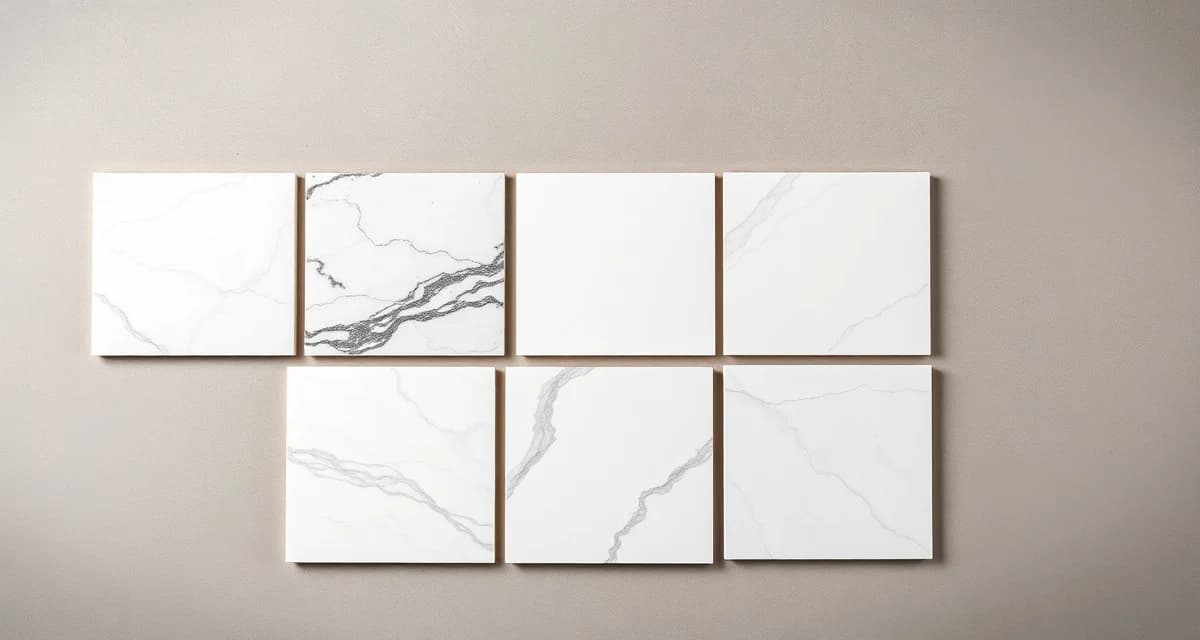
Best Countertop Materials in 2026
Quick Definition
Finding the best countertop materials starts with understanding what matters most for your shop.
Countertop materials range from natural stone like granite and marble to engineered options like quartz and porcelain. Each material brings a different combination of durability, maintenance needs, heat resistance, and price per square foot. Picking the right one depends on your kitchen or bathroom usage patterns, design taste, and long-term budget.
TL;DR
- Quartz dominates 2026 for most kitchens with low maintenance and consistent color patterns
- Granite remains the natural stone standard at $50-$200/sq ft installed
- Porcelain slabs are gaining fast thanks to extreme heat and scratch resistance
- Marble stays popular for bathrooms and statement islands despite etching concerns
- Butcher block and concrete appeal to homeowners who want a custom, tactile feel
- Recycled glass and paper composites lead the eco-friendly category
- Budget-friendly laminates have improved dramatically in look and durability
How We Ranked These Materials
We evaluated each countertop material across six criteria that matter most to homeowners and fabricators:
Calculate your material waste savings
See exactly how much slab material and money you could save with optimized cutting layouts.
Try the free Waste Calculator| Criteria | Weight | What We Measured |
|---|---|---|
| Durability | 25% | Scratch, chip, and crack resistance over 10+ years |
| Maintenance | 20% | Sealing frequency, stain susceptibility, daily care |
| Heat Resistance | 15% | Performance under hot pans and direct heat exposure |
| Price Range | 15% | Installed cost per square foot (materials + labor) |
| Appearance Options | 15% | Color range, pattern consistency, edge profile compatibility |
| Resale Value | 10% | Impact on home appraisal and buyer appeal |
Every material below includes real pricing from fabricator surveys conducted in Q4 2025 and Q1 2026.
1. Quartz (Engineered Stone)
Best for: Most kitchens and bathrooms Price range: $55-$175/sq ft installed
Quartz countertops are made from roughly 90-94% ground natural quartz crystals bound with polymer resins. Brands like Caesarstone, Cambria, and Silestone continue to lead the market.
Why Quartz Ranks #1
- Zero sealing required. Unlike granite, quartz never needs periodic resealing.
- Consistent patterns. You can order 40 slabs and get near-identical veining.
- Stain resistance. Coffee, wine, and oil wipe right off.
- Color range. Over 500 patterns across major manufacturers.
Where Quartz Falls Short
- Heat tolerance caps around 300°F before resin can discolor
- Prolonged UV exposure causes yellowing on outdoor installations
- Heavy slabs require structural support for overhangs beyond 12 inches
Fabricator Notes
Quartz cuts predictably on CNC bridge saws. Material waste typically runs 12-18% depending on layout complexity. Shops using AI-powered nesting software (like SlabWise) regularly bring that down to 8-12% by optimizing piece placement across the slab.
2. Granite
Best for: High-traffic kitchens, homeowners who want natural stone Price range: $50-$200/sq ft installed
Granite has held its market position for decades. Each slab is unique, mined from quarries worldwide, and available in hundreds of color variations from Luna Pearl whites to Absolute Black.
Why Granite Stays Popular
- Heat resistant. You can set a hot pan directly on granite without damage.
- Extremely hard. Rates 6-7 on the Mohs hardness scale.
- Unique appearance. No two slabs look the same.
- Strong resale value. Buyers still associate granite with quality.
Where Granite Falls Short
- Requires resealing every 1-3 years
- Porous surface can absorb stains if unsealed
- Color matching across multiple slabs is difficult
- Cracking risk around sink cutouts if support is inadequate
Fabricator Notes
Granite slab inventory management is critical. Because every slab differs, fabricators need to photograph and catalog each one. Digital slab management tools help shops track inventory and show customers exactly which slab their countertop will come from. Template verification matters here - a $3,000 slab ruined by a template error means a full remake at shop expense.
3. Porcelain Slabs
Best for: Modern kitchens, outdoor installations, commercial projects Price range: $55-$150/sq ft installed
Porcelain countertop slabs have grown from a niche product to a serious contender. Brands like Dekton (Cosentino), Neolith, and SapienStone produce large-format slabs that mimic marble, concrete, and wood.
Why Porcelain Is Rising Fast
- UV stable. Perfect for outdoor kitchens - no fading
- Heat proof. Withstands temperatures above 1,000°F
- Scratch resistant. Harder than granite on the Mohs scale
- Ultra-thin options. 6mm and 12mm slabs reduce weight and cost
- Non-porous. Zero sealing, zero staining
Where Porcelain Falls Short
- Chipping risk during fabrication and transport
- Requires specialized tooling (diamond blades rated for porcelain)
- Limited edge profile options on thin slabs
- Color-body consistency varies by manufacturer
Fabricator Notes
Porcelain demands careful handling and precise CNC programming. Breakage during cutting can run 5-8% for shops new to the material. Experienced shops with dialed-in parameters get that below 2%. The thin profile also means standard edge profiles need buildup strips, adding labor time.
4. Marble
Best for: Bathroom vanities, baking stations, statement islands Price range: $75-$250/sq ft installed
Marble - especially Calacatta and Carrara varieties - remains the aspirational choice for high-end residential projects.
Why Homeowners Still Choose Marble
- Timeless appearance. Marble has been used in luxury spaces for centuries
- Cool surface temperature. Ideal for pastry work and baking
- Increases home value. Strong association with premium finishes
- Translucence. Backlit marble installations create dramatic effects
Where Marble Falls Short
- Etches from acidic substances (lemon juice, vinegar, tomato sauce)
- Requires sealing every 6-12 months
- Softer than granite (3-5 Mohs) - scratches more easily
- High price for premium varieties
Fabricator Notes
Marble fabrication requires careful slab selection with customers. Vein direction and pattern continuity across seams matter enormously. Shops that use digital layout tools to show customers exactly how the veining will flow across seams reduce "that's not what I expected" callbacks dramatically. This is where template verification and layout approval workflows pay for themselves.
5. Quartzite
Best for: Homeowners who want a natural stone with quartz-like durability Price range: $70-$200/sq ft installed
Not to be confused with manufactured quartz, quartzite is a natural metamorphic rock. Varieties like Taj Mahal, White Macaubas, and Super White offer marble-like aesthetics with much better durability.
Why Quartzite Is Gaining Ground
- Harder than granite. Rates 7-8 on the Mohs scale
- Heat resistant. Handles hot cookware without damage
- Marble-like appearance. Soft veining and light colorways
- Better stain resistance than marble when properly sealed
Where Quartzite Falls Short
- Requires sealing (annual recommended)
- Some slabs marketed as quartzite are actually dolomite marble - testing matters
- Limited color range compared to quartz or porcelain
- Premium pricing for popular varieties
6. Soapstone
Best for: Farmhouse kitchens, historical restorations, heat-intensive cooking areas Price range: $70-$150/sq ft installed
Soapstone is a talc-rich metamorphic rock that develops a dark patina over time. It has a distinctive matte, tactile surface that splits opinion - people either love it or want something glossier.
Key Strengths
- Completely non-porous without any sealing
- Naturally antibacterial surface
- Impervious to acids - no etching from lemon or vinegar
- Heat resistant enough for direct hot pot placement
Limitations
- Soft material (1-2 Mohs) - dents and scratches easily
- Limited color range (grays and greens primarily)
- Scratches can be sanded out but require mineral oil maintenance
- Fewer fabricators experienced with soapstone
7. Butcher Block (Wood)
Best for: Warm kitchen aesthetics, prep areas, kitchen islands Price range: $40-$100/sq ft installed
Butcher block countertops - typically made from maple, walnut, cherry, or oak - bring warmth that no stone can match.
Key Strengths
- Can be sanded and refinished multiple times
- Easy to cut and modify on-site
- Comfortable chopping surface (end-grain especially)
- Pairs well with stone countertops for mixed-material kitchens
Limitations
- Requires regular oiling (monthly for heavy use)
- Not waterproof - standing water causes warping
- Scratches and knife marks accumulate over time
- Not recommended around sinks without waterproof sealant
8. Concrete
Best for: Industrial and modern aesthetic, custom shapes, integrated features Price range: $65-$135/sq ft installed
Cast concrete countertops allow for custom shapes, integrated drainboards, embedded objects, and unique color treatments using pigments and stains.
Key Strengths
- Fully customizable shapes, colors, and textures
- Integrated sinks and drainboards possible
- Heavy, solid feel that appeals to many homeowners
- Can be cast on-site or prefabricated
Limitations
- Prone to hairline cracks over time
- Requires periodic sealing
- Heavy - requires strong cabinetry support
- Lead time for custom casting (2-4 weeks typical)
9. Laminate
Best for: Budget-conscious renovations, rental properties, quick turnarounds Price range: $15-$45/sq ft installed
Modern high-pressure laminate (HPL) from brands like Formica, Wilsonart, and Arborite has improved significantly. New textures convincingly mimic stone and wood grain.
Key Strengths
- Lowest cost per square foot of any countertop material
- Fast installation (often same-day)
- Hundreds of patterns and colors
- Lightweight - no structural reinforcement needed
Limitations
- Cannot be repaired if deeply scratched or burned
- Seams are visible and can peel over time
- Low resale value compared to stone options
- Heat damage from hot pans is permanent
10. Recycled Glass
Best for: Eco-conscious homeowners, colorful design statements Price range: $50-$120/sq ft installed
Recycled glass countertops embed glass fragments in cement or resin binders. Brands like IceStone and Vetrazzo create surfaces from post-consumer glass bottles and windows.
Key Strengths
- Made from 75-100% recycled materials
- Unique, colorful appearance
- Non-porous when resin-bound
- Durable and heat resistant
Limitations
- Limited availability in some regions
- Cement-bound versions require sealing
- Can chip if struck with heavy objects
- Higher price than comparable quartz options
Material Comparison Table
| Material | Price (Installed/sq ft) | Durability | Maintenance | Heat Resistance | Best For |
|---|---|---|---|---|---|
| Quartz | $55-$175 | Excellent | Very Low | Moderate | Most kitchens |
| Granite | $50-$200 | Excellent | Moderate | Excellent | High-traffic kitchens |
| Porcelain | $55-$150 | Excellent | Very Low | Excellent | Modern/outdoor |
| Marble | $75-$250 | Moderate | High | Good | Bathrooms/baking |
| Quartzite | $70-$200 | Excellent | Moderate | Excellent | Stone lovers |
| Soapstone | $70-$150 | Low-Moderate | Low | Excellent | Farmhouse style |
| Butcher Block | $40-$100 | Low | High | Low | Prep areas/islands |
| Concrete | $65-$135 | Moderate | Moderate | Good | Custom shapes |
| Laminate | $15-$45 | Low | Very Low | Low | Budgets/rentals |
| Recycled Glass | $50-$120 | Good | Low-Moderate | Good | Eco-friendly |
How Your Fabricator Affects Material Quality
The material you pick only tells half the story. The fabrication quality determines whether your countertops last 5 years or 25. Here is what to look for in a fabricator, regardless of material:
Template accuracy. Digital laser templating reduces measurement errors to under 1/16 inch. Shops still using manual templates (cardboard or wooden strips) introduce human error that can lead to costly remakes - averaging $1,500-$4,000 per remake for premium materials.
CNC programming. Proper CNC toolpath programming affects edge quality, cutout precision, and material waste. Shops using modern fabrication software optimize nesting layouts to squeeze the most usable surface from every slab.
Quality control. The best shops run multi-point inspections before the slab ever leaves the facility. Three-layer template verification - comparing the original measurements, the CNC program, and the final cut piece - catches errors before they become remakes.
Communication. Homeowners who get regular project status updates (approval notifications, scheduling confirmations, progress photos) report higher satisfaction and place fewer status calls. Some shops reduce those calls by up to 70% with automated customer portals.
What Material Is Best for Your Project?
Choose quartz if you want low maintenance, consistent appearance, and excellent stain resistance for a busy kitchen.
Choose granite if you want natural stone character, excellent heat resistance, and strong resale value.
Choose porcelain if you need an outdoor-ready material or want ultra-modern thin profiles.
Choose marble if your heart is set on the look and you accept the maintenance trade-off.
Choose quartzite if you want marble aesthetics with granite-level toughness.
Choose butcher block if you want warmth and a surface you can sand down every few years.
Choose laminate if budget is the primary driver and you need a quick install.
FAQ
What is the most durable countertop material?
Quartzite and porcelain top the durability charts. Quartzite rates 7-8 on the Mohs hardness scale, while porcelain resists scratches, heat, and UV exposure. Quartz (engineered) is close behind with excellent scratch and stain resistance, though it is more sensitive to heat.
What countertop material is best for kitchens?
Quartz is the most popular kitchen countertop material in 2026 because it combines low maintenance, consistent appearance, and strong stain resistance. Granite remains a close second for homeowners who prioritize heat resistance and natural stone aesthetics.
How much do countertops cost per square foot?
Installed prices range from $15/sq ft for laminate to $250+/sq ft for premium marble or exotic granite. Most mid-range kitchens use materials in the $55-$150/sq ft range. A typical 40 sq ft kitchen countertop runs $2,200-$6,000 installed for quartz or granite.
Do quartz countertops stain?
Quartz is highly stain resistant but not stain proof. Prolonged contact with strong dyes (turmeric, permanent marker) or leaving spills overnight can leave marks. Most spills wipe clean with soap and water. Unlike granite, quartz does not require periodic sealing.
Is marble worth the maintenance?
For many homeowners, yes. Marble develops character over time - the etching and patina that some consider "damage," others see as charm. Marble is particularly well-suited for bathrooms (less acid exposure) and baking areas (naturally cool surface). If you prefer a pristine, maintenance-free surface, quartz or porcelain is a better fit.
Can I put hot pans on granite?
Yes. Granite handles direct heat exposure well and will not discolor, crack, or scorch from hot pots and pans. However, extreme and repeated thermal shock (moving a pan from a 500°F oven directly to a cold granite surface) can theoretically cause stress fractures, though this is rare.
What countertop material has the best resale value?
Quartz and granite consistently rank highest for resale value. Real estate agents report that kitchens with stone countertops sell faster and for higher prices than those with laminate. Marble adds premium value in high-end markets but can concern buyers worried about maintenance.
How long do quartz countertops last?
With normal use, quartz countertops last 25-50+ years. The polymer resins binding the quartz crystals do not degrade under typical kitchen conditions. The main threats to longevity are excessive heat exposure and impact damage to edges and corners.
What is the cheapest countertop material that looks good?
Modern laminate offers the best value for appearance. High-pressure laminate from brands like Formica now includes textures and patterns that convincingly mimic stone at $15-$45/sq ft installed - a fraction of natural stone costs. Butcher block ($40-$100/sq ft) is another attractive budget option.
Are porcelain countertops fragile?
Porcelain slabs are extremely hard and scratch-resistant, but they can chip on edges and corners during handling and installation. Once installed, they perform exceptionally well. The main risk period is during fabrication and transport, which is why working with an experienced porcelain fabricator matters.
What countertop material is best for outdoor kitchens?
Porcelain (especially Dekton) leads for outdoor installations because it resists UV fading, extreme heat, freeze-thaw cycles, and staining. Granite is also suitable outdoors. Avoid quartz outdoors - UV exposure yellows the resin binders over time.
How do I find a good countertop fabricator?
Look for shops that use CNC machinery (not just hand tools), digital laser templating, and modern fabrication software. Ask about their quality control process, warranty terms, and how they handle communication during the project. Shops that offer customer portals with real-time status updates tend to deliver better experiences overall.
Get Accurate Countertop Estimates
Planning a countertop project? Use our free countertop cost calculator to estimate material and installation costs based on your kitchen dimensions and material choice. Get a ballpark price in under 3 minutes - no phone calls required.
Try the SlabWise Cost Calculator →
Try These Free Tools
- Nesting Optimizer -- AI-powered slab layout that maximizes yield considering vein direction and defects.
- Defect Mapping -- Upload a slab photo and AI maps every fissure, pit, and color issue.
- Value Engineering -- Find dollar-quantified suggestions to save material without cutting margin.
Sources & Further Reading
- Natural Stone Institute - Digital Tools for Stone Fabricators
- International Surface Fabricators Association - Technology Solutions for Countertop Businesses
- National Kitchen & Bath Association - Business Management Software Guide
- Remodeling Magazine - CRM Systems for Custom Fabricators