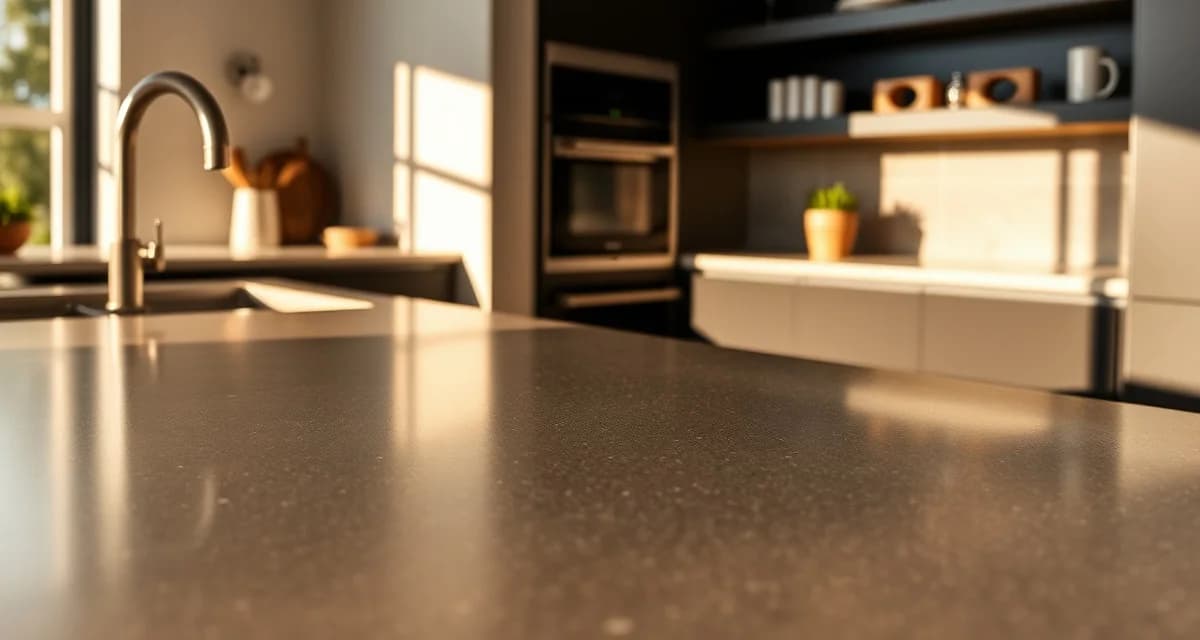
Dekton Countertops Complete Guide
Quick Definition
This dekton countertops complete guide walks you through the process step by step.
Dekton is an ultra-compact surface manufactured by Cosentino (the same company behind Silestone). Unlike quartz, Dekton contains zero resin - it's made from a blend of raw materials used in glass, porcelain, and quartz production, fused together using a process called TSP (Technology of Sintered Particles) at temperatures exceeding 1,200°C. This makes Dekton heat-proof, UV-resistant, and suitable for both indoor and outdoor applications. Pricing runs $70-$120/sq ft installed.
TL;DR
- Dekton costs $70-$120/sq ft installed - premium pricing similar to high-end quartz or natural stone
- Zero resin content means it won't discolor from heat, UV light, or chemical exposure
- Rated for outdoor use - the only major countertop brand that handles full sun exposure without degrading
- Available in 0.4cm, 0.8cm, 1.2cm, 2cm, and 3cm thicknesses - from wall cladding to full countertops
- Extremely scratch-resistant - harder than granite, quartz, and most natural stones
- Brittle at thin profiles - 0.8cm and 1.2cm slabs can crack from point impact
- 25-year warranty covering residential and commercial installations
What Makes Dekton Different From Quartz
The key distinction: Dekton is sintered, not bound with resin.
Calculate your material waste savings
See exactly how much slab material and money you could save with optimized cutting layouts.
Try the free Waste Calculator| Property | Dekton (Sintered) | Quartz (Resin-bound) |
|---|---|---|
| Composition | Glass + porcelain + quartz minerals | 90-94% quartz + 6-10% resin |
| Heat resistance | Direct flame safe | Burns/discolors at 300-400°F |
| UV resistance | Full outdoor exposure OK | Yellows in sunlight |
| Stain resistance | Virtually zero porosity | Very low porosity |
| Scratch resistance | Extremely high (Mohs 8+) | High (Mohs 7) |
| Flexibility | Very rigid, brittle | Slightly more flexible |
| Weight (3cm) | ~14 lbs/sq ft | ~12 lbs/sq ft |
| Price range | $70-$120/sq ft | $50-$100/sq ft |
The TSP sintering process subjects the raw material mixture to approximately 25,000 tons of pressure and temperatures above 1,200°C (2,200°F) - essentially mimicking thousands of years of natural stone formation in a matter of hours. The result is a surface with near-zero porosity and no organic binders that can degrade over time.
Who Dekton Is For
Dekton fills specific niches where traditional quartz and natural stone fall short:
Outdoor Kitchens
This is Dekton's strongest selling point. No other major countertop brand handles outdoor exposure - UV light, rain, freeze-thaw cycles, and temperature swings - without degrading. Quartz yellows in sunlight. Granite needs frequent sealing outdoors. Dekton shrugs it all off.
Heavy-Use Commercial Kitchens
Restaurant kitchens abuse surfaces. Hot sheet pans set directly on counters, acidic prep ingredients, constant scrubbing. Dekton's heat and chemical resistance makes it practical for environments where quartz would burn and marble would etch.
Design-Forward Residential Kitchens
Dekton's thin-profile options (0.8cm, 1.2cm) enable design looks that thick stone can't achieve - razor-thin island edges, wraparound cabinet cladding, integrated waterfall sides that look like they were carved from a single block.
Fireplace Surrounds
The heat resistance makes Dekton a natural fit for fireplace surrounds and hearths where temperatures exceed what quartz can handle.
Pricing Breakdown
| Dekton Series | Price Range (installed) | Style |
|---|---|---|
| Solid Collection | $70-$85/sq ft | Uniform solid colors |
| Natural Collection | $80-$100/sq ft | Stone and marble looks |
| Industrial Collection | $85-$105/sq ft | Concrete, metal, urban textures |
| Stonika Collection | $90-$110/sq ft | Premium marble reproductions |
| XGloss Collection | $95-$120/sq ft | High-gloss mirror finishes |
Kitchen Cost Example (40 sq ft, 2cm)
| Component | Natural Collection |
|---|---|
| Material + fabrication | $3,200-$4,000 |
| Edge finishing | $300-$500 |
| Undermount sink cutout | $200-$350 |
| Installation | $400-$600 |
| Total | $4,100-$5,450 |
Outdoor kitchen installations add 10-20% due to additional structural support requirements and weather-related installation considerations.
Popular Dekton Designs
Nilium (Stonika Collection)
Premium marble-look with delicate gray veining on a bright white base. Designed to mimic the look of Calacatta marble but with Dekton's performance characteristics.
Kelya (Natural Collection)
Dark, moody surface inspired by Belgian black marble. Deep charcoal with subtle lighter veining. Popular for dramatic island installations and commercial bar tops.
Kreta (Industrial Collection)
Warm gray concrete look with visible aggregate texture. Part of the industrial trend in kitchen design. Available in matte and textured finishes.
Olimpo (Natural Collection)
Warm white with soft beige undertones and gentle veining. A warmer alternative to the cool-white marble looks that have dominated recent trends.
Sirius (Solid Collection)
Jet black with a fine-grained uniform texture. The go-to for monolithic dark kitchen designs and commercial installations where a consistent dark surface is needed.
Fabrication Specifications
Slab Dimensions
- Standard: 56" x 126"
- Large format: 56" x 142" (select designs)
- Thickness options: 0.4cm, 0.8cm, 1.2cm, 2cm, 3cm
Weight by Thickness
| Thickness | Weight per sq ft | Full slab weight |
|---|---|---|
| 0.4cm | ~2.5 lbs | ~120 lbs |
| 0.8cm | ~5 lbs | ~240 lbs |
| 1.2cm | ~7 lbs | ~340 lbs |
| 2cm | ~11 lbs | ~535 lbs |
| 3cm | ~14 lbs | ~680 lbs |
Fabrication Considerations for Shops
Dekton requires different handling than quartz:
Cutting:
- CNC with diamond tooling rated for sintered materials
- Slower feed rates than quartz - the material is harder and more brittle
- Water cooling is critical - Dekton generates significant heat during cutting
- Bridge saw with specific blade recommendations from Cosentino
Edge profiling:
- Limited to simpler profiles on thin slabs (0.8cm, 1.2cm) - detailed profiles like ogee risk chipping
- 2cm and 3cm support full edge profile range
- Edge polishing takes longer than quartz due to hardness
- Cosentino recommends specific polishing pad sequences
Seaming:
- Color-matched adhesive provided by Cosentino
- Seams must be tight - Dekton doesn't flex to close gaps the way quartz can
- Any gap wider than 1/16" is visible and difficult to fill invisibly
Handling:
- Thin profiles (0.8cm, 1.2cm) are fragile during transport - use A-frame racks with foam padding
- Support full slab length during moves - Dekton snaps cleanly at stress points
- Do NOT lean thin slabs against walls unsupported
Fabricator Training: Cosentino requires Dekton-specific training for fabricators. The material's hardness and brittleness create a learning curve - shops that jump from quartz to Dekton without training report higher breakage rates. Cosentino offers training at their regional centers.
Performance in Real-World Use
Heat Resistance
Dekton's standout feature. You can set a pot straight from a 500°F oven directly on Dekton and it won't mark, discolor, or crack. This is the only mainstream countertop surface that makes this claim - even granite can theoretically thermal shock under extreme temperature differentials.
Scratch Resistance
Dekton scores above 8 on the Mohs hardness scale, putting it harder than granite (6-7) and quartz (7). In practical terms: ceramic dinnerware, knives, and normal kitchen use won't mark it. You could theoretically use it as a cutting board - though your knife edges would disagree.
Stain Resistance
Near-zero porosity means Dekton resists stains from wine, coffee, lemon juice, oil, and food coloring. Even permanent marker can be wiped off. No sealing needed - ever.
Impact Resistance
This is Dekton's weakness. Sintered surfaces are rigid and brittle. Dropping a heavy cast-iron pan from counter height onto a 1.2cm Dekton surface can crack it. Thicker profiles (2cm, 3cm) are more impact-resistant but still less forgiving than quartz or granite.
UV and Weather Resistance
Dekton doesn't fade, crack, or warp from sun exposure. It handles freeze-thaw cycles, rain, and humidity without degradation. This makes it genuinely unique for outdoor kitchens, pool surrounds, and exterior cladding.
Dekton for Outdoor Kitchens
This is where Dekton truly has no competition. An outdoor kitchen comparison:
| Surface | Outdoor Durability | UV Resistance | Heat Resistance | Maintenance |
|---|---|---|---|---|
| Dekton | Excellent | Excellent | Excellent | None |
| Granite | Good (with sealing) | Good | Excellent | Seal 2x/year |
| Quartz | Poor (yellows) | Poor | Moderate | N/A (not rated) |
| Concrete | Fair (cracks) | Fair | Good | Seal regularly |
| Tile | Good | Good | Good | Grout maintenance |
| Stainless steel | Excellent | Excellent | Excellent | Polish regularly |
For outdoor installations, Dekton in 2cm or 3cm thickness mounted on a weather-resistant cabinet system (marine-grade polymer or stainless steel) creates a surface that will look the same in 20 years as it does on day one.
Warranty
Dekton's 25-year warranty:
- Covers manufacturing defects and UV color stability
- Applies to both indoor and outdoor installations
- Transferable to subsequent property owners
- Does NOT cover impact damage, improper installation, or chemical abuse
- Requires professional installation by a trained fabricator
FAQ
How much does Dekton cost?
$70-$120/sq ft installed, depending on design collection and thickness. A 40 sq ft indoor kitchen costs $4,100-$5,450 before extras.
Is Dekton better than quartz?
Different, not categorically better. Dekton is heat-proof, UV-resistant, and harder - making it superior for outdoor use and high-heat environments. Quartz is less brittle, more affordable, and available in more colors. For a standard indoor kitchen, quartz is usually the better value.
Can Dekton crack?
Yes. Dekton is brittle, especially at thinner profiles (0.8cm, 1.2cm). Heavy point impacts (dropping a cast-iron skillet from height) can crack it. Proper support and handling minimize this risk.
Does Dekton scratch?
Dekton is extremely scratch-resistant - harder than granite or quartz. Normal kitchen use won't scratch it. Deliberate attempts with hardened tools could mark it, but everyday cooking activities are safe.
Can I put hot pots directly on Dekton?
Yes. This is one of Dekton's defining features. The surface handles direct contact with cookware at any kitchen temperature without damage. No trivets needed (though they don't hurt).
Is Dekton good for outdoor kitchens?
Dekton is the best countertop material for outdoor kitchens. It's the only major surface rated for full outdoor exposure - UV light, rain, freeze-thaw, and temperature extremes don't affect it.
How does Dekton compare to porcelain countertops?
Both are sintered surfaces. Dekton uses a proprietary blend and manufacturing process that produces a denser, harder result than most porcelain countertops. Dekton is typically thicker (2-3cm for countertops vs. 0.6-1.2cm for porcelain), heavier, and more expensive.
Does Dekton need to be sealed?
Never. Dekton has near-zero porosity and requires no sealing for the life of the product, indoors or outdoors.
What are Dekton's weaknesses?
Price (20-40% more than comparable quartz), brittleness (especially thin profiles), limited color options compared to quartz, and the need for fabricators with specific Dekton training.
Can Dekton be repaired if it chips?
Minor chips can be filled with color-matched epoxy. Cracks typically require section replacement - Dekton doesn't bond back together the way some natural stones can with structural epoxy.
How thick should Dekton be for kitchen countertops?
2cm or 3cm for kitchen countertops. 3cm for undermount sinks and heavy-use areas. Thinner profiles (0.8cm, 1.2cm) are for wall cladding, backsplash, and vertical applications only.
Quote Dekton Projects With Confidence
Dekton's premium pricing means your quotes need to be accurate - a $200 estimating error on a $6,000 Dekton job directly hits your margin. SlabWise's Quick Quote tool handles Dekton's per-collection pricing, thickness variations, and edge options in about 3 minutes.
Start your 14-day free trial - accurate pricing protects your profits on every Dekton project.
Try These Free Tools
- Cost Calculator -- Get instant countertop cost estimates by material, edge profile, and square footage.
- Compare Materials -- Side-by-side material comparison with pricing, durability, and maintenance ratings.
- Edge Profile Selector -- Browse edge profiles with cost impact and visual previews.
Sources & Further Reading
-
Natural Stone Institute - Digital Tools and Technology in Stone Fabrication
-
International Surface Fabricators Association - Quoting Best Practices and Technology
-
National Kitchen & Bath Association - Technology Integration in Kitchen Design
-
Remodeling Magazine - Digital Transformation in Countertop Industry