Are There Recycled Countertop Options?
Quick Answer
Are there recycled countertop options is a growing question as sustainability becomes a priority.
Yes - several countertop materials incorporate recycled content, and some are made almost entirely from recycled materials. Recycled glass countertops (like IceStone and Vetrazzo) use 75-100% recycled glass in a cement or resin binder. Paper composite countertops (like Richlite) use recycled paper and phenolic resin. Reclaimed wood countertops reuse old-growth lumber from demolished buildings. Even some quartz and porcelain brands now include recycled content in their products. Pricing ranges from $50-$150 per square foot installed, comparable to mid-range to high-end stone.
TL;DR
- Recycled glass countertops use 75-100% post-consumer glass in a cement or resin binder
- Paper composite surfaces like Richlite are made from recycled paper - surprisingly durable and heat-resistant
- Reclaimed wood gives old-growth character you can't buy new
- Some quartz brands include 20-50% recycled content (pre-consumer quartz waste)
- Recycled aluminum and concrete options exist for commercial and modern residential designs
- Prices are comparable to mid-range stone ($50-$150/sq ft installed)
- Availability is more limited than mainstream materials - plan for longer lead times
Recycled Countertop Materials: Full Breakdown
Recycled Glass Countertops
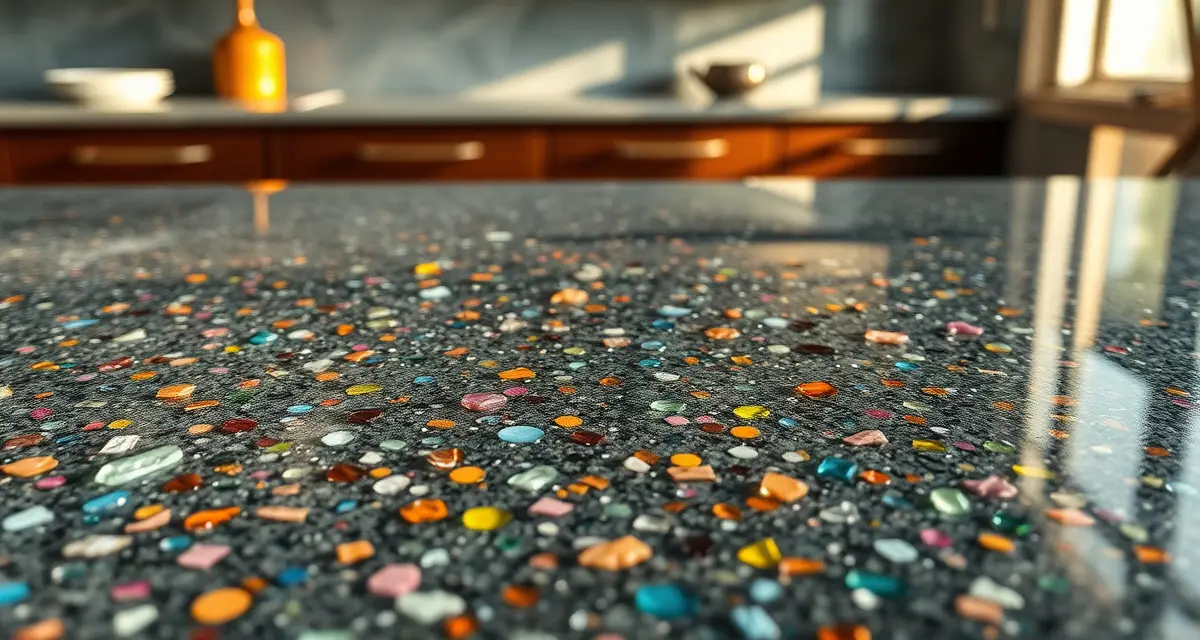
What they are: Crushed recycled glass (from bottles, windows, and other post-consumer sources) embedded in a cement or resin binder.
Calculate your material waste savings
See exactly how much slab material and money you could save with optimized cutting layouts.
Try the free Waste CalculatorMajor brands: IceStone, Vetrazzo, EnviroGLAS, Cosentino ECO line
Recycled content: 75-100% recycled glass by weight
| Attribute | Details |
|---|---|
| Cost | $65-$150/sq ft installed |
| Durability | Good - similar to concrete; cement-based versions need sealing |
| Heat resistance | Good (cement-based); moderate (resin-based) |
| Stain resistance | Moderate - cement-based versions are porous; sealing required |
| Maintenance | Annual sealing for cement-based; minimal for resin-based |
| Appearance | Distinctive - glass chips visible in the surface; available in many colors |
| Lifespan | 20-30+ years |
Pros:
- High recycled content
- Unique, eye-catching appearance
- Each slab is one-of-a-kind
- Available in dozens of colors
- Strong eco-credentials
Cons:
- Cement-based versions need periodic sealing
- Higher price point than standard quartz
- Limited fabricator availability
- Glass edges can be sharp during fabrication (specialized handling needed)
- Heavier than quartz in some formulations
Paper Composite Countertops
What they are: Layers of recycled paper saturated with phenolic resin, compressed under heat and pressure into a solid surface.
Major brands: Richlite, PaperStone, Shetkastone
Recycled content: 60-100% recycled paper content
| Attribute | Details |
|---|---|
| Cost | $50-$100/sq ft installed |
| Durability | Very good - used in commercial kitchens and science labs |
| Heat resistance | Excellent - handles hot pans without scorching |
| Stain resistance | Good - non-porous when properly finished |
| Maintenance | Periodic mineral oil application (similar to butcher block) |
| Appearance | Matte, warm, slightly textured - available in dark, earthy tones |
| Lifespan | 20-40 years |
Pros:
- Excellent heat resistance - direct hot pan contact is fine
- Warm, tactile surface feel
- Can be sanded and refinished like wood
- Lighter weight than stone
- FDA-approved for food contact
- Long track record in commercial settings (science labs, restaurant kitchens)
Cons:
- Limited color range - mostly dark browns, grays, and blacks
- Needs periodic oiling to maintain appearance
- Not as scratch-resistant as stone
- Less name recognition among homebuyers
Reclaimed Wood Countertops
What they are: Lumber salvaged from old buildings, barns, factories, or warehouses, milled and finished into countertop surfaces.
Recycled content: 100% reclaimed material
| Attribute | Details |
|---|---|
| Cost | $60-$150/sq ft installed |
| Durability | Good - old-growth wood is often denser than new lumber |
| Heat resistance | Moderate - trivets needed for hot cookware |
| Stain resistance | Low - requires sealing and regular maintenance |
| Maintenance | Monthly oiling, annual refinishing of high-use areas |
| Appearance | Rich, aged character with nail holes, patina, and grain patterns unavailable in new wood |
| Lifespan | 25-50 years with proper care |
Pros:
- Old-growth wood species (heart pine, American chestnut, Douglas fir) that are no longer commercially available
- Unique character - nail holes, saw marks, weathering
- Carbon-neutral (no new trees harvested)
- Can be sanded and refinished multiple times
Cons:
- Requires same maintenance as any wood countertop (monthly oiling)
- Water-sensitive near sinks
- Supply is unpredictable - finding enough matching material for a kitchen can take time
- Price varies wildly based on species and source
Recycled Content Quartz
Several quartz manufacturers now include recycled content in their products:
- Pre-consumer recycled quartz - waste quartz from other manufacturing processes
- Recycled glass - incorporated into the quartz mix
- Post-consumer content - varies by brand and product line
Typical recycled content: 20-50% by weight (varies significantly by brand and color)
Brands with recycled content lines: Caesarstone, Cambria (some colors), Cosentino (ECO by Cosentino)
The advantage here is that you get familiar quartz performance (zero maintenance, wide color range, established fabrication methods) with a meaningful reduction in virgin material use.
Recycled Porcelain / Sintered Stone
Some sintered stone manufacturers incorporate recycled materials into their products. The manufacturing process - firing at 2,200°F+ - can accept recycled clay, glass, and mineral content without compromising performance.
Recycled content in porcelain slabs is typically 15-40%, depending on the manufacturer and product line.
Recycled Aluminum Countertops
What they are: Sheets of recycled aluminum formed into countertop surfaces, sometimes with a stainless steel appearance.
Best for: Commercial kitchens, modern/industrial residential designs, outdoor bars
| Attribute | Details |
|---|---|
| Cost | $80-$200/sq ft installed |
| Durability | Excellent - nearly indestructible |
| Heat resistance | Excellent - metal handles any kitchen heat |
| Stain resistance | Very good - non-porous |
| Maintenance | Wipe clean; may show fingerprints and scratches |
| Appearance | Industrial, modern - develops a patina over time |
| Lifespan | 30-50+ years |
Terrazzo (Recycled Aggregate)
Modern terrazzo countertops can use recycled glass, marble chips, and other aggregate in a cement or resin binder. This traditional material has seen a design resurgence and can include 50-90% recycled content depending on the aggregate source.
Cost Comparison: Recycled vs. Conventional Materials
For a typical 40 sq ft kitchen:
| Material | Installed Cost (40 sq ft) | Recycled Content |
|---|---|---|
| Recycled glass (IceStone) | $2,600-$6,000 | 75-100% |
| Paper composite (Richlite) | $2,000-$4,000 | 60-100% |
| Reclaimed wood | $2,400-$6,000 | 100% |
| Recycled content quartz | $2,200-$4,800 | 20-50% |
| Recycled aluminum | $3,200-$8,000 | 80-100% |
| Standard quartz (comparison) | $2,000-$4,800 | 0-10% |
| Standard granite (comparison) | $1,800-$4,800 | 0% |
Recycled materials generally cost 10-40% more than their conventional counterparts, though some options (paper composite, recycled content quartz) are priced competitively.
Eco Certifications to Look For
When evaluating recycled countertop claims, these certifications provide independent verification:
- Greenguard Gold - Low chemical emissions
- LEED contributing - Points toward LEED building certification
- Cradle to Cradle Certified - Full lifecycle environmental assessment
- SCS Recycled Content Certified - Independent verification of recycled content percentage
- NSF/ANSI 51 - Food safety certification for kitchen surfaces
Availability and Lead Times
Recycled countertop materials often have longer lead times than mainstream stone:
| Material | Typical Lead Time | Fabricator Availability |
|---|---|---|
| Recycled glass | 4-8 weeks | Limited - specialty fabricators |
| Paper composite | 3-6 weeks | Moderate - growing distributor network |
| Reclaimed wood | 2-8 weeks (varies by sourcing) | Moderate - woodworking shops |
| Recycled content quartz | 2-4 weeks | Wide - standard quartz fabricators |
| Standard quartz (comparison) | 1-3 weeks | Very wide |
For fabrication shops, managing inventory and lead times across specialty materials alongside standard stone products requires careful scheduling. Longer lead times mean earlier ordering, and the shop needs to coordinate material arrival with templating and production schedules.
Are recycled glass countertops durable?
Yes. Recycled glass in a cement or resin binder creates a surface comparable to concrete in strength. They handle normal kitchen use well, though they can chip on heavy impacts. Cement-based versions need periodic sealing.
Do recycled countertops cost more?
Generally yes - expect 10-40% more than conventional materials. Paper composite and recycled content quartz are the most competitively priced. Recycled glass and reclaimed wood tend to be at the higher end.
Can I get recycled countertops in white or light colors?
Recycled glass countertops are available in light colors. Paper composite is generally limited to darker tones. Recycled content quartz offers the widest color range, including whites and light patterns.
Are paper countertops actually durable?
Yes. Richlite and similar paper composites are used in commercial kitchens, science labs, and outdoor applications. The phenolic resin makes the material waterproof and very dense. It's not "paper" in the way you'd think - it's a hard, solid surface.
Do any recycled countertops qualify for LEED points?
Yes. Recycled glass, paper composite, and some recycled content quartz products contribute toward LEED Materials & Resources credits. The specific points depend on the product's recycled content percentage and certifications.
Can my fabricator work with recycled glass countertops?
It depends. Recycled glass countertops require specialized fabrication equipment and experience. Not all granite/quartz shops can process them. Ask for references from the material supplier.
How do recycled countertops hold up near sinks?
Recycled content quartz performs the same as standard quartz - excellent near water. Paper composite is waterproof. Recycled glass (cement-based) needs sealing near wet areas. Reclaimed wood needs the same water precautions as any wood countertop.
Is reclaimed wood safe for food preparation?
Yes, when properly sealed with food-grade mineral oil or a food-safe finish. Reclaimed wood should be tested for lead paint and properly milled before use as a food prep surface.
Track Material Costs and Waste Across All Material Types
Whether you're fabricating recycled glass, paper composite, or standard quartz, tracking material costs and waste percentages by job helps you price accurately and identify waste reduction opportunities. SlabWise tracks material usage and waste rates across all material types in your shop.
Start your 14-day free trial and get clear visibility into your material costs.
Try These Free Tools
- Nesting Optimizer -- AI-powered slab layout that maximizes yield considering vein direction and defects.
- Defect Mapping -- Upload a slab photo and AI maps every fissure, pit, and color issue.
- Value Engineering -- Find dollar-quantified suggestions to save material without cutting margin.
Sources & Further Reading
-
Natural Stone Institute - Stone Selection and Specification Guide
-
International Surface Fabricators Association - Slab Selection Best Practices
-
National Kitchen & Bath Association - Countertop Material Selection Guidelines
-
Marble Institute of America - Natural Stone Inspection and Grading Standards