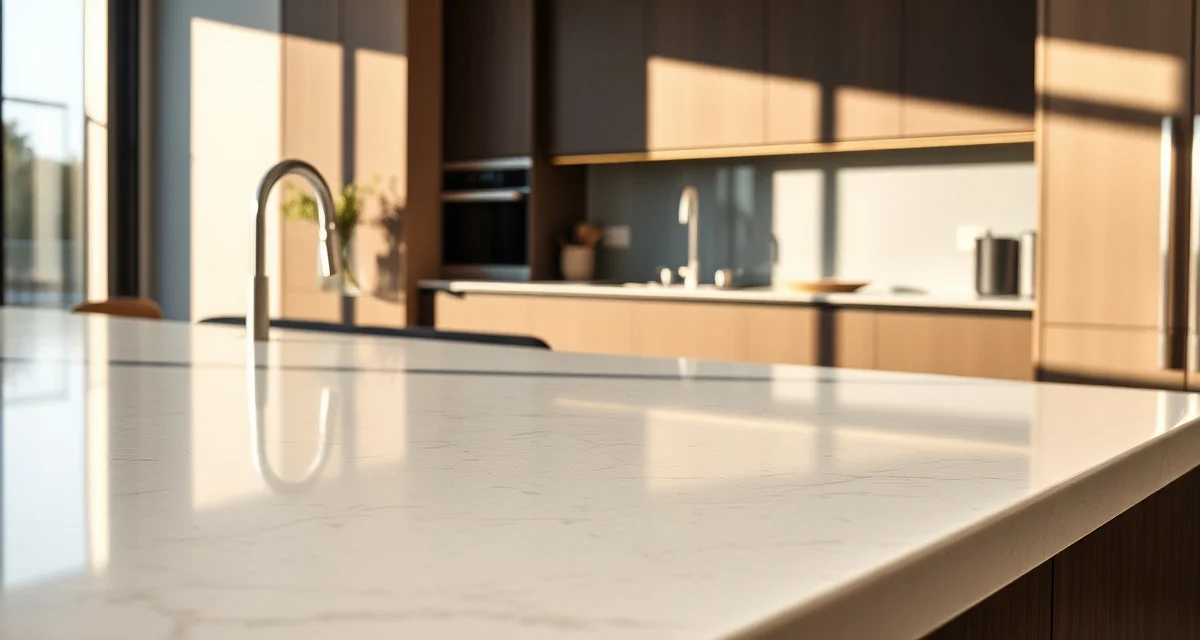
Modern Kitchen Countertop Design
What You Need to Know in 60 Seconds
Modern kitchen design favors clean lines, minimal ornamentation, and surfaces that make a statement through material quality rather than decorative detail. The countertop is the primary surface in a modern kitchen, and getting the material, edge, and finish right defines whether the space reads as intentionally designed or simply bare. This guide covers the materials, profiles, and design strategies that create a genuinely modern kitchen.
TL;DR
- Quartz dominates modern kitchen design for its clean lines and consistent appearance
- Waterfall edges and mitered profiles are signature modern details that justify their cost
- White, gray, and black form the modern kitchen color palette with occasional warm accent
- Thin-profile countertops (2cm/12mm porcelain) are an emerging modern trend that creates a minimalist look
- Integrated sinks and flush-mount appliances maintain the unbroken surface lines modern design requires
- Polished and matte finishes both work - polished for sleek contemporary, matte for warm modern
- Budget $3,000-$12,000 for modern kitchen countertops depending on material and details
Defining Modern Countertop Design
Modern kitchen design is often confused with contemporary. They overlap but are distinct. Modern design follows specific principles that date to the mid-20th century modernist movement: form follows function, less is more, and materials should be honest about what they are.
Calculate your material waste savings
See exactly how much slab material and money you could save with optimized cutting layouts.
Try the free Waste CalculatorFor countertops, this means:
- Clean, geometric forms - straight lines, square or subtly softened edges, no ornate profiles
- Material honesty - the surface should look like what it is, not imitate something else
- Minimal visual clutter - fewer joints, no unnecessary details, purposeful negative space
- Quality over decoration - the beauty comes from the material itself, not from what is done to it
Best Countertop Materials for Modern Kitchens
Quartz
Quartz is the workhorse of modern kitchen design. Its engineered consistency produces the uniform, predictable surfaces that modern design demands. No two granite slabs are alike - that is a selling point for other styles. In modern design, consistency is the goal.
Best modern quartz looks:
- Solid white or off-white: The foundation of bright modern kitchens. Pairs with flat-panel cabinets in any color.
- Concrete-look gray: Textured appearance with industrial roots. Works in loft and urban modern kitchens.
- Solid black or charcoal: Dramatic and bold. Requires careful lighting to avoid feeling heavy.
- Subtle marble-look: Soft veining on white background. Adds movement without busy pattern.
Cost: $55-$110/sq ft installed
Ultra-Compact Surfaces (Sintered Stone)
Brands like Dekton and Neolith produce ultra-compact surfaces that represent the newest material category in modern kitchen design. These are not quartz - they are sintered at extreme temperatures to create a nearly indestructible surface.
What makes them modern:
- Available in very thin profiles (8mm, 12mm) for a razor-thin edge look
- Can be fabricated in large-format panels (up to 126" x 56") with fewer seams
- Available in concrete, metal, and abstract finishes that no natural stone offers
- UV resistant, scratch resistant, and heat resistant
Cost: $65-$150/sq ft installed
Porcelain Slab
Large-format porcelain slabs (typically 1/2 inch thick) create ultra-thin countertop surfaces that are a growing trend in modern design. They can replicate marble, concrete, metal, and abstract patterns while being extremely lightweight.
Best for: Kitchens where a thin, delicate countertop profile is the design goal. The visual effect is a surface that appears to float rather than sit heavily on the cabinets.
Cost: $60-$120/sq ft installed
Concrete
Poured or precast concrete countertops are an established modern material. Their industrial character, matte finish, and customizability (integral color, aggregate exposure, embedded objects) make them a favorite for urban modern and industrial-modern kitchens.
Cost: $65-$135/sq ft installed
Natural Stone in Modern Contexts
Natural stone is not excluded from modern kitchens - it just needs the right treatment.
- Honed black granite: Clean, dark, monolithic. No ornate edge, no visible pattern variation.
- White quartzite with minimal veining: Natural material, modern restraint.
- Book-matched marble: When symmetry meets natural stone, the result is both natural and geometric - a modern design ideal.
Edge Profiles That Define Modern Design
The edge profile is arguably the most important detail in a modern kitchen countertop. The wrong edge undoes the entire design.
Modern Edge Guide
| Profile | Modern Rating | Best Application | Visual Effect |
|---|---|---|---|
| Eased (square with micro-radius) | Excellent | Universal modern | Clean, precise, minimal |
| Mitered (thick look) | Excellent | Islands, peninsulas | Substantial, architectural |
| Thin edge (12mm-2cm) | Excellent | Floating surface look | Lightweight, refined |
| Small bevel | Good | Transitional modern | Subtle detail line |
| Waterfall | Excellent | Island ends | Dramatic, sculptural |
| Half bullnose | Acceptable | Warm modern only | Softened, less precise |
| Ogee / dupont | Not modern | Avoid | Traditional, ornate |
| Full bullnose | Not modern | Avoid | Dated, undefined |
The Waterfall Edge in Modern Design
The waterfall edge is the definitive modern island detail. Stone flowing from horizontal to vertical at the island's end creates an architectural form that reads as deliberate and designed rather than simply functional.
For the waterfall to look correct in a modern kitchen:
- The vein or pattern must be continuous from top to side (requires precise fabrication)
- The corner joint must be invisible or nearly so
- The stone should reach the floor (stopping short at a plinth looks unfinished)
Thin Edge Trend
Ultra-thin countertop edges (8mm-20mm) are gaining popularity in modern kitchens. Rather than the substantial 3cm standard, thin edges create a delicate, floating appearance.
This look requires either thin natural materials (unlikely at these dimensions) or ultra-compact/porcelain surfaces designed for thin-edge applications. The fabrication is different from standard stone work and not all shops are equipped for it.
Color Strategies for Modern Kitchens
The Modern Palette
Modern kitchens operate primarily within a neutral palette, with color introduced through materials and lighting rather than pattern.
Primary modern countertop colors:
- White: The default modern kitchen countertop color. Opens the space, reflects light, pairs with everything.
- Medium gray: Adds depth without darkness. Concrete-look quartz is the most popular version.
- Black/charcoal: Bold and dramatic. Works best with white or light wood cabinets for contrast.
- Warm white/off-white: Softer than pure white, prevents the clinical feel some all-white kitchens develop.
Contrast Principles
Modern design typically uses high contrast between countertops and cabinets:
- White countertop + dark cabinets = dramatic modern
- Black countertop + white cabinets = classic modern contrast
- Gray countertop + white cabinets = soft modern
- White countertop + natural wood cabinets = warm modern
Low-contrast combinations (white on white, gray on gray) work when texture differences provide visual separation - matte cabinets with polished countertop, for example.
Integrated Features for Modern Kitchens
Modern design eliminates visual interruptions wherever possible. Integrated features remove the seams and transitions that break the countertop's visual flow.
Integrated Sinks
An undermount sink is the minimum standard for modern kitchens. A fully integrated sink - where the sink basin is formed from or bonded to the same material as the countertop - is the premium modern solution. No rim, no seam, no transition. Just a smooth curve from flat surface to basin.
Flush-Mount Cooktops
Modern cooktops that sit flush with the countertop surface maintain the unbroken plane that modern design prizes. Raised cooktops or freestanding ranges break the line.
Hidden Drains and Accessories
Drainboards carved into the surface, integrated drying areas, and flush-mount soap dispensers keep the countertop surface clean and uncluttered.
Fabrication Standards for Modern Kitchens
Modern design's emphasis on precision means fabrication quality is under a microscope.
Seam Requirements
Visible seams in a modern kitchen are design failures. The clean lines and minimal aesthetic mean any seam that draws attention disrupts the visual intent.
Modern seam standards:
- Seams should be tight enough to be nearly invisible at arm's length
- Color-matched adhesive should blend perfectly with the surface
- Seam placement should follow geometric logic - at corners, direction changes, or centered where symmetry demands it
- Avoid seams in the middle of visible runs
This is where digital templating and precision cutting make the biggest difference. SlabWise's Template Verification and Slab Nesting tools help fabricators plan seam placement optimally and cut to exact specifications, which directly affects the finished quality that modern kitchens demand.
Surface Flatness
Modern countertops, especially those with thin edges, reveal any surface imperfection. Warping, lippage at seams, or uneven cabinet support shows immediately on a thin, clean-edged modern countertop that would be less noticeable with an ornate edge profile.
Modern Kitchen Countertop Budget
| Component | Standard Modern | Premium Modern | High-End Modern |
|---|---|---|---|
| Quartz (per sq ft) | $55-$80 | $80-$110 | N/A |
| Ultra-compact (per sq ft) | N/A | $75-$110 | $110-$150 |
| Porcelain slab (per sq ft) | $60-$80 | $80-$120 | N/A |
| Waterfall edge (island) | $1,500-$2,500 | $2,500-$5,000 | $5,000-$8,000 |
| Mitered edge (per linear ft) | $30-$50 | $50-$80 | $80+ |
| 40 sq ft kitchen total | $3,500-$6,000 | $6,000-$10,000 | $10,000-$18,000 |
What is the best countertop for a modern kitchen?
White or gray quartz with a clean eased edge is the most popular and practical choice for modern kitchens. It provides the consistency, low maintenance, and clean lines that modern design requires. For a more distinctive look, ultra-compact surfaces like Dekton offer unique finishes not available in quartz.
Are waterfall countertops still in style?
Waterfall edges remain a strong modern design element and show no signs of fading. They have transitioned from trend to established design feature over the past decade. In well-designed modern kitchens, waterfall islands are increasingly considered a standard detail rather than a novelty.
What edge profile is most modern?
A square eased edge (sharp right angle with a micro-radius for safety) is the most universally modern profile. For islands, a mitered edge that creates a thick, monolithic appearance is the premium modern choice. Thin edges (sub-2cm materials) represent the newest direction in modern edge design.
Can natural stone work in a modern kitchen?
Absolutely. The key is selecting slabs with controlled veining or consistent patterns, using honed or leathered finishes instead of polished, and maintaining clean edge profiles. Book-matched marble or quartzite is one of the most striking modern countertop treatments available.
What finish is better for modern kitchens - polished or matte?
Both work. Polished suits sleek, high-gloss modern kitchens and reflects light for a bright, spacious feel. Matte (honed) suits warm modern and Scandinavian-modern styles and hides fingerprints and water spots better. Leathered finish adds texture and works well in modern kitchens that want to avoid the clinical feel of polished surfaces.
How thin can a modern countertop be?
Ultra-compact surfaces and porcelain slabs can be as thin as 8mm (about 1/3 inch). Standard quartz and natural stone are typically 2cm (3/4 inch) minimum for residential use. Thinner profiles create a more refined modern look but require different support structures and edge finishing techniques.
Do modern kitchens use backsplashes?
Modern kitchens often use the countertop material as the backsplash, running it 4-6 inches up the wall for a continuous look. Full-height backsplashes (counter to upper cabinet) in matching material create a dramatic modern effect. The goal is material continuity rather than introducing a third material into the visual field.
How do I keep a modern countertop looking clean?
Modern countertops show clutter, crumbs, and water spots more readily because the clean aesthetic highlights anything out of place. Choose stain-resistant materials (quartz, ultra-compact), keep appliances off the counter surface, and establish a quick daily wipe-down routine.
What is ultra-compact surfacing?
Ultra-compact surfaces are made by fusing natural raw materials (porcelain, glass, quartz) at extremely high temperatures and pressures. The result is a nearly indestructible surface that resists heat, scratches, UV rays, and stains. Leading brands include Dekton (by Cosentino) and Neolith. They represent the newest material category in modern countertop design.
Are concrete countertops considered modern?
Yes, particularly in industrial-modern and urban-modern kitchens. Concrete's raw, handmade character contrasts with the precision of other modern elements (stainless appliances, flat-panel cabinets) in a way that adds warmth and interest. The main drawbacks are maintenance requirements and the potential for hairline cracking.
Design Your Modern Kitchen
Modern kitchen countertops are where material quality, fabrication precision, and design intent converge. The right choices create a space that feels intentional, clean, and built to last.
Use SlabWise's project calculator to compare modern countertop materials and get accurate cost estimates for your kitchen layout. Start your 14-day free trial today.
Try These Free Tools
- Kitchen Visualizer -- Upload a kitchen photo and preview different countertop materials in place.
- AR Overlay -- See the actual stone pattern on your customer's cabinets using AR.
- Sink Finder -- Search compatible sink models by countertop dimensions and cutout specs.
Sources & Further Reading
- Natural Stone Institute - Bathroom Design Guidelines
- National Kitchen & Bath Association - Countertop Selection Guide
- Marble Institute of America - Bathroom Stone Applications
- International Surface Fabricators Association - Residential Bathroom Standards