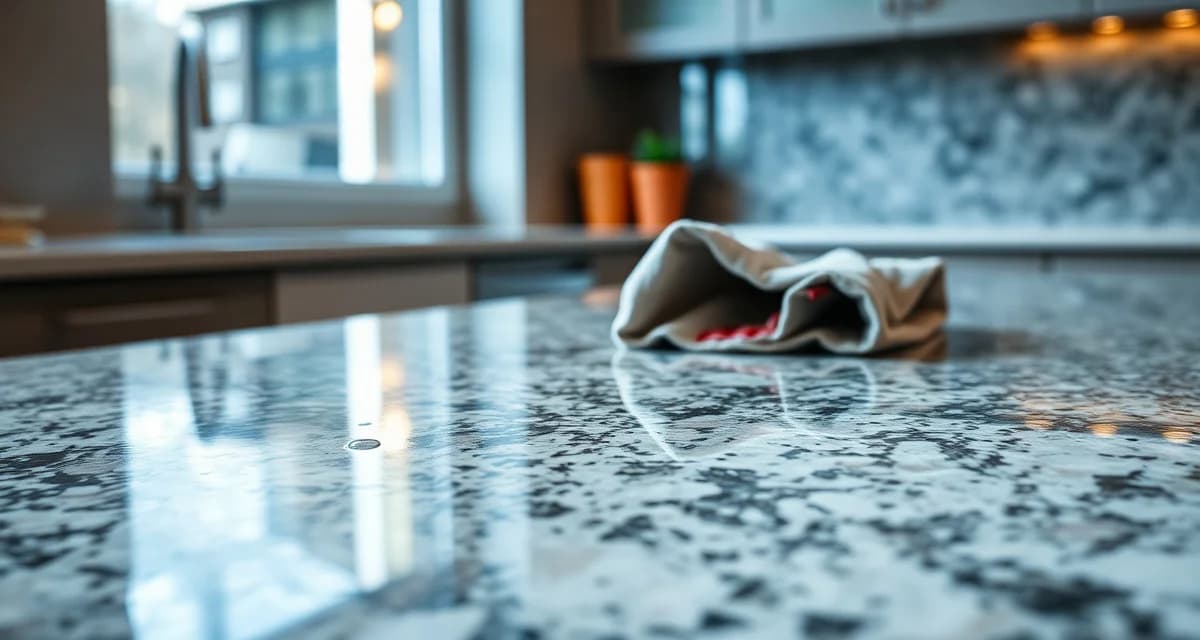
Care and Maintenance Guide for Every Countertop Material
Care and maintenance keeps your equipment running at peak performance.
Proper countertop care is the difference between a surface that looks brand new after 15 years and one that shows its age in 15 months. Whether you fabricate, install, or own stone countertops, knowing the right cleaning routines, sealing schedules, and damage prevention techniques protects a major investment.
TL;DR
- Daily cleaning for most stone countertops requires only warm water, mild dish soap, and a soft cloth
- Granite needs resealing every 1-3 years depending on porosity and color
- Quartz is non-porous and never needs sealing, but is vulnerable to heat damage above 300F
- Marble stains and etches easily --- always use coasters and wipe spills within 60 seconds
- Quartzite is harder than granite but still requires periodic sealing
- Porcelain and sintered stone are virtually maintenance-free with no sealing required
- Fabricators: handing customers a care sheet at installation cuts complaint callbacks by up to 40%
Why Countertop Maintenance Matters
A kitchen countertop handles 1,500+ touches per day on average. Between meal prep, hot pans, acidic foods, and daily wear, every surface material faces specific threats. The right maintenance routine keeps surfaces looking sharp while avoiding costly repairs.
Calculate your material waste savings
See exactly how much slab material and money you could save with optimized cutting layouts.
Try the free Waste CalculatorFor fabricators, maintenance knowledge is just as important. Shops that include printed care instructions with every installation see fewer warranty claims and stronger customer relationships. If you run a fabrication shop, you can use customer portals like SlabWise to automatically send material-specific care guides to homeowners after install --- reducing those "is this stain normal?" phone calls that eat up your office staff's time.
The Real Cost of Poor Maintenance
| Problem | Average Repair Cost | Could It Have Been Prevented? |
|---|---|---|
| Granite stain removal | $200-$500 | Yes - with proper sealing |
| Marble etch mark polishing | $300-$800 | Yes - with immediate spill cleanup |
| Quartz heat damage/scorch | $400-$1,200 | Yes - with trivets |
| Cracked countertop repair | $500-$1,500+ | Sometimes - with proper support |
| Full slab replacement | $2,000-$5,000+ | Depends on cause |
Granite Countertop Care
Granite remains one of the most popular natural stone countertops in the U.S., and for good reason. It is durable, heat-resistant, and can last decades with basic upkeep.
Daily Cleaning Routine
- Wipe down with warm water and a few drops of pH-neutral dish soap
- Use a soft microfiber cloth or non-abrasive sponge
- Dry the surface with a clean towel to prevent water spots
- For stuck-on food, use a plastic scraper --- never a metal blade
What to Avoid on Granite
- Vinegar, lemon juice, or acidic cleaners --- these can dull the polish over time
- Bleach and ammonia --- both can degrade the sealant
- Abrasive scrub pads --- they scratch polished surfaces
- Generic "stone cleaners" that contain citric acid or other acidic compounds
Sealing Granite
Granite is porous, and unsealed surfaces absorb liquids that cause staining. Here is a simple test: place a few drops of water on the surface. If the water soaks in within 4-5 minutes and darkens the stone, it is time to reseal.
Sealing frequency by granite type:
| Granite Type | Typical Seal Frequency | Notes |
|---|---|---|
| Light-colored (e.g., Kashmir White) | Every 6-12 months | More porous, stains show faster |
| Mid-range (e.g., Santa Cecilia) | Every 1-2 years | Moderate porosity |
| Dark/dense (e.g., Absolute Black) | Every 2-3 years | Some dark granites barely absorb |
Stain Removal for Granite
For oil-based stains (cooking oil, grease): make a poultice with baking soda and water, apply it to the stain, cover with plastic wrap, and let it sit 24-48 hours.
For organic stains (coffee, wine, berries): use a poultice of baking soda and hydrogen peroxide (12% solution). Same method --- apply, cover, wait.
For water rings or hard water deposits: use a paste of baking soda and water, rub gently with a soft cloth, and rinse.
Quartz Countertop Care
Quartz (engineered stone) is made from roughly 90-94% ground natural quartz bound with polymer resins. Because it is non-porous, it never needs sealing. That makes daily maintenance simpler than natural stone.
Daily Cleaning Routine
- Warm water and mild dish soap --- same as granite
- Spray-and-wipe with a non-abrasive all-purpose cleaner works fine
- For dried spills, let a damp cloth sit on the spot for a few minutes to soften it
- Glass cleaner (ammonia-based) is safe for quartz and adds streak-free shine
The Big Weakness: Heat
Quartz resin can scorch or discolor at temperatures above 300F (150C). A hot pan straight from the stove or oven can leave a permanent white or brown mark.
Always use trivets or hot pads. This is the single most important care instruction for quartz.
Avoiding Damage
- No harsh chemicals: permanent markers, paint strippers, oven cleaners, and drain openers can damage the resin
- No cutting directly on the surface: quartz resists scratches well, but knife edges still leave marks over time
- UV exposure: prolonged direct sunlight can cause yellowing in some quartz colors --- keep this in mind for outdoor kitchens (quartz is generally not recommended for outdoor use)
Stain Removal for Quartz
Most stains wipe right off quartz. For stubborn spots:
- Dried food or gum: use a plastic putty knife to gently scrape, then clean with soap and water
- Permanent marker or ink: rubbing alcohol on a soft cloth
- Hard water deposits: a 50/50 vinegar-water solution (safe for quartz, unlike granite)
Marble Countertop Care
Marble is beautiful, but it is the highest-maintenance natural stone countertop. It is softer than granite (3-5 on the Mohs scale vs. 6-7 for granite), and it reacts chemically with acids, causing etching --- dull, light-colored marks on the surface.
Daily Cleaning Routine
- Use only pH-neutral cleaners or plain water with a tiny amount of dish soap
- Wipe up spills immediately --- especially citrus, wine, vinegar, tomato sauce, or coffee
- Dry after every cleaning to prevent water spots
- Use coasters under every glass, especially those with acidic drinks
Understanding Etching vs. Staining
These are two different problems, and homeowners confuse them constantly:
- Etching is a chemical reaction. Acid dissolves the calcium carbonate in marble, leaving a dull spot. It happens in seconds. Etching is not a stain --- it is physical surface damage.
- Staining is absorption. A liquid soaks into the porous stone and discolors it. Stains take minutes to hours to develop.
Sealing Marble
Sealing marble prevents stains but does NOT prevent etching. This is the number-one thing homeowners misunderstand about marble care.
- Seal marble countertops every 3-6 months in kitchens
- Use an impregnating (penetrating) sealer, not a topical coating
- Perform the water drop test monthly to check if the seal is still effective
Repairing Marble Etching
Light etching can often be buffed out with marble polishing powder and a soft cloth. Deep etching requires professional honing and re-polishing, which typically costs $300-$800 depending on the area.
Quartzite Countertop Care
Quartzite is a natural metamorphic rock --- harder than granite, with the veined look of marble. It is an increasingly popular choice for homeowners who want the marble aesthetic with better durability.
Daily Cleaning
Same approach as granite: warm water, mild soap, soft cloth. Quartzite handles daily use extremely well.
Sealing Quartzite
Despite its hardness, quartzite is still a natural stone with some porosity. Sealing frequency depends on the specific slab:
- Dense quartzite (like Taj Mahal or Sea Pearl): every 1-2 years
- More porous varieties: every 6-12 months
- Always do the water test to check
Heat and Scratch Resistance
Quartzite handles heat better than quartz (engineered stone) because it contains no resin. You can set a hot pan on quartzite without damage, though using trivets is still a good habit. It is also very scratch-resistant --- harder than a steel knife blade.
Porcelain and Sintered Stone Care
Porcelain slabs (like Dekton and Neolith) are among the lowest-maintenance countertop options available. They are non-porous, UV-stable, heat-resistant, and scratch-resistant.
Daily Cleaning
- Any household cleaner works --- porcelain is not chemically reactive
- Warm water and soap for everyday cleaning
- For tough stains: diluted bleach is safe on porcelain
- Abrasive cleaners are generally safe, but test in an inconspicuous area first
What You Need to Know
- No sealing required --- ever
- Heat-resistant up to 500F+ for most sintered stone products
- UV-stable --- safe for outdoor kitchens
- Main vulnerability: porcelain can chip on edges if hit with a heavy object; edge profiles are limited compared to natural stone
Butcher Block and Wood Countertop Care
Wood countertops require a fundamentally different care approach than stone.
Daily Care
- Wipe with a damp cloth after each use
- Apply food-grade mineral oil every 2-4 weeks (more often in dry climates)
- Sand out minor scratches with fine-grit sandpaper (220-grit), then re-oil
Deep Cleaning
- For disinfecting: spray with white vinegar, let sit 5 minutes, wipe, then follow with mineral oil
- For stubborn stains: sprinkle coarse salt, scrub with half a lemon, rinse, dry, and re-oil
- For odors: baking soda paste left on for 15 minutes
Avoiding Damage
- Never let standing water sit on wood countertops
- Keep wood surfaces away from dishwasher steam vents
- Do not use polyurethane sealers on food-prep surfaces --- stick to mineral oil or beeswax blends
Laminate and Solid Surface Care
Laminate
- Clean with warm soapy water or a mild all-purpose cleaner
- Avoid abrasive scrubbers --- they dull the finish
- Do not cut directly on laminate; knife marks are permanent
- Keep hot pans off the surface; laminate scorches at relatively low temperatures
- Laminate edges are vulnerable to water damage --- wipe up spills around seams quickly
Solid Surface (Corian, etc.)
- Clean with warm soapy water or ammonia-based cleaners
- Minor scratches can be sanded out with fine-grit sandpaper (solid surface is homogeneous throughout)
- Avoid placing hot cookware directly on the surface
- For deeper scratches or burn marks, a professional can sand and refinish the surface
Care Guide Comparison Table
| Material | Sealing Needed | Heat Resistance | Stain Resistance | Scratch Resistance | Maintenance Level |
|---|---|---|---|---|---|
| Granite | Every 1-3 years | High | Moderate (sealed) | High | Low-Medium |
| Quartz | Never | Low (resin scorches) | High | High | Low |
| Marble | Every 3-6 months | Moderate | Low | Low | High |
| Quartzite | Every 6-24 months | High | Moderate (sealed) | Very High | Low-Medium |
| Porcelain | Never | Very High | Very High | High | Very Low |
| Butcher Block | Oil every 2-4 weeks | Low | Low | Low (but repairable) | High |
| Laminate | Never | Very Low | Moderate | Low | Low |
| Solid Surface | Never | Low | Moderate | Low (but repairable) | Low |
Tips for Fabricators: Reducing Post-Install Callbacks
If you run a countertop shop, maintenance-related customer calls are one of the biggest drains on your office staff's time. Here are practical ways to cut those calls down:
- Include a printed care card with every installation --- material-specific, laminated, easy to stick on the fridge
- Walk through care basics during the final install walkthrough --- spend 2 minutes showing the homeowner what to do and what not to do
- Send a follow-up email at 30 days with a reminder about sealing schedules and cleaning tips
- Use a customer portal so homeowners can look up their material, care instructions, and warranty info without calling your shop
Shops that use SlabWise's Customer Portal report up to 70% fewer inbound calls, partly because customers can self-serve answers to basic care questions. That frees your team to focus on quoting new jobs and managing production.
What is the best daily cleaner for stone countertops?
Warm water with a small amount of pH-neutral dish soap works for granite, marble, quartzite, and quartz. Avoid anything acidic (vinegar, citrus-based cleaners) on natural stone. For quartz, glass cleaner is also safe.
How often should I seal my granite countertops?
Most granite needs resealing every 1-3 years. Light-colored granites tend to be more porous and may need sealing annually. Do the water drop test: if water absorbs within 5 minutes, it is time to reseal.
Can I use vinegar on my countertops?
It depends on the material. Vinegar is safe on quartz, porcelain, and laminate. Never use vinegar on granite, marble, or quartzite --- the acid can etch or dull the surface and break down the sealant.
Why does my marble have dull spots even though I sealed it?
Those dull spots are likely etch marks, not stains. Sealing prevents staining (liquid absorption) but does not prevent etching (acid reaction). Any contact with acidic substances --- lemon, wine, tomato sauce --- can etch marble in seconds.
Is quartz really maintenance-free?
Quartz is low-maintenance, not zero-maintenance. It never needs sealing and resists stains well, but it is vulnerable to heat damage, UV discoloration, and can be damaged by harsh chemicals like paint stripper or oven cleaner.
How do I remove a burn mark from quartz?
Unfortunately, heat damage on quartz is often permanent because the resin itself is scorched. Minor discoloration may improve with a paste of baking soda and water, but deep scorch marks typically require professional repair or section replacement.
Can I cut directly on my countertop?
You should always use a cutting board regardless of material. While granite and quartzite will not be damaged by a knife, they will dull your knife blades quickly. Quartz, marble, laminate, and solid surface will show cut marks over time.
What causes dark spots on granite after cleaning?
Dark spots that appear after getting the surface wet are usually water absorption in areas where the sealant has worn away. Let the spot dry completely (it should disappear as the water evaporates), then reseal the area.
How do I care for an outdoor kitchen countertop?
Outdoor countertops need UV-stable materials: granite, quartzite, porcelain, or sintered stone. Avoid quartz outdoors. Clean with soap and water, seal natural stone more frequently (every 6-12 months), and cover surfaces during harsh weather.
Do I need to seal porcelain countertops?
No. Porcelain and sintered stone are non-porous and never require sealing. They are also resistant to UV, heat, and most chemicals, making them among the easiest countertop materials to maintain.
What should I tell my fabricator about countertop care before installation?
Ask your fabricator about the specific care requirements for your chosen slab, recommended sealers, and whether they provide a care guide. A good fabricator will walk you through maintenance basics during the installation walkthrough.
How long do countertops last with proper care?
With proper maintenance, granite and quartzite can last 50+ years. Quartz typically lasts 25-30 years. Marble lasts decades but will develop a patina. Laminate and solid surface usually last 15-20 years before showing significant wear.
Keep Your Countertops Looking Their Best
Whether you are a homeowner protecting your kitchen investment or a fabricator helping customers get the most from their new surfaces, the right care routine makes all the difference.
For fabricators: reducing post-install support calls starts with proactive education. Start a free 14-day SlabWise trial to set up automated care guides, customer portals, and follow-up sequences that keep homeowners informed --- and keep your phone lines clear for new business.
Try These Free Tools
- Cost Calculator -- Get instant countertop cost estimates by material, edge profile, and square footage.
- Compare Materials -- Side-by-side material comparison with pricing, durability, and maintenance ratings.
- Edge Profile Selector -- Browse edge profiles with cost impact and visual previews.
Sources & Further Reading
-
Natural Stone Institute - Digital Tools and Technology in Stone Fabrication
-
International Surface Fabricators Association - Quoting Best Practices and Technology
-
National Kitchen & Bath Association - Technology Integration in Kitchen Design
-
Remodeling Magazine - Digital Transformation in Countertop Industry