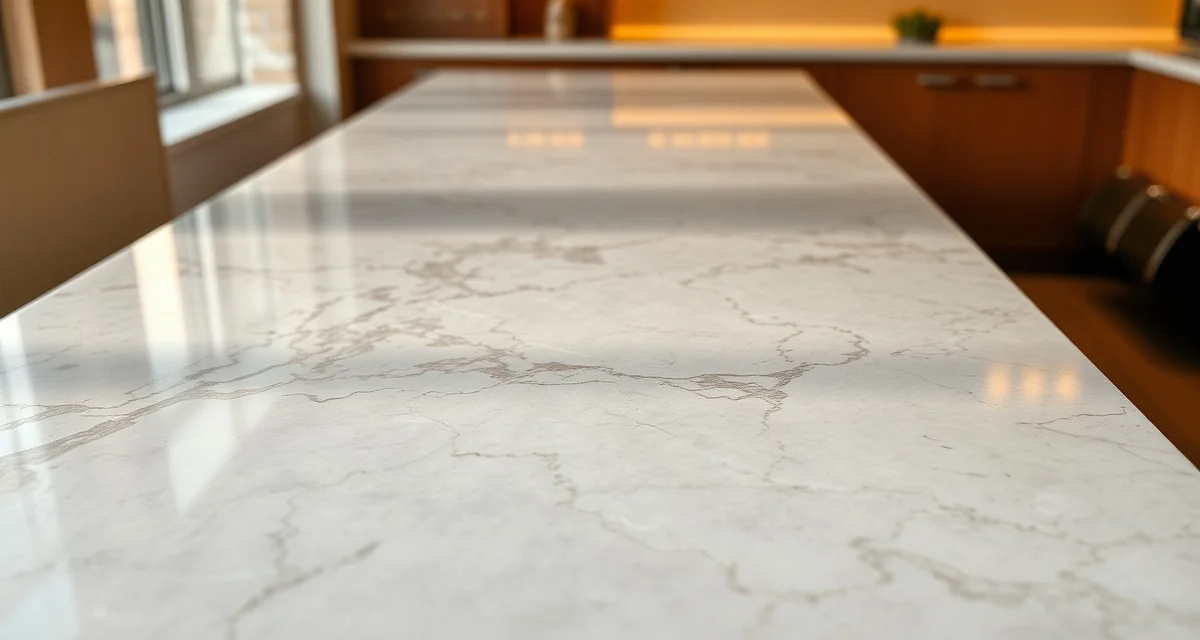
Marble Countertops Guide: Beauty, Cost, and Reality in 2026
This marble countertops guide covers everything fabricators and homeowners need to know.
Marble is a metamorphic rock formed when limestone undergoes extreme heat and pressure deep within the earth's crust, recrystallizing the calcite minerals into the distinctive veined patterns that have defined luxury surfaces for centuries. As a countertop material, marble offers unmatched aesthetic appeal but demands more care than granite or quartz, with susceptibility to etching from acids and staining from oils. Installed prices range from $75 to $250+ per square foot, making it one of the more premium countertop choices.
TL;DR
- Marble countertops cost $75-$250+ per square foot installed; average kitchen runs $4,500-$12,000
- Composed primarily of calcite, which reacts with acids (lemon juice, vinegar, wine) causing etching
- Softer than granite (3-5 Mohs vs. 6-6.5), making it more scratch-prone
- Requires sealing 2-3 times per year for kitchen use
- Carrara is the most affordable marble ($75-$120/sq ft); Calacatta is the most sought-after ($150-$250+/sq ft)
- Best suited for: bathroom vanities, low-traffic areas, baking stations, and homeowners who appreciate patina
- The marble look without the maintenance: consider quartz alternatives or quartzite
Types of Marble for Countertops
Italian Marbles
Italy, particularly the Carrara region of Tuscany, has produced marble for over 2,000 years. The three most common Italian marbles for countertops:
Calculate your material waste savings
See exactly how much slab material and money you could save with optimized cutting layouts.
Try the free Waste CalculatorCarrara Marble
- Appearance: Gray-white background with soft gray veining
- Price: $75-$120/sq ft installed
- Best for: Bathrooms, backsplashes, less-trafficked kitchen areas
- Availability: Widely available; the most common marble in the US market
Calacatta Marble
- Appearance: Bright white background with bold, dramatic gray and gold veining
- Price: $150-$250+/sq ft installed
- Best for: Statement kitchens, islands, feature walls
- Availability: Limited; quarried from specific sites in the Apuan Alps
Statuario Marble
- Appearance: Pure white background with striking gray veining; less gold than Calacatta
- Price: $130-$200/sq ft installed
- Best for: Modern luxury kitchens, high-end bathrooms
- Availability: Rare; commands premium pricing
Other Popular Marbles
| Marble | Origin | Appearance | Price Range (Installed) |
|---|---|---|---|
| Danby | Vermont, USA | White with subtle gray veining | $100-$160/sq ft |
| Thassos | Greece | Pure white, minimal veining | $120-$180/sq ft |
| Nero Marquina | Spain | Black with white veining | $90-$150/sq ft |
| Emperador | Spain | Brown with lighter veining | $80-$130/sq ft |
| Fantasy Brown | India | Waves of brown, gray, and white | $70-$110/sq ft |
| Arabescato | Italy | White with dramatic gray movement | $120-$200/sq ft |
Marble Countertop Costs in 2026
Full Kitchen Cost Breakdown
For a 40 sq ft L-shaped kitchen with one undermount sink:
| Component | Carrara | Calacatta |
|---|---|---|
| Material (slab) | $2,400-$3,600 | $4,800-$8,000 |
| Fabrication | $500-$900 | $600-$1,000 |
| Edge profile | $200-$500 | $200-$500 |
| Sink cutout | $150-$250 | $150-$250 |
| Installation | $450-$800 | $500-$900 |
| Initial sealing | $50-$100 | $50-$100 |
| Total | $3,750-$6,150 | $6,300-$10,750 |
What Affects Marble Pricing?
- Quarry origin: Italian marble costs 30-60% more than comparable Indian or Turkish marble
- Vein pattern: Bold, book-matched veining commands higher prices
- Slab size: Jumbo slabs reduce seams but cost more per sq ft
- Block quality: First-choice slabs from the center of blocks have fewer defects
- Market demand: Calacatta demand has driven prices up 15-25% over the past 5 years
The Reality of Marble in Kitchens
Etching: Marble's Biggest Vulnerability
Marble is composed of calcite (calcium carbonate), which reacts chemically with acids. When lemon juice, vinegar, wine, tomato sauce, or even some cleaning products contact marble, they dissolve a microscopic layer of the surface, creating dull spots called "etch marks."
Important distinction: Etching is not staining. Stains penetrate into the stone; etching is surface-level chemical damage. A stain is a dark spot; an etch mark is a lighter, dull spot.
| Substance | Etch Risk | Time to Etch |
|---|---|---|
| Lemon juice | Very high | 30 seconds |
| Vinegar | Very high | 1-2 minutes |
| Red wine | High (and stains) | 2-5 minutes |
| Tomato sauce | High | 2-5 minutes |
| Coffee | Low etch, moderate stain | 10+ minutes |
| Cooking oil | No etch, stains if unsealed | 15+ minutes |
| Water | No etch or stain | N/A |
| Mild dish soap | None | N/A |
Dealing with Etching
For polished marble:
- Prevention: Wipe acid spills immediately, use coasters, seal regularly
- Minor etching: Buff with marble polishing powder and a damp cloth
- Moderate etching: Professional honing and repolishing
- Accepting patina: Many marble owners (especially in Europe) embrace the aging process as part of the material's character
For honed marble:
- Etch marks are far less visible because the surface is already matte
- Honed finishes are recommended for kitchen marble for this reason
Staining
Sealed marble resists most stains, but the seal wears away over time. The most common kitchen stains on marble:
- Oil-based: Cooking oils, butter, grease (dark stains)
- Organic: Coffee, tea, fruit juice (brown/pink stains)
- Rust: Metal cans or cast iron left on wet marble (orange stains)
Stains can be removed with poultice treatments (baking soda + water paste for oil stains; hydrogen peroxide + baking soda for organic stains).
Marble Maintenance Schedule
| Task | Frequency | Time Required |
|---|---|---|
| Wipe with pH-neutral cleaner | Daily | 2 minutes |
| Check for etch marks | Weekly | 2 minutes |
| Apply penetrating sealer | Every 3-4 months | 30 minutes |
| Professional polish (if desired) | Every 1-2 years | 2-4 hours (professional) |
| Deep stain removal (if needed) | As needed | 1-24 hours (poultice) |
Fabrication Considerations for Shops
Cutting Marble
Marble fabrication differs from granite and quartz in several ways:
- Softness: Marble's lower hardness (3-5 Mohs) means faster cutting speeds but higher chip risk
- Brittleness: More prone to edge chipping during edge profiling; use sharp tooling
- Vein direction: Veins can create weak planes; avoid placing seams across vein lines
- Fissures: Natural fissures are more common in marble; inspect slabs carefully before cutting
- Rodding: Many marble slabs require fiberglass rods epoxied into channels on the underside for reinforcement
Edge Profile Recommendations
Not all edge profiles work well with marble:
| Edge Profile | Suitability | Notes |
|---|---|---|
| Eased | Excellent | Simple, low chip risk |
| Beveled | Excellent | Clean look, durable |
| Half bullnose | Good | Slightly more chip risk at rounded edge |
| Full bullnose | Good | Classic marble look |
| Ogee | Fair | Detailed profile increases chip risk |
| Mitered | Fair | Requires careful alignment of veining |
| Waterfall | Good | Dramatic with bold veining; vein matching is critical |
Seam Challenges
Marble seams require extra attention:
- Vein matching: Customers expect veins to flow across seams, requiring careful layout planning
- Book matching: Using consecutive slabs from the same block to create mirror-image patterns
- Epoxy color: Marble's translucency makes seam adhesive color more critical than with granite
- Fragility at seams: Thin areas near seams are vulnerable during transport and installation
Slab Yield
Marble slab yield is typically lower than granite due to:
- Natural fissures that must be avoided
- Vein matching requirements that constrain piece placement
- Higher defect rates in some marble varieties
- Customer expectations for visual continuity
Expect 50-70% yield from marble slabs compared to 60-80% from granite. AI nesting software helps maximize yield while respecting vein direction constraints.
Who Should (and Shouldn't) Choose Marble
Marble Is a Good Fit If You:
- Value natural beauty and are willing to maintain it
- Accept that patina develops over time
- Use your kitchen primarily for light cooking or entertaining
- Are installing in a bathroom vanity (lower exposure to acids)
- Want a dedicated baking station (marble stays cool, ideal for pastry)
- Prefer a honed finish that hides wear
Marble May Not Be Right If You:
- Cook frequently with acidic ingredients (Italian, Mexican, Asian cuisines)
- Want a maintenance-free surface
- Have young children who spill frequently
- Are particular about keeping surfaces looking brand-new
- Plan to use it in a high-traffic commercial kitchen
Alternatives That Look Like Marble
For homeowners who love the marble look but want less maintenance:
| Alternative | Appearance Match | Maintenance | Price Range |
|---|---|---|---|
| Calacatta quartz (Cambria, Silestone) | 85-90% | Very low | $80-$150/sq ft |
| White quartzite (Taj Mahal, Mont Blanc) | 80-85% | Moderate | $100-$200/sq ft |
| Porcelain slabs (Dekton, Neolith) | 75-85% | Very low | $70-$150/sq ft |
| Marble-look sintered stone | 75-80% | Very low | $80-$140/sq ft |
FAQ
Does marble stain easily?
Sealed marble resists most stains well. Without sealing, marble is moderately porous and will absorb liquids like oil, wine, and coffee within 5-15 minutes. Sealing every 3-4 months significantly reduces stain risk. Honed marble tends to show stains less than polished.
What's the difference between Carrara and Calacatta?
Carrara has a gray-white background with soft, feathery gray veining and costs $75-$120/sq ft installed. Calacatta has a brighter white background with bold, dramatic gray and gold veining and costs $150-$250+/sq ft. Both come from the Carrara region of Italy but from different quarry locations.
Can you use marble in a kitchen?
Yes, with expectations properly set. Marble will develop patina over time from etching and wear. Many homeowners and designers consider this part of the charm. Choosing a honed finish, sealing regularly, and using cutting boards and trivets will keep marble looking great for decades.
How do you remove etch marks from marble?
Light etch marks on polished marble can be buffed out with marble polishing powder (tin oxide or aluminum oxide based). Apply the powder with a damp cloth, buff in circles, and rinse. Deeper etching requires professional honing and repolishing with diamond pads.
Is marble heat-resistant?
Marble handles heat better than quartz but can thermal-shock if exposed to extreme temperature changes. Placing a 450 degree F pan on cold marble could potentially cause stress fractures. Using trivets is recommended as a precaution, though brief contact with hot items is generally safe.
How long does marble last?
With proper care, marble countertops last 50-100+ years. Many marble surfaces in historic buildings are centuries old. The surface will develop patina over time, but structurally marble is extremely durable. Repolishing can restore the original finish when desired.
Does marble need to be sealed?
Yes. Marble should be sealed with a quality penetrating sealer every 3-4 months for kitchen use and every 6-12 months for bathroom use. Sealing does not prevent etching (which is a chemical reaction) but does prevent staining (liquid absorption).
Is honed or polished marble better for kitchens?
Honed (matte finish) marble is generally better for kitchens because etch marks are far less visible on a matte surface. Polished marble shows every etch mark as a dull spot against the shiny surface. However, polished marble resists staining slightly better because the pores are more closed.
Can marble countertops be refinished?
Yes. Professional stone restoration companies can hone and repolish marble to remove etching, scratches, and stains. The process uses progressive diamond pads (similar to the original factory finishing). Expect to pay $5-$15 per square foot for professional refinishing.
What is the most durable marble?
Danby marble from Vermont is considered one of the most durable marbles for countertop use. It has a tighter crystal structure and lower porosity than many Italian marbles. However, all marble is softer and more reactive than granite, quartzite, or quartz.
Get Precise Marble Quotes Without the Guesswork
Marble jobs require accurate quoting to account for vein matching, slab yield differences, and material premiums. SlabWise's Quick Quote pulls real-time marble slab pricing and automatically calculates the additional waste factor, giving your customers accurate numbers in under 3 minutes.
Start Your 14-Day Free Trial - Quote marble jobs with confidence. No credit card required.
Try These Free Tools
- Nesting Optimizer -- AI-powered slab layout that maximizes yield considering vein direction and defects.
- Defect Mapping -- Upload a slab photo and AI maps every fissure, pit, and color issue.
- Value Engineering -- Find dollar-quantified suggestions to save material without cutting margin.
Sources & Further Reading
-
International Surface Fabricators Association - Digital Fabrication and CAD/CAM Best Practices
-
Natural Stone Institute - Stone Fabrication Technology and Optimization
-
Marble Institute of America - Template and Layout Efficiency Guidelines
-
National Kitchen & Bath Association - Countertop Installation and Fabrication Standards