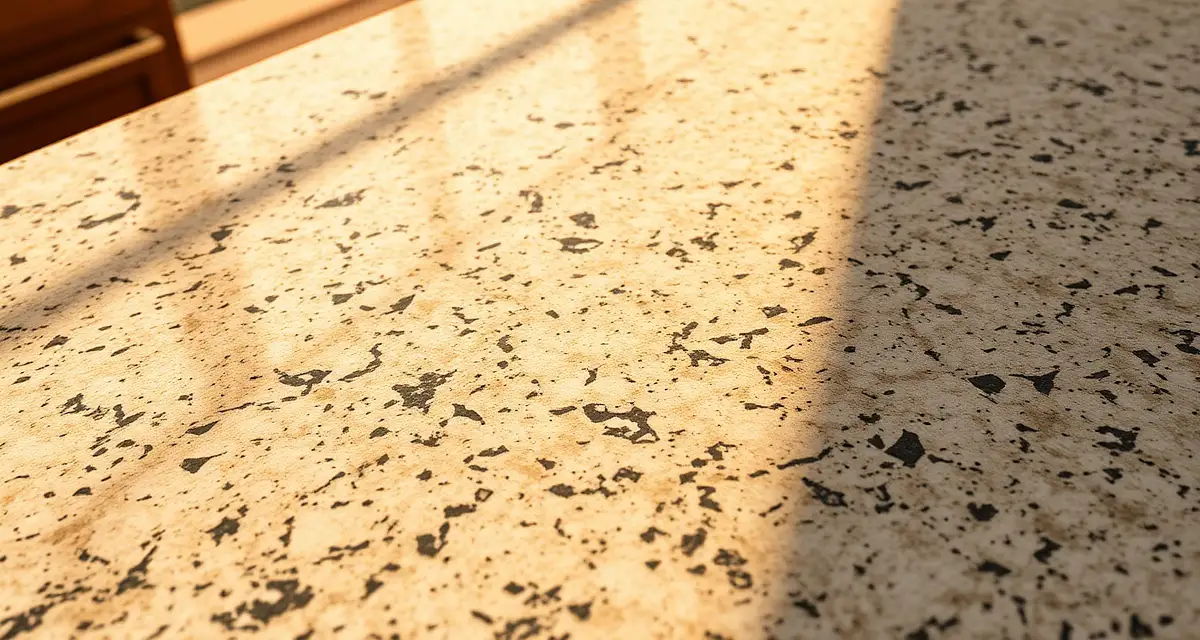
Granite was the default upgrade countertop for twenty years before quartz took the crown, and it never stopped being good. It is real stone, cut from a mountain in Brazil or India, and no two slabs match. It takes a hot pan without complaint. It works outdoors. Entry-level granite is now one of the cheapest stone surfaces you can buy.
It also comes with homework. Granite is porous, so it needs sealing. Its pricing system ("level 1" through "level 5") confuses almost everyone. And because every slab is unique, buying granite from a 4-inch sample is how people end up with a kitchen they don't recognize.
This guide explains what granite actually is, how the level system really works, what you should pay in 2026, where granite beats quartz and where it loses, and how to buy a slab without surprises.
What is granite, actually?
Granite is igneous rock: magma that cooled slowly underground over millions of years, crystallizing into the speckled, veined patterns you see in a slab. Quarries cut it from the earth in massive blocks, mostly in Brazil and India, then saw it into slabs and polish it. Nothing is added. What came out of the mountain is what goes on your cabinets.
That origin explains almost everything about granite ownership:
Every slab is unique. Two slabs of "Santa Cecilia" from different lots can look noticeably different. This is the appeal and the risk. You are not buying a pattern from a catalog; you are buying one specific piece of a mountain. Where the stone comes from shapes its look, and our granite origin guide plus the deep dives on Brazilian granite and Indian granite cover the regional differences.
It is porous. Natural stone has microscopic pores. Unsealed granite absorbs oil, wine, and water, which is why sealing exists and why your fabricator will talk about it. More on that below, because the sealing chore is smaller than its reputation.
It formed under heat, so it handles heat. A pan straight off the burner will not scorch granite the way it scorches quartz resin. This is granite's single biggest practical advantage.
What do granite countertops cost in 2026?
Installed granite runs $40 to $200+ per square foot in 2026, and the spread is about rarity, not quality. The industry prices granite in levels, and the level system is the first thing to understand before reading a quote.
| Level | Installed cost/sq ft | What you're getting | Example colors |
|---|---|---|---|
| Level 1 (Basic) | $40-$60 | Plentiful, consistent patterns | Uba Tuba, Santa Cecilia, Giallo Ornamental |
| Level 2 (Standard) | $55-$80 | More color variety | New Venetian Gold, Tan Brown, Black Pearl |
| Level 3 (Premium) | $75-$110 | Whites and lighter exotics | Alaska White, Colonial White, Bianco Antico |
| Level 4 (Exotic) | $100-$150 | Rare colors, dramatic movement | Blue Bahia, Van Gogh, Titanium |
| Level 5 (Ultra-Exotic) | $140-$200+ | Statement stones | Azul Macaubas, Patagonia, Ice Blue |
The part nobody tells you: level is a rarity and availability ranking, not a durability ranking. Level 1 Uba Tuba is not weaker stone than a level 5 Patagonia. It is just quarried in enormous quantities, which makes it cheap. A level 1 slab will survive your kitchen exactly as well as the exotic. If you like a level 1 color, buying it is the single biggest money move in countertop shopping. The full breakdown is in our granite levels guide, with the common what does level 2 mean question answered separately.
Other numbers worth knowing, all covered line by line in the granite cost guide:
- A typical 40 square foot kitchen in level 1 or 2 granite lands between $2,200 and $3,200 installed. The same kitchen in a level 4 exotic can pass $6,000.
- Edges: eased is free, bullnose $10 to $18 per linear foot, ogee $15 to $25, mitered $25 to $50.
- Big box "$39/sq ft installed granite" promotions are level 1 stone with the extras (cutouts, tear-out, edge upgrades, seam work) billed separately. The all-in number is what matters.
- Granite slabs are smaller than quartz jumbo slabs, so long kitchens sometimes need an extra seam or even an extra slab. Ask how many slabs your layout needs before comparing quotes.
For color hunting, granite colors and what they cost sorts the popular ones by level.
Which rooms does granite belong in?
Granite works in every room quartz works in, plus the two places quartz can't go: outdoors and next to serious heat. Room by room:
Calculate your material waste savings
See exactly how much slab material and money you could save with optimized cutting layouts.
Try the free Waste CalculatorKitchens: yes, especially for real cooks. Hot pans, dropped knives, daily chaos. Granite's heat tolerance means the trivet rule that governs quartz kitchens mostly doesn't apply here. The caveat is spill discipline on lighter stones; wine left overnight on an unsealed white granite can leave a mark. Details in hot pots on granite.
Bathrooms: yes, and save money doing it. A level 1 remnant makes a beautiful vanity for a few hundred dollars. Sealed granite shrugs off cosmetics and water. Our vanity cost guide has the numbers.
Outdoor kitchens: granite is the answer. UV does nothing to it. Rain does nothing to it. This is the room where the granite vs quartz decision makes itself, since quartz resin fails in sunlight. Pick a mid-tone color (bright whites show pollen and grime, dark stones get hot in full sun) and seal it annually. The specifics are in outdoor granite.
Fireplace surrounds: excellent. Granite tolerates sustained radiant heat that would cook quartz resin. It's the traditional surround material for a reason.
Laundry and mudrooms: fine, remnant territory. Same play as bathrooms. Ask your fabricator what granite remnants they're sitting on.
Who is granite right for?
Granite fits people who cook hard, want stone with real character, or are building outdoors. It is the wrong pick for buyers who want a maintenance-free surface or a specific uniform look.
Serious cooks: the strongest case. If your cooking style moves hot cast iron around without thinking, granite forgives what quartz punishes.
Outdoor builders: no real competition except quartzite and porcelain, both pricier on average.
Character buyers: if the manufactured uniformity of quartz leaves you cold, granite's randomness is the point. No neighbor will have your slab.
Budget stone shoppers: level 1 granite at $40 to $60 installed undercuts almost all quartz while being genuinely natural stone. It's the best value in real stone, full stop.
Landlords: decent but not ideal. The stone survives tenants fine; the sealing schedule is the weak link, because nobody seals a rental counter. A dark, dense level 1 (Uba Tuba is the classic) hides neglect best. The full rental math is in our rental countertop guide.
Selling soon: granite still reads as an upgrade in listings, though quartz overtook it as the buyer-preference keyword in most markets. If your market skews traditional, granite shows well. Either way, don't put a level 4 exotic into a flip.
Maintenance minimalists: buy quartz instead. Sealing granite is light work, but light work you'll actually have to remember.
How durable is granite, really?
Granite is one of the most durable countertop materials sold, with a different weakness profile than quartz: heat is a non-issue, but porosity and chips are the things to manage.
Heat: the headline strength. Pans off the burner are fine. The one real risk is thermal shock, a hot pan on a freezing-cold stone in rare conditions, which is uncommon enough that most fabricators have never seen it.
Scratches: harder than your knives. Like quartz, granite dulls blades that cut on it.
Stains: the porosity story. Sealed granite resists everything you'll throw at it in normal life. Let the seal lapse on a light stone and oil or wine can soak in and shadow. Dark, dense granites are nearly stain-proof even with lazy sealing.
Chips: edges chip if struck hard, same as quartz. The difference is repair: a granite chip can often be filled and polished to near-invisible, since there's no resin to color-match. Granite repair options and costs covers chips, and the general repair cost guide has the dollar figures.
Cracks: rare and almost always an installation or support issue, not daily use. Hairline fissures that came with the stone are normal and structural non-events; your fabricator should point them out at slab viewing so you don't mistake them for damage later.
The radon question: granite contains trace amounts of naturally radioactive minerals, and the internet periodically panics about it. The EPA's position is that granite countertops are a negligible contributor to home radon, far below levels of concern. We walk through the actual numbers in is granite radon dangerous. Short version: not a real factor in this decision.
What maintenance does granite need?
Granite needs one habit quartz doesn't: sealing. Everything else is the same dish-soap-and-water routine. The honest sealing picture:
- How often depends on the stone. Dense, dark granites can go 3 to 5 years between sealings, sometimes longer. Light, more porous stones want it every 1 to 2 years. The granite sealing guide covers timing by stone type.
- The water-drop test tells you when. Drop water on the counter. If it beads, you're sealed. If it darkens the stone within a few minutes, reseal. Thirty-second test, twice a year.
- Doing it is trivial. Wipe-on sealer from a hardware store, $25 and twenty minutes. This is the "maintenance burden" that scares people toward quartz. It's less work than oiling a cutting board.
- What to avoid: vinegar, bleach, and abrasive cleaners dull the polish over time. pH-neutral cleaner or plain dish soap is the daily answer.
Where does granite fall short?
Granite's weaknesses are mostly logistics and habit, not performance:
You must see your slab. Buying granite from a sample chip is the classic regret. Patterns shift across a slab, lots vary, and the busy movement that looks great in 4 inches can overwhelm a whole kitchen. Plan a stone yard visit; there is no shortcut.
Sealing is a real, if small, chore. If you know you'll never do it, a light granite will eventually stain and you'd be happier with quartz.
Color hunting takes longer. Quartz offers consistent whites on demand. Granite whites (level 3 and up) cost more and still vary slab to slab. If you want a specific clean white, quartz usually gets you there cheaper.
Budget creep through the levels. Showrooms display the exotics. The jump from a $55 level 2 to a $120 level 4 happens one "just look at this one" at a time. Decide your level before you visit.
Weight. Like all 3cm stone, granite runs around 18 to 19 pounds per square foot, slightly heavier than quartz. Countertop weight covers when cabinets need reinforcement. Not a DIY install.
How does granite compare to the alternatives?
Granite beats quartz on heat and outdoor use, loses on maintenance, and undercuts every other natural stone on entry price. The quick view:
| Material | Installed/sq ft | Sealing | Where it beats granite |
|---|---|---|---|
| Laminate | $15-$40 | No | Price only |
| Butcher block | $30-$60 | Yes (oil) | Warmth, DIY-friendliness |
| Quartz | $50-$150 | No | Zero maintenance, uniform colors |
| Granite | $40-$200 | Yes | The baseline |
| Porcelain/sintered | $60-$120 | No | Thinner profiles, pattern consistency |
| Marble | $75-$200 | Yes | Luxury look, nothing practical |
| Quartzite | $80-$200 | Yes | Marble looks with granite toughness |
| Soapstone | $70-$120 | No (oil optional) | Chemistry-lab charm, no sealing |
The matchups with their own pages: granite vs quartz is the big one, then granite vs quartzite, granite vs marble, granite vs porcelain, granite vs sintered stone, granite vs butcher block, granite vs concrete, and granite vs soapstone. People also cross-shop granite against specific quartz brands: Silestone vs granite, Cambria vs granite, and Caesarstone vs granite.
Starting from zero? The best countertop materials overview ranks everything by situation.
What should be on your granite quote?
A complete granite quote names the stone, its level, the slab count, and every fabrication line item. Granite quotes have two extra items quartz quotes don't: slab selection terms and sealing.
- Stone name and level, not just "granite." "Level 2 New Venetian Gold, 3cm" is a quote. "Granite starting at $39" is an ad.
- Slab viewing and tagging. The quote should reference the specific slab (or lot) you approved. Reputable shops tag your slab after you pick it.
- Slab count and seam plan. Granite slabs average smaller than quartz jumbos; an L-shaped kitchen might need two. Seam placement matters more on patterned stone, so ask to see the layout before they cut.
- Edge profile priced per linear foot (what edges cost).
- Cutouts for sink, cooktop, faucets, typically $100 to $250 each.
- Sealing: applied at install (usually included) and what they recommend ongoing.
- Tear-out and disposal, stated included or excluded.
With two or three quotes structured like this, comparison is arithmetic. The installation cost guide breaks down the labor side, and your kitchen's real square footage keeps everyone honest on measurements.
How do you actually buy granite? The short version
- Pick your level ceiling first. Decide the budget tier before a showroom shows you a $150 Patagonia under perfect lighting.
- Browse colors online to shortlist, knowing the slab will differ from the photo.
- Go to the stone yard and walk the slabs. This is non-negotiable for granite. Bring photos of your cabinets and floor.
- Tag the exact slab you choose and get the slab or lot number on the quote.
- Get three itemized quotes from local fabricators (the directory lists shops by city). Independent shops usually beat big box pricing on the same stone.
- Ask each shop: how many slabs does my layout need, where do the seams fall, and is install done by employees or subs.
- Schedule fall or winter if you can, and do the water-drop test on your first anniversary.
Common questions about granite countertops
How often does granite need to be sealed?
Every 1 to 5 years depending on the stone. Dark, dense granites go years between sealings; light porous stones want it more often. The water-drop test gives you the real answer: if water darkens the stone instead of beading, it's time. The job is a $25 bottle and twenty minutes.
Can you put hot pans directly on granite?
Yes. Granite formed under extreme heat and tolerates cookware straight off the burner. The only theoretical risk is thermal shock on a very cold slab. If you want zero thought about heat, granite is the surface that gives it to you.
Can granite countertops go outside?
Yes, and it's the best mainstream choice for outdoor kitchens. UV and weather don't degrade it. Use a mid-tone color, seal annually, and it will outlast the grill.
Is granite cheaper than quartz?
At the entry level, yes: level 1 granite installs at $40 to $60 per square foot, below most quartz. Mid and premium levels overlap quartz almost exactly. Exotic levels exceed it.
What does "level 1 granite" mean? Is it low quality?
No. Levels rank rarity and availability, not strength. Level 1 stones are quarried in huge volumes, which makes them cheap, not weak. A level 1 slab performs like a level 5 slab. If you love a level 1 color, you've won.
Is granite safe? What about radon?
Yes. Granite contains trace radioactive minerals like nearly all natural stone, and the EPA considers countertops a negligible radon contributor. It is not a meaningful factor in choosing a counter.
Do granite countertops stain?
Sealed granite resists almost everything. Lapsed sealing on light stones can let oil or wine shadow the surface, and most of those marks can be drawn back out with a poultice. Dark granites are close to stain-proof even when neglected.
How long do granite countertops last?
Effectively forever with basic care. The stone itself is a multi-decade surface; kitchens get remodeled around granite far more often than granite wears out. It is one of the few counters that can outlive the house's second owner.