Dupont Edge: Complete Guide
Last October, Brian Meacham stood over a 3cm Taj Mahal quartzite slab in his shop outside Hagerstown, Maryland, watching his lead fabricator run a dupont profile for the fifth time that week. "We were eating $1,200 a month in rework on edges alone," Brian told me. "And I was the only guy who could sign off on a dupont before it left the building. That's not a business. That's a hostage situation."
Brian's shop, 14 employees, roughly 220 kitchens a year, 80/20 residential to light commercial. Quartz is 70 percent of slab volume, quartzite 18, granite the rest. He'd been in the trade 19 years, same location for 11, added a second CNC two years ago and digital templating 18 months back. On paper, a healthy mid-Atlantic operation. In practice, the dupont edge was quietly strangling his growth.
This article sits in the CNC Fabrication & Edge Profiles cluster, anchored by the Eased Edge hub. For the full picture of how edge work fits the broader fab workflow, the Complete Guide to Countertop Fabrication ties every piece of the shop into one operational view. What follows is the working answer on dupont edge from a shop-floor perspective, built from case studies, fabricator surveys, and the kind of conversations that happen at ISFA events after the booth lights go off and the real talk starts.
Why the Dupont Edge Keeps Stalling Shops
Before Brian made changes, his numbers looked like this: quote turnaround on dupont jobs sat at six to eight hours, callback rate hovered around 7 percent, and he was personally approving every single dupont decision. That last part was the real problem. He was working 65-hour weeks. Revenue had been stuck in the same band for two straight years.
He'd tried two fixes that didn't stick. A software tool the office found too complicated. A manual checklist the crew abandoned after three weeks. Sound familiar?
The pattern is weirdly common. Shops that can run an eased edge in their sleep still trip over the dupont because it sits in this awkward middle ground: too premium to standardize the way you'd standardize a pencil, not exotic enough to warrant the full custom treatment you'd give a mitered waterfall. So it just... lingers in the owner's head.
The Fix Was Boring (It Usually Is)
Brian's actual solution had nothing to do with new machines or fancy software. He picked one person, not himself, to own dupont edge outcomes. That person ran a weekly review, kept a one-page process doc current, and tracked three numbers. That's it.
Calculate your material waste savings
See exactly how much slab material and money you could save with optimized cutting layouts.
Try the free Waste CalculatorTooling got updated later, but only after the manual process was working. The order matters. A bad process inside a good tool is still a bad process. A good process can survive a mediocre tool. This is the part nobody wants to hear because it doesn't involve buying anything.
The person Brian chose was his second-year fabricator, a guy who was meticulous but had never been given authority over anything. "He treated that one-page doc like scripture," Brian said. "Better than I ever did."
The Numbers, Six Months Later
Tooling cost per edge typically runs $0.40 to $1.10 per linear foot depending on the profile and material. Most shops don't track this at all. They absorb it as overhead instead of pricing it into the job, which is like running a restaurant and forgetting to charge for the garnish on every plate.
Brian's callback rate dropped. His quote turnaround compressed. He declined to share exact percentages publicly (fair enough), but the benchmarks from fabricator surveys and shop-floor data across similar-sized operations suggest a 10 to 25 percent improvement on tracked metrics inside the first cycle when shops follow a structured 30-day approach. The point isn't the specific number. The point is the gap between the top performers and the bottom is large enough to change the trajectory of a business.
How to Price Dupont Against Other Profiles
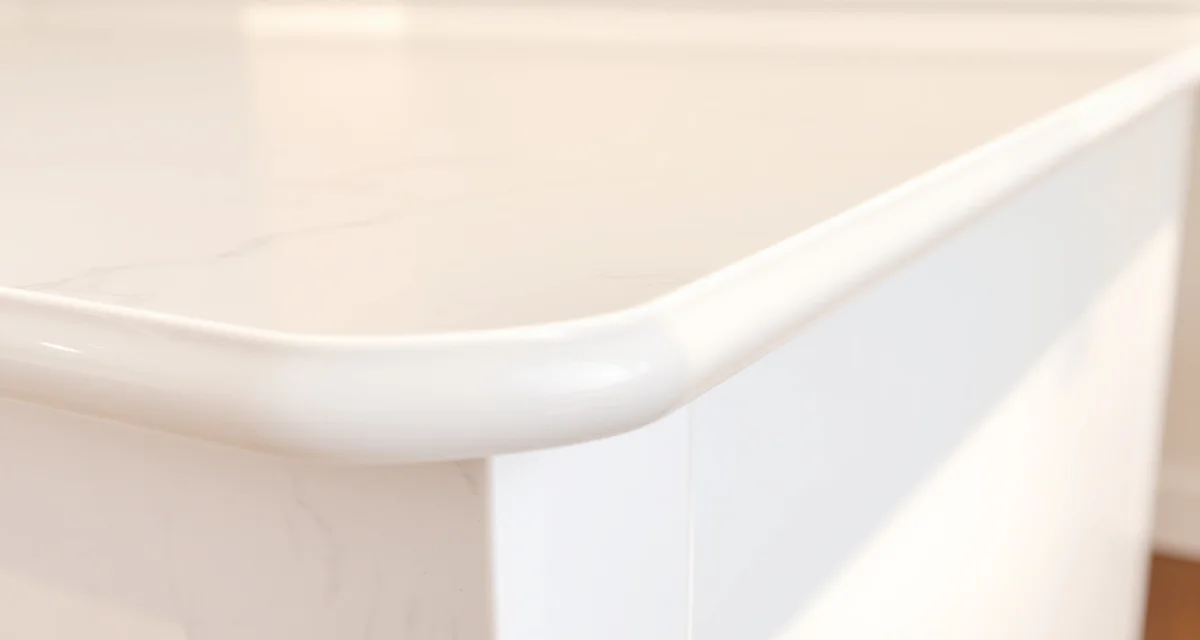
Every shop should keep a current edge profile library, sample pieces for the showroom, reference photos in the fabrication file. The profiles that show up most often: eased, pencil, half bullnose, full bullnose, ogee, double ogee, dupont, mitered. Each carries its own tooling cost, labor time, and customer perception.
Eased and pencil are the bread and butter of modern kitchens. Bullnose has fallen out of fashion in new construction but still shows up in renovations. Ogee and dupont command a premium and tend to land in higher-end homes.
Here's the thing about edge pricing: shops that use flat pricing across all profiles are subsidizing their premium work with their standard work. That math only breaks even if your mix never changes. The moment you start selling more dupont or ogee (which is the goal, because the margin is better), flat pricing actually punishes you for winning.
A clean tier structure:
- Tier 1: Eased and pencil, included in base price.
- Tier 2: Quarter round, half bullnose, included on residential.
- Tier 3: Ogee and dupont, $12 to $20 per linear foot upcharge.
- Tier 4: Mitered edges, priced by the job.
A CNC-profiled eased edge on quartz runs nearly free in incremental time. A hand-profiled ogee with a flame polish on quartzite runs $25 to $45 per linear foot in labor alone. That spread is enormous. Shops that price by tier capture margin that shops with flat pricing leave sitting on the counter.
What Brian Would Do Differently
Move sooner. The conversation about fixing his dupont workflow had been on the table for 18 months before anyone acted. By his own math, the delay cost somewhere between $40K and $80K in margin and unbooked work.
Invest in training up front. His team adapted, but structured training (plan for two to four hours per person) would have shortened the learning curve. "I assumed they'd figure it out by watching," Brian said. "They didn't. Nobody does."
My genuinely opinionated take: the dupont edge is the single best litmus test for whether a fab shop has its act together on process. It's complicated enough to expose weak systems but common enough that you can't just avoid it. If your dupont workflow is clean, everything downstream probably is too.
Your 30-Day Action Plan
If you want to act on this, here's the order of operations.
Week one. Observe and measure. Change nothing. Track how dupont edge is performing across 5 to 10 jobs. Write down three numbers that matter most (turnaround time, error rate, and one of your choosing).
Week two. Identify the single largest leak. Where is time, money, or quality slipping most? One leak. Not three.
Week three. Implement one change. Train the team. Update the written process. Communicate clearly.
Week four. Measure the result against week one. Adjust. Document what worked.
Repeat monthly. The gains compound over a quarter the same way interest compounds in a savings account, except the returns are better and you can actually see them on Monday morning.
Silica Safety: Non-Negotiable
Anywhere a saw, router, or polisher meets engineered stone, respirable crystalline silica is part of the conversation. OSHA's permissible exposure limit is 50 micrograms per cubic meter of air as an 8-hour time-weighted average. Wet cutting, proper ventilation, and fit-tested respirators are the baseline. Shops cutting corners on silica controls are taking on liability that no margin improvement can offset. This applies whether you're templating, nesting, fabricating, or installing. No exceptions.
Frequently Asked Questions
How long does it actually take to see results from changing your approach to dupont edge?
Most shops see measurable change inside 30 to 60 days. The numbers compound through the first two quarters. Shops with stable crews and clean workflows see results faster than shops fighting turnover, which makes sense: you can't improve a process if the people running it keep leaving.
Is dupont edge something a small two-person shop should worry about?
Yes, and arguably more so. Smaller shops have less slack to absorb mistakes. The owner is usually the bottleneck, and any process improvement that clears that bottleneck has outsized impact when there are only two people in the building.
What is the biggest mistake new shops make on dupont edge?
Treating it as a one-time decision instead of an ongoing practice. The first version of any system is wrong. The second is better. The fifth is what wins. Shops that keep iterating outperform shops that set and forget, every single time.
Do bigger shops handle dupont edge differently?
The principles are the same, the scale changes. A shop running 30 jobs a month and a shop running 300 face the same math, but the tooling and headcount look different. Pick the version that fits your stage.
How much should a typical shop budget for improvements tied to dupont edge?
Budget time more than dollars. Most meaningful changes cost 5 to 20 hours of owner or manager time to set up and another 2 to 5 hours a month to maintain. Software costs, where applicable, run a few hundred a month for small shops, a few thousand for larger operations. ROI based on case study data generally lands well above the cost inside two quarters.
What number should I track first if I'm just starting out?
Pick one speed number and one accuracy number. For most fabrication shops, that's some version of turnaround time and some version of callback rate. Get those two on a whiteboard. Look at them every Monday morning. Everything else can wait.
Does the dupont profile work on all stone types?
It works on most, but the tooling and finishing vary significantly. Quartz machines cleanly and predictably. Quartzite requires more careful attention to chipping, especially on the step portion of the profile. Granite depends heavily on the specific stone. Always run a test cut on a remnant before committing to a full slab.
Related Reading
Start with the cluster hub on Eased Edge for the full overview of CNC fabrication and edge profiles in a modern fab shop. From there, the Complete Guide to Countertop Fabrication connects every cluster into one workflow.
Inside this cluster, the related supporting articles worth reading next:
- Cove Edge: Complete Guide
- Double Ogee Edge Profile: Complete Guide
- Half Bullnose Edge Countertop: Complete Guide
From adjacent clusters:
For the broader shop-floor view, the Complete Guide to Countertop Fabrication brings every cluster into one frame, and the Eased Edge hub is where the rest of the CNC fabrication and edge profiles articles live.