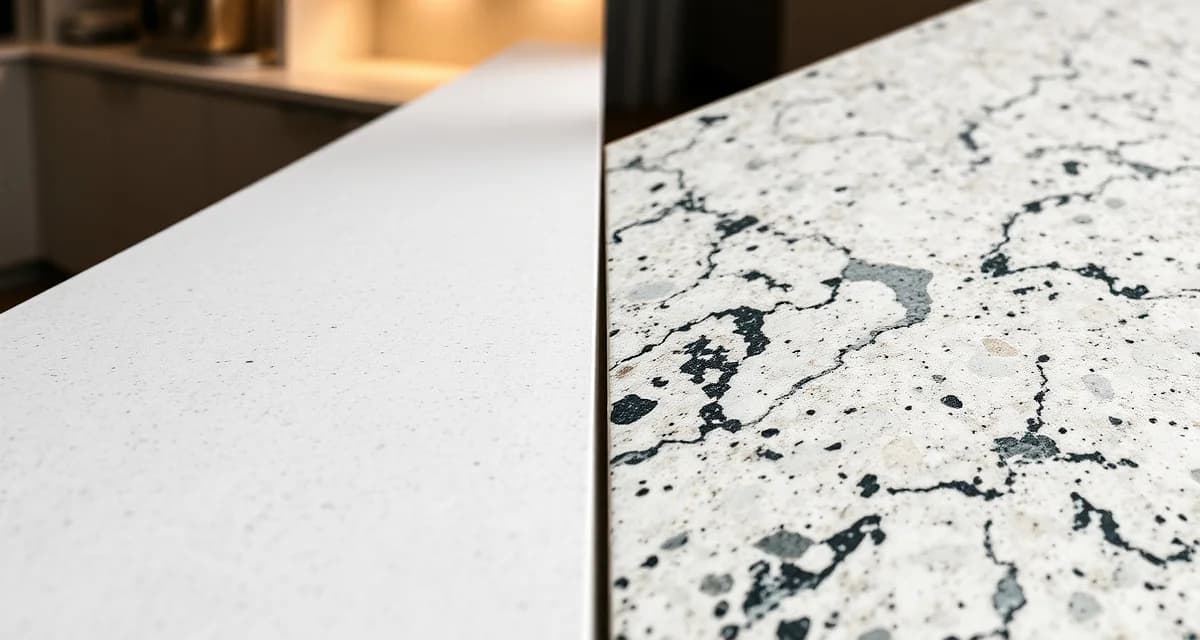
Silestone vs Granite Countertops: 2026 Comparison
Silestone, by Cosentino, is one of the world's most recognized quartz brands. Granite is the natural stone standard. Both compete in the mid-to-premium countertop market, and the choice often comes down to the classic trade-off: engineered convenience vs. natural stone authenticity.
TL;DR
- Silestone never needs sealing; granite requires sealing every 1-3 years
- Granite handles heat far better - no resin to scorch; Silestone burns above 300F
- Silestone costs more on average: $70-$130/sq ft vs. $40-$100/sq ft for granite
- Granite is UV-stable and works outdoors; Silestone does not
- Silestone's HybriQ+ technology reduces crystalline silica content for safer fabrication
- Both are scratch-resistant and durable for daily kitchen use
- Pattern consistency favors Silestone; natural uniqueness favors granite
Side-by-Side Comparison
| Feature | Silestone | Granite |
|---|---|---|
| Type | Engineered (HybriQ+ mineral hybrid) | Natural igneous stone |
| Installed Cost (per sq ft) | $70-$130 | $40-$100 |
| Sealing | Never | Every 1-3 years |
| Heat Resistance | Low (scorches above 300F) | Excellent |
| Scratch Resistance | High | High (6-7 Mohs) |
| Stain Resistance | Very High | Moderate (when sealed) |
| UV/Outdoor Use | No | Yes |
| Maintenance | Very Low | Low-Medium |
The Core Trade-Offs
Maintenance vs. heat: Silestone wins on maintenance (no sealing, ever). Granite wins on heat resistance (no trivet needed). This is the fundamental trade-off in nearly every quartz-vs-granite comparison.
Calculate your material waste savings
See exactly how much slab material and money you could save with optimized cutting layouts.
Try the free Waste CalculatorConsistency vs. uniqueness: Silestone slabs match the showroom sample precisely. Granite slabs vary - the installed countertop may look different from the sample, which is either exciting (natural variation) or frustrating (unpredictable) depending on your perspective.
Cost: Granite offers natural stone at lower entry prices ($40/sq ft). Silestone's floor is higher ($70/sq ft). At the premium end ($100+/sq ft), both materials compete directly.
HybriQ+ Technology
Silestone's HybriQ+ composition uses a mineral-based formula with reduced crystalline silica and recycled materials. This matters primarily for fabricators (reduced silicosis risk during cutting) and environmentally conscious buyers. For day-to-day kitchen performance, HybriQ+ products perform the same as traditional quartz formulations.
Real-World Cost Comparison
The price gap between Silestone and granite narrows at the premium end of each material's range. Here's what actual installed projects typically cost:
| Kitchen Size | Silestone Installed | Granite Installed | Difference |
|---|---|---|---|
| Small (25 sq ft) | $1,750-$3,250 | $1,000-$2,500 | $500-$1,250 |
| Medium (40 sq ft) | $2,800-$5,200 | $1,600-$4,000 | $800-$2,000 |
| Large (60 sq ft) | $4,200-$7,800 | $2,400-$6,000 | $1,200-$3,000 |
These ranges include material, fabrication, and installation. Edge upgrades, cutouts, and sink configurations add $200-$800 regardless of which material you choose.
Long-Term Ownership Costs
Granite's sealing requirement adds roughly $50-$100 per year if you hire a professional, or $15-$30 in products if you do it yourself. Over 20 years, that's $300-$2,000 in additional maintenance compared to Silestone's zero-maintenance surface.
Factor in potential stain remediation (granite is more vulnerable to oil and wine stains if sealing lapses), and the true cost gap shrinks further over the life of the countertop.
Durability Under Daily Use
Kitchen Performance
Both Silestone and granite handle normal kitchen wear without issue. The differences emerge at the extremes:
Cutting directly on the surface: Neither material shows knife marks easily. Both rate 6-7 on the Mohs hardness scale. Use a cutting board regardless - it protects your knives more than the countertop.
Hot pan contact: This is where granite clearly wins. A 500°F cast iron skillet set on granite causes zero damage. The same pan on Silestone leaves a permanent white mark or scorch ring. If you regularly move cookware from stove to counter, granite eliminates worry.
Spill response time: Silestone gives you unlimited time - wine, coffee, and oil sit on the non-porous surface without absorbing. Granite needs spills wiped within 15-30 minutes (properly sealed) or staining risk increases.
Bathroom Performance
In bathrooms, both materials are excellent. Heat and heavy cooking aren't factors, so Silestone's zero-sealing advantage matters more. Granite's porosity makes it slightly more vulnerable to water rings around faucet bases if sealing is neglected.
Fabrication and Installation
Both Silestone and granite require professional fabrication with CNC or bridge saw equipment and wet cutting for dust control. Installation timelines are similar - template to install typically runs 5-10 business days.
Key differences for fabricators:
- Silestone's HybriQ+ formula produces less crystalline silica dust, reducing health risks during cutting
- Granite slabs vary in hardness by color and origin - some cut faster than others
- Silestone's consistent density means more predictable tooling wear
- Both materials require the same edge profile equipment and polishing process
Resale Value
In real estate markets across the US, both Silestone and granite are considered premium countertop materials. Appraisers and buyers view them similarly in the $70-$120/sq ft installed range.
Where differences appear:
- Luxury markets: Granite's natural uniqueness can be a selling point for buyers seeking one-of-a-kind kitchens
- Modern/contemporary homes: Silestone's clean lines and consistent patterns often appeal to buyers of newer construction
- Outdoor kitchens: Granite adds value to outdoor living spaces where Silestone cannot be used
Best Uses
Choose Silestone When:
- Zero sealing maintenance is important
- Pattern consistency matters for your design
- HybriQ+ composition appeals (health, sustainability)
- Indoor kitchen or bathroom installation
- You want the Cosentino warranty and fabricator network
Choose Granite When:
- Heat resistance is a priority (no trivets needed)
- Natural stone authenticity matters for your aesthetic
- Budget is below $70/sq ft
- Outdoor use is planned (BBQ islands, patio bars)
- You prefer the uniqueness of a one-of-a-kind slab
FAQ
Is Silestone more durable than granite?
Both are durable. Silestone is more stain-resistant (non-porous). Granite is more heat-resistant (no resin). For scratch resistance, they are comparable. The durability comparison is a draw overall, with each material winning in different categories.
How much more does Silestone cost than granite?
Silestone typically costs $20-$40 more per square foot than comparable granite. For a 40-square-foot kitchen, expect to pay $800-$1,600 more for Silestone vs. mid-range granite.
Does Silestone look like granite?
Silestone patterns tend to mimic marble more than granite. Some Silestone designs have speckled or granular patterns, but the brand focuses primarily on veined and contemporary looks rather than granite reproductions.
Can I put a hot pan on granite but not Silestone?
Correct. Granite handles hot cookware without any damage. Silestone's resin can scorch at temperatures above 300F. Always use trivets with Silestone.
Which adds more value to a home?
Both are premium materials that add value. In the $70-$100+/sq ft range, buyers tend to view Silestone and granite equally. The specific pattern and overall kitchen design matter more than material choice for resale.
Is granite harder to maintain than Silestone?
Slightly. Granite needs sealing every 1-3 years (a 15-30 minute task) and should be cleaned with pH-neutral products. Silestone needs only soap and water, no sealing. The difference is real but manageable.
Can Silestone go outside?
No. UV exposure causes Silestone to yellow and degrade. Use granite, porcelain, or sintered stone for outdoor countertops.
Which is better for a busy kitchen?
If you cook with high heat frequently: granite. If stain prevention and zero maintenance are the priorities: Silestone. Both handle busy kitchen conditions well overall.
Compare Your Options
Silestone and granite are both strong performers. Let your cooking habits, maintenance preferences, and budget guide the decision.
Get a cost estimate with our countertop cost calculator. Fabricators can try SlabWise free for 14 days to manage all material types.
Try These Free Tools
- Cost Calculator -- Compare material costs instantly across different countertop options.
- Compare Materials -- Side-by-side material comparison with pricing, durability, and maintenance.
- Kitchen Visualizer -- Let customers preview countertop materials in their actual kitchen.
Sources & Further Reading
-
Natural Stone Institute - Technology and Software Solutions for Stone Fabricators
-
International Surface Fabricators Association - Fabrication Software and Digital Tools
-
National Kitchen & Bath Association - Technology Integration in Countertop Design
-
Marble Institute of America - Digital Fabrication and Software Standards