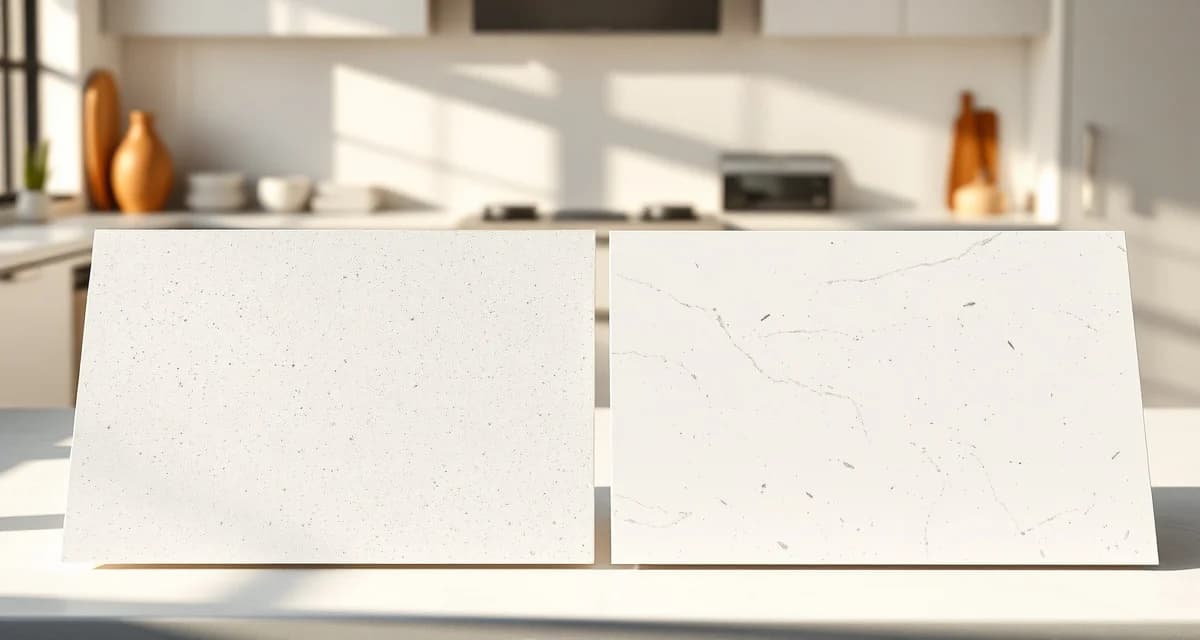
Silestone vs Caesarstone Countertops: 2026 Comparison
Silestone and Caesarstone are two of the most established premium quartz brands worldwide. Both manufacture high-quality engineered stone countertops, and both are regularly recommended by fabricators and designers. The differences come down to composition technology, pattern selection, pricing, and warranty terms.
TL;DR
- Silestone uses HybriQ+ technology with mineral-based composition (reduced resin content); Caesarstone uses traditional quartz-resin composition
- Both are non-porous, stain-resistant, and never need sealing
- Pricing is comparable: Silestone $70-$130/sq ft, Caesarstone $65-$125/sq ft installed
- Silestone has a larger pattern collection with 80+ colors; Caesarstone offers 60+ colors
- Silestone is backed by Cosentino (same company as Dekton); Caesarstone is a standalone brand
- Both carry strong warranties: Silestone 25 years, Caesarstone lifetime (limited)
- Caesarstone's lifetime warranty is a differentiator, though terms and conditions matter
- Pattern preferences are the biggest practical difference for most buyers
Side-by-Side Comparison
| Feature | Silestone | Caesarstone |
|---|---|---|
| Manufacturer | Cosentino (Spain) | Caesarstone (Israel, manufactured globally) |
| Composition | HybriQ+ (mineral hybrid, reduced resin) | Traditional quartz + polymer resin |
| Installed Cost (per sq ft) | $70-$130 | $65-$125 |
| Color/Pattern Options | 80+ colors | 60+ colors |
| Sealing | Never | Never |
| Scratch Resistance | High | High |
| Stain Resistance | Very High | Very High |
| Heat Resistance | Low (resin scorches) | Low (resin scorches) |
| Warranty | 25 years | Lifetime (limited) |
| Distribution | Cosentino Centers | Multiple distributors |
| Antimicrobial | N-Boost technology | Not standard |
Composition: HybriQ+ vs. Traditional
The most significant technical difference is Silestone's HybriQ+ technology, introduced in recent years:
Calculate your material waste savings
See exactly how much slab material and money you could save with optimized cutting layouts.
Try the free Waste CalculatorSilestone HybriQ+ uses a mineral-based composition that reduces the percentage of crystalline silica and resin in the product. This addresses growing industry concerns about silicosis risk during fabrication. The formulation uses a blend of premium minerals, quartz, and recycled materials with reduced organic binders.
Caesarstone uses a more traditional quartz composition --- approximately 90-93% natural quartz particles bound with polymer resin. This is the standard formulation that has been the industry norm for decades.
For homeowners, this composition difference does not change the day-to-day performance of the countertop. Both products are non-porous, stain-resistant, and require the same care. The distinction matters more for fabricators, who face silicosis risk during cutting and grinding.
Pattern and Design Selection
Silestone Collections
Silestone organizes its patterns into styled collections:
- Loft --- concrete-inspired and industrial looks
- Ethereal --- marble-inspired veining
- Sunlit Days --- warm Mediterranean tones
- Classic --- traditional quartz patterns
Silestone has invested heavily in realistic marble and stone reproductions, with particular strength in veined patterns that mimic Calacatta, Statuario, and other marble aesthetics.
Caesarstone Collections
Caesarstone's pattern range includes:
- Supernatural --- natural stone looks
- Classico --- solid and lightly patterned options
- Metropolitan --- industrial and concrete aesthetics
- Outdoor --- specifically rated for exterior use (notable)
Caesarstone was one of the first quartz brands to offer an outdoor-rated quartz product line --- a significant differentiator. Their outdoor collection uses a modified formulation designed to resist UV degradation.
Which Looks Better?
This is entirely subjective. Both brands produce high-quality, realistic patterns. The best approach is to visit showrooms and see actual samples:
- If you prefer warmer, Mediterranean-inspired tones, Silestone's collections tend to lean in that direction
- If you want a wider range of classic, clean-lined patterns, Caesarstone's Classico line is extensive
- For marble reproductions, both brands have strong options --- compare specific patterns side-by-side
Warranty Comparison
Silestone: 25-year limited warranty covering manufacturing defects. The warranty is transferable if you sell your home.
Caesarstone: Lifetime limited warranty for the original purchaser, covering manufacturing defects. This is one of the longest warranties in the quartz industry, though "lifetime" is limited to the original buyer's ownership of the home.
The lifetime warranty gives Caesarstone a marketing edge, though the practical difference is minimal --- most countertop issues that are covered by warranty appear within the first few years.
Price Comparison
Both brands position themselves as premium quartz, and pricing reflects this:
- Silestone: $70-$130/sq ft installed (varies by pattern and region)
- Caesarstone: $65-$125/sq ft installed
Caesarstone tends to be slightly less expensive for comparable patterns, though the gap is narrow. Both brands cost notably more than budget quartz brands (MSI, Allen + Roth) which start around $50/sq ft installed.
For a 40-square-foot kitchen:
- Silestone: $2,800-$5,200
- Caesarstone: $2,600-$5,000
Distribution and Availability
Silestone benefits from Cosentino's distribution infrastructure, including Cosentino Centers across the U.S. This gives fabricators and homeowners easy access to see full-size slabs, get samples, and arrange delivery.
Caesarstone distributes through a network of stone distributors and dealers. Availability is widespread in major markets, though the showroom experience varies by local dealer.
Both brands are readily available in most U.S. metros. In smaller or rural markets, check local availability before setting your heart on a specific pattern.
Fabrication and Silicosis Considerations
Both Silestone and Caesarstone require the same dust control measures during fabrication: wet cutting, proper ventilation, and respiratory protection. However, Silestone's HybriQ+ composition, with reduced crystalline silica content, may reduce (not eliminate) silicosis risk during fabrication.
This matters for fabrication shops evaluating which brands to carry. As silicosis regulations tighten in states like California, Texas, and others, material composition is becoming a factor in product selection beyond aesthetics and price.
Best Uses
Choose Silestone When:
- HybriQ+ reduced-silica composition matters (fabricator health consideration)
- Cosentino Center access provides convenient showroom experience
- The specific pattern you love is in Silestone's collection
- You value N-Boost antimicrobial surface technology
Choose Caesarstone When:
- Lifetime warranty is a strong selling point
- The specific pattern you want is in Caesarstone's collection
- Outdoor-rated quartz is needed (Caesarstone Outdoor collection)
- Budget is slightly tighter (marginally lower pricing in many markets)
Is Silestone better than Caesarstone?
Neither is objectively better. Both produce high-quality quartz countertops with similar performance characteristics. The choice comes down to which patterns you prefer, which brand is more available in your area, and whether specific features (warranty, composition, outdoor rating) matter to you.
Which is more expensive, Silestone or Caesarstone?
Pricing is very similar. Silestone tends to be $5-$15 per square foot more expensive for comparable patterns in most markets, but this varies by region and specific color selection.
Do Silestone and Caesarstone both stain?
Both are non-porous and highly stain-resistant. Under normal kitchen conditions, neither stains. Harsh chemicals (oven cleaner, paint stripper) can damage either surface, but common foods and beverages wipe off without issue.
Can you put hot pans on either surface?
No. Both Silestone and Caesarstone contain resin that can scorch at temperatures above 300F. Always use trivets and hot pads with any quartz countertop, regardless of brand.
Which has more colors to choose from?
Silestone has a slightly larger pattern collection (80+ colors vs. 60+ for Caesarstone). Both regularly release new patterns and retire older ones, so the exact count shifts over time.
Is Caesarstone's lifetime warranty really better?
It sounds better on paper. In practice, the types of issues covered by warranty (manufacturing defects) typically appear early in the countertop's life. A 25-year warranty from Silestone covers the same practical window. The lifetime warranty is a nice marketing feature but rarely a decisive factor.
Can either brand be used outdoors?
Caesarstone offers a specific outdoor-rated product line designed to resist UV. Standard Silestone and standard Caesarstone should not be used outdoors. For outdoor applications, consider Dekton, Neolith, granite, or porcelain instead.
Which brand do fabricators prefer?
This varies by shop. Many fabricators carry both brands and let customers choose based on pattern preference. Cosentino-affiliated shops may emphasize Silestone. Independent shops often stock whichever brand their local distributor supports best.
Pick the Right Brand
Silestone and Caesarstone are both excellent quartz choices. Visit showrooms, compare the specific patterns you like, and let your design vision guide the decision.
Estimate your project cost with our countertop cost calculator. Fabricators can try SlabWise free for 14 days to speed up quoting across all quartz brands.
Try These Free Tools
- Cost Calculator -- Compare material costs instantly across different countertop options.
- Compare Materials -- Side-by-side material comparison with pricing, durability, and maintenance.
- Kitchen Visualizer -- Let customers preview countertop materials in their actual kitchen.
Sources & Further Reading
-
Natural Stone Institute - Technology and Software Solutions for Stone Fabricators
-
International Surface Fabricators Association - Fabrication Software and Digital Tools
-
National Kitchen & Bath Association - Technology Integration in Countertop Design
-
Marble Institute of America - Digital Fabrication and Software Standards