
TL;DR
- Contractor referrals, meaning general contractors, kitchen designers, and remodelers who send you repeat work, are the most reliable source of high-margin countertop jobs.
- The fastest path combines in-person relationship building, fast quote turnaround, and a referral fee or trade discount that makes recommending you easy and financially logical.
- Expect 12 to 24 months to build a network that produces steady volume.
Why contractor referrals matter more than any ad you'll ever run
A homeowner buys countertops once every ten to fifteen years. A general contractor who does ten kitchen remodels a year sends you ten jobs annually, possibly for a decade. That math is hard to argue with.
The average major kitchen remodel in the United States cost $27,492 in 2023, according to the Remodeling Magazine Cost vs. Value Report, with countertops typically running 10 to 15 percent of that budget [1]. If a mid-volume GC refers eight jobs a year, that's somewhere between $22,000 and $33,000 in countertop revenue from a single relationship. Multiply across five or six reliable partners and you have a predictable baseline that makes marketing spend feel almost optional.
Contractor referrals also produce better customers. A homeowner who arrives through a trusted GC already has a budget set, a timeline locked, and some trust transferred to you. They're less likely to price-shop you against three competitors and more likely to go with what their contractor recommends. That's not nothing.
The downside is that building the network takes real time. Most fabricators with strong contractor relationships say it took 12 to 24 months before referral volume felt consistent. There's no shortcut around that. The tactics below compress the timeline.
Who should you actually target for referrals?
Not every contractor is worth your time. The right targets are people who touch countertop decisions regularly and have homeowner clients with real budgets.
General contractors doing kitchen and bath remodels are the obvious first tier. Look for firms that do 10 or more projects per year in your service radius. Many will have a Google Business Profile with enough reviews to gauge volume.
Kitchen and bath designers at design studios and showrooms get overlooked by most fabricators. These people spec materials before a contractor is even hired. Getting your samples into their showroom and your name on their preferred vendor list can produce a pipeline that runs entirely separate from GC relationships.
Interior designers on high-end residential projects are worth pursuing if your shop does premium natural stone. Designers at this level move slowly, but their clients almost never price-shop.
Property management companies and multifamily developers sit at a different tier. They want volume pricing, consistent lead times, and low drama. The margin per square foot is often thinner, but the jobs are predictable and cancellations are rare.
Home builders, both production and custom, are a longer sales cycle with enormous volume potential. A single production builder putting up 50 homes a year is a major account. They'll want pricing, references, and proof of capacity before committing.
Realtors who work with home stagers are an underrated source for quick countertop swaps before listing. The jobs are usually small, but they move fast and come in tight clusters.
Start with whoever is already in your market and actively pulling permits. Your local building department posts permit data, often online, and that data tells you exactly who is doing kitchens and baths in your area right now [2].
How do you find contractors to approach in your area?
The permit database is the best tool most fabricators never use. Most county and city building departments publish permit records through a public search portal or downloadable datasets. Search for 'kitchen remodel' or 'residential alteration' permits in your county. You'll get company names, addresses, and often contact info. This is free. Do it before anything else [2].
Google Maps searches for 'general contractor [your city]' surface the obvious players. Filter for businesses with 20 or more reviews and look at project photos. If you see kitchens in the photos, they're a viable target.
The National Association of the Remodeling Industry (NARI) runs a local chapter network and a public member directory [3]. Many serious remodelers belong to NARI because membership signals credibility to homeowners. A fabricator who shows up at a NARI chapter meeting is often the only stone person in the room.
Houzz Pro is worth a look. Contractors list project portfolios and specialties there, and you can filter by location and project type to find who does the kind of work that produces countertop jobs.
Angi, Thumbtack, and HomeAdvisor all have contractor directories too. Noisier, but they can fill gaps in a thin local market.
Local kitchen and bath showrooms sometimes post preferred contractor lists right on their websites. Even when they don't, walking in and asking which contractors they work with regularly is a legitimate research move. Showroom staff have strong opinions and will tell you who is reliable and who isn't.
Don't sleep on subcontractor relationships either. Tile setters, cabinet installers, and plumbers all work in kitchens after the countertops go in. They know who the busy GCs are and often have warm introductions to offer if you treat them like professionals.
What do you say when you first reach out to a contractor?
Cold outreach works if you lead with something useful instead of a sales pitch. The goal of the first contact is a 15-minute in-person conversation, not a closed deal.
Email is fine for the first touch, but keep it short. Name one specific project they recently completed (permit records or their Houzz portfolio give you this), mention it briefly so they know you did some homework, and ask if they have 15 minutes to meet at their office or a job site. Do not attach a brochure. Do not explain your entire value proposition. One ask, one sentence about why it's worth their time.
The in-person meeting should open with questions, not a presentation. Ask what their typical countertop experience looks like, what has frustrated them about past fabricators, and what their customers usually want. Most fabricators walk in and start talking about their slab inventory. Contractors don't care yet. They care about whether you'll make their job easier and whether their clients will be happy.
After they've talked for ten minutes, offer specifics: your turnaround from template to install, how you handle communication on delays, whether you offer a GC portal or a dedicated contact, and what your warranty process looks like. These things matter because GCs get burned by fabricators who ghost them mid-project.
Leave something physical. A laminate sample card, a printed one-page summary of your lead times and pricing tiers, or even a well-made business card does more work than a follow-up email.
Follow up within 48 hours with a quick thank-you. Not an email. A handwritten card if you want to be memorable. Most fabricators won't do this, which is exactly why it works.
Should you offer a referral fee or trade discount to contractors?
Yes, with some caveats.
A referral fee structure is common in the trades. The most typical arrangement is a flat dollar amount per completed job, somewhere between $50 and $200, or a percentage of the countertop sale, usually 3 to 8 percent [4]. Some fabricators instead offer a standing trade discount, meaning contractors always get materials or installation at 10 to 15 percent below retail, with the expectation that they pass some savings to clients and pocket the rest as margin.
Before you set up any referral fee, check your state's contractor licensing laws. California's Contractors State License Board notes that referral fees for construction work are restricted under Business and Professions Code Section 7157, and several other states have similar rules requiring the arrangement be a direct discount rather than a cash payment [5]. The rules vary a lot by state. Your state licensing board's website has the statute text.
The practical question is whether a referral fee actually changes contractor behavior. Experienced contractors with busy pipelines often say no. What changes their behavior is a fabricator who makes them look good in front of clients and never causes a problem on a job site. The fee is a nice gesture. It's not the primary motivator for most professional remodelers.
For newer contractors or design-build firms with thin margins, a trade discount is often more appealing because it improves their project economics on every job instead of waiting for a per-referral payment.
If you do offer referral fees, track them carefully, pay them promptly, and document them. A contractor who has to chase you for a $100 referral fee will never send you another job.
How do you turn a one-time job into an ongoing referral relationship?
One job is an audition. The GC is watching how you perform and deciding whether to put their name on the line for you again.
Speed on the quote matters more than anything at this stage. Contractors consistently name slow quote turnaround from stone fabricators as one of their top frustrations in kitchen and bath projects [6]. A quote that takes four days loses work to a shop that quotes in four hours. If you're still doing quotes by hand or in a spreadsheet, that's fixable. Software like SlabWise can generate a detailed countertop quote in minutes from a simple template, which means you can respond to a GC's request the same day they send it.
Communicate before you have to. If a slab is back-ordered, call the GC before they call you. If the install is running 30 minutes late, send a text. This sounds obvious, but most fabricators go dark during problems and only resurface when forced to. GCs remember the ones who don't.
After the install, follow up with the GC. Ask how the client reacted. Ask if there were any issues. If the client loved it, ask whether you can photograph the finished space for your website. That builds a loop of value: you give them marketing content, they stay connected to you, and both parties benefit.
Referrals compound. A GC who sends you two jobs and has good experiences mentions you to other GCs. The network effect in local contracting markets is real. A reputation for reliability travels fast in a market where bad fabricators are common.
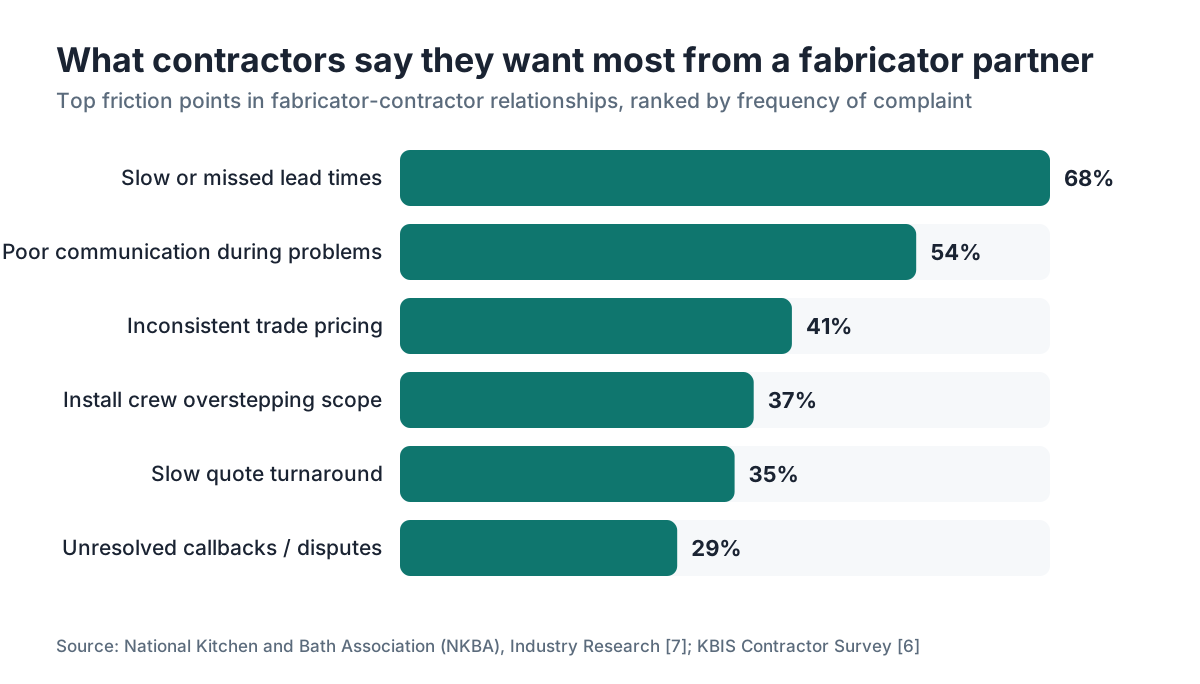
What do contractors actually want from a fabricator partner?
Every fabricator thinks their quality is the selling point. Contractors mostly treat adequate quality as a baseline requirement, not a differentiator.
Here's what they actually want.
First: lead times they can count on. If you say three weeks from template, you mean three weeks, not three weeks plus whatever. Unpredictable timelines break their schedules and make them look bad to homeowners.
Second: one phone number. They don't want to call the front desk and get transferred around. A dedicated contact who knows their projects and gives real answers in real time is worth a lot.
Third: clean installs. The crew leaves the job site cleaner than they found it, handles the homeowner professionally, and doesn't make promises that contradict what the GC has told the client. Overstepping on a job site is a fast way to lose a contractor for good.
Fourth: honest pricing. Contractors hate finding out a homeowner got a cheaper quote by going direct to you. If you offer trade pricing, honor it every time. Inconsistency creates distrust, and the trades are a small world.
Fifth: the ability to handle their client. Some homeowners are difficult. A fabricator who manages expectations, explains the material, and documents decisions protects both the GC and themselves. Blame games after install kill relationships.
National Kitchen and Bath Association research indicates countertop-related callbacks and disputes rank among the top causes of contractor satisfaction issues in kitchen remodels [7]. A fabricator who eliminates callbacks earns loyalty that no referral fee can buy.
Should you attend trade events and contractor association meetings?
Yes, and it's one of the highest-return uses of your time if you do it consistently instead of once.
NARI local chapters meet monthly in most metro areas [3]. Home Builders Association affiliates, connected to the National Association of Home Builders, host regular events and carry large local memberships [8]. Both are good targets. Pick one and attend three meetings before you try to get business from anyone. You need to be a familiar face before you're a trusted vendor.
Local kitchen and bath showrooms often host contractor appreciation nights, CE credit events, or product launches. These are small settings where you can have real conversations with designers and GCs in one room.
Home shows and trade expos are lower-value in most markets. The crowds are mostly homeowners and the other vendors are your competitors. I'd spend that budget on NARI dinners instead.
Bring something to these events. Not a sales deck. Samples, a simple before-and-after photo booklet, or just the willingness to answer technical questions about stone. Being useful in a room before you ask for anything is how you build trust with people who get pitched constantly.
The fabricators who show up once and then vanish get forgotten. The ones who show up every month for a year are the ones whose cards get passed around.
How important is your Google reputation for landing contractor referrals?
More important than most fabricators realize, because contractors check you before they recommend you.
A GC recommending a vendor is staking their own reputation on that vendor's performance. Before a contractor tells their client 'call this fabricator,' they almost always run a quick Google search. If your business has 12 reviews and two are one-star complaints about no-shows, the contractor finds someone else.
The review threshold that seems to build confidence sits around 40 to 50 reviews with an average of 4.5 or higher, based on local consumer review research from BrightLocal [9]. That's not a magic number, but a profile with fewer than 20 reviews reads as thin to a professional sizing up a potential partner.
Get reviews systematically. After every install, ask the homeowner directly. If they're enthusiastic, text them a direct link to your Google review page within 24 hours while the experience is fresh. Don't ask for a five-star review specifically. Just ask them to share their experience. Google's review policies prohibit soliciting reviews that specify a particular star rating [10].
Respond to every review, good and bad. How you handle a bad review tells a contractor more about your professionalism than the review itself.
Your website matters too. Real project photos, a clear service area, and a professional look signal an established business. Plenty of fabricators run websites that look untouched since 2014. That's a quiet credibility hit every time a contractor checks you out.
What should your contractor onboarding process look like?
If you want contractors to send repeat business, make working with you as frictionless as possible.
Build a contractor intake document, one or two pages max, that explains your process: how to request a quote, what information you need, your standard lead times by material type, your warranty policy, and who to call for questions. It does two jobs. It sets expectations up front, cutting misunderstandings, and it signals you're organized enough to have thought about this.
A trade pricing sheet, even a simple one, is worth having. Contractors appreciate knowing their pricing without negotiating every job. You don't have to offer steep discounts. Consistency and predictability are the value, not the specific percentage.
Consider a dedicated email address for contractor inquiries, something like trade@yourshop.com. It creates a clear lane that gets prioritized and signals that you treat trade clients differently.
For fabricators juggling more than a handful of contractor relationships, quoting software that turns around accurate bids fast becomes the infrastructure your referral network runs on. A job that sits in your quote queue for three days because you're slammed is a job that might go to someone else. The faster your quoting process, the more contractor relationships you can sustain at once.
Document everything in writing. Trade pricing agreements, referral fee arrangements, and project scope should all be written down. Not because you expect disputes, but because clarity prevents them.
How long does it take to build a contractor referral network, and what does a mature one look like?
Realistically, 12 to 24 months to go from zero to a network that produces meaningful volume. The first six months are almost entirely investment: showing up, doing good work on early referral jobs, and building reputation without seeing much return.
Months six through twelve usually bring the first signs of compounding. A GC who had a good experience starts sending a second and third job. Their subcontractors mention you to other GCs. A designer you met at a showroom event finally has a client who needs stone.
By month 18 to 24, fabricators with a consistent approach usually report contractor referrals accounting for 30 to 50 percent of their job volume. That number can eventually climb to 60 or 70 percent for shops that invest heavily in the relationship side and less in direct-to-consumer marketing.
A mature network looks like five to fifteen contractor relationships of varying depth. Two or three will be high-volume, sending six or more jobs a year. Another five to eight will be occasional senders, one to three jobs a year. The rest are dormant relationships that activate when a specific project comes up.
The network needs maintenance. Contractors change firms, retire, pivot to commercial work, or just drift away. Plan on losing one or two relationships a year and actively adding one or two new ones to keep the pipeline healthy. This is not a set-it-and-forget-it system.
What mistakes kill contractor referral relationships?
Missing a deadline without communicating first is the fastest way to lose a contractor. One surprise delay, handled with a proactive call and a solution, is survivable. One surprise delay the GC discovers when their client calls in a panic is often unrecoverable.
Competing directly with the contractor for a homeowner is a close second. If a homeowner the GC sent you calls later for a quote on a second project without mentioning the GC, call the GC first and let them know. Trying to capture that homeowner as a direct client is a short-term margin gain and a long-term relationship loss.
Inconsistent pricing creates distrust. If a contractor's client calls you directly and gets a different price than the contractor expected, the contractor looks bad and starts wondering if you're working around them. Price lists should be applied the same way every time.
Ignoring small jobs is a common mistake. GCs remember which fabricators took their small bathroom vanity seriously and which ones tried to upsell them into a bigger project. The small job done well earns the next referral. The small job done reluctantly earns nothing.
Bad communication during the install kills relationships too. If your crew interacts with the homeowner and contradicts something the GC told them, or promises a change the GC never authorized, you've created a mess the GC has to clean up. Train your install team to stay professional, stay focused, and redirect any homeowner questions about scope or changes back to the GC.
Frequently asked questions
How much should I pay contractors as a referral fee for countertop jobs?
The range most fabricators use is $50 to $200 per completed job or 3 to 8 percent of the countertop sale. A standing trade discount of 10 to 15 percent off retail often appeals more to established GCs than per-referral payments. Before setting up any fee, check your state's contractor licensing rules, since some states restrict cash referral payments to unlicensed parties.
Is it legal to pay a contractor a referral fee for sending me countertop jobs?
It depends on your state. California and several others restrict referral fees paid to unlicensed contractors for construction work, under rules like California Business and Professions Code Section 7157. A trade discount applied directly to the project price is generally safer legally than a cash payment. Check your state contractor licensing board's website or consult a local attorney before setting up any formal fee arrangement.
What's the single most effective first step to get contractor referrals?
Pull your county's building permit records and identify the top ten remodelers doing kitchen and bath work in your area. Then reach out with a short, specific email asking for a 15-minute meeting. Most fabricators never do this. Leading with research signals professionalism and separates you from cold-call vendors before you've said a single thing about your shop.
How do I find general contractors who do kitchen remodels in my area?
County building permit databases are the most accurate source. Search for residential kitchen or bath permits issued in the last 12 months to find active remodelers. Google Maps searches filtered by review count and project photos, NARI's member directory, and Houzz Pro's contractor listings are also useful. Local kitchen showrooms can informally tell you which contractors work with them regularly.
Should I join NARI or NAHB to meet contractors?
Attending as a guest is free and worth doing first. NARI local chapter meetings are open to suppliers and trade partners, alongside remodelers, in most markets. If the chapter has active members in your target contractor tier, a membership or sponsorship makes sense. NAHB affiliate events suit fabricators targeting new home builders better. Consistent attendance at either beats a one-time appearance.
How many Google reviews do I need before contractors will trust my business?
There's no official threshold, but local consumer review research suggests profiles with fewer than 20 to 30 reviews read as thin to professional buyers. Aiming for 40 or more reviews with a 4.5-plus average puts you in a range where contractors doing a quick check before recommending you feel comfortable. Fewer than 10 reviews, or any unresolved one-star complaints, will cost you referrals.
What do contractors hate most about working with fabricators?
Slow or inconsistent lead times come up most often. After that: poor communication during problems, install crews who make unauthorized promises to homeowners, and inconsistent pricing when homeowners go direct. National Kitchen and Bath Association data indicates countertop callbacks and disputes rank among the top friction points in kitchen remodels. A fabricator who eliminates those friction points earns loyalty that discounts cannot.
How do I compete with bigger fabrication shops that already have contractor relationships?
Speed and communication. Large shops often quote slower and manage accounts less responsively precisely because they're large. If you can quote the same day, pick up your phone, and show up on time, you win on the dimensions that matter to GCs even if your slab inventory is smaller. Target contractors who have had a bad experience with a big-shop fabricator and are open to a change.
Can kitchen designers send me as many referrals as general contractors?
Yes, and in some markets more. Kitchen designers spec materials before a contractor is ever hired, which means a designer who recommends your shop influences the client before anyone else does. Getting your samples into a design studio showroom and your name on their preferred vendor list is a pipeline that operates independently of GC relationships. High-end designers move slowly, but their clients rarely price-shop.
How should I follow up after a referral job is completed?
Call or text the GC within a day or two of the install. Ask how the client reacted and whether there were any issues. If the outcome was positive, ask if you can photograph the space for your portfolio, which gives the GC content they can use too. A handwritten thank-you note after the first job is the kind of gesture most fabricators skip, and it gets remembered.
How do I handle it if a GC's homeowner client tries to cut the GC out and come to me directly?
Call the GC first and tell them what's happening before you quote the homeowner. Protecting the GC's relationship with their client is how you keep the GC relationship long-term. The margin on one direct job is not worth losing a contractor who sends you six jobs a year. Most contractors will remember and respect that you handled it this way.
What materials should I bring to a first meeting with a potential contractor partner?
Keep it simple: a laminate sample card, a one-page summary of your lead times by material, your pricing tier structure (trade vs. retail), and a business card. Don't bring a full sales deck. The goal is a conversation, not a presentation. Come with questions about their business rather than answers about yours. Listening in that first meeting does more work than talking.
How long does it take to build a contractor referral network that produces steady work?
Most fabricators who invest consistently in relationship-building report 12 to 24 months before referral volume feels reliable. The first six months are almost pure investment with little return. By month 18, contractor referrals often account for 30 to 50 percent of job volume for shops that prioritize this channel. Expect to maintain the network actively: losing one or two relationships a year is normal.
Sources
- Remodeling Magazine, 2023 Cost vs. Value Report: Average major kitchen remodel cost was $27,492 in 2023
- U.S. Census Bureau, Building Permits Survey: Building permit records are publicly available and identify contractors doing residential kitchen and bath work by jurisdiction
- National Association of the Remodeling Industry (NARI), Member Directory: NARI maintains a public member directory and local chapter network for remodeling professionals
- U.S. Small Business Administration, Marketing and Sales Guidance: Referral and commission arrangements are a recognized customer-acquisition tactic for small businesses; common trade fee structures range from 3 to 8 percent of the sale or flat fees of $50 to $200 per completed job
- California Contractors State License Board, Business and Professions Code Section 7157: California law restricts referral fee payments for construction work to licensed contractors under Business and Professions Code Section 7157
- Kitchen and Bath Industry Show (KBIS), Contractor Survey Findings: Contractors cite slow quote turnaround from fabricators as a top frustration in kitchen and bath remodel projects
- National Kitchen and Bath Association (NKBA), Industry Research: Countertop-related callbacks and disputes are among the top causes of contractor satisfaction issues in kitchen remodels
- National Association of Home Builders (NAHB), Local Chapter Network: NAHB affiliates host regular local events and have large memberships of home builders and remodelers
- BrightLocal, Local Consumer Review Survey 2023: Local business profiles with higher review counts and 4.5-plus average ratings generate significantly higher trust among buyers evaluating vendors
- Google Business Profile Help, Prohibited and Restricted Content Policy: Google's review policies prohibit soliciting reviews that specify a particular star rating
Last updated 2026-07-11