TL;DR
- Most countertop leads go quiet because they're overwhelmed, comparing prices, or waiting on a contractor, not because they picked a competitor.
- A structured sequence of 4-6 touches spread over 3-4 weeks, mixing email, text, and a phone call, recovers 20-35% of leads that looked lost, according to sales research across home-services industries.
Why do countertop leads go silent in the first place?
Silence almost never means "no." Homeowners request countertop quotes and then vanish for reasons that have nothing to do with your shop.
The most common reason is decision paralysis. Replacing countertops is a $2,000-to-$10,000+ purchase for most families, and the material choices alone, granite, quartz, quartzite, marble, laminate, solid surface, are genuinely confusing [1]. People freeze. They open your quote PDF, feel uncertain about whether they picked the right edge profile or the right slab, and quietly close the tab.
A second reason is contractor timing. Many homeowners are waiting on a GC, plumber, or cabinet installer before they commit. They're not stalling you on purpose. Your quote is sitting in a queue behind someone else's schedule.
A third reason is sticker shock. Even if your price is fair, seeing a real number triggers a "let me think about this" reflex. Research from the Harvard Business Review on B2C purchase psychology found that buyers who receive a price quote without a prior relationship are more likely to go dark than to reply with a counteroffer [2].
The fourth reason is dumber than all the others: your quote email got lost. Promotions folders, spam filters, and cluttered inboxes swallow quote emails constantly. That's not a reason to give up. It's a reason to use more than one channel.
How long should you wait before following up after sending a quote?
Follow up within 24 hours of sending the quote. Not 48. Not "early next week."
Lead-response research consistently shows that contact rates collapse after the first hour. A study published in the Harvard Business Review found that companies contacting leads within one hour were nearly seven times more likely to have a meaningful conversation than those who waited two or more hours [2]. Home services aren't exempt. Homeowners are comparison-shopping. The first fabricator to follow up with a helpful, pressure-free message often wins the job before the others even reply.
For a countertop lead specifically, the sequence looks like this:
- Day 0: Send the quote.
- Day 1: First follow-up (light touch, confirm they received it, offer to answer questions).
- Day 3-4: Second follow-up (add value, answer a likely objection, offer to walk them through material options).
- Day 7-8: Third touch (gentle check-in, mention your install schedule is filling).
- Day 14: Fourth touch (longer pause, try a different channel).
- Day 21-28: Final touch (honest, low-pressure closing message).
Four to six total contacts is the right range for most shops. Fewer and you leave money on the table. More than six starts to damage your reputation.
One practical note: set a calendar reminder or use your shop management software to trigger these follow-ups automatically. Manual tracking fails. Quotes stack up, a busy install week hits, and suddenly three leads have been sitting for 30 days untouched.
What channels work best for following up on countertop quotes?
Use all three: email, text, and phone. Not all at once, and not in the same order every time.
Email is the baseline. It's documented, it lets you attach photos or a revised quote, and most homeowners expect it. The weakness is deliverability. A big share of quote follow-up emails end up in promotions or spam, so email alone is not enough.
Text gets read. The Pew Research Center found that 97% of Americans use texting, and open rates for SMS are generally estimated at 90%+, compared with email open rates in the 20-30% range for home services [3]. A short, non-pushy text is often the single most effective way to revive a silent lead. Keep it under 160 characters and make it easy to reply with one word.
Phone calls feel intrusive to a lot of homeowners, so use them selectively. Save the call for touch 3 or 4, after you've established that texts and emails aren't landing. When you do call, leave a voicemail. A voicemail that says you're calling to make sure they have everything they need before deciding, not to pressure them, lands far better than a generic "just checking in."
A note on social: some fabricators have success with a LinkedIn or Instagram DM if they can find the lead's account, but that gets uncomfortable fast. Stick to the channels the customer handed you directly.
If the homeowner came as a referral from a GC or designer you work with regularly, a call to that referral source is fair game. They can often tell you what's actually happening on the job.
What should you actually say in a follow-up message?
The single worst follow-up message is: "Just checking in to see if you had a chance to review our quote." Everyone says this. It adds no value, answers no question, and gives the homeowner zero reason to reply.
Every follow-up should offer something: information, a question answered, a visual, or clarity on scheduling. Here's a framework that works:
Touch 1 (Day 1, email or text): "Hi [name], I wanted to make sure our quote came through cleanly. Let me know if you have questions about the material options or the edge profiles we included. Happy to pull some photos of similar jobs if that helps."
Touch 2 (Day 3-4, email with an image): Attach one or two photos of a recently finished job in a style close to what they described. Say: "I thought of your project when I photographed this kitchen last week. If you want to see how [material they chose] handles the [finish they asked about], I can send more angles."
Touch 3 (Day 7-8, text or phone): "Hi [name], I know countertop decisions take time. Our schedule for [month] is filling up, so I wanted to give you an update in case timing matters. No pressure either way." [4]
Touch 4 (Day 14, email): Ask a real question. "One thing people often want to talk through is the difference between [material A] and [material B] for their kitchen use. If that's where the decision is stuck, I'd love 10 minutes on the phone."
Touch 5 (Day 21-28, final message): Be honest. "I don't want to keep filling your inbox, so this is my last note. If you're ready to move forward or have questions, I'm here. If the timing isn't right, no worries, just let me know and I'll close out your file." This last message pulls a high response rate, because people feel comfortable replying to something that isn't demanding anything.
None of these messages mention price. If they ask about price, that's a good sign. Don't cut the price in a follow-up unless a specific budget problem has been raised. Discounting unprompted trains customers to wait you out.
Should you ever lower your price to win back a silent lead?
Rarely, and never on your own initiative.
Dropping your price in a follow-up when the customer hasn't complained about cost signals two bad things: that your original quote was inflated, and that silence is a negotiating tactic that works. Both beliefs will cost you on the next job and every job after.
If a lead replies and explicitly says the price is too high, that's a different conversation. You can then explore whether a spec change (a different material, a simpler edge, fewer cutouts) gets them to a number that works. That's not discounting. That's value engineering.
The one exception where a price change makes sense is if your costs have moved since you sent the quote and you're adjusting upward, or if slab inventory you quoted has sold and you're replacing it with something comparable. Communicate those changes clearly.
Most silent leads are not silent because of price. They're silent because of indecision or timing. Meet those problems with information and patience, not a lower number.
How many follow-up attempts is too many?
Six is a reasonable ceiling for most residential countertop leads. Past six touches with no response, you're doing more damage to your brand than good.
The specific number matters less than the spacing. Front-load your touches (day 1, day 3-4, day 7-8) while intent is still warm, then space the later ones out. A contact on day 21 and a final close-out message on day 28-30 gives you two more chances without feeling like harassment.
After touch six with zero response, mark the lead as dormant, not dead. Send one reactivation email 90 days later. Say something like: "You reached out about countertops a few months back. If you're still planning the project, I'd love to put together a fresh quote." About 5-10% of dormant leads reactivate on that 90-day touch, because the kitchen project that was on hold finally moved forward [5].
Commercial leads (restaurants, multi-unit developers, property managers) run to a higher ceiling. Those decisions involve committees, budgets, and approval chains that genuinely take longer. Eight to ten touches over 60-90 days is reasonable there.
What CRM or tracking system should a countertop shop use to manage follow-ups?
You need something, even if it's a $0 spreadsheet. Shops that run on memory and sticky notes lose quotes. Period.
At the simplest level, a Google Sheet with columns for lead name, date quoted, dollar amount, follow-up dates, and status gets the job done. Color-code by days since last contact. Review it every Monday morning.
For shops running 20 or more quotes per month, that spreadsheet becomes a liability. A light CRM like HubSpot (free tier), Jobber, or ServiceTitan handles reminders, automated sequences, and status tracking without forcing you to become a software person [6]. These tools let you build a follow-up sequence once and apply it to every new lead automatically.
For fabricators who want something built specifically for countertop quoting, shop management software like SlabWise ties the quote itself to the follow-up workflow, so you're not bouncing between a quoting tool and a separate CRM. The quote status, follow-up notes, and slab inventory all live in one place.
Whatever tool you pick, the discipline that matters is updating lead status every time you make contact or get a response. A CRM full of stale data is worse than no CRM at all.
Does the follow-up process differ for homeowners versus contractors and designers?
Yes, meaningfully.
Homeowners are emotional buyers. They're picturing their kitchen. The follow-up messages that work best for homeowners are visual (photos of finished jobs), reassuring (this decision is easier than it feels), and tied to the specific details of their project. Personalization matters. A message that references the waterfall island edge they asked about is ten times more effective than a generic check-in.
Contractors and designers are repeat buyers. They don't need to be sold on you. They need to trust your reliability and your turnaround times. For GC and designer leads, follow-up should lean on your schedule, your template process, and your record of hitting install dates. Concrete numbers help. "We templated 14 kitchens last month and hit every install date" is the kind of sentence a GC actually cares about.
Designers also respond well to sample availability. If you have a material they specified in a job sitting in your yard, a text saying "we have a 3cm slab of that Calacatta Oro you were asking about, want me to hold it?" moves faster than any email sequence.
One rule holds for both groups: always use the name, always reference the specific project, and never send a follow-up that reads like a mass email.
How do you handle a lead who says they went with someone else?
Thank them and ask one question.
Something like: "Thanks for letting me know, I appreciate you closing the loop. If you don't mind sharing, was it mainly price, timing, or something else that made the difference?" Most people will tell you. That single answer is worth more than the lost sale.
If they say price, find out how far apart it was. Quotes $500 or more apart usually mean a spec difference, not a markup difference. If they say timing, that's a process problem you can fix. If they say they got a referral from a friend or preferred a shop they'd used before, that's competition, and there's nothing wrong with it.
End with a gracious offer to keep the door open. "If anything comes up with the install or you have other projects, feel free to reach out." Homeowners who had a bad experience with another fabricator (delayed templates, wrong cuts, poor communication) do come back, and they come back with guilt that makes them excellent clients.
What response rates should you realistically expect from follow-ups?
Honest answer: nobody has clean, countertop-specific data on this. The closest applicable research comes from home services and B2C sales broadly.
HubSpot's sales research found that 80% of sales require five or more follow-up contacts, yet 44% of salespeople give up after just one follow-up [7]. That gap is your opportunity. Send five touches while your competitors send one, and you're in a much smaller group competing for that homeowner's attention.
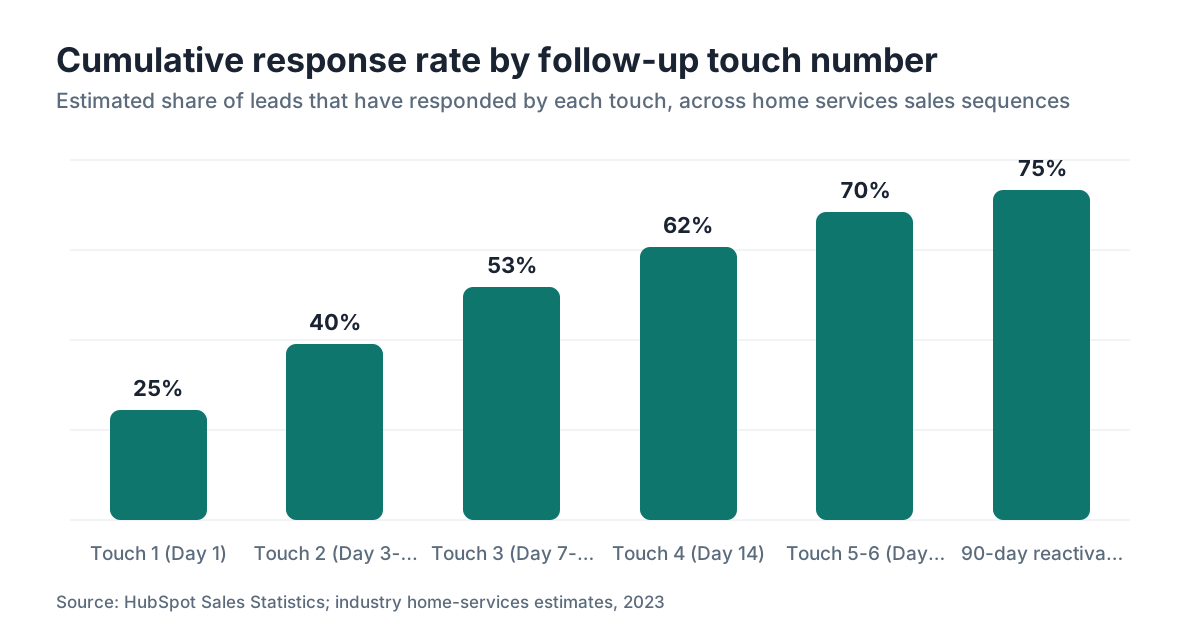
For a well-run follow-up sequence in home services, realistic response rates look something like this:
| Touch | Cumulative response rate |
|---|---|
| Touch 1 (day 1) | 20-30% |
| Touch 2 (day 3-4) | 35-45% |
| Touch 3 (day 7-8) | 50-55% |
| Touch 4 (day 14) | 58-65% |
| Touch 5-6 (day 21-28) | 65-75% |
| 90-day reactivation | +5-10% of dormant leads |
These numbers combine responses in any direction: "yes I want to move forward," "I'm not ready yet," and "I went with someone else." All three are good outcomes. The only bad outcome is silence, because silence gives you no information to act on.
Conversion rates (quotes that become signed jobs) for well-managed residential countertop shops typically run 25-40% of total quotes sent, depending on how competitive the market is and how thoroughly the shop qualifies leads upfront [8]. If your conversion rate sits below 20%, the problem is usually one of three things: price competitiveness, quote quality, or follow-up gaps.
How do you build a follow-up process your shop will actually use?
The best follow-up system is the one your team runs consistently, not the most sophisticated one.
Start with three things: a standard sequence (the timing and messages above), a weekly review habit (15 minutes every Monday to look at every open quote and flag which touch is due), and a defined owner (one person whose job it is to send follow-ups, even if that person is you).
Automation helps, but it has a ceiling. Automated email is fine for touch 1 and touch 2. By touch 3, the message should be personalized enough that a human is writing it. A sequence that refers to the customer's specific material and edge profile looks automated but isn't. It just takes discipline in data capture at the quote stage.
Two habits make the whole system easier: ask for a timeline when you send the quote ("are you hoping to have this installed before a specific date?"), and ask for the best way to reach them ("do you prefer text or email for follow-ups?"). Both answers let you calibrate the sequence before you even start.
For fabricators scaling shop operations, a platform like SlabWise handles the connection between quoting and follow-up tracking so neither falls through the cracks during a busy install week. The goal is the same whether you use software or a spreadsheet: no quote goes 48 hours without a next-action date attached to it.
The shops that win leads back consistently aren't doing anything magical. They just follow up more times, with more relevant messages, than anyone else is willing to.
Frequently asked questions
How soon should I follow up after sending a countertop quote?
Within 24 hours. Lead-response research consistently shows that the chance of a meaningful conversation drops sharply after the first day. A quick, low-pressure message confirming they received the quote and offering to answer questions is all you need for touch 1. Don't wait until the end of the week.
Is texting a customer after a countertop quote appropriate?
Yes, if you keep it brief and helpful. SMS open rates run far higher than email open rates, and most homeowners are comfortable with a short text from a business they've already contacted. Keep it under 160 characters, make it easy to reply, and never send more than one text per touch. If they don't respond to a text, switch channels.
What should I do if a lead opens my follow-up email but doesn't reply?
Wait one full day, then try a different channel, usually a text. An open without a reply often means the person read your message, thought about answering, and got distracted. A brief text saying you wanted to make sure your email came through tends to get a response when the email alone didn't. Don't mention that you saw they opened it.
How do I know when a countertop lead is truly dead?
After six touches with no response at any point, the lead is dormant. Mark it that way and move on. Set a 90-day reminder to send one reactivation message. If that also gets no response, archive it. Some projects genuinely get cancelled or put on hold indefinitely, and no amount of follow-up will change that.
Should I offer a discount to get a silent lead to respond?
No, not on your own initiative. Discounting without being asked trains customers to use silence against you. If a lead responds and specifically says the price is too high, explore whether a spec change (different material, simpler edge) gets them to a workable number. That's different from cutting your margin to chase a ghost.
What's the best follow-up message for a homeowner who got sticker shock?
Address the value, not the price. A message that spells out what's included (template, fabrication, installation, tearout) and why your process produces better results beats a lower number. If budget is genuinely the issue, offer to look at alternative materials that might hit their price point without a full rebuild of the quote.
How do follow-ups work differently for a commercial countertop lead vs. a homeowner?
Commercial leads (restaurants, offices, multi-unit developers) have longer decision chains and bigger budgets but more red tape. Extend your window to 60-90 days and lean on practical information: lead times, install scheduling, references from similar commercial projects. Homeowner follow-ups should be warmer and more visual, focused on the finished look and day-to-day use.
What tracking system should a small countertop shop use for quote follow-ups?
A Google Sheet works fine at low volume. For shops running 20 or more quotes per month, a light CRM like HubSpot's free tier or Jobber handles automated reminders and sequence tracking without much setup. The rule for any system: every open quote needs a next-action date attached. Quotes without a next step fall through the cracks.
Can I automate my countertop quote follow-ups?
You can automate the first two touches with reasonable results. Past that, the messages need enough personalization (specific material, edge, project details) that a human writing them performs noticeably better than a canned sequence. Use automation to trigger the reminder and pre-fill the template, then have a human review and send the actual message.
What's the realistic close rate for countertop quotes with a good follow-up process?
Well-run residential countertop shops typically close 25-40% of quotes sent, though this varies by market, pricing, and lead quality. Without structured follow-up, that rate often falls below 20%. Adding even three consistent touches to your current process can move the number within the first month of doing it.
What do I say to a lead who says they chose another countertop shop?
Thank them and ask what made the difference: price, timing, referral, or something else. Most people answer honestly. That answer is valuable data. End with a gracious offer to reconnect on future projects. Homeowners who have a bad experience with another fabricator sometimes come back, and they tend to be very committed clients.
Does following up on countertop quotes really make a financial difference for a shop?
Yes, meaningfully. If a shop sends 20 quotes per month averaging $4,500 each and closes 25%, that's $22,500 in monthly revenue. Improving the close rate to 35% with better follow-up adds $45,000 in annual revenue with no increase in lead spend. The math favors aggressive but respectful follow-up on almost any shop's numbers.
Sources
- Consumer Expenditure Survey, U.S. Bureau of Labor Statistics: Home improvement expenditures including countertop replacement represent significant household spending decisions, commonly ranging from $2,000 to $10,000+ for kitchen countertop projects.
- Harvard Business Review, 'The Short Life of Online Sales Leads': Companies that contacted leads within one hour were nearly seven times more likely to have a meaningful conversation than those who waited two or more hours; buyers who receive a price quote without a prior relationship are more likely to go dark than to reply.
- Pew Research Center, Mobile Fact Sheet: 97% of Americans use text messaging, making SMS a high-reach channel for business follow-up communication.
- Federal Trade Commission, CAN-SPAM Act guidance: Business follow-up emails must include a way to opt out and must honor opt-out requests; applies to commercial email messages sent as part of a sales follow-up sequence.
- Salesforce, State of Sales Report: A portion of dormant leads reactivate when recontacted after 60-90 days, as purchase timelines shift and projects resume.
- Jobber, small business field service management software: CRM and job management tools for home service businesses automate follow-up reminders and track quote status across multiple leads.
- National Kitchen and Bath Association, Industry Statistics: Residential kitchen remodeling, including countertop replacement, is among the most common home improvement projects; quote-to-project conversion rates for fabricators vary by market and shop practices.
- Small Business Administration, Managing Customer Relationships: Consistent follow-up with prospective customers is identified as a key driver of small business revenue and client retention.
Last updated 2026-07-11