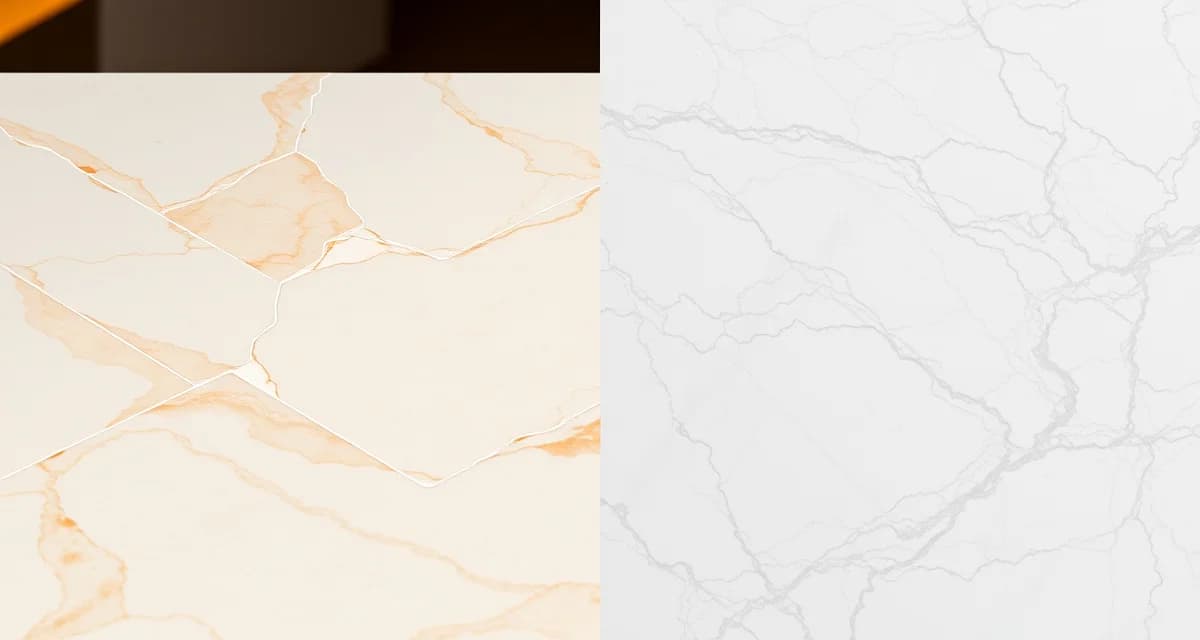
Marble vs Dekton Countertops: 2026 Comparison
Marble is timeless luxury. Dekton is modern engineering at its best. Both are premium countertop materials, but they sit at opposite ends of the maintenance spectrum. If you love the marble look but dread marble care, Dekton's marble-inspired patterns might be the answer. Here is the full comparison.
TL;DR
- Marble etches from acids and stains easily; Dekton is chemically inert and non-porous
- Dekton needs zero maintenance; marble needs sealing every 3-6 months and constant spill vigilance
- Marble has irreplaceable natural beauty - real veining, translucent depth, warmth
- Dekton handles heat (500F+), UV, and outdoor use; marble is limited in all three
- Marble costs more at the premium end: $75-$250/sq ft vs. $65-$150/sq ft for Dekton
- Dekton's marble patterns are convincing from a distance but lack the luminosity of real stone up close
- For busy kitchens, Dekton is the practical choice; marble is for spaces where beauty comes first
Side-by-Side Comparison
| Feature | Marble | Dekton |
|---|---|---|
| Type | Natural metamorphic stone | Sintered stone (ultra-compact) |
| Installed Cost (per sq ft) | $75-$250 | $65-$150 |
| Sealing | Every 3-6 months | Never |
| Heat Resistance | Moderate | Excellent (500F+) |
| Scratch Resistance | Low (3-5 Mohs) | Very High |
| Acid Sensitivity | Very High (etches) | None |
| Stain Resistance | Low | Very High |
| UV Resistance | Yes | Yes |
| Outdoor Use | Not recommended | Yes |
| Maintenance | High | Very Low |
| Pattern Uniqueness | Every slab unique | Printed patterns |
The Maintenance Divide
Marble demands constant attention in a kitchen setting. Acid contact causes etching in seconds. Unsealed surfaces absorb stains. Professional re-polishing costs $300-$800 every few years. Every glass of wine, every squeeze of lemon requires awareness.
Calculate your material waste savings
See exactly how much slab material and money you could save with optimized cutting layouts.
Try the free Waste CalculatorDekton requires soap and water. That is the entire maintenance routine. No sealing, no special cleaners, no urgency around spills, no professional re-polishing. The difference in daily living is dramatic.
Appearance: Nature vs. Engineering
Marble's beauty comes from millions of years of geological processes. Light enters the stone, creating a soft luminosity. Veining is genuinely random and unique. The surface has warmth and depth that is visceral - you can feel the difference when touching marble vs. any engineered surface.
Dekton's marble-inspired patterns (like Olimpo, Rem, and Taga) are impressive. From several feet away, they convincingly replicate marble's veining and color. But up close, the printed pattern lacks translucent depth. The surface feels different - harder, more uniform, less organic.
For some homeowners, Dekton's appearance is close enough. For marble purists, no engineered product matches the real thing.
Cost
At the premium end, marble is significantly more expensive:
- Calacatta marble: $150-$250/sq ft installed
- Calacatta-look Dekton: $90-$130/sq ft installed
At the entry level, the gap is smaller:
- Carrara marble: $75-$120/sq ft installed
- Marble-look Dekton standard: $65-$90/sq ft installed
Factor in marble's ongoing maintenance costs (sealing products, professional polishing), and Dekton's total cost of ownership is noticeably lower over a 20-year period.
Real Cost Comparison
Here's what actual kitchen projects look like with each material:
| Kitchen Size | Marble Installed | Dekton Installed | Difference |
|---|---|---|---|
| Small (25 sq ft) | $1,875-$3,750 | $1,625-$2,250 | $250-$1,500 |
| Medium (40 sq ft) | $3,000-$6,000 | $2,600-$3,600 | $400-$2,400 |
| Large (60 sq ft) | $4,500-$9,000 | $3,900-$5,400 | $600-$3,600 |
The upfront cost gap is only part of the story. Marble needs professional sealing every 6-12 months ($100-$200/year) and eventual honing to remove etch marks ($300-$600 per session). Over 15 years, marble's maintenance costs add $2,000-$5,000 that Dekton owners never spend.
Daily Kitchen Experience
Living With Marble
Marble in a kitchen is beautiful and demanding. Lemon juice left on the surface for 10 minutes leaves an etch mark. Red wine can stain if it sits too long. Cutting directly on marble damages both the stone and the knife.
Many marble kitchen owners say they love the look but wish they'd understood the maintenance commitment upfront. Others embrace the aging process and consider the developing patina part of marble's character.
Living With Dekton
Dekton in a kitchen is essentially worry-free. Hot pans go straight from stove to counter without trivets (rated to 500F+). Wine, coffee, and lemon juice sit on the surface without any effect. It never needs sealing, honing, or polishing.
The trade-off is subtle: Dekton surfaces lack marble's warmth and organic depth. In person, there's a visual flatness to even the best Dekton marble reproductions that real marble doesn't have.
Fabrication and Installation Notes
Both materials require professional fabrication, but the equipment and techniques differ:
- Marble fabricates with standard stone shop equipment: CNC, bridge saw, diamond tooling. Most fabrication shops handle marble routinely.
- Dekton is ultra-compact sintered stone and requires specific tooling adjustments. Its extreme hardness (rated 8 on Mohs scale) means slower cutting speeds and faster blade wear. Not all shops are set up for Dekton.
- Dekton is brittle despite its hardness. It can crack during fabrication if not supported properly, especially at cutout locations. Experienced Dekton fabricators handle it differently than natural stone.
- Lead times for Dekton may be longer since it's manufactured exclusively by Cosentino, while marble is available from multiple suppliers worldwide.
Resale Value
In the luxury home market, genuine marble still carries unmatched prestige. Buyers recognize it instantly and associate it with high-end design. Dekton, while excellent, doesn't have the same emotional pull.
In mid-range homes, Dekton's marble look is perfectly acceptable to most buyers. The brand recognition is growing, and "sintered stone" is becoming a recognized premium category in its own right.
Best Uses
Choose Marble When:
- Natural authenticity is non-negotiable
- The space is a bathroom or bar area (lower acid risk)
- You embrace patina and the stone's evolution over time
- Luxury prestige is important to the project
- Budget allows for ongoing professional maintenance
Choose Dekton When:
- Kitchen durability is the priority
- You want a marble look without marble maintenance
- Outdoor installation is needed (UV and weather resistant)
- Zero-maintenance living is a firm requirement
- Heat resistance matters (rated for direct hot pan contact)
FAQ
Does Dekton look like real marble?
Dekton's marble patterns are convincing from a normal viewing distance. Side-by-side with real marble, the natural stone's translucent depth and organic variation are noticeably different. Most guests in a finished kitchen will not spot the difference.
Can you put hot pans on Dekton?
Yes. Dekton withstands temperatures exceeding 500F without any damage. This is one of its strongest advantages over both marble and quartz.
Is marble worth the maintenance?
It depends on your lifestyle and values. Homeowners who view the surface as a living material that develops character over time enjoy marble despite its demands. Those who want a pristine surface with minimal effort will find marble frustrating.
Does Dekton stain?
Dekton is non-porous and does not stain under normal conditions. Coffee, wine, oil, and other common kitchen substances wipe off without leaving marks. It is one of the most stain-resistant countertop materials available.
Can Dekton chip?
Yes. Heavy impacts on Dekton edges can cause chipping. The surface is extremely hard, but its rigidity makes edges the weak point. Reasonable care prevents most issues.
Which is better for a bathroom?
Both work well in bathrooms. Marble is especially popular for bathroom vanities since acid exposure is lower than in kitchens. Dekton is the lower-maintenance option if you use acidic skincare products regularly.
How long does Dekton last?
Dekton carries a 25-year warranty from Cosentino and is expected to last 25-50+ years. The material does not degrade from UV, heat, or moisture exposure.
Is marble more expensive than Dekton?
Premium marble (Calacatta, Statuario) is more expensive than Dekton. Entry-level marble (Carrara) costs about the same or slightly more than standard Dekton. Marble's higher lifetime maintenance costs widen the gap further.
Make Your Decision
Marble and Dekton represent different philosophies: natural beauty with trade-offs vs. engineered performance with compromise-free living. Both are premium choices worthy of any kitchen or bathroom.
Compare costs for your project with our countertop cost calculator. Fabricators can try SlabWise free for 14 days to optimize quoting and reduce waste.
Try These Free Tools
- Cost Calculator -- Compare material costs instantly across different countertop options.
- Compare Materials -- Side-by-side material comparison with pricing, durability, and maintenance.
- Kitchen Visualizer -- Let customers preview countertop materials in their actual kitchen.
Sources & Further Reading
-
Natural Stone Institute - Technology and Software Solutions for Stone Fabricators
-
International Surface Fabricators Association - Fabrication Software and Digital Tools
-
National Kitchen & Bath Association - Technology Integration in Countertop Design
-
Marble Institute of America - Digital Fabrication and Software Standards