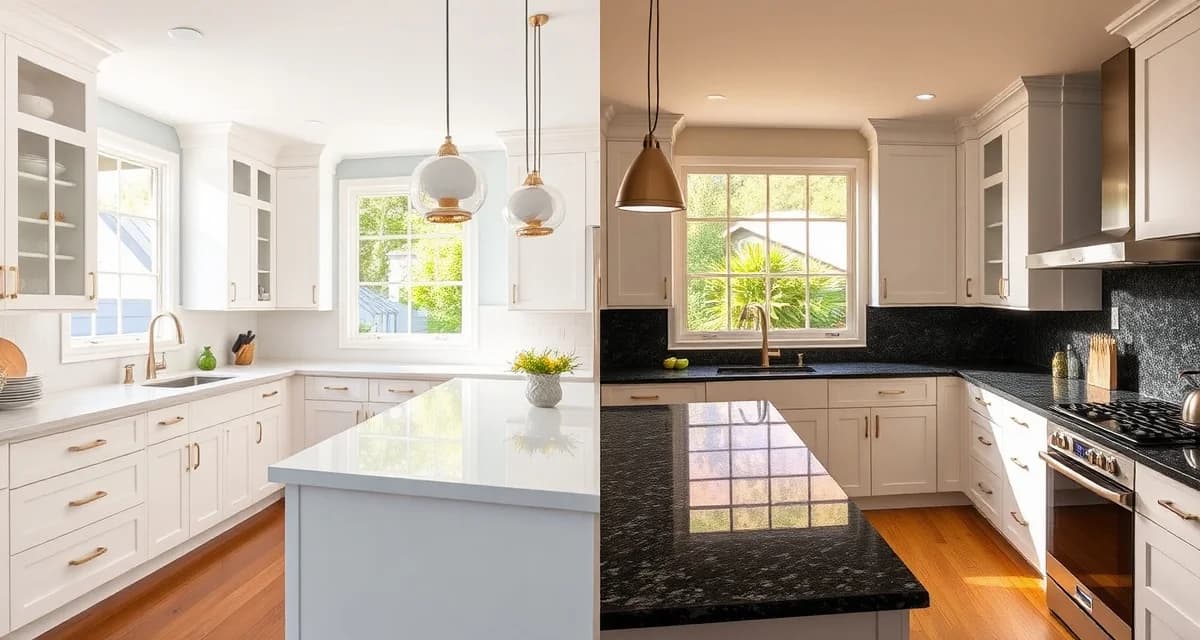
White vs Dark Countertops: A Complete Comparison for Homeowners and Fabricators
Quick Definition
The white vs dark countertop debate comes down to aesthetics, maintenance, kitchen size, and resale value. White countertops brighten spaces and show dirt easily, while dark countertops hide crumbs but show dust, water spots, and fingerprints. Both sell well - the right choice depends on cabinet color, lighting, lifestyle, and regional buyer preferences.
TL;DR
- White countertops dominate 2024-2026 trends, holding roughly 60% of new kitchen installations
- Dark countertops hide food mess but show dust, water spots, and fingerprints more visibly
- White quartz outsells white granite 3:1 due to consistent color and lower maintenance
- Dark granite remains popular in traditional and transitional kitchens, especially in the South and Midwest
- Fabrication differences matter - white materials show chip repairs more obviously than dark ones
- Resale data shows white kitchens get 2-5% higher offers in markets where open-concept designs dominate
- Material cost is similar - color choice doesn't significantly affect price within the same stone type
The Case for White Countertops
Why Homeowners Choose White
White countertops have dominated kitchen design for the better part of a decade, and the trend isn't slowing down. The reasons are practical as much as aesthetic:
Calculate your material waste savings
See exactly how much slab material and money you could save with optimized cutting layouts.
Try the free Waste CalculatorSpace perception. White surfaces reflect light, making kitchens feel larger. In a 100-square-foot galley kitchen, white counters can make the room feel 15-20% more spacious compared to dark alternatives.
Versatility. White countertops pair with virtually any cabinet color - white-on-white, white with navy, white with natural wood, white with green. Dark countertops limit cabinet choices more significantly.
Photography and listing appeal. Real estate agents consistently report that white kitchens photograph better for online listings, where 97% of home searches begin.
Popular White Countertop Materials
| Material | Price Range (per sq ft installed) | Maintenance | Stain Risk |
|---|---|---|---|
| White quartz (Calacatta look) | $55-$120 | Low - no sealing | Low |
| White marble (Carrara) | $75-$150 | High - annual sealing | High |
| White granite (Alaska White) | $50-$100 | Moderate - biannual sealing | Moderate |
| White quartzite (Taj Mahal) | $80-$150 | Moderate - annual sealing | Low-Moderate |
| White laminate | $15-$40 | Very low | Moderate |
The Downsides of White
White isn't forgiving. Red wine, turmeric, coffee, and beet juice all leave visible marks - especially on marble. And while quartz resists staining better than natural stone, it's not immune to prolonged contact with strong pigments.
Chip repairs on white surfaces stand out more than on dark ones. A chip in a dark granite counter can be filled with tinted epoxy that blends reasonably well. The same repair on white quartz often remains visible because matching the bright, clean tone precisely is difficult.
The Case for Dark Countertops
Why Homeowners Choose Dark
Dark countertops bring weight and drama to a kitchen. They anchor the room, create contrast against lighter cabinets, and give a sense of permanence.
Stain forgiveness. A splash of soy sauce on dark granite? Barely noticeable. The same splash on white marble requires immediate attention. For households that cook frequently with strong-colored ingredients, dark countertops are genuinely more practical.
Timelessness. Dark granite (Absolute Black, Ubatuba, Blue Pearl) has been popular for 30+ years without feeling dated. White Calacatta quartz, while currently trendy, may eventually feel era-specific.
Cost stability. Dark granite tends to hold steady pricing because demand is consistent rather than trend-driven. White quartz prices fluctuate more with design trends.
Popular Dark Countertop Materials
| Material | Price Range (per sq ft installed) | Maintenance | Fingerprint Visibility |
|---|---|---|---|
| Black granite (Absolute Black) | $50-$100 | Low-Moderate | Very high (polished) |
| Dark quartz (Caesarstone Piatto Black) | $55-$110 | Low | High (polished) |
| Soapstone | $60-$120 | Low - oil periodically | Moderate |
| Dark marble (Nero Marquina) | $80-$150 | High | Moderate |
| Dark quartzite (Titanium) | $70-$130 | Moderate | High |
The Downsides of Dark
The #1 complaint about dark countertops: everything shows. Every water drop, every crumb, every smudge. Polished black granite in particular requires wiping after every use if you want it to look clean.
Dark countertops also absorb more heat from sunlight. A dark counter near a south-facing window can reach 120°F+ on sunny days, which isn't dangerous but can affect items stored on the surface (chocolate, butter, candles).
In small kitchens, dark counters make the space feel more closed in. Pair dark counters with dark cabinets in a small kitchen, and you've created a cave.
Side-by-Side Comparison
| Factor | White Countertops | Dark Countertops |
|---|---|---|
| Shows crumbs/food | Yes - very visible | No - hides well |
| Shows dust/water spots | Minimal | Very visible |
| Shows fingerprints | Minimal | Highly visible (polished) |
| Stain risk | Higher | Lower |
| Chip repair visibility | More obvious | Easier to hide |
| Space perception | Makes rooms feel larger | Makes rooms feel cozier |
| Cabinet pairing | Pairs with almost anything | Best with white/light cabinets |
| Current trend status | Peak popularity | Stable, classic |
| Resale appeal | Broadly appealing | Niche but strong |
| Heat absorption | Lower | Higher |
What Fabricators Need to Know
Fabrication Differences
White and dark materials behave differently in the shop:
Inspection visibility. Flaws in white slabs are harder to spot during quality control because the stone itself is bright. Dark slabs show fissures, fills, and surface defects more readily under shop lighting. Inspect white slabs under both direct and raking light.
Edge finishing. Dark polished edges show micro-chipping and grinding marks more than white edges. A dark granite bullnose that looks acceptable at arm's length may show swirl marks up close. Budget 10-15% more time for dark edge polishing.
Seam matching. White quartz with subtle veining is easier to seam-match than dark granite with bold mineral patterns. However, if the white quartz has strong, directional veining (like a Calacatta pattern), seam placement becomes critical and layout time increases.
Waste considerations. Color doesn't directly affect waste percentages, but pattern matching on heavily veined white materials can increase waste by 5-8% because fabricators reject sections where the vein pattern creates an ugly seam.
Customer Expectations
White countertop customers tend to have higher aesthetic expectations. They notice imperfections faster, photograph their new counters for social media, and compare the finished product to the showroom display more critically.
Dark countertop customers are generally more practical-minded. They chose dark for durability reasons and are less likely to flag cosmetic issues that fall within normal tolerances.
Regional Preferences
Geography plays a bigger role than most people realize:
- Pacific Northwest: White quartz dominates (70%+ of new installs)
- Southeast: Dark granite still holds 40-45% market share
- Northeast: Mix, with white marble (Carrara) popular in high-end renovations
- Southwest: Light colors preferred (cream, beige, white) due to existing warm tones in architecture
- Midwest: Practical choices - dark granite and mid-tone quartz split the market
Fabricators who stock based on national trends without accounting for regional preferences tie up capital in slow-moving inventory.
The Maintenance Reality
Here's what daily life actually looks like with each:
White countertop morning routine: Make coffee, wipe up any drips within a few minutes (especially on marble), no visible dust or water spot issues. Weekly deep clean is mostly about sanitizing, not appearance.
Dark countertop morning routine: Make coffee, notice every water splash and crumb immediately, wipe down for visual cleanliness. Hard water spots build up fast and require vinegar solution or specialized cleaner weekly.
Neither is maintenance-free. They're just maintenance-different.
FAQ
Are white countertops hard to keep clean?
White countertops show food stains and spills more readily, but they don't show dust, water spots, or fingerprints. Daily maintenance is about wiping up colored spills quickly, especially on marble or light granite. White quartz is the lowest-maintenance white option.
Do dark countertops make a kitchen look smaller?
In small kitchens (under 120 sq ft), dark countertops can make the space feel more enclosed, especially with dark cabinets. In larger kitchens with good lighting, dark counters add depth and drama without shrinking the feel of the room.
Which color has better resale value?
Current data shows white kitchens get 2-5% higher offers on average, but this varies by market. In regions where traditional design dominates (parts of the South and Midwest), dark granite can be equally appealing to buyers.
Does color affect countertop price?
Within the same material, color has minimal impact on fabrication cost. However, certain colors are rarer - exotic white granites (like White Ice) can cost 30-50% more than standard dark granites. Quartz pricing is more consistent across colors.
Can I mix white and dark countertops in the same kitchen?
Yes, and it's increasingly popular. A common approach: white countertops on perimeter cabinets with a dark island counter. This creates visual contrast and lets you enjoy the benefits of both.
Which shows scratches more - white or dark?
Scratches are more visible on polished dark surfaces because they expose the lighter material beneath the polish. Honed or leathered finishes reduce scratch visibility on both light and dark materials.
What's the most popular white countertop in 2026?
White quartz with a Calacatta marble look remains the bestseller. Brands like Caesarstone, Cambria, and Silestone all offer multiple Calacatta-inspired patterns. For natural stone, Carrara marble and White Macaubas quartzite lead the market.
Are dark countertops going out of style?
No. Dark countertops aren't as trendy as they were in the 2005-2012 era of Ubatuba and Tan Brown granite, but they remain a strong choice. Matte black, soapstone, and leathered dark granite are all gaining momentum as alternatives to the all-white kitchen trend.
Do white countertops yellow over time?
Natural white stone (marble, granite, quartzite) doesn't yellow. Some white quartz can yellow with prolonged UV exposure near windows, which is why most quartz manufacturers recommend avoiding direct sunlight. Check the warranty terms for UV-related discoloration.
Which is better for a rental property?
Dark granite. It hides wear better, resists visible staining from careless tenants, and doesn't require the attentive cleaning that white surfaces need to look good. Budget-friendly options like Ubatuba or Absolute Black granite last decades in rental properties.
Help Your Customers Choose Faster with Accurate Quotes
Whether your customer picks Calacatta quartz or Absolute Black granite, SlabWise's Quick Quote system generates accurate estimates in 3 minutes instead of 20. Give homeowners the pricing clarity they need to make confident color decisions - and cut your quoting time by 85%.
[Start Your 14-Day Free Trial →]
Try These Free Tools
- Cost Calculator -- Compare material costs instantly across different countertop options.
- Compare Materials -- Side-by-side material comparison with pricing, durability, and maintenance.
- Kitchen Visualizer -- Let customers preview countertop materials in their actual kitchen.
Sources & Further Reading
-
International Surface Fabricators Association - Countertop Fabrication Standards
-
National Kitchen & Bath Association - Countertop Selection and Installation Guidelines
-
ASTM International - Standard Specification for Natural Stone Dimension