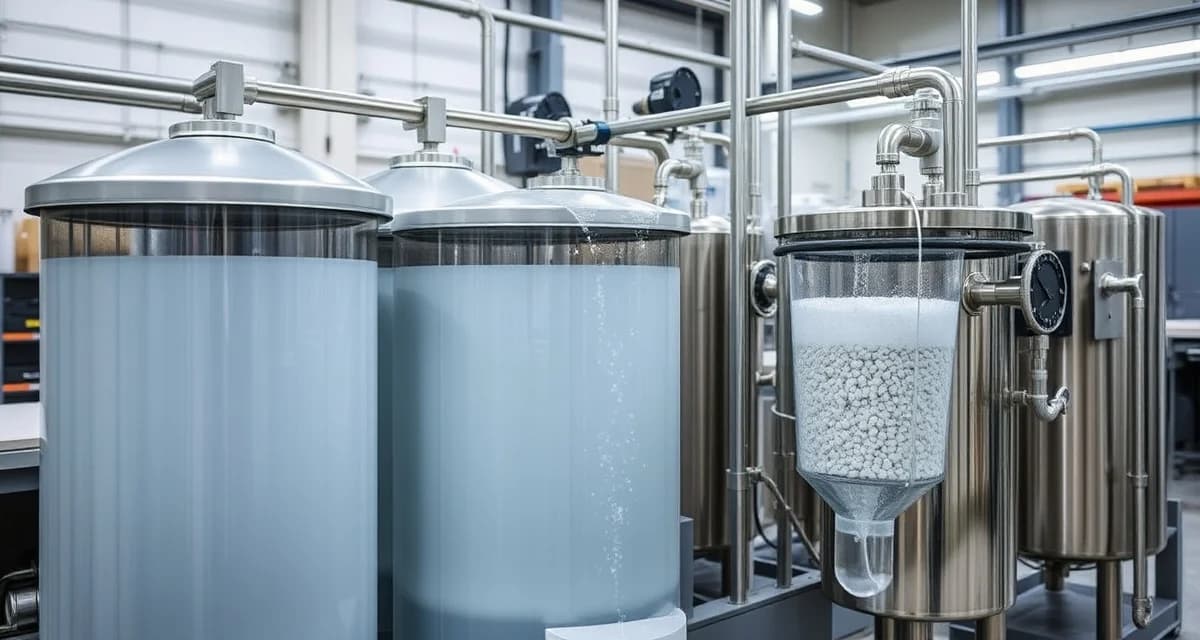
Water Recycling Systems for Countertop Fabrication
What Is a Water Recycling System?
A water recycling system captures, filters, and reuses the water that flows through your bridge saw, CNC router, and polishing equipment during stone fabrication. Instead of sending thousands of gallons of stone-slurry water down the drain every day, the system separates stone particles from the water and recirculates clean water back to your machines.
TL;DR
- A typical countertop shop uses 5,000-15,000 gallons of water per day across all machines
- Water recycling systems reclaim 85-95% of process water
- Monthly water and sewer savings range from $500-$2,000 depending on local rates
- Systems cost $8,000-$50,000 depending on capacity and filtration level
- Many municipalities now require water treatment before discharge
- ROI is typically 12-24 months from water savings alone - faster when avoiding EPA fines
- Proper pH management is critical for equipment longevity
Why Fabricators Need Water Recycling
Water Consumption Reality
Every wet-cutting machine in your shop uses water continuously:
Calculate your material waste savings
See exactly how much slab material and money you could save with optimized cutting layouts.
Try the free Waste Calculator| Equipment | Typical Water Use |
|---|---|
| Bridge saw | 3-8 GPM |
| CNC router | 2-5 GPM |
| Waterjet | 0.5-2 GPM |
| Inline polisher | 5-10 GPM |
| Edge polisher | 2-4 GPM |
| Hand polishing stations | 1-3 GPM each |
A mid-size shop running two saws, a CNC, and polishing equipment can easily use 8,000-12,000 gallons in a single shift. At municipal water rates of $5-$15 per 1,000 gallons (plus sewer fees that are often higher), that's $40-$180 per day just for water.
Regulatory Pressure
The bigger driver for many shops is compliance. Stone fabrication wastewater contains:
- Suspended solite particles (silica, calcium carbonate, feldspar)
- High pH (typically 9-12, especially with concrete or marble dust)
- Trace metals (from tooling wear)
- Resin residues (from engineered quartz cutting)
Most municipalities prohibit discharging this wastewater into storm drains or the sanitary sewer without treatment. EPA and state environmental agencies have been increasing enforcement, with fines ranging from $1,000-$50,000 per violation. Several countertop shops have faced six-figure penalties for untreated discharge.
Silica Dust Connection
When stone-cutting water isn't managed properly, it dries into fine dust that contains crystalline silica. OSHA's permissible exposure limit for respirable crystalline silica is 50 micrograms per cubic meter. Dried cutting slurry becomes airborne silica dust - the same hazard that wet cutting is supposed to prevent. Proper water management is inseparable from proper silica exposure control.
How Water Recycling Systems Work
Basic Process Flow
- Collection: Wastewater from all machines flows into a central pit or sump
- Primary settling: Heavy particles settle out in a clarifier tank
- Chemical treatment (optional): Flocculants bind fine particles for easier removal
- Secondary filtration: Filter press, bag filters, or cyclone separators remove remaining particles
- pH adjustment: Automated systems add acid or base to bring water to neutral (6.5-8.5)
- Storage: Clean water is stored in a holding tank
- Redistribution: Pumps deliver recycled water back to each machine
System Types
Settling tanks (simplest)
- Cost: $2,000-$8,000
- Recovery rate: 60-75%
- How it works: Gravity settles heavy particles; water is skimmed off the top
- Best for: Small shops with 1-2 machines
- Drawback: Requires frequent manual cleaning; doesn't remove fine particles
Filter press systems
- Cost: $15,000-$35,000
- Recovery rate: 85-92%
- How it works: Water is pressed through filter plates that capture solids, producing dry "cakes" for easy disposal
- Best for: Mid-size to large shops
- Produces: Stackable filter cakes (easy to transport and dispose)
Closed-loop systems with flocculant treatment
- Cost: $25,000-$50,000
- Recovery rate: 90-95%
- How it works: Chemical flocculants bind micro-particles; clarified water passes through multi-stage filtration
- Best for: High-volume shops or areas with strict discharge regulations
- Produces: Near-clear recycled water meeting discharge standards
Cyclone/centrifugal separators
- Cost: $8,000-$20,000
- Recovery rate: 75-85%
- How it works: Spinning water forces heavy particles to the outer wall for collection
- Best for: Shops wanting moderate recycling without chemical treatment
- Advantage: Low maintenance, continuous operation
Cost Analysis
Installation and Operating Costs
| Cost Category | Settling Tank | Filter Press | Closed-Loop |
|---|---|---|---|
| Equipment cost | $2K-$8K | $15K-$35K | $25K-$50K |
| Installation | $1K-$3K | $3K-$8K | $5K-$15K |
| Monthly chemicals | $0 | $50-$200 | $100-$400 |
| Monthly electricity | $20-$50 | $50-$150 | $100-$300 |
| Monthly maintenance | $50-$100 | $100-$300 | $200-$500 |
| Waste disposal | $200-$500/mo | $100-$300/mo | $50-$200/mo |
Savings Calculation
For a shop using 10,000 gallons/day with a filter press system:
Water savings:
- Municipal water: 10,000 gal × $0.008/gal = $80/day
- Recycled at 90%: 9,000 gal saved = $72/day saved
- Monthly water savings: ~$1,500
Sewer fee savings:
- Reduced discharge volume: $500-$1,000/month
Compliance savings:
- Avoided fines: Potentially $1,000-$50,000+ per incident
- Avoided shutdown orders: Priceless for business continuity
Total monthly savings: $2,000-$3,000+ System payback: 8-18 months
Selecting the Right System
Factors to Consider
Shop volume: How many gallons per day do you use? Measure actual consumption before sizing a system - most shops underestimate.
Local regulations: What are your discharge limits for pH, total suspended solids (TSS), and total dissolved solids (TDS)? This determines how much filtration you need.
Available space: Filter press systems need 100-200 square feet. Settling tanks need comparable space. Plan for maintenance access.
Waste disposal options: Filter cakes and settled sludge need disposal. Check if your local landfill accepts stone fabrication waste (most do - it's typically classified as non-hazardous).
Water quality requirements: Some CNC machines and waterjets require cleaner water than others. Check your equipment manufacturer's specifications for maximum particulate levels.
Sizing Guide
| Shop Size | Daily Water Use | Recommended System |
|---|---|---|
| 1-2 machines | 2,000-5,000 gal | Settling tank or cyclone |
| 3-5 machines | 5,000-10,000 gal | Filter press |
| 6+ machines | 10,000-20,000 gal | Closed-loop with flocculant |
| Multiple shifts | 15,000-30,000 gal | Redundant closed-loop |
Installation Best Practices
Trenching and Collection
- Slope all floor drains toward a central collection point (minimum 1/8" per foot)
- Use trench drains rather than round floor drains (less clogging)
- Install catch basins at each machine to trap large debris before it enters the main system
- Size piping for peak flow (all machines running simultaneously)
Pump Selection
- Use slurry-rated pumps - standard sump pumps will fail within weeks
- Install duplex pumps for redundancy (one pump failure shouldn't shut down your shop)
- Oversized impellers and wear plates extend pump life in abrasive environments
- Variable-frequency drives (VFDs) allow flow rate adjustment as demand changes
pH Management
Stone cutting typically produces alkaline wastewater (pH 9-12). Most discharge permits require pH 6.5-8.5. Automated pH dosing systems:
- Monitor pH in real time
- Inject CO2 or dilute acid to lower pH
- Log pH levels for compliance documentation
- Cost $2,000-$5,000 for the dosing system
Cold Weather Considerations
If your shop is in a cold climate:
- Insulate exterior piping and tanks
- Install tank heaters to prevent freezing
- Indoor systems are preferred but require adequate space
- Frozen lines can crack and cause significant water damage
Maintenance Schedule
| Task | Frequency |
|---|---|
| Check pump operation | Daily |
| Monitor pH levels | Daily |
| Clean catch basins | Daily |
| Inspect filter plates/bags | Weekly |
| Remove settled sludge | Weekly to biweekly |
| Clean flocculant dosing system | Monthly |
| Full system flush | Quarterly |
| Replace filter media | As needed (monitor pressure differential) |
| Pump rebuild/replacement | Annually or as needed |
| Compliance water testing | Per local requirements |
Connecting Water Management to Production Efficiency
Water recycling is one piece of a broader operational efficiency picture. Shops that invest in systems-level thinking - managing water, material waste, production scheduling, and customer communication together - consistently outperform those that address each issue in isolation.
SlabWise helps fabricators optimize the production side of this equation. Better slab nesting means fewer cuts, which means less water used per finished square foot. Faster quoting means more jobs through the shop, spreading your fixed water system costs across more revenue.
How much water does a typical countertop shop use?
Mid-size shops (3-5 machines) typically use 5,000-10,000 gallons per day. Large shops running multiple shifts can use 15,000-30,000 gallons daily.
Is stone fabrication wastewater hazardous?
Generally no. Stone cutting wastewater is classified as non-hazardous in most jurisdictions. However, it does require treatment before discharge due to high pH and suspended solids. Some engineered quartz residues may have additional considerations.
Can I just use a settling pond?
In some rural areas with adequate space, settling ponds are permitted. However, they require significant land area, are affected by weather, and may not meet discharge limits for pH or fine particles. They're increasingly rare as regulations tighten.
How often do filter plates need replacement?
Filter press plates typically last 2-5 years depending on operating pressure and the abrasiveness of your waste stream. Filter cloths need replacement more frequently - every 3-12 months depending on use.
What do I do with the solid waste?
Filter cakes and settled sludge are typically disposed of in lined construction debris landfills. Some shops have found secondary uses - landscape fill, road base material, or brick manufacturing. Check local disposal regulations.
Will recycled water damage my equipment?
Properly filtered and pH-adjusted recycled water is safe for all standard fabrication equipment. Maintain total suspended solids below 500 ppm and pH between 6.5-8.5 per most manufacturer specifications.
Do I need a permit for my water recycling system?
Most jurisdictions require an industrial discharge permit if any water leaves your property through the sewer system. Even with recycling, you'll likely need a permit for overflow or blowdown discharge. Contact your local environmental agency.
How much floor space does a water recycling system need?
Plan for 100-300 square feet depending on system type. Filter press systems need space for the press plus room to remove and handle filter cakes. Include access for a forklift or cart to remove waste.
Can I install a system myself?
Basic settling systems are straightforward. Filter press and closed-loop systems typically require professional installation - both for proper function and to meet regulatory requirements. Many suppliers include installation in their pricing.
What's the biggest maintenance mistake shops make?
Ignoring pH monitoring. Running alkaline water (pH 10+) through your machines accelerates corrosion on pumps, fittings, and machine components. Automated pH dosing is a small investment that protects much larger ones.
Protect Your Investment and Your Compliance
Water management isn't optional for modern countertop fabricators. The right system protects your equipment, keeps you compliant, and saves thousands per month in water costs.
Start your 14-day free trial of SlabWise and optimize the rest of your fabrication workflow too.
Try These Free Tools
- Nesting Optimizer -- AI-powered slab layout that maximizes yield considering vein direction and defects.
- Defect Mapping -- Upload a slab photo and AI maps every fissure, pit, and color issue.
- Value Engineering -- Find dollar-quantified suggestions to save material without cutting margin.
Sources & Further Reading
-
International Surface Fabricators Association - Digital Fabrication and CAD/CAM Best Practices
-
Natural Stone Institute - Stone Fabrication Technology and Optimization
-
Marble Institute of America - Template and Layout Efficiency Guidelines
-
National Kitchen & Bath Association - Countertop Installation and Fabrication Standards