Traditional Kitchen Countertop Guide
What You Need to Know in 60 Seconds
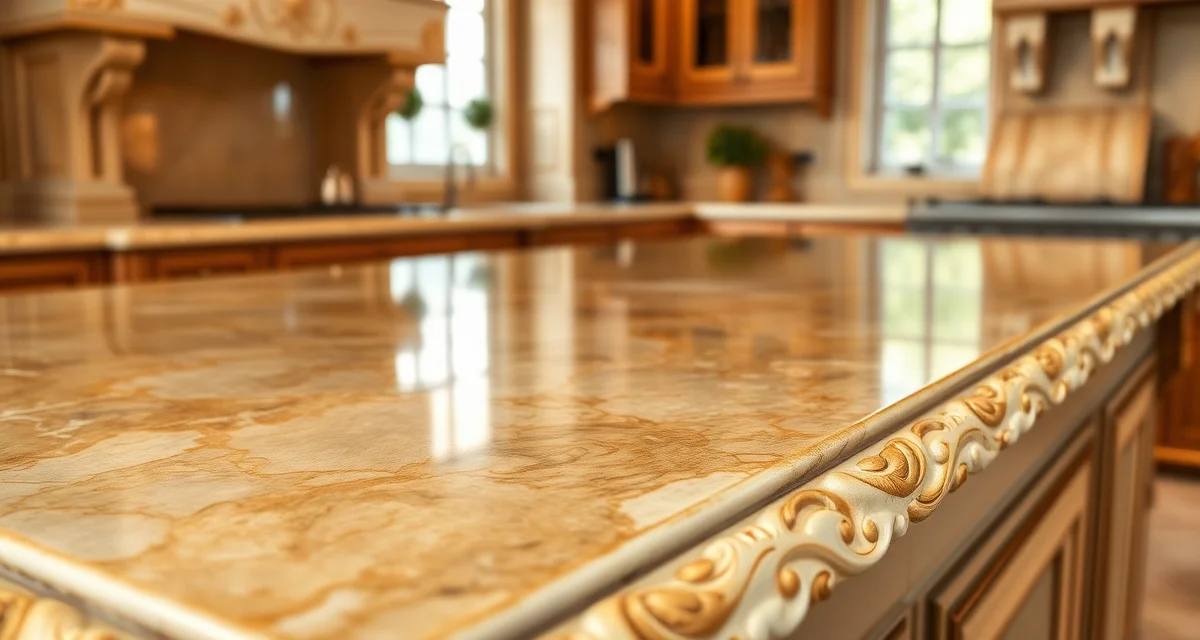
Traditional kitchen design draws from European and early American architectural styles, emphasizing craftsmanship, warm materials, and decorative detail. The countertop in a traditional kitchen is both a work surface and an expression of quality - natural stone, ornate edge profiles, and warm color palettes define the look. This guide walks through materials, edge details, color choices, and design pairings that create an authentically traditional kitchen.
TL;DR
- Granite is the most popular traditional kitchen countertop for its natural beauty and durability
- Ornate edge profiles (ogee, dupont, triple pencil) distinguish traditional from modern kitchens
- Warm color palettes dominate - cream, gold, brown, and warm gray tones
- Marble is the traditional luxury choice especially for baking stations and pastry prep
- Raised-panel cabinets, crown molding, and stone countertops form the traditional trifecta
- Traditional kitchens typically use polished finishes that reflect light and showcase stone depth
- Budget $3,000-$10,000 for traditional kitchen countertops in a standard-sized kitchen
The Traditional Kitchen Aesthetic
Traditional kitchens value craftsmanship, permanence, and warmth. Unlike modern kitchens that celebrate minimalism, traditional design embraces detail - fluted columns on cabinet faces, crown molding, furniture-style island legs, and countertop edges that are works of craft themselves.
Calculate your material waste savings
See exactly how much slab material and money you could save with optimized cutting layouts.
Try the free Waste CalculatorThe countertop's role in a traditional kitchen is to be beautiful and impressive up close. Traditional kitchen users spend time at the counter and appreciate details: the depth of a granite's mineral crystals, the softness of marble's veining, the complexity of an ogee edge profile.
Traditional vs. Transitional
Transitional kitchens borrow from both traditional and modern. Here is where they diverge on countertops:
| Element | Traditional | Transitional |
|---|---|---|
| Edge profile | Ogee, dupont, bullnose | Simple ogee, half-bullnose, beveled |
| Finish | Polished | Polished or honed |
| Material | Granite, marble | Granite, quartz, marble |
| Color | Warm (gold, brown, cream) | Warm to neutral (gray, cream) |
| Pattern | Bold movement and veining | Moderate to subtle |
Best Materials for Traditional Kitchens
Granite
Granite is the backbone of traditional kitchen countertop design. Its natural variation, depth of color, and polished finish create the rich, substantial surface that traditional design demands.
Best granite styles for traditional kitchens:
- Warm browns and golds (Giallo Ornamentale, Santa Cecilia, Typhoon Bordeaux) - the most classic traditional granite palette
- Deep greens (Verde Butterfly, Ubatuba) - a traditional color with European roots
- Rich blacks with gold veining (Black Galaxy, Titanium) - formal and dramatic
- Creams with warm movement (Colonial Cream, Ivory Fantasy) - soft and elegant
Why granite works: Every slab is unique, polished granite has remarkable depth when light hits it, and the material signals permanence - all values aligned with traditional design.
Cost: $50-$100/sq ft installed
Marble
Marble is the prestige material in traditional kitchens. Historic European kitchens used marble work surfaces for pastry and baking, and this heritage gives marble a place of honor in traditional design.
Best uses in traditional kitchens:
- Full kitchen installation (for homeowners who accept marble's maintenance needs)
- Baking station inset (a marble section built into the countertop specifically for pastry work)
- Island feature (marble island with granite perimeter for practical balance)
Popular traditional marble: Calacatta Gold, Carrara, Emperador Dark, Crema Marfil
Cost: $75-$150/sq ft installed
Quartz in Traditional Kitchens
Quartz can work in traditional kitchens, but it requires careful selection. Choose quartz patterns with warm tones and natural-looking movement - avoid solid colors or obviously engineered patterns that read as modern.
Traditional-friendly quartz: Patterns that mimic warm granite or marble, with visible veining and tonal variation. Avoid bright whites, concrete-looks, or solid colors.
Cost: $55-$100/sq ft installed
Soapstone and Slate
Both soapstone and slate have historical roots in traditional American kitchens, particularly in New England and Mid-Atlantic homes. Their dark, matte surfaces provide an alternative to the polished-granite standard.
Best for: Colonial, Federal, and early American traditional kitchens where historical accuracy matters.
Edge Profiles That Define Traditional Style
Edge profiles in traditional kitchens are not simply functional - they are a design statement. The complexity and craftsmanship of the edge communicates the kitchen's level of quality and attention to detail.
Traditional Edge Profile Guide
| Profile | Complexity | Best With | Visual Effect |
|---|---|---|---|
| Ogee | High | Granite, marble | Classic S-curve, elegant and formal |
| Double ogee | Very high | Premium granite | Double S-curve, extra ornate |
| Dupont | High | Granite, marble | Step-down with curve, architectural |
| Full bullnose | Moderate | All materials | Fully rounded, traditional standard |
| Triple pencil | High | Granite | Three thin rounds stacked, distinctive |
| Cove ogee | High | Marble | Concave curve with ogee, very ornate |
| Lambs tongue | Very high | Premium stone | Pointed curve, rare and distinctive |
Choosing the Right Profile
Match edge complexity to kitchen formality:
- Casual traditional: Half bullnose or simple ogee
- Standard traditional: Ogee or dupont
- Formal traditional: Double ogee, cove ogee, or lambs tongue
- Historic reproduction: Research the specific period for authentic profiles
Fabrication note: Complex edge profiles require more machining time and skill. Not all fabrication shops can produce the more ornate profiles consistently. Ask to see samples of the specific edge profile you want in the actual material you have selected before committing. SlabWise's Quick Quote feature helps fabricators price these variable-complexity edges accurately, which means your quote reflects the actual work involved.
Color Palettes for Traditional Kitchens
Warm Traditional
The most common traditional palette revolves around warm tones:
- Countertop: Gold, brown, or warm cream granite
- Cabinets: Cherry, maple, or warm-glazed white
- Backsplash: Tumbled travertine or warm subway tile
- Hardware: Oil-rubbed bronze or antique brass
Rich Traditional
Deeper, more formal traditional kitchens use richer colors:
- Countertop: Deep green or black granite with gold flecks
- Cabinets: Dark cherry, espresso, or navy
- Backsplash: Dark tumbled stone or decorative tile
- Hardware: Antique brass or pewter
Light Traditional
A lighter approach to traditional design that still maintains warmth:
- Countertop: Cream granite or warm marble
- Cabinets: Antique white or cream with glaze
- Backsplash: Cream subway tile or handmade tile
- Hardware: Polished brass or satin nickel
Pairing Countertops with Traditional Elements
Cabinet Styles
Traditional cabinets feature raised panels, applied moldings, and furniture-style details. The countertop material and edge should match the cabinet's level of ornamentation.
- Full overlay raised panel with crown molding pairs with ogee or dupont edges on granite
- Inset raised panel pairs with ogee edges on marble or premium granite
- Beadboard panel (casual traditional) pairs with half bullnose on granite or quartz
Backsplash Integration
Traditional kitchens often use the countertop material as a 4-inch backsplash, with decorative tile above. This stone backsplash strip creates a visual base that anchors the countertop to the wall.
For more formal traditional kitchens, a full stone backsplash from counter to upper cabinet creates a dramatic effect, particularly with book-matched marble or granite with significant movement.
Island Design
Traditional kitchen islands often incorporate furniture-style details: turned legs, corbels supporting the overhang, decorative panels on the sides, and sometimes a different countertop material than the perimeter.
A marble-topped island with granite perimeter counters is a classic traditional combination - the marble signals luxury and function (baking surface) while the granite handles the daily work of the kitchen.
Fabrication Considerations for Traditional Kitchens
Edge Profile Quality
Ornate edge profiles are the most visible fabrication detail in a traditional kitchen. Any waviness, inconsistency, or roughness in the profile stands out because the eye follows the curve. CNC-machined profiles are more consistent than hand-routed, but some profiles (particularly lambs tongue and cove ogee) are still finished by hand in many shops.
Corner Details
Where two countertop sections meet at a corner, the edge profile must transition smoothly. In traditional kitchens with complex edges, this corner detail requires extra attention. A poorly mitered ogee edge is far more noticeable than a poorly joined eased edge.
Backsplash Scribe
Traditional 4-inch stone backsplashes need to be scribed precisely to the wall surface, which is rarely perfectly flat or plumb. The gap between the backsplash and wall is filled with caulk but should be minimal. Digital templating captures wall irregularities that manual methods can miss.
Maintenance for Traditional Countertop Materials
| Material | Sealing Frequency | Daily Care | Professional Maintenance |
|---|---|---|---|
| Granite (polished) | Every 12 months | Stone cleaner wipe-down | Repolish every 5-10 years |
| Marble (polished) | Every 3-6 months | Stone cleaner, immediate spill wipe | Repolish every 2-5 years |
| Quartz | None | Any mild cleaner | None typically needed |
| Soapstone | None (oil optional) | Mineral oil for even color | Sand out deep scratches |
What is the most traditional countertop material?
Granite with a polished finish and ornate edge profile (ogee or dupont) is the most widely recognized traditional kitchen countertop. For historically specific styles, marble (formal European), soapstone (colonial American), and butcher block (country traditional) each have legitimate traditional credentials.
Are polished or honed countertops more traditional?
Polished finishes are more traditional. The reflective surface showcases the stone's depth and mineral content, which aligns with traditional design's emphasis on visible quality and craftsmanship. Honed finishes read as more contemporary or transitional.
What edge profile is best for a traditional kitchen?
Ogee is the most popular traditional edge profile. For more formal kitchens, double ogee or dupont edges add complexity. For casual traditional, a half bullnose provides a softened edge without ornate detail. The edge should match the level of detail in your cabinetry.
Can I use quartz in a traditional kitchen?
Yes, if you select patterns that mimic natural stone with warm tones and visible variation. Avoid solid-color quartz, concrete-look patterns, or high-contrast modern marble-look options. Look for quartz that could be mistaken for granite or warm marble at a glance.
How do I update a traditional kitchen without losing the style?
Lightening the color palette is the most effective single change. Replace dark granite with lighter granite or warm marble. Lighter stone modernizes the feel while maintaining traditional character through edge profiles and cabinet style. Adding under-cabinet lighting also updates the look without changing the style.
What granite colors are most traditional?
Warm golds and browns (Giallo Ornamentale, Santa Cecilia), rich greens (Ubatuba, Verde Butterfly), and formal blacks with gold flecks (Black Galaxy, Titanium) are the most traditional granite palettes. Avoid bright blue, red, or white granites - these read as contemporary.
Should my island have a different countertop than my perimeter?
In traditional kitchens, yes - this is both historical and practical. A marble island with granite perimeter is a classic combination. The marble serves as a dedicated pastry/baking surface while the granite handles everyday use. This approach also adds visual variety that complements the detailed nature of traditional design.
How much do ornate edge profiles cost?
Complex edge profiles (ogee, dupont, triple pencil) add $15-$40 per linear foot compared to a standard eased edge. For a kitchen with 30 linear feet of edge, that is $450-$1,200 in additional cost. The premium is for the extra machine time and hand-finishing required to produce clean, consistent ornate profiles.
Do traditional kitchens need crown molding with the countertop?
Crown molding goes on cabinets, not countertops, but it is related. Traditional kitchens with crown molding on upper cabinets should have countertop edges that match in formality. Crown molding with a simple eased countertop edge looks mismatched - pair ornate cabinets with ornate edges.
What backsplash works best with traditional granite countertops?
A 4-inch granite backsplash (matching the countertop) with tumbled travertine or handmade ceramic tile above is the classic traditional combination. For a more uniform look, full granite backsplash from counter to upper cabinet creates a dramatic but cohesive traditional statement.
Build Your Traditional Kitchen
Traditional kitchens stand the test of time because they are built on quality materials and skilled craftsmanship. The right countertop - natural stone, ornate edges, warm colors - creates a kitchen that feels both luxurious and welcoming.
Use SlabWise's project calculator to estimate costs for your traditional kitchen countertop project and compare materials and edge options. Start your 14-day free trial today.
Try These Free Tools
- Kitchen Visualizer -- Upload a kitchen photo and preview different countertop materials in place.
- AR Overlay -- See the actual stone pattern on your customer's cabinets using AR.
- Sink Finder -- Search compatible sink models by countertop dimensions and cutout specs.
Sources & Further Reading
- Natural Stone Institute - Bathroom Design Guidelines
- National Kitchen & Bath Association - Countertop Selection Guide
- Marble Institute of America - Bathroom Stone Applications
- International Surface Fabricators Association - Residential Bathroom Standards