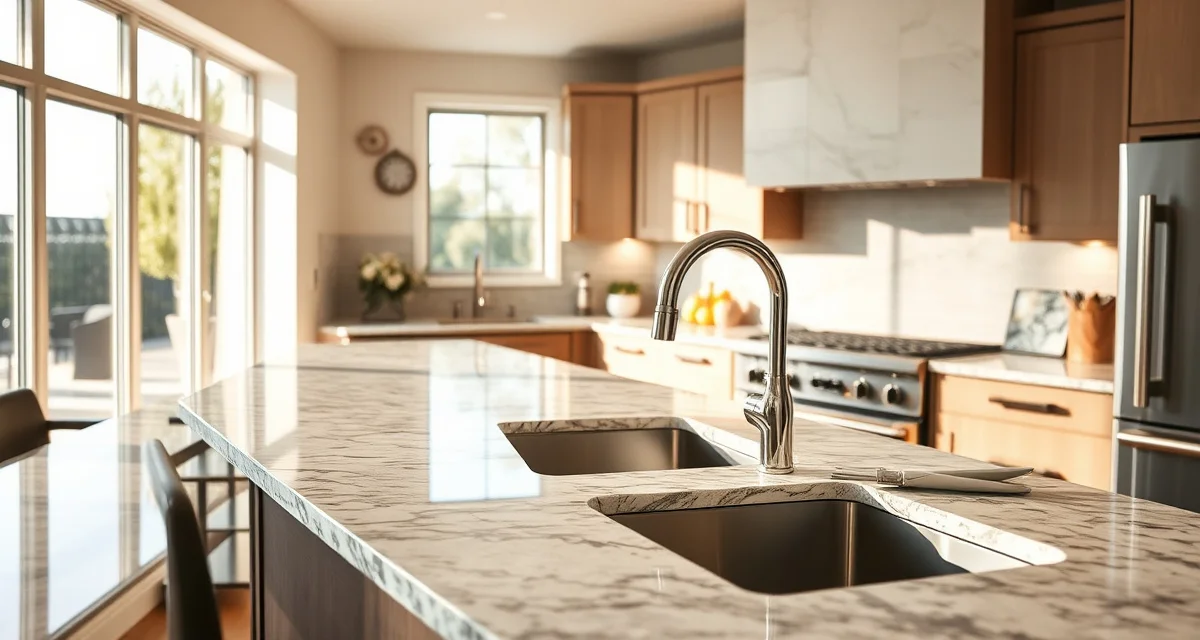
Countertops That Add Resale Value
What You Need to Know in 60 Seconds
Your countertop choice directly affects what buyers are willing to pay for your home. Certain materials consistently return more than their installation cost at resale, while others barely move the needle. This guide breaks down which countertop materials deliver the best return on investment, what buyers actually look for, and how fabrication quality plays into perceived home value.
TL;DR
- Granite and quartz countertops return 60-80% of their cost at resale, with some markets exceeding 100%
- Laminate countertops rarely add measurable resale value and can actually deter buyers
- Kitchen remodels with quality countertops recoup an average of 75% of total project cost
- The mid-range sweet spot ($50-$80/sq ft installed) offers the best ROI for most markets
- Slab quality matters - visible seams, poor color matching, and bad edge profiles reduce perceived value
- Regional preferences vary significantly - what sells in Miami differs from Minneapolis
- Fabrication precision affects appraisal values - poorly fitted countertops raise red flags for inspectors
Which Countertop Materials Add the Most Resale Value?
Not all countertops are created equal when it comes to getting your money back at closing. Here is how the most common materials stack up.
Calculate your material waste savings
See exactly how much slab material and money you could save with optimized cutting layouts.
Try the free Waste CalculatorMaterial-by-Material ROI Breakdown
| Material | Avg. Cost/Sq Ft (Installed) | Typical ROI at Resale | Buyer Appeal Rating |
|---|---|---|---|
| Granite | $50-$100 | 60-80% | High |
| Quartz | $55-$110 | 65-85% | Very High |
| Marble | $75-$150 | 50-70% | High (luxury market) |
| Quartzite | $70-$120 | 60-75% | High |
| Butcher Block | $40-$70 | 40-60% | Moderate |
| Laminate | $15-$40 | 10-25% | Low |
| Concrete | $65-$130 | 40-60% | Niche |
| Solid Surface | $40-$80 | 30-50% | Moderate |
Why Quartz Leads the Pack
Quartz has overtaken granite as the most requested countertop material among home buyers. The reasons are practical: zero sealing required, consistent color patterns, and a wide range of style options from modern whites to natural stone looks.
For fabricators, quartz projects also tend to have fewer callbacks. The material is engineered for consistency, which means fewer surprises during templating and cutting. When every piece matches the sample the homeowner approved, satisfaction stays high and word-of-mouth referrals follow.
Granite Still Holds Strong
Granite remains a top performer in resale value, particularly in markets where natural stone carries prestige. Each slab is unique, which appeals to buyers who want something no other house on the block has.
The key factor with granite ROI is slab selection and fabrication quality. A well-matched, properly sealed granite countertop with clean seams and a polished edge reads as premium. A poorly cut slab with visible filler at the seams reads as a shortcut.
Where Marble Fits In
Marble commands attention but comes with caveats. In luxury markets ($500K+ homes), marble countertops signal quality and can push offers higher. In mid-range homes, buyers may actually view marble as a maintenance liability rather than an upgrade.
If you are targeting resale value with marble, consider using it strategically - a marble island top paired with quartz perimeter counters gives the wow factor without the full maintenance burden.
How Much Does Countertop Quality Affect Home Appraisals?
Home appraisers look at countertops as part of the overall kitchen quality assessment. The Uniform Residential Appraisal Report (URAR) includes kitchen condition and materials as explicit line items.
What Appraisers Actually Evaluate
- Material type - stone countertops rate higher than laminate or tile
- Condition - chips, stains, and burn marks reduce the rating
- Installation quality - gaps, uneven surfaces, and poor seam work get noted
- Age and wear - countertops that look dated pull down the overall kitchen score
- Consistency - mismatched materials between kitchen areas suggest piecemeal renovations
A single kitchen upgrade from laminate to granite or quartz can shift an appraiser's kitchen rating from "average" to "above average," which typically translates to a $5,000-$15,000 increase in appraised value for a median-priced home.
The Fabrication Quality Factor
This is where many homeowners and even some fabricators miss the mark. Two kitchens can have identical granite, but the one with tighter seams, better-matched veining across pieces, and crisp edge profiles will appraise and sell higher.
Precision templating makes the difference. Digital templating systems that capture exact measurements reduce the gap between what was planned and what gets installed. For shops still using physical templates, the margin for error is wider, and those errors show up as value reductions.
SlabWise's Template Verification system runs a three-layer check that catches dimensional errors before they reach the CNC. That kind of quality control is what separates a countertop that adds value from one that just fills the space.
Best Countertop Choices by Home Price Range
Your countertop investment should match the home's overall market position. Over-improving a starter home or under-improving a luxury property both hurt returns.
Starter Homes ($150K-$300K)
Best bet: Mid-grade quartz or entry-level granite ($45-$65/sq ft installed)
Buyers in this range notice the upgrade from laminate but are not expecting exotic materials. A clean white or gray quartz with a simple eased edge delivers the most bang for the buck. Avoid ornate edge profiles or rare granite colors - they will not recoup the premium.
Mid-Range Homes ($300K-$600K)
Best bet: Quality quartz or mid-grade granite ($60-$90/sq ft installed)
This is the sweet spot where countertop upgrades have the most measurable impact on resale. Buyers at this level expect stone countertops and will adjust offers downward if they see laminate or tile.
Waterfall edges on islands, integrated backsplashes, and book-matched slabs all add perceived value in this tier without breaking the budget.
Luxury Homes ($600K+)
Best bet: Premium granite, quartzite, or marble ($90-$150+/sq ft installed)
Luxury buyers expect natural stone and notice the details. Slab selection, vein matching across multiple pieces, mitered edges, and flawless seam work all matter. This is where fabrication skill directly translates to dollars at closing.
Regional Countertop Preferences That Affect Resale
What buyers want varies by geography. Understanding your local market helps you choose materials that maximize return.
| Region | Top Preference | Secondary Preference | Notes |
|---|---|---|---|
| Northeast | White/gray quartz | Dark granite | Clean, modern kitchens dominate |
| Southeast | Granite | Quartz | Natural stone still king |
| Midwest | Quartz | Granite | Value-conscious buyers prefer low maintenance |
| Southwest | Granite | Quartzite | Warm tones popular |
| Pacific Northwest | Quartz | Concrete | Modern, eco-conscious buyers |
| Texas | Granite | Quartz | Bold patterns and colors popular |
How Kitchen Layout Affects Countertop ROI
The amount of countertop surface area matters for resale perception, not just the material.
Square Footage Sweet Spots
- Under 25 sq ft: Upgrading to premium stone is cost-effective and high-impact
- 25-45 sq ft: The typical range - material choice matters most here
- 45+ sq ft: Large kitchens benefit from mixing materials (stone perimeter, different stone or butcher block on island) to manage costs while maintaining premium appearance
Islands and Peninsulas
A kitchen island with a quality stone top is one of the most cited features in real estate listings. If you are renovating specifically for resale, adding or upgrading an island countertop often delivers better returns per dollar than upgrading the entire kitchen's countertops.
Countertop Upgrades That Hurt Resale Value
Not every countertop decision helps your bottom line. Some choices actively push buyers away.
What to Avoid
- Overly trendy materials or colors - That bright blue concrete countertop might look great in a design magazine, but it narrows your buyer pool dramatically
- Poor-quality installation over premium material - A $100/sq ft granite with visible gaps and mismatched seams looks worse than a well-installed $55 quartz
- Tile countertops - Even with premium tile, grout lines are a dealbreaker for most modern buyers
- Excessive ornamentation - Triple-ogee edge profiles and heavy bullnose edges date a kitchen fast
- Mismatched materials between kitchen areas - Different stone on the island vs. perimeter can look intentional or like a budget compromise depending on execution
The Waste Problem and How It Affects Your Quote
Material waste during fabrication gets passed to you as a cost. The industry average for slab waste runs 10-15%, and that waste directly increases your per-square-foot cost without adding any value.
Better nesting - arranging cut pieces on a slab to minimize unused material - keeps your project cost down while maintaining full material quality. SlabWise's Slab Nesting feature improves yield by 10-15% compared to manual layout, which for a typical 40 sq ft kitchen project can save $200-$600 in material costs depending on the stone.
Working with Fabricators for Maximum Resale Value
Your fabricator relationship matters more than most homeowners realize. Here is how to get the best result.
Questions to Ask Before Signing
- What templating method do you use? (Digital laser templating is the current standard)
- Can I see the actual slab before fabrication?
- How do you handle seam placement and matching?
- What edge profiles do you recommend for my home's style and price range?
- Do you provide a warranty, and what does it cover?
Red Flags During the Process
- No on-site template (estimating from builder plans alone)
- Cannot show previous work or references
- Significantly lower price than other bids (often means thinner slabs or hidden fees)
- No discussion of seam placement before fabrication
- Unwilling to let you visit the slab yard
How Technology Improves the Process
Modern fabrication shops use digital tools that reduce errors and speed up project timelines. Automated templating, CNC cutting, and software that optimizes slab layout all contribute to better outcomes.
For homeowners, this means fewer delays, more accurate quotes, and countertops that fit precisely the first time. For fabricators, tools like SlabWise's Quick Quote system cut estimate time from 20 minutes down to 3, which means you get your quote faster and the fabricator can take on more projects.
Long-Term Value: Maintenance and Durability Considerations
A countertop that looks great at installation but deteriorates quickly is a poor investment. Here is how materials hold up over time.
| Material | Expected Lifespan | Annual Maintenance Cost | 10-Year Appearance |
|---|---|---|---|
| Granite | 50+ years | $15-$30 (sealing) | Excellent if sealed |
| Quartz | 25-50 years | $0 (no sealing) | Excellent |
| Marble | 50+ years | $30-$60 (sealing + polishing) | Good with care |
| Quartzite | 50+ years | $15-$30 (sealing) | Excellent |
| Butcher Block | 20-30 years | $20-$50 (oiling) | Good with care |
| Laminate | 10-15 years | $0 | Fair to poor |
| Solid Surface | 15-25 years | $0 | Good |
For resale purposes, a material that still looks close to new after 5-10 years of use provides the best value. Quartz and granite lead this category for most homeowners.
What countertop material has the best resale value?
Quartz currently offers the best combination of buyer demand, durability, and cost recovery at resale. In most markets, you can expect to recoup 65-85% of your quartz countertop investment when selling. Granite is a close second at 60-80%.
Do countertops increase home value?
Yes, but the increase depends on material choice, installation quality, and your local market. A kitchen upgrade from laminate to stone countertops typically adds $5,000-$15,000 to a median-priced home's appraised value.
Is marble a good investment for resale?
Marble adds significant value in luxury homes ($600K+) but can be a tougher sell in mid-range properties where buyers worry about maintenance. For best ROI with marble, use it selectively - an island top or accent area rather than full kitchen coverage.
How much does a kitchen countertop upgrade cost?
For a typical 40 sq ft kitchen, expect to pay $2,000-$4,400 for installed quartz or $2,000-$4,000 for installed granite. Premium materials like marble or quartzite range from $3,000-$6,000+. These figures include templating, fabrication, and installation.
Should I replace countertops before selling my house?
If your current countertops are laminate, tile, or visibly damaged stone, replacing them before listing typically pays off. If you have decent granite or quartz that is in good condition, a professional polish and reseal is usually sufficient.
Does edge profile affect resale value?
Mildly. Simple, clean profiles (eased, beveled, half-bullnose) appeal to the widest range of buyers. Ornate profiles (ogee, dupont) can date a kitchen or limit appeal. The edge profile should match the home's overall style.
How important are seam placement and quality for resale?
Very important. Visible or poorly matched seams are one of the first things home inspectors and savvy buyers notice. Good seam work is invisible to most people - bad seam work stands out immediately and raises questions about overall installation quality.
Do outdoor countertops add resale value?
Outdoor kitchen countertops add value primarily in warm-climate markets. Granite is the go-to choice for outdoor applications because it handles UV exposure and temperature changes well. Quartz should not be used outdoors as UV light causes discoloration.
What is the ROI on a full kitchen remodel vs. just countertops?
A mid-range full kitchen remodel returns approximately 75% of cost. Replacing only the countertops can return 60-85% at a fraction of the total cost. If budget is limited, countertops alone often provide the best return per dollar spent.
How does countertop color affect resale value?
Neutral colors (whites, grays, warm beiges) appeal to the broadest buyer pool. Bold or unusual colors narrow the potential market. If you are renovating specifically for resale, stick with neutral tones that complement multiple cabinet and flooring options.
Does the countertop brand matter for resale?
Most buyers do not ask about the specific brand or slab origin. What matters is the material type, visual appearance, and installation quality. However, well-known quartz brands (Caesarstone, Cambria, Silestone) can be selling points for knowledgeable buyers.
How do I get the best price on countertops that add value?
Get at least three quotes from local fabricators. Ask about slab selection (choosing from inventory vs. special order), standard vs. premium edge profiles, and any package pricing. Timing matters too - some fabricators offer better pricing during slower months (typically January-March).
Ready to Maximize Your Countertop Investment?
Whether you are a homeowner planning a renovation or a fabricator helping clients make smart choices, getting the material selection, fabrication quality, and pricing right is what separates a good countertop project from a great one.
Try SlabWise's countertop cost calculator to get accurate estimates for your project and see how different materials compare in your area. Start your 14-day free trial and see why precise fabrication leads to better value.
Try These Free Tools
- Nesting Optimizer -- AI-powered slab layout that maximizes yield considering vein direction and defects.
- Defect Mapping -- Upload a slab photo and AI maps every fissure, pit, and color issue.
- Value Engineering -- Find dollar-quantified suggestions to save material without cutting margin.
Sources & Further Reading
-
International Surface Fabricators Association - Digital Fabrication and CAD/CAM Best Practices
-
Natural Stone Institute - Stone Fabrication Technology and Optimization
-
Marble Institute of America - Template and Layout Efficiency Guidelines
-
National Kitchen & Bath Association - Countertop Installation and Fabrication Standards