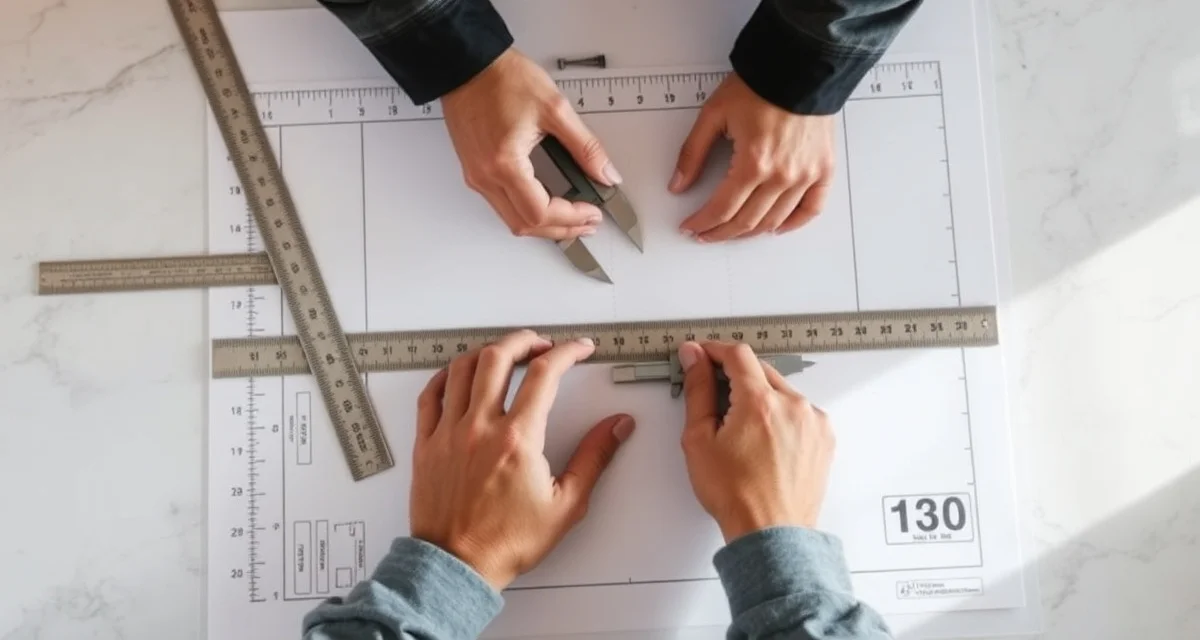
Preventing Template Errors
Template errors are measurement or specification mistakes captured during the field templating process that, if not caught, result in incorrectly fabricated countertops. These errors cost fabrication shops $1,500-4,000 per remake in material, labor, and customer goodwill. The good news: 90% of template errors follow predictable patterns and can be prevented with the right procedures and verification tools.
TL;DR
- Template errors cause 60-70% of all countertop remakes
- The most common errors: wrong sink cutout, incorrect dimensions, missed wall angles, and wrong edge profiles
- Most errors are human judgment calls, not equipment failures
- A pre-fabrication verification checklist catches 80% of errors in 5 minutes
- AI template verification catches 95%+ of errors automatically in seconds
- Prevention costs pennies; remakes cost thousands
- SlabWise's 3-layer AI verification checks every template against the quote, manufacturer specs, and geometric constraints
The True Cost of Template Errors
By Error Type
| Error | How Often (Without Prevention) | Average Remake Cost | Detection Point |
|---|---|---|---|
| Wrong sink cutout size/type | 1-2% of jobs | $2,000-4,000 | Installation |
| Dimension error (1/4"+ off) | 2-3% of jobs | $1,500-4,000 | Installation |
| Missed or wrong wall angle | 1-2% of jobs | $1,000-2,500 | Installation |
| Wrong edge profile | 1-3% of jobs | $500-2,000 | QC or installation |
| Incorrect cooktop opening | 0.5-1% of jobs | $2,000-4,000 | Installation |
| Missing measurement section | 0.5-1% of jobs | $800-2,000 | Fabrication |
| Backsplash dimension error | 2-4% of jobs | $300-800 | Installation |
| Faucet hole misplacement | 1-2% of jobs | $200-600 | Installation |
By Shop Size
| Shop Size | Monthly Jobs | Expected Errors (No Prevention) | Monthly Cost |
|---|---|---|---|
| Small (1-2 crews) | 15-25 | 1-2 | $1,500-8,000 |
| Medium (3-5 crews) | 40-80 | 3-6 | $4,500-24,000 |
| Large (6+ crews) | 100+ | 8-15 | $12,000-60,000 |
The 8 Most Common Template Errors and How to Prevent Them
Error 1: Wrong Sink Cutout
What happens: The template specifies a 33" undermount cutout, but the actual sink is a 30" drop-in (or vice versa). The fabricated piece has the wrong hole in the wrong position.
Calculate your material waste savings
See exactly how much slab material and money you could save with optimized cutting layouts.
Try the free Waste CalculatorRoot causes:
- Templater measured the existing sink instead of confirming the new sink model
- Wrong sink model entered in the system
- Sink changed after template but before fabrication
Prevention:
- Photograph the sink label (model number) during the template visit
- Cross-reference the sink model against the contract and quote
- Confirm with the customer: "Is this the sink being installed, or are you getting a new one?"
- Use AI verification that checks cutout dimensions against manufacturer specs
Error 2: Dimension Error
What happens: A measurement is off by 1/4 inch or more, causing the countertop to not fit the space.
Root causes:
- Measuring at the wrong height (floor level vs. counter height)
- Moving the laser templater mid-measurement without proper repositioning
- Measuring to the wrong reference point (wall vs. cabinet vs. tile edge)
- Math errors when manually combining measurements
Prevention:
- Always measure at counter height (not floor level, as walls can lean)
- Use the laser templater's repositioning function rather than moving it casually
- Define reference points before starting
- Let the digital device handle the math - don't add or subtract measurements manually
Error 3: Missed Wall Angle
What happens: The template assumes a 90-degree inside corner, but the actual angle is 88 or 92 degrees. The fabricated pieces don't meet properly at the corner.
Root causes:
- Not measuring the actual wall angle
- Assuming walls are square (they almost never are)
- Relying on a single measurement point in the corner
Prevention:
- Measure the actual wall angle at every inside corner
- Record the angle to the nearest 0.5 degree
- Verify with a digital angle finder as backup
- Flag any angle more than 2 degrees off from 90
Error 4: Wrong Edge Profile
What happens: The template specifies eased edge but the customer selected ogee (or any mismatch between what was recorded and what was specified in the contract).
Root causes:
- Templater didn't review the contract before templating
- Miscommunication during the site visit
- Different terminology used (customer says "rounded" meaning bullnose, templater records "eased")
Prevention:
- Review the contract edge profile specification before the site visit
- Show the customer physical edge samples and confirm their selection
- Record the edge profile per the contract terms, not the customer's verbal description
- AI verification cross-checks the template edge specs against the signed contract
Error 5: Incorrect Cooktop Opening
What happens: The cooktop cutout is the wrong size or position. This is particularly expensive because cooktop openings are large and centrally located.
Root causes:
- Using generic cooktop dimensions instead of the specific model's requirements
- Not having the cooktop model information during the template visit
- Measuring from the wrong reference point for cooktop position
Prevention:
- Get the exact cooktop model number before the template visit
- Download the manufacturer's cutout template
- Measure the cutout position from the manufacturer's specs, not from visual estimation
- Verify clearances (distance from wall, from counter edge) against manufacturer requirements
Error 6: Missing Measurement Section
What happens: A section of the countertop wasn't measured - typically a small return section, a backsplash wing, or a section near an appliance.
Root causes:
- Templater forgot about a section that wasn't immediately visible
- Section was blocked by an appliance or tool during measurement
- Quote included sections the templater didn't realize needed measuring
Prevention:
- Walk the entire counter perimeter before starting measurements
- Compare the template against the quote - every section on the quote should appear in the template
- Use a checklist specific to the job's scope
Error 7: Backsplash Dimension Error
What happens: The backsplash height, length, or corner returns don't match the actual installation requirements.
Root causes:
- Not measuring backsplash height at multiple points (it varies if the counter or wall isn't level)
- Forgetting outlet and switch cutout positions
- Missing corner returns or end caps
Prevention:
- Measure backsplash height at every 24 inches along the wall
- Mark every outlet, switch, and obstacle position
- Measure and record corner returns separately
- Photograph the backsplash area with all obstacles visible
Error 8: Faucet Hole Misplacement
What happens: Faucet holes are drilled in the wrong position, often too close to the wall or off-center on the sink.
Root causes:
- Measuring faucet position from the wrong reference point
- Not confirming the faucet spread (distance between hole centers)
- Not accounting for backsplash thickness when positioning holes
Prevention:
- Measure faucet hole center from the finished edge (including backsplash thickness)
- Confirm the faucet spread from the faucet model specifications
- Mark faucet positions on the template with explicit measurements from two reference points
Prevention Systems
Level 1: Pre-Template Checklist
Before every template visit, review:
- Contract reviewed (material, edge, sink model, cooktop model)
- Sink cutout specifications downloaded
- Cooktop cutout specifications downloaded
- Faucet specifications confirmed
- Equipment charged and calibrated
- Site readiness confirmed with customer
Level 2: On-Site Verification
During the template visit:
- Walk the full perimeter before starting measurements
- Measure every wall angle (don't assume 90 degrees)
- Photograph sink and cooktop labels
- Confirm edge profile selections with customer
- Verify overhangs against shop standards
- Take minimum 10 photos per job
- Compare template scope against quoted scope
- Get customer sign-off on key decisions
Level 3: Office Verification
After the template is uploaded:
- Overall dimensions match the quote within tolerance
- All sections from the quote are present in the template
- Sink cutout dimensions match the specified model
- Cooktop cutout dimensions match the specified model
- Edge profiles match the contract
- Backsplash dimensions are complete (height at multiple points)
- Faucet hole positions are specified
- Photos are linked to the job record
Level 4: AI Verification
Automated checks that catch errors humans miss:
- Dimensional comparison against the original quote
- Cutout dimensions cross-referenced against manufacturer databases
- Edge profile specifications matched against the signed contract
- Geometric consistency checks (perimeter area vs. quoted square footage)
- Measurements compared against standard industry ranges
SlabWise performs all Level 4 checks automatically when a template is uploaded.
Building a Culture of Error Prevention
Training
- Train every templater on the top 8 errors and their prevention
- Require new templaters to shadow experienced templaters for 20+ jobs
- Conduct quarterly error review meetings to analyze any remakes
- Share "near miss" stories (errors caught before fabrication)
Accountability
- Track error rates by templater
- Discuss errors constructively - focus on prevention, not blame
- Recognize templaters with zero-error months
- Make error prevention a performance metric, not just production speed
Continuous Improvement
- Analyze every remake to identify the root cause
- Update checklists when new error patterns emerge
- Test new equipment or processes on low-risk jobs first
- Benchmark error rates against industry averages
What percentage of jobs have template errors?
Without prevention systems, 8-12% of jobs contain at least one template error. With proper checklists, this drops to 3-5%. With AI verification, it drops below 1%.
Can AI verification replace manual checking?
AI catches 95%+ of dimensional, cutout, and specification errors. It's less effective at catching visual issues (wrong orientation, pattern mismatches) and judgment calls (inappropriate seam locations). Use AI verification as the primary check and supplement with visual review for complex jobs.
How long does template verification take?
Manual verification: 10-15 minutes per template. AI verification: seconds. For a shop processing 10 templates per day, AI saves 100-150 minutes of daily verification time.
What should I do when a template error is found after fabrication?
If the piece is still usable (error is in a non-critical area), explore modifications. If the piece is scrap, fabricate the replacement from the corrected template as priority. Analyze the root cause to prevent recurrence. Communicate proactively with the customer about the delay.
Should I verify every template or just spot-check?
Verify every template. The cost of verification (seconds for AI, minutes for manual) is negligible compared to the cost of missing one error ($1,500-4,000). Spot-checking creates false confidence.
How do I reduce errors from new templaters?
Pair new templaters with experienced mentors for their first 20-30 jobs. Use a detailed checklist for every job during the training period. Review every template from new hires before fabrication. AI verification provides an automatic safety net during the learning period.
What's the most common template error?
Dimension errors (off by 1/4 inch or more) are the most frequent. Wrong sink cutout is the most expensive.
Can template errors be the customer's fault?
Sometimes - if the customer changes their sink after the template, moves cabinets, or gives wrong information about their intended fixtures. Photographing the site conditions during the template visit documents the state of the kitchen at the time of measurement, protecting you in disputes.
Catch Every Error Before the Saw Runs
SlabWise's 3-layer AI verification checks every template against the original quote, manufacturer specifications, and geometric constraints. Errors are flagged with specific descriptions so your team can verify and correct before fabrication starts.
Start Your 14-Day Free Trial - AI template verification included with every plan.
Try These Free Tools
- Photo to Template -- Snap a photo of an existing countertop and get an AI-generated DXF template.
- Template Compare -- Upload two templates and see every dimension change highlighted instantly.
- AI Template Verification -- Cross-check your template against manufacturer specs before cutting.
Sources & Further Reading
-
Natural Stone Institute - ADA Compliance Guidelines for Natural Stone Installations
-
National Kitchen & Bath Association - Universal Design and ADA Standards for Kitchen Countertops
-
ASTM International - Standard Practice for Accessible Counter and Work Surface Design