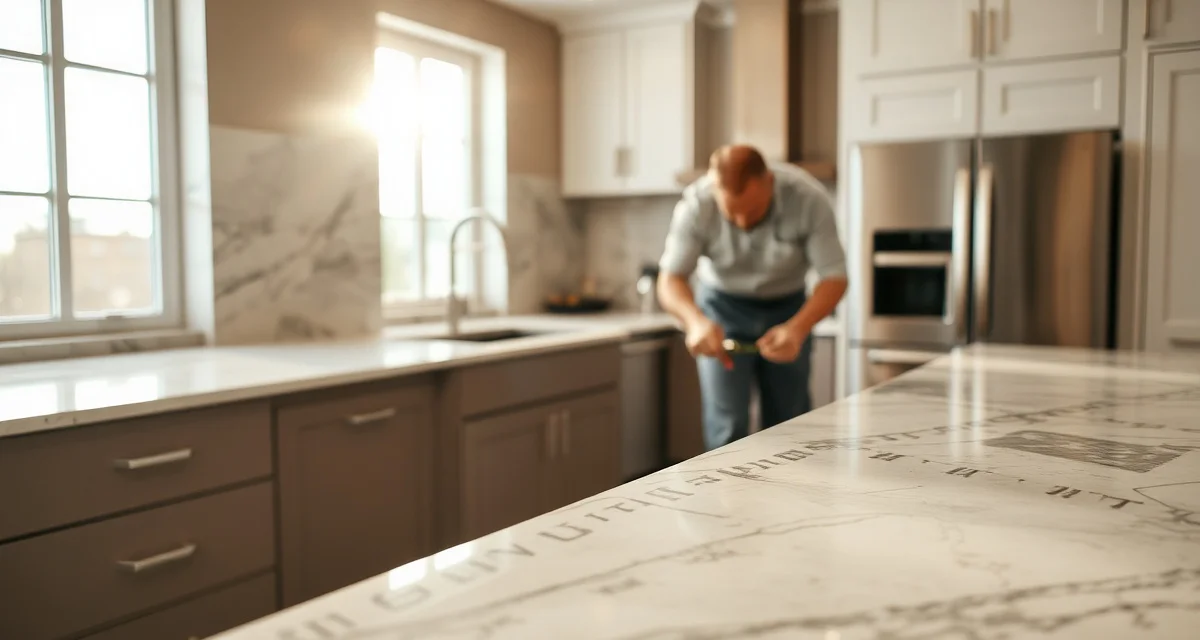
Common Mistakes When Buying Countertops
What You Need to Know in 60 Seconds
Buying countertops involves more decisions and potential pitfalls than most homeowners expect. The material is the obvious choice, but edge profiles, seam placement, fabricator selection, contract details, and installation coordination all affect the outcome. This guide covers the most frequent mistakes - from choosing material based on a screen photo to paying 100% upfront - and how to avoid each one.
TL;DR
- Choosing material from photos alone is the single most common mistake - screens distort color and hide texture
- Going with the cheapest quote usually costs more in the end - hidden fees, thinner slabs, and poor fabrication
- Not having the sink on-site before templating delays the entire project
- Ignoring seam placement lets the fabricator decide - and their priority is efficiency, not aesthetics
- Skipping the contract review leads to disputes about what was and was not included
- Expecting perfection from natural stone sets up disappointment - fissures and variation are features, not defects
- Paying 100% upfront removes your negotiating power if something goes wrong
Mistake 1: Choosing Material from Photos or Screens
This is the most common and most preventable mistake. A countertop that looks perfect on your laptop, phone, or tablet may look completely different in person. Screens vary in brightness, contrast, and color calibration. The same granite photo looks warm on one screen and cool on another.
Calculate your material waste savings
See exactly how much slab material and money you could save with optimized cutting layouts.
Try the free Waste CalculatorHow to avoid it:
- Always get physical samples and evaluate them under your kitchen's actual lighting
- For natural stone, visit the slab yard to see the exact slab that will become your countertop
- View samples against your cabinets, flooring, and backsplash - not in isolation
Mistake 2: Choosing the Cheapest Quote
Price varies between fabricators for real reasons: different material quality (slab thickness, grade), different equipment (CNC vs. manual), different edge profiles included, and different scope of work. The cheapest quote often means one or more compromises you did not expect.
Common reasons a quote is significantly lower:
- 2cm slab instead of 3cm (thinner, less durable, needs plywood substrate)
- Basic eased edge included - the edge you actually want costs extra
- Sink cutout and other cutouts are additional charges
- Installation is not included
- Old countertop removal is not included
- Sealing is not included
How to avoid it: Compare quotes item by item, not just by total price. Ask each fabricator to itemize material, fabrication, edge profile, each cutout, installation, removal, and sealing.
Mistake 3: Not Having the Sink Before Templating
The fabricator needs the actual sink (or the exact manufacturer specifications) to cut the correct opening. If the sink is not available, the template visit gets postponed - pushing your entire project back by days or weeks.
How to avoid it: Purchase and receive your sink before scheduling the template visit. If you are buying the sink during the countertop process, order it first and make sure it arrives before the template date.
The same applies to cooktops, faucets, and any other fixtures that require countertop cutouts.
Mistake 4: Ignoring Seam Placement
If you do not discuss seam placement with your fabricator, they will place seams where it is most efficient for material usage and shop workflow. That might mean a seam across the middle of your island or at an awkward location that catches light and draws attention.
How to avoid it:
- Ask about seam placement during the quoting phase
- Discuss options during the template visit
- Request seams at natural transition points: corners, adjacent to sink cutouts, or where direction changes
- For open-concept kitchens, insist on seeing the seam plan before fabrication begins
Mistake 5: Not Understanding What the Quote Includes
The biggest source of countertop project disputes is mismatched expectations about scope. The homeowner assumes something is included; the fabricator's quote says otherwise.
Commonly assumed but not always included:
- Old countertop removal and disposal
- Plumbing disconnect and reconnect
- Cooktop disconnect and reconnect
- Backsplash removal
- First sealing application
- All edge profile choices (many shops include only eased and charge extra for others)
- Faucet holes beyond the sink cutout
How to avoid it: Before signing, ask explicitly: "Is [item] included in this price?" for every line item. Get the answer in writing as part of the contract.
Mistake 6: Selecting Material Without Seeing It at Scale
A 4x4 inch sample of an exotic granite looks exciting. That same pattern at full slab scale - 120 inches by 70 inches - can be overwhelming. Conversely, a subtle quartz pattern that seemed plain in a small sample may look elegant across a full countertop.
How to avoid it: For natural stone, visit the slab yard. For quartz, ask to see the material installed in a kitchen (your fabricator may have project photos) or request the largest available sample.
Mistake 7: Forgetting About Maintenance Requirements
Every natural stone requires some maintenance. Granite needs sealing annually. Marble needs sealing every 3-6 months and careful treatment with acidic foods. Butcher block needs monthly oiling. Homeowners who choose a material without understanding its care requirements often end up unhappy.
How to avoid it: Before committing to any material, ask:
- Does it need sealing? How often?
- Can it stain? From what substances?
- Does it etch from acids (relevant for marble and some limestone)?
- How does it handle heat?
- How do I clean it daily?
Mistake 8: Paying 100% Upfront
Some fabricators request full payment before work begins. This removes your ability to withhold payment if the work is unsatisfactory. It also creates a situation where the fabricator has little incentive to prioritize your project or resolve issues promptly.
Industry standard payment structure:
- 50% deposit at contract signing
- 50% balance upon satisfactory completion of installation
How to avoid it: If a fabricator insists on full payment upfront, consider it a red flag. Look for shops that follow the standard 50/50 or 33/33/33 payment structure.
Mistake 9: Not Reading the Contract
Many homeowners sign the countertop contract after glancing at the total price. The details - warranty limitations, change order policies, cancellation terms, material substitution clauses - are where disputes originate.
How to avoid it: Read every section of the contract. Flag anything unclear and ask for explanation before signing. Verify that the contract matches the verbal quote and discussion exactly.
Mistake 10: Choosing Trendy Over Timeless
A bright blue quartz or heavily veined exotic granite might be trending on Instagram today, but trends change. Your countertop lasts 15-50 years. If you are planning to stay in the home, choose a material and color that you will not tire of.
How to avoid it: Ask yourself: would this countertop look good in a kitchen from 10 years ago? If the answer is yes, it will probably look good 10 years from now. Neutral colors (whites, grays, warm beiges) have remained consistently popular for decades.
Mistake 11: Skipping References and Reviews
A polished website and good showroom do not guarantee quality fabrication and installation. The work happens at the shop and in your kitchen, not on the internet.
How to avoid it: Ask for 3-5 references from recent projects (within the last 6 months). Read Google and Yelp reviews. Look at Houzz profiles if available. If possible, visit a recently completed installation.
Mistake 12: Expecting Natural Stone to Be Perfect
Granite, marble, and quartzite are natural materials. They have fissures (natural lines in the stone), pits (small surface cavities), and color variation. These are not defects - they are characteristics of natural stone. Homeowners who expect the flawless uniformity of quartz will be disappointed by natural stone.
How to avoid it: Understand the material you are choosing. Visit the slab yard so you see the actual stone, fissures and all. If you want uniform perfection, choose quartz. If you want natural character, choose natural stone and accept its natural features.
Mistake 13: Not Coordinating With Other Contractors
Your countertop project intersects with plumbing, electrical (for cooktops and garbage disposals), cabinet installation, and backsplash tiling. If these trades are not coordinated, delays cascade.
How to avoid it: Create a clear sequence:
- Cabinets installed and level
- Countertop templated
- Countertops fabricated and installed
- Plumber reconnects sink and dishwasher
- Backsplash tiled (after countertop is in place)
Make sure each contractor knows when they are scheduled and what they need from the others.
Mistake 14: Over-Improving for Your Market
Installing $200/sq ft quartzite countertops in a $200K starter home will not return that investment at resale. Countertop quality should match the overall home quality and local market expectations.
How to avoid it: Research what homes in your price range and neighborhood typically have. Match or slightly exceed that standard. Save the premium materials for homes where the market expects them.
Mistake 15: Underestimating Lead Times
Many homeowners start the countertop process expecting installation within a week. Standard lead times are 2-4 weeks, and complex projects can take 2-3 months. Starting late means either rushing (and paying premium for rush service) or delaying your entire kitchen renovation.
How to avoid it: Start the countertop process at least 4-6 weeks before your desired installation date for standard materials. For exotic or rare materials, start 3-6 months ahead.
Mistake 16: Not Considering Material Weight
Stone countertops are heavy. A 3cm granite countertop weighs approximately 18-20 pounds per square foot. A 45 sq ft kitchen puts 800-900 pounds of stone on your cabinets. Standard kitchen cabinets can handle this, but older cabinets, modified cabinets, or particularly large overhangs may not.
How to avoid it: Discuss weight with your fabricator and cabinet installer. Unsupported overhangs beyond 10 inches need brackets. If you have older cabinets, have them assessed for structural capacity before committing to stone countertops.
Quick Reference: Mistakes by Project Phase
| Phase | Common Mistakes |
|---|---|
| Planning | Choosing from photos, not understanding maintenance, over-improving |
| Quoting | Going cheapest, not comparing line items, skipping references |
| Contract | Not reading terms, paying 100% upfront, missing scope items |
| Material Selection | Not seeing at scale, choosing trendy, expecting perfection from natural stone |
| Pre-Template | Sink not available, cabinets not ready, no coordination with other trades |
| Fabrication | Not discussing seam placement, not reviewing template |
| Installation | Not being home for questions, not doing final walkthrough |
What is the biggest mistake people make when buying countertops?
Choosing material from photos rather than physical samples evaluated under their actual kitchen lighting. This single mistake leads to more buyer regret than any other factor. Always see and touch the material in person before committing.
How do I avoid overpaying for countertops?
Get at least three itemized quotes from different fabricators. Compare line by line - not just total price. Understand what each quote includes and excludes. The best value is rarely the cheapest or the most expensive option.
Is it worth paying more for a better fabricator?
Almost always, yes. The difference between a $3,500 and $4,200 quote is often the difference between visible seams and invisible ones, between a tight fit and gaps, and between a shop that stands behind their work and one that does not answer the phone after installation.
What should I not do before countertop installation?
Do not remove plumbing or cooktop connections yourself unless you are qualified. Do not apply any adhesive or shims to cabinet tops - the installers need a clean, level surface. Do not schedule other contractors (plumber, tiler) for the same day as countertop installation.
How do I know if a countertop quote is too good to be true?
If a quote is more than 25% below the other quotes for the same material and scope, investigate. Ask about slab thickness, what is included, and whether they subcontract any work. There is usually a specific reason for a significantly lower price.
Can I return countertops if I don't like them?
Once countertops are fabricated (cut from the slab), they cannot be returned. The material is customized to your exact kitchen dimensions and is not usable for another project. This is why material selection and sample evaluation before contract signing is so important.
Should I buy countertop material myself or through the fabricator?
Buying through the fabricator is standard and usually easier. They have trade relationships, handle delivery, and take responsibility for material quality. Buying directly from a slab yard yourself can save 10-15% but shifts the risk to you - if the slab is damaged in transit or has hidden defects, it is your problem.
What questions should I ask before signing a countertop contract?
Ask about everything: material specifics, edge profile, all cutouts, seam placement, installation process, what is included and excluded, payment schedule, timeline, warranty, and what happens if something goes wrong. A detailed list of questions is covered in our fabricator questions guide.
How do I verify that I got the slab I selected?
For natural stone, the contract should include the slab lot number or tag number from the yard. When the fabricator brings the countertop to your home, the material should match what you saw at the yard. If you took photos of your selected slab (recommended), compare before installation begins.
Is it bad to change my mind after signing?
Changes are common and manageable if handled through the contract's change order process. Changing material selection is the most disruptive change - it restarts the selection process and may affect pricing. Smaller changes (adding a cutout, changing an edge profile) are usually straightforward.
Do I need to seal my countertops before using them?
For natural stone (granite, marble, quartzite), yes - the fabricator should apply the first seal as part of installation. For quartz and other engineered surfaces, no sealing is needed. If sealing is not included in your contract, apply a quality impregnating sealer before first use and allow 24 hours to cure.
What do I do if I'm unhappy with the installation?
Address issues immediately during the post-installation walkthrough with the installers present. Point out any chips, gaps, uneven seams, or other concerns. Document everything with photos. Reference your contract warranty and contact the fabricator in writing if issues are not resolved on-site.
Buy Smart, Buy Once
Countertops are a long-term investment. Avoiding these common mistakes means choosing a material you love, working with a fabricator you trust, and ending up with a kitchen you are proud of - the first time.
Use SlabWise's project calculator to research materials, compare costs, and prepare for conversations with fabricators. Start your 14-day free trial today.
Try These Free Tools
- Cost Calculator -- Get instant countertop cost estimates by material, edge profile, and square footage.
- Compare Materials -- Side-by-side material comparison with pricing, durability, and maintenance ratings.
- Edge Profile Selector -- Browse edge profiles with cost impact and visual previews.
Sources & Further Reading
-
Natural Stone Institute - Digital Tools and Technology in Stone Fabrication
-
International Surface Fabricators Association - Quoting Best Practices and Technology
-
National Kitchen & Bath Association - Technology Integration in Kitchen Design
-
Remodeling Magazine - Digital Transformation in Countertop Industry