What Is Polished Finish? Definition & Guide
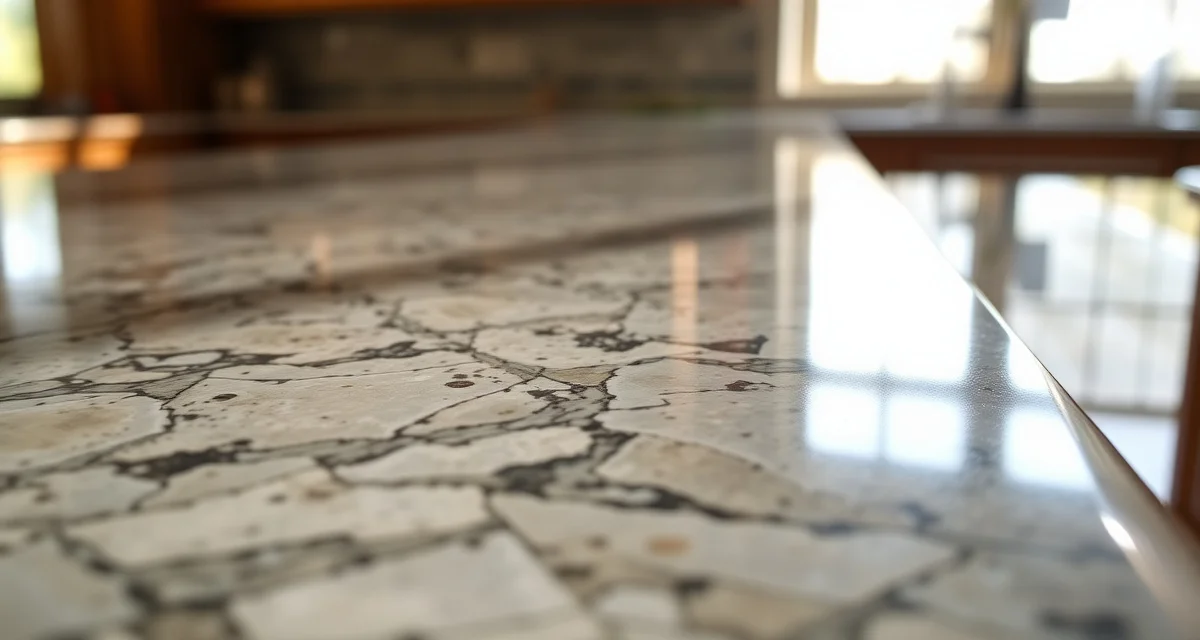
Polished finish is a high-gloss, mirror-like surface treatment created by grinding natural stone with progressively finer diamond abrasives - typically from 50 grit up to 3,000+ grit. It's the most common countertop finish in the United States, accounting for roughly 55-60% of all residential countertop installations. The polishing process closes the stone's surface pores, producing maximum color depth and a reflective sheen that can bounce 70-90% of incident light.
TL;DR
- Polished finish uses progressive diamond grinding through 3,000+ grit for a mirror-like surface
- Accounts for 55-60% of all countertop installations in the U.S.
- Provides the deepest color saturation of any finish - 100% of the stone's natural color
- More stain-resistant than honed or leathered because polishing closes surface pores
- Shows fingerprints, water spots, and scratches more visibly than matte finishes
- Production time is 8-12 minutes per linear foot on a typical CNC line
- Best suited for granite, quartz, and quartzite; shows wear quickly on marble
The Polishing Process Explained
Polishing stone is an abrasive reduction process. Each stage removes the scratch marks left by the previous grit level:
Calculate your material waste savings
See exactly how much slab material and money you could save with optimized cutting layouts.
Try the free Waste CalculatorGrinding Stages
| Stage | Grit Range | What Happens | Time per Slab |
|---|---|---|---|
| Rough grind | 50-100 | Removes saw marks, levels surface | 3-5 min |
| Medium grind | 200-400 | Smooths surface, removes deep scratches | 3-4 min |
| Fine grind | 800-1500 | Begins developing sheen | 3-4 min |
| Polish | 3000+ | Closes pores, creates mirror finish | 4-6 min |
| Total | 13-19 min |
On a modern CNC polishing line, the entire process takes 8-12 minutes per linear foot. Manual polishing with hand tools takes 2-3 times longer but allows more control on curved or detailed areas.
Why Polishing Creates Shine
The polishing effect isn't from adding anything to the stone - it's from making the surface so smooth at a microscopic level that light reflects uniformly rather than scattering. At 3,000+ grit, the surface irregularities are smaller than the wavelength of visible light, creating the mirror effect.
Polished Finish Characteristics by Stone Type
Different stones produce different levels of polish based on their mineral composition:
| Stone Type | Polish Quality | Reflectivity | Durability of Polish | Notes |
|---|---|---|---|---|
| Granite | Excellent | 80-90% | 10-15 years | Best overall polish due to quartz content |
| Engineered quartz | Excellent | 85-95% | 15+ years | Factory polished, extremely consistent |
| Quartzite | Very good | 75-85% | 8-12 years | Takes a good polish but varies by slab |
| Marble | Good | 70-80% | 2-5 years | Etches from acids, dulls over time |
| Soapstone | Poor | 20-30% | N/A | Too soft to hold a lasting polish |
| Limestone | Fair | 40-60% | 1-3 years | Soft, etches easily, not recommended |
Advantages of Polished Finish
Maximum Color Depth
Polishing produces the most saturated, vivid color display of any finish. The veining in marble, the crystal patterns in granite, and the movement in quartzite all appear at their most dramatic with a polished surface. If you're selling on visual impact, polished is your best finish.
Superior Stain Resistance
The polishing process effectively closes the stone's surface pores. A polished granite countertop has roughly 40-60% less porosity than the same stone with a honed finish. This means:
- Longer time before stains can penetrate (15-30 minutes vs. 5-10 minutes for honed)
- Less frequent sealing required (every 1-3 years vs. 6-12 months for honed)
- Easier daily cleaning - spills sit on the surface rather than absorbing
Easier Daily Maintenance
Polished surfaces require only warm water and a soft cloth for daily cleaning. The smooth surface doesn't trap food particles or grime the way textured finishes (leathered, flamed) can.
Disadvantages of Polished Finish
Shows Everything
This is the single biggest complaint about polished countertops. Fingerprints, water spots, dust, and scratches are all highly visible against the reflective surface - especially on dark stones. A polished Black Galaxy granite countertop looks stunning for the first 30 seconds after cleaning, then shows every fingerprint.
Etching on Marble
Polished marble in a kitchen is a maintenance challenge. Acidic substances (lemon juice, wine, tomato sauce, vinegar) chemically react with the calcium carbonate in marble, leaving dull etch marks. On a polished surface, these marks are impossible to miss. On honed marble, the same etching is nearly invisible.
Slippery When Wet
Polished stone offers poor traction when wet. This is primarily a concern for flooring applications, but it also matters for bathroom countertops and outdoor installations. The coefficient of friction on polished granite drops to 0.25-0.35 when wet - below the ADA minimum of 0.42 for accessible surfaces.
Cost and Production Considerations
Fabrication Costs
- Polishing pads (full set): $80-$200, lasting 500-800 sq ft
- Production time: 8-12 min/linear ft on CNC
- Labor cost per slab: $15-$35 depending on complexity
- Polished is the baseline - other finishes are priced relative to polished
Pricing to Customers
Polished is the default finish, so it's included in your standard per-square-foot fabrication price. Most shops don't break out polishing as a line item. Where you can charge more is for re-polishing existing countertops in the field ($8-$15/sq ft).
Maintaining a Polished Finish
Daily Care
- Wipe with warm water and a microfiber cloth
- Use pH-neutral stone cleaner for deeper cleaning
- Blot spills immediately - don't wipe (wiping spreads the stain)
What to Avoid
- Vinegar, lemon, or any acidic cleaner (causes etching on marble and some granites)
- Abrasive scrubbers or powders (creates micro-scratches that dull the finish)
- Generic kitchen cleaners with bleach or ammonia
- Sitting hot pans directly on the surface (thermal shock can crack the polish layer)
Re-polishing
Professional re-polishing restores a dulled countertop to near-original shine. Cost: $8-$15/sq ft for field polishing. This is a good add-on service for fabricators to offer, with margins of 60-70% since it requires minimal materials.
How long does a polished finish last?
On granite and engineered quartz, a polished finish lasts 10-15+ years with proper care. On marble, expect the polish to show dulling within 2-5 years due to etching and wear. High-traffic areas like the sink zone and stove landing area wear fastest.
Is polished or honed better for kitchens?
It depends on the stone. For granite and quartz, polished is better for kitchens because the closed pores resist staining. For marble, honed is better because it hides the inevitable etching from acidic foods. Personal style matters too - polished suits traditional kitchens, while honed fits contemporary designs.
Can you re-polish a dull countertop?
Yes. Professional re-polishing uses diamond pads to restore the shine. Field re-polishing costs $8-$15/sq ft and takes 4-8 hours for an average kitchen. For minor dulling, homeowners can use a stone polish product ($10-$25) for a temporary improvement, though it won't match professional results.
Does polished granite need to be sealed?
Most polished granite benefits from sealing, though some extremely dense granites (Absolute Black, for example) are nearly non-porous and don't require it. Test by placing a few drops of water on the surface - if it darkens within 5 minutes, seal it. Typical sealing interval for polished granite is every 1-3 years.
Why does my polished marble countertop look dull?
Dull spots on polished marble are almost always etch marks caused by contact with acidic substances. This is a chemical reaction, not physical wear. Professional re-polishing with marble-specific compounds can remove etch marks. Prevention requires wiping up acidic spills within 30 seconds.
Is polished finish slippery?
Yes, polished stone surfaces are slippery when wet. The coefficient of friction drops to 0.25-0.35 on wet polished stone, below the ADA's 0.42 minimum for accessible surfaces. This is mainly a concern for flooring and outdoor countertops. For kitchen countertops, slip resistance isn't a significant factor.
What's the shiniest countertop material?
Engineered quartz (Caesarstone, Silestone, Cambria) produces the most consistent, highest-gloss polish at 85-95% reflectivity. Among natural stones, Black Galaxy granite and Absolute Black granite achieve the highest polish due to their dense, uniform mineral structure.
How do fabricators achieve a mirror polish?
The mirror effect comes from progressive grinding through 6-8 grit levels, finishing at 3,000+ grit. The final passes use resin-bonded diamond pads that create a surface smooth enough to reflect light uniformly. Some fabricators use a final buffing compound for an extra 5-10% boost in reflectivity.
Can polished finish be converted to honed?
Yes. Re-grinding a polished surface with 200-400 grit pads converts it to a honed finish. This can be done in the field on existing countertops for $8-$15/sq ft. The process takes 4-8 hours for an average kitchen and is irreversible without full re-polishing back through all grit stages.
Does polished stone scratch easily?
Polished stone doesn't scratch more than other finishes - the stone hardness is the same regardless of finish. However, scratches are far more visible on polished surfaces because they disrupt the reflective surface, creating a visible dull line. On honed or leathered surfaces, the same scratch blends in with the matte texture.
Get Finish Pricing Right on Every Quote
Finish type affects your production schedule, tooling costs, and customer expectations. SlabWise tracks finish specifications per job and ensures your quotes reflect real fabrication costs - so you're never undercharging for specialty work.
Start Your 14-Day Free Trial → No credit card required.
Try These Free Tools
- Cost Calculator -- Get instant countertop cost estimates by material, edge profile, and square footage.
- Compare Materials -- Side-by-side material comparison with pricing, durability, and maintenance ratings.
- Edge Profile Selector -- Browse edge profiles with cost impact and visual previews.
Sources & Further Reading
- National Kitchen & Bath Association - Cabinet Frame Construction Standards
- International Surface Fabricators Association - Support Frame Requirements for Stone Installation
- Natural Stone Institute - Structural Framing Guidelines for Natural Stone Applications
- ASTM International - ASTM C1242 Standard Guide for Selection, Design, and Installation of Dimension Stone Attachment Systems