What Is Epoxy Reinforcement? Definition & Guide
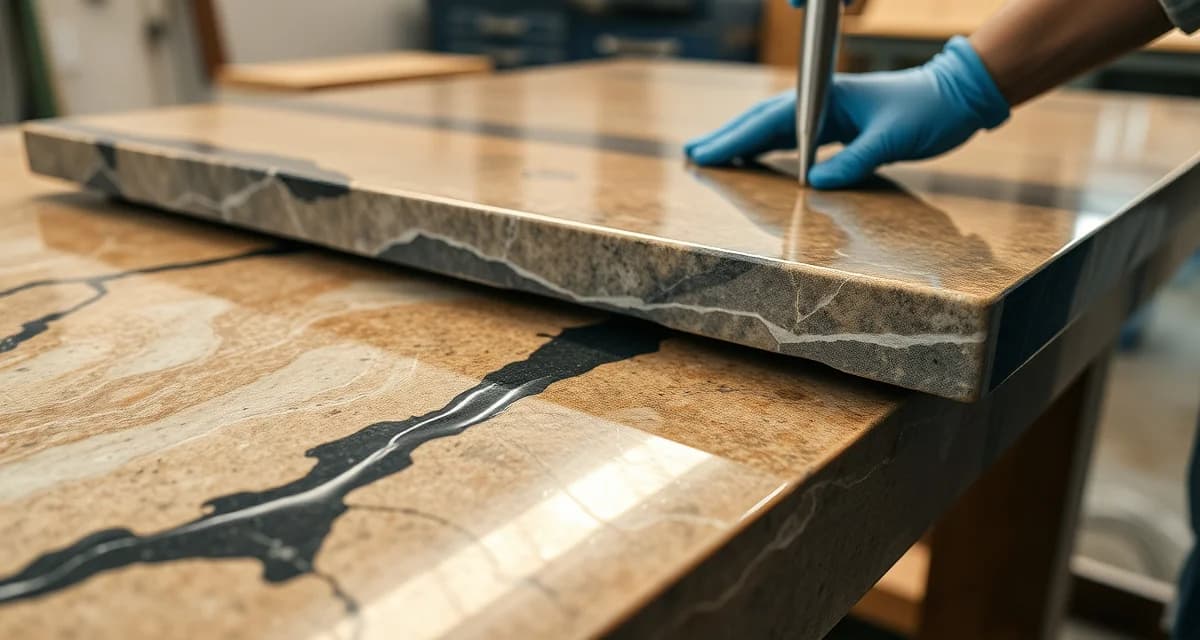
Epoxy reinforcement is the process of applying epoxy resin to natural stone slabs to fill micro-fissures, strengthen weak areas, and prevent cracking during fabrication and installation. Approximately 60-70% of all natural stone slabs sold in the U.S. receive some form of epoxy treatment - either a full back coating, surface filling, or mesh reinforcement - before they reach your fabrication shop. For fragile materials like exotic marbles and thin quartzites, epoxy reinforcement is the difference between a usable slab and an expensive pile of rubble.
TL;DR
- 60-70% of natural stone slabs receive epoxy treatment before reaching fabricators
- Three main types: surface fill (fissures), back coating (structural), and mesh backing (crack prevention)
- Adds $3-$8 per square foot to the slab cost when done at the quarry or distributor
- Shop-applied epoxy for repairs costs $15-$40 per repair area
- Proper epoxy work prevents slab breakage during CNC cutting, transport, and installation
- Curing time ranges from 2-24 hours depending on epoxy type and ambient temperature
- Critical for exotic marbles, thin porcelain slabs, and heavily fissured granites
Types of Epoxy Reinforcement
1. Surface Epoxy Fill
Surface filling addresses visible fissures, pits, and voids on the face of the slab. The process involves:
Calculate your material waste savings
See exactly how much slab material and money you could save with optimized cutting layouts.
Try the free Waste Calculator- Cleaning the fissure or void with compressed air
- Applying color-matched epoxy resin into the opening
- Allowing it to cure (2-6 hours depending on type)
- Grinding and polishing the filled area flush with the surface
Cost: $5-$15 per filled area when done in-shop Used on: Granite with natural fissures, marble with veining gaps, travertine with surface pits
2. Back Coating (Resin Backing)
A full layer of epoxy resin is applied to the back of the slab, creating a continuous structural bond. This is the most common form of epoxy reinforcement and is typically done at the quarry or distribution level.
- Thickness: 1-3mm of resin
- Coverage: Entire back surface of the slab
- Added strength: Increases flexural strength by 30-50%
- Cost: $3-$8/sq ft (usually included in slab price)
3. Fiberglass Mesh Backing
A fiberglass or polyester mesh is embedded in epoxy on the slab's back surface. This provides the highest level of structural reinforcement.
- When used: Thin slabs (2cm or thinner), exotic materials, heavily fractured stone
- Mesh types: Fiberglass (most common), polyester, carbon fiber (premium)
- Added strength: Increases flexural strength by 50-80%
- Cost: $5-$12/sq ft above base slab price
Why Epoxy Reinforcement Matters to Fabricators
Preventing Breakage During Fabrication
A slab that looks solid can have hidden internal fissures that fail under the stress of CNC cutting, saw vibration, or edge profiling. A single broken slab during fabrication costs:
- Material loss: $1,500-$6,000+ depending on the stone
- Lost labor: 2-4 hours of CNC time wasted
- Schedule delay: 1-3 days to source and fabricate a replacement
- Customer impact: Missed installation date, potential discount or lost deposit
Proper epoxy reinforcement reduces slab breakage during fabrication by an estimated 70-85%.
Ensuring Installation Integrity
Even after successful fabrication, poorly reinforced slabs can crack during transport or installation. An L-shaped countertop with an unreinforced fissure near the inside corner is a ticking time bomb. The vibration from transport or the stress of being carried up a staircase can cause catastrophic failure.
Supporting Cutouts
Sink cutouts, cooktop cutouts, and faucet holes remove material that was helping the slab hold together. Reinforcing the area around cutouts with epoxy and rodding (steel rods set in epoxy channels) is standard practice for anything larger than a simple bar sink.
Shop-Level Epoxy Application
When You'll Apply Epoxy In-Shop
Most slabs arrive pre-treated, but fabricators regularly apply additional epoxy for:
- Seam reinforcement - Joining two pieces with color-matched epoxy at the seam
- Crack repair - Fixing hairline cracks discovered during templating or cutting
- Cutout reinforcement - Strengthening areas around sink and cooktop openings
- Rodding channels - Filling routed channels with steel rods and epoxy for added support
- Chip repair - Filling small edge chips before installation
Epoxy Types Used in Fabrication
| Epoxy Type | Cure Time | Best For | Working Time | Cost/Unit |
|---|---|---|---|---|
| Polyester resin | 15-45 min | Quick repairs, seams | 5-10 min | $15-$30/quart |
| Knife-grade epoxy | 2-6 hours | Surface fills, chip repair | 30-60 min | $25-$50/quart |
| Flowing epoxy | 4-12 hours | Deep fissures, back coating | 45-90 min | $30-$60/quart |
| UV-cure epoxy | 2-5 min (UV) | Small repairs, production speed | Until UV exposure | $40-$80/cartridge |
| Structural adhesive | 12-24 hours | Critical joints, mesh lamination | 60-120 min | $35-$70/cartridge |
Color Matching
Color-matched epoxy is essential for surface-visible repairs. Most fabricators keep a kit of pigments (black, white, brown, red oxide, yellow oxide) and mix custom colors to match each slab. Getting a good color match requires:
- Matching the base tone (warm vs. cool)
- Adding veining color if the repair crosses a vein
- Testing on a scrap piece of the same slab before applying
- Accounting for color shift during curing (most epoxies darken slightly)
Common Epoxy Reinforcement Mistakes
Mistake 1: Not checking slab reinforcement before cutting. Always inspect the back of every slab for mesh condition and epoxy coverage. Missing or delaminated mesh can cause unexpected breaks during CNC operations.
Mistake 2: Using the wrong epoxy type. Fast-cure polyester works for seams but isn't structural enough for crack repair. Match the epoxy to the application.
Mistake 3: Rushing cure times. Moving a slab or continuing fabrication before the epoxy is fully cured defeats the purpose of reinforcement. A 6-hour epoxy needs 6 hours - not 4.
Mistake 4: Skipping reinforcement around cutouts. Every sink cutout in natural stone should have rodding and/or epoxy reinforcement. Skipping this step is the #1 cause of field cracks during installation.
Mistake 5: Ignoring ambient temperature. Most epoxies cure slower below 60°F and faster above 80°F. In cold shops, cure times can double. In hot conditions, working time shrinks dramatically.
What is the purpose of epoxy on stone slabs?
Epoxy serves three purposes: filling visible fissures and voids for cosmetic improvement, providing structural reinforcement to prevent cracking, and creating a moisture barrier on the back surface. Approximately 60-70% of all natural stone slabs sold commercially have received some form of epoxy treatment.
How much does epoxy reinforcement add to slab cost?
Factory-applied epoxy reinforcement (back coating or mesh) adds $3-$12 per square foot to the slab price. Shop-applied epoxy for individual repairs costs $15-$40 per repair area. For a standard 55 sq ft slab, factory reinforcement adds $165-$660 to the cost, though this is usually included in the quoted price.
Can you tell if a slab has been epoxy-treated?
Yes. Flip the slab and look at the back. Resin-backed slabs have a smooth, slightly glossy coating. Mesh-backed slabs have visible fiberglass or polyester netting embedded in resin. Surface-filled fissures are harder to spot - run your hand across the face and look for slight color or texture differences in filled areas.
Does epoxy reinforcement affect the slab's appearance?
Good epoxy work is nearly invisible. Surface fills use color-matched resin that blends with the surrounding stone. Back coating and mesh reinforcement aren't visible from the face at all. Poor color matching or sloppy application can leave visible patches, which is why quality control matters.
How long does epoxy take to cure on stone?
Cure times range from 2 minutes (UV-cure epoxy) to 24 hours (structural adhesive), depending on the type. Most common shop epoxies cure in 2-6 hours. Temperature matters: cure times double in cold shops (below 60°F) and halve in warm conditions (above 85°F). Always follow manufacturer specifications.
Is epoxy-reinforced stone as strong as solid stone?
Properly reinforced stone can be stronger than un-reinforced stone in terms of flexural (bending) strength. Fiberglass mesh backing increases flexural strength by 50-80%. However, the epoxy doesn't change the stone's hardness or scratch resistance - those properties are determined by the mineral composition.
What happens if epoxy fails after installation?
Epoxy failure after installation typically manifests as a crack along a previously filled fissure or a separation at a reinforced area. This is relatively rare with quality epoxy work but can happen due to thermal cycling, structural settling, or impact. Repair involves re-epoxying the crack in place, which costs $150-$400 for a field repair.
Should I add more epoxy to pre-treated slabs?
Not typically. Factory epoxy treatment is designed to be sufficient for normal fabrication and installation. Add additional reinforcement only when you're making large cutouts (sink, cooktop), when the existing mesh shows damage, or when the slab has visible un-treated fissures near stress points.
What's the difference between epoxy and polyester resin?
Polyester resin cures faster (15-45 minutes) and costs less, but it's less structurally strong and has more shrinkage during curing. Epoxy takes longer to cure (2-24 hours) but provides a stronger bond and better color stability. Use polyester for quick seam work; use epoxy for structural reinforcement and visible repairs.
Can epoxy reinforcement fix a cracked countertop?
Minor hairline cracks can be repaired with flowing epoxy that wicks into the crack. For cracks wider than 1mm, the repair involves V-grooving the crack, filling with color-matched epoxy, and re-polishing. Structural cracks (full breaks) may require rodding reinforcement on the underside. Field crack repair costs $150-$500 depending on severity.
Track Slab Quality from Delivery to Install
Knowing which slabs need extra reinforcement - before they hit the saw - prevents costly breakage. SlabWise lets you log slab condition at intake, flag reinforcement needs, and track every repair, so your team never cuts a slab that isn't ready.
Start Your 14-Day Free Trial → No credit card required.
Try These Free Tools
- Cost Calculator -- Get instant countertop cost estimates by material and square footage.
- Kitchen Visualizer -- Upload a kitchen photo and preview different materials in place.
- Template Compare -- Upload two templates and see every dimension change highlighted.