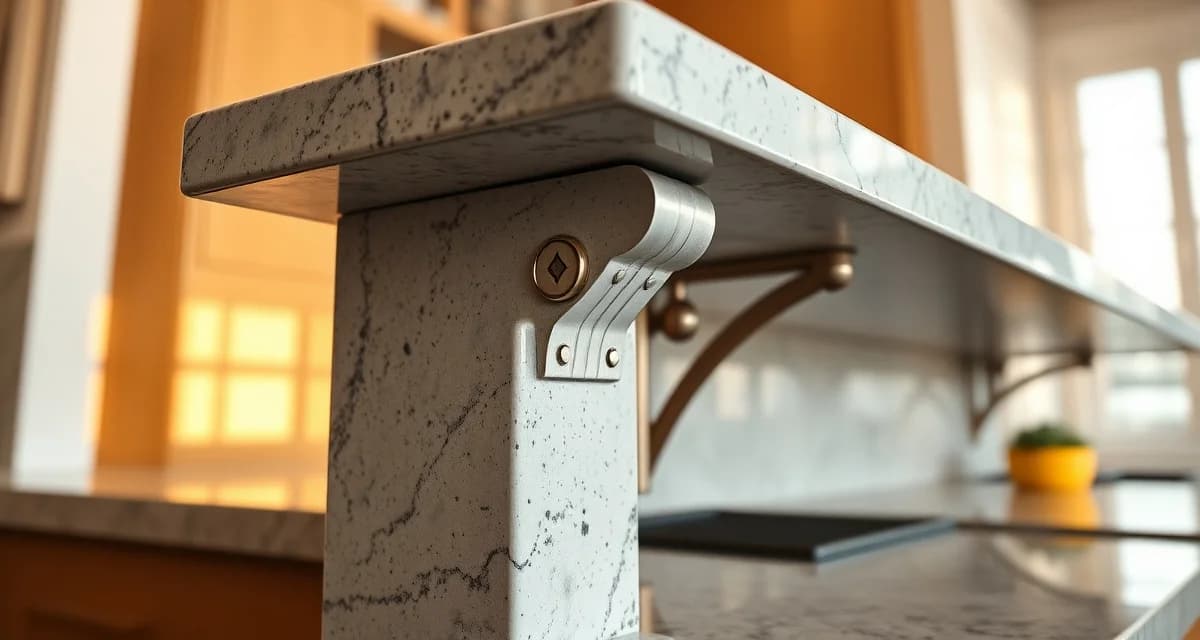
What Is a Corbel? Definition & Guide for Countertop Fabricators
A corbel is a structural bracket or support piece that projects from a wall or cabinet to carry the weight of an overhanging countertop. In countertop fabrication, corbels are used whenever a stone surface extends beyond the base cabinetry by more than a few inches, preventing cracking, sagging, or catastrophic failure under load.
TL;DR
- A corbel is a projecting support bracket that holds up overhanging countertops
- Required when stone overhangs exceed 6-10 inches (material dependent)
- Available in wood, metal, stone, and hidden/concealed designs
- Typical load capacity ranges from 50 to 500+ lbs per corbel
- Granite and quartz generally need support at 10" overhang; marble at 6-8"
- Spacing between corbels should not exceed 24-36 inches
- Proper corbel installation prevents costly remakes averaging $1,500-$4,000
Why Corbels Matter in Countertop Fabrication
Every fabricator has seen what happens when a countertop overhang lacks proper support. The stone cracks at the stress point, the homeowner panics, and the shop eats a remake that costs $1,500-$4,000 in materials and labor. Corbels exist to prevent this exact scenario.
Calculate your material waste savings
See exactly how much slab material and money you could save with optimized cutting layouts.
Try the free Waste CalculatorThe physics are simple: stone is strong in compression but weak in tension. When a countertop extends past its cabinet support, the top surface goes into compression while the bottom surface goes into tension. Without a corbel to transfer that load back to the wall or cabinet, the stone will eventually fail.
When Are Corbels Required?
The general rule varies by material:
| Material | Max Unsupported Overhang | Corbel Recommended |
|---|---|---|
| Granite (3cm) | 10-12 inches | Beyond 10" |
| Quartz (3cm) | 10-14 inches | Beyond 10" |
| Marble (3cm) | 6-8 inches | Beyond 6" |
| Quartzite (3cm) | 10-12 inches | Beyond 10" |
| Porcelain (12mm) | 6 inches | Beyond 6" |
| 2cm materials | 6-8 inches | Beyond 6" |
These numbers assume a standard 25.5" deep countertop. For island overhangs or breakfast bars that extend 12-18 inches, corbels are almost always mandatory regardless of material.
Types of Corbels Used in Countertop Fabrication
Wood Corbels
Traditional wooden corbels are the most visible style. They come in dozens of profiles - from simple right-angle brackets to ornate scrollwork. Common wood species include oak, maple, cherry, and alder. Wood corbels are often stained or painted to match cabinetry.
Load capacity: 50-250 lbs per corbel, depending on species, size, and fastening method.
Metal Corbels
Steel and wrought iron corbels offer higher load capacity in a thinner profile. They can be powder-coated in any color and are popular in modern kitchen designs. Heavy-duty steel L-brackets can support 300-500+ lbs each.
Load capacity: 100-500+ lbs per corbel.
Hidden/Concealed Support Brackets
These are steel brackets that mount inside the cabinet or behind the wall, leaving no visible support. The countertop appears to float. Brands like Federal Brace and Granite Brackets specialize in concealed supports.
Load capacity: 150-750 lbs per bracket, depending on model and installation.
Stone Corbels
Fabricated from the same material as the countertop, stone corbels create a monolithic look. They require additional material and fabrication time but deliver a premium appearance. These are popular in high-end residential projects.
Load capacity: Varies by stone type and dimensions.
Corbel Sizing and Spacing Guidelines
Getting corbel sizing right is critical. An undersized corbel can fail just as badly as no corbel at all.
Size Rules
- The corbel should extend to at least two-thirds of the overhang depth. A 15" overhang needs a corbel that reaches at least 10" from the wall.
- Corbel height should match the thickness of the countertop at minimum, though taller corbels provide more support.
- For concealed brackets, follow the manufacturer's rated overhang specifications exactly.
Spacing Rules
- Maximum spacing between corbels: 24-36 inches for most stone materials
- For heavy materials like 3cm granite: keep spacing to 24 inches or less
- Always place a corbel within 6 inches of any unsupported corner
- Island overhangs should have corbels at each end plus intermediates every 24-30 inches
Common Corbel Mistakes Fabricators See
Under-Specifying Support
The number one mistake is relying on the homeowner or contractor to install adequate support. If the corbels are not in place during final measure, the fabricator needs to flag it. Template verification tools can help catch this issue before cutting begins.
Wrong Attachment Method
A corbel is only as strong as its fastening. Screwing into drywall alone is a failure waiting to happen. Corbels must anchor into wall studs, cabinet framing, or use appropriate masonry anchors. Toggle bolts in drywall are not sufficient for stone loads.
Ignoring Material Properties
Not all stones behave the same. A quartz slab with consistent engineered properties can span farther than a natural marble with internal veining and fissures. Fabricators should adjust corbel recommendations based on the specific material, not just the general category.
How Corbels Affect Fabrication Workflow
Corbels impact several stages of the fabrication process:
- Sales/Quoting: Corbels add cost. A set of four decorative wood corbels runs $80-$300+. Hidden brackets can be $40-$150 each. This needs to appear on the quote.
- Templating: The templater must document existing corbels and note where additional support is needed. Digital templating systems can flag overhang dimensions automatically.
- Fabrication: If using stone corbels, they must be cut from the same slab and finished to match. This affects nesting and material yield.
- Installation: The installer must verify corbels are properly secured before setting the stone. A 3cm granite island top can weigh 300-500 lbs - that weight plus daily use loads need solid support.
Using fabrication management software helps track corbel requirements from the initial quote through installation, reducing the risk of costly field surprises.
Corbel Costs at a Glance
| Corbel Type | Price Range (Each) | Best For |
|---|---|---|
| Basic wood bracket | $15-$60 | Traditional kitchens |
| Decorative wood | $40-$150 | Upscale traditional |
| Iron/steel decorative | $30-$120 | Transitional/modern |
| Hidden steel bracket | $40-$150 | Contemporary/floating look |
| Stone (fabricated) | $75-$300+ | Premium matching finish |
FAQ
How far can a granite countertop overhang without a corbel?
Most 3cm granite slabs can safely overhang 10-12 inches without additional support. Beyond that, corbels or other brackets are strongly recommended.
Do quartz countertops need corbels?
Yes, when the overhang exceeds about 10-14 inches. While quartz is engineered and more consistent than natural stone, it still needs support on longer spans.
How many corbels do I need for a kitchen island?
For a standard 8-foot island with a 12-15 inch breakfast bar overhang, plan on 3-4 corbels spaced 24-30 inches apart. Always include one within 6 inches of each end.
Can I use hidden corbels with granite?
Absolutely. Concealed steel brackets rated for the appropriate weight work with any countertop material. Check the manufacturer's load ratings and maximum overhang specs.
What is the difference between a corbel and a bracket?
A corbel traditionally refers to a decorative, often ornamental support piece. A bracket is a more utilitarian support. In practice, the terms are used interchangeably in the countertop industry.
Do corbels need to match the cabinetry?
There is no structural requirement, but most designers prefer corbels that complement the overall kitchen design. Hidden brackets avoid the aesthetic question entirely.
How do corbels affect my countertop quote?
Corbels add $100-$600+ to a typical kitchen project depending on type, quantity, and whether the fabricator supplies them. Always itemize this cost separately.
Can I install corbels after the countertop is already set?
It is possible but difficult and risky. The countertop must be carefully lifted, the corbel secured, and the stone reset. It is far better to have corbels in place before installation day.
What is the maximum weight a corbel can support?
This depends entirely on the corbel type and installation. Basic wood corbels handle 50-250 lbs; heavy-duty concealed steel brackets can support 500-750 lbs each.
Are corbels required by building code?
Most building codes do not specifically address countertop corbels. However, countertop installations must be structurally sound. Industry best practices serve as the de facto standard.
Make Overhang Support Part of Your Workflow
Tracking corbel requirements manually across dozens of active jobs is where details slip through the cracks. SlabWise helps fabricators catch overhang issues during template verification, flag missing support in job packets, and keep installation crews informed. Start a 14-day free trial and see how automated checks prevent expensive field surprises.
Try These Free Tools
- Nesting Optimizer -- AI-powered slab layout that maximizes yield considering vein direction and defects.
- Defect Mapping -- Upload a slab photo and AI maps every fissure, pit, and color issue.
- Value Engineering -- Find dollar-quantified suggestions to save material without cutting margin.