Why Does Marble Etch? Causes, Prevention, and Repair
Quick Definition
Why does marble etch? causes is a question that comes up in almost every countertop consultation.
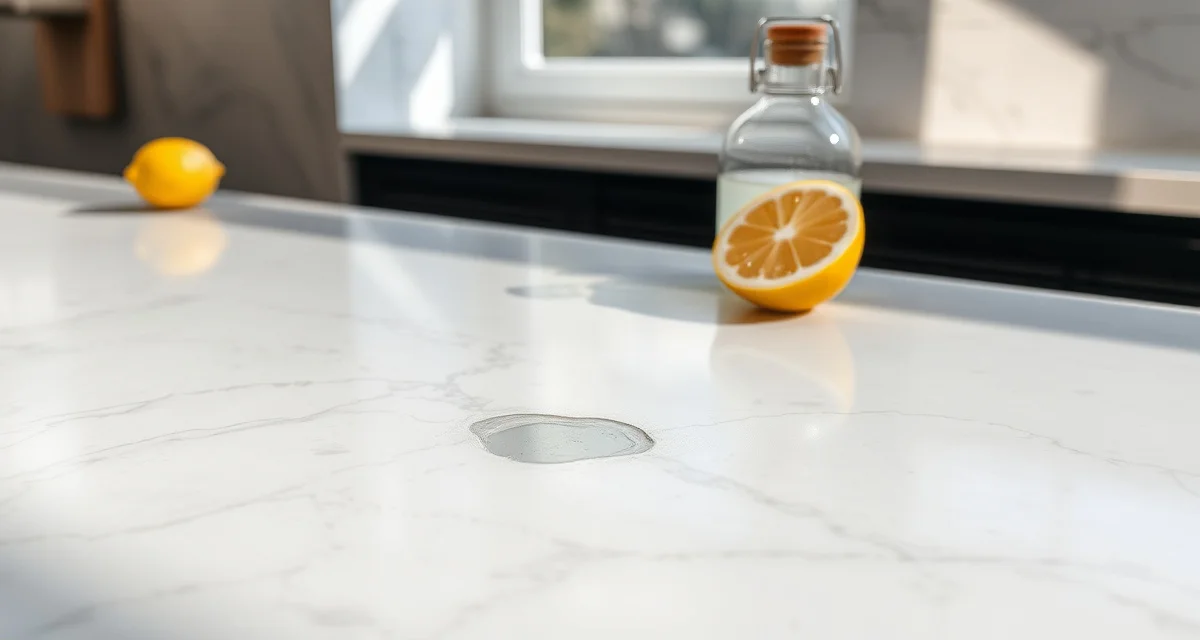
Marble etches because it's made of calcium carbonate (CaCO3), which reacts chemically with acids. When lemon juice, vinegar, wine, tomato sauce, or even some cleaning products contact a polished marble surface, the acid dissolves a microscopic layer of the stone. This creates a dull, lighter spot called an etch mark. Etching is not a stain - it's physical damage to the stone's surface that no sealer can prevent.
TL;DR
- Etching is a chemical reaction, not a stain - acids dissolve the calcium carbonate in marble
- Common culprits: lemon, vinegar, wine, tomato, coffee, soda, and acidic cleaners
- Sealing does NOT prevent etching - sealers block liquids from penetrating but don't stop surface chemical reactions
- Honed marble hides etching better than polished marble (etch marks blend into the matte finish)
- Light etching can be polished out at home with marble polishing powder ($10-$20)
- Deep etching requires professional re-polishing ($15-$30/sq ft)
- All marble etches - there are no etch-proof marble varieties; it's inherent to the stone's chemistry
The Chemistry Behind Marble Etching
Marble is metamorphosed limestone. Its primary component is calcium carbonate (CaCO3), which formed from ancient marine organisms compressed and heated over millions of years.
Calculate your material waste savings
See exactly how much slab material and money you could save with optimized cutting layouts.
Try the free Waste CalculatorWhen any acid contacts calcium carbonate, the following reaction occurs:
CaCO3 + 2H+ → Ca²⁺ + H₂O + CO₂
In plain terms: the acid dissolves the marble surface, producing calcium ions (which wash away), water, and carbon dioxide gas (sometimes visible as tiny fizzing bubbles).
This reaction happens instantly on contact. Even brief exposure - a splash of lemon juice wiped up within 30 seconds - can leave a visible etch on polished marble.
Why This Matters
Etching cannot be prevented by sealing. Stone sealers (impregnating sealers) work by filling the microscopic pores of the stone to prevent liquid penetration and staining. But etching happens at the surface, where the acid contacts the exposed calcium carbonate. The sealer doesn't form a barrier on top of the stone - it sits within the pores below the surface.
Think of it this way: sealer prevents stains (liquid soaking in). Nothing prevents etches (surface chemical reactions) except avoiding acid contact entirely.
What Causes Marble Etching?
Common Household Acids
| Substance | pH Level | Etching Speed | Severity |
|---|---|---|---|
| Lemon juice | 2.0-2.6 | Seconds | Severe |
| Vinegar | 2.4-3.4 | Seconds | Severe |
| Red wine | 3.3-3.6 | 1-2 minutes | Moderate |
| Orange juice | 3.3-4.2 | 1-2 minutes | Moderate |
| Tomato sauce | 3.5-4.7 | 2-5 minutes | Moderate |
| Coffee | 4.8-5.1 | 5-10 minutes | Light |
| Soda/cola | 2.5-3.5 | Seconds | Moderate-Severe |
| Beer | 4.0-5.0 | 5-10 minutes | Light |
| Yogurt | 4.0-4.5 | 2-5 minutes | Moderate |
Cleaning Products That Etch Marble
Many common household cleaners are acidic enough to damage marble:
- Bathroom cleaners (most contain phosphoric or hydrochloric acid)
- Glass cleaners with ammonia (technically alkaline, but some formulations include acidic compounds)
- Grout cleaners (highly acidic - will severely etch marble on contact)
- All-purpose cleaners with citric acid (marketed as "natural" cleaners)
- Bleach (sodium hypochlorite is alkaline but can cause discoloration, which is different from etching)
Safe marble cleaners: pH-neutral stone cleaners (pH 7), warm water with a few drops of dish soap, or dedicated marble-specific products.
Etching on Polished vs. Honed Marble
Polished Marble
Polished marble has a high-gloss, mirror-like finish created by progressively finer grinding and buffing. This reflective surface makes etch marks extremely visible - a dull spot on a glossy surface stands out immediately.
On white marble (Carrara, Calacatta), etch marks appear as lighter, duller patches. On dark marble (Nero Marquina), they appear as lighter, chalky spots.
Honed Marble
Honed marble has a matte, smooth finish. Because the entire surface is already non-reflective, etch marks blend in much more effectively. The chemical reaction still occurs, but the visual evidence is far less noticeable.
This is why many fabricators and designers recommend honed finishes for marble kitchen countertops. The stone still etches, but homeowners notice it far less - resulting in fewer complaints and callbacks.
Leathered Marble
Leathered (or brushed) marble has a textured finish that hides etching even better than honed. The textured surface breaks up light in multiple directions, masking the dull spots created by acid exposure.
How to Fix Marble Etching
Light Etching (DIY Fix)
Light etch marks - the kind from a quick splash of wine or a coffee ring - can usually be polished out at home.
What you need:
- Marble polishing powder ($10-$20 for a container that lasts dozens of repairs)
- Soft cloth or chamois
- Water
- 10-15 minutes per etch mark
Process:
- Wet the etch mark with water
- Sprinkle a small amount of polishing powder on the wet surface
- Rub in a circular motion with a soft cloth for 3-5 minutes
- Add water as needed to keep the surface wet
- Wipe clean and check - repeat if the etch is still visible
- Buff dry with a clean cloth
Polishing powder works by gently abrading the marble surface to blend the etch with the surrounding area. On polished marble, it restores some of the lost gloss. On honed marble, it smooths out the roughened texture.
Moderate to Deep Etching (Professional Fix)
Deep etching - from prolonged acid contact, harsh cleaning products, or accumulated light etching over years - requires professional re-polishing.
A stone restoration professional uses:
- Diamond hand pads (progressive grits from 200 to 3000+)
- Polishing compounds
- Power buffing equipment for large areas
Cost: $15-$30 per square foot, or $200-$500 for a focused repair area.
Timing: Schedule professional polishing every 2-5 years for marble kitchen counters depending on usage. Bathroom marble may go 5-10 years between professional treatments.
Preventing Marble Etching
You can't make marble acid-proof, but you can minimize exposure:
Daily Habits
- Wipe up acidic spills immediately (within seconds for citrus)
- Use coasters under all glasses (condensation can trap acidic beverages against the surface)
- Use cutting boards - don't slice citrus or tomatoes directly on marble
- Clean with pH-neutral cleaners only
- Place mats under bottles of vinegar, hot sauce, and salad dressing
Kitchen-Specific Strategies
- Keep a dedicated rag near the cooking area for instant wipe-ups
- Don't marinate food directly on marble surfaces
- Avoid vinegar-based cleaning solutions (a common mistake with "natural cleaning" trends)
- Use trivets under all pots and pans (heat + acidic food residue doubles the damage)
Sealing (Prevents Stains, Not Etches)
Seal marble every 6-12 months with a quality impregnating sealer. This won't prevent etching, but it prevents acidic liquids from soaking in and causing stains in addition to the surface etch. An unsealed etch + stain combo is much harder to fix than an etch alone.
What Fabricators Should Tell Marble Customers
Marble etching generates more homeowner complaints than any other stone issue. Fabricators can reduce callbacks and protect their reputation by setting clear expectations:
Before the sale:
- "Marble will etch from acidic contact. This is normal and happens to all marble."
- "Polished marble shows etching more than honed. Consider honed or leathered for kitchens."
- "Sealing prevents stains but not etching - they're different things."
At installation:
- Leave a marble care card with the homeowner
- Recommend specific pH-neutral cleaners by brand name
- Show the homeowner how to use marble polishing powder for light etch repair
- Suggest the homeowner test their comfort level by placing a lemon slice on a remnant piece
For follow-up:
- Offer annual professional polishing as a maintenance service ($200-$500 per visit)
- This creates recurring revenue and keeps the customer relationship active
FAQ
Does sealing marble prevent etching?
No. Sealing prevents stains (liquid penetration) but does not prevent etching (surface chemical reaction). These are two different types of damage. Etching happens at the surface where acid contacts exposed calcium carbonate.
Can you make marble etch-proof?
No. Etching is inherent to marble's chemistry. Some topical coatings claim to protect against etching, but they alter the marble's appearance and feel, wear off with use, and require reapplication. No treatment eliminates etching permanently.
Does honed marble still etch?
Yes, honed marble etches from acid contact just like polished marble. However, etch marks are far less visible on honed surfaces because the surrounding matte finish disguises the dull spot. This is why honed marble is recommended for kitchen use.
How do I remove etch marks from marble?
Light marks polish out with marble polishing powder and a soft cloth (5-10 minutes of rubbing). Deep marks need professional re-polishing with diamond pads. Cost for professional treatment: $15-$30 per square foot.
Is marble a bad choice for kitchen countertops?
Not bad - just different. Marble requires acceptance that the surface will develop a patina of light etching over time. Some homeowners love this lived-in character. Others find it unacceptable. Setting accurate expectations before installation is critical.
Does quartzite etch like marble?
True quartzite (metamorphosed sandstone) does not etch because it's made of silicon dioxide, not calcium carbonate. However, many stones sold as "quartzite" are actually dolomitic marble or calcite-based and will etch. Test with a lemon drop before purchasing.
Will water etch marble?
Pure water (pH 7) does not etch marble. However, hard water with mineral deposits can leave rings that look similar to etching. These are mineral deposits (calcification), not true etches, and can be removed with a plastic scraper and pH-neutral cleaner.
Does white marble etch more than dark marble?
All marble etches at the same rate chemically. White marble (Carrara, Calacatta) shows etching more obviously because the lighter, duller etch marks contrast against the white polished surface. Dark marble (Nero Marquina) shows lighter-colored chalky marks that can be equally visible.
How often should I re-polish my marble countertops?
For kitchen countertops with regular cooking use: every 1-3 years professionally. For bathroom vanities with lighter use: every 3-5 years. For marble floors: every 2-5 years depending on foot traffic.
Can I use vinegar to clean marble?
Absolutely not. Vinegar is acetic acid (pH 2.4-3.4) and will etch marble on contact. This is one of the most common marble care mistakes. Use only pH-neutral stone cleaners or warm water with a small amount of dish soap.
Help Your Customers Make Informed Choices
When customers understand marble's maintenance needs upfront, they make better decisions - and your shop gets fewer callbacks. SlabWise's Customer Portal gives homeowners access to material care guides, project timelines, and direct communication with your shop, reducing support calls by 70%.
[Start Your 14-Day Free Trial →]
Try These Free Tools
- Cost Calculator -- Get instant countertop cost estimates by material and square footage.
- Kitchen Visualizer -- Upload a kitchen photo and preview different materials in place.
- Template Compare -- Upload two templates and see every dimension change highlighted.
Sources & Further Reading
-
Natural Stone Institute - Countertop Installation Best Practices Guide
-
National Kitchen & Bath Association - Kitchen Renovation Sequencing Guidelines
-
International Surface Fabricators Association - Professional Installation Standards
-
Remodeling Magazine - Kitchen Remodel Installation Order Best Practices