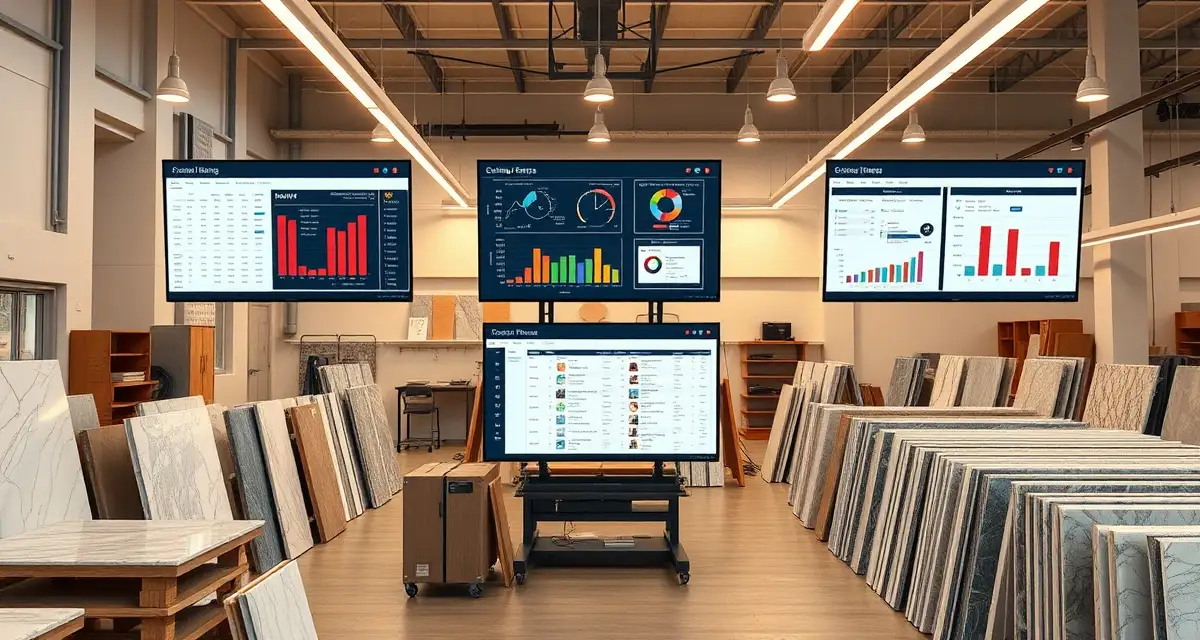
Digital Transformation for Stone Shops
Digital transformation for stone fabrication shops means replacing manual, paper-based, and disconnected processes with integrated software that connects quoting, templating, production, inventory, scheduling, and customer communication into a single system. For most shops, this shift reduces costs by $3,000-8,000 per month while cutting customer complaints by half or more.
TL;DR
- Digital transformation doesn't mean buying a single tool - it means connecting all your shop processes into one system
- Most fab shops lose $36,000-96,000 per year to inefficiencies that digital tools eliminate
- The three highest-ROI areas to digitize first: quoting, customer communication, and slab inventory
- Shops that digitize fully report 70% fewer customer calls, 85% faster quoting, and 10-15% less material waste
- You don't need to transform everything at once - start with the process causing the most pain
- The average payback period for fabrication software is 30-60 days
- SlabWise covers quoting, nesting, template verification, customer portal, and scheduling in one platform for $199-349/month
Where Most Stone Shops Stand Today
The countertop fabrication industry is in an odd position technologically. CNC bridge saws and laser templaters represent millions of dollars in advanced manufacturing equipment. But the business operations surrounding that equipment often run on sticky notes, whiteboards, and spreadsheets.
Calculate your material waste savings
See exactly how much slab material and money you could save with optimized cutting layouts.
Try the free Waste CalculatorA 2024 industry survey found that among U.S. fabrication shops:
| Process | Still Manual/Paper | Using Basic Digital | Using Integrated Software |
|---|---|---|---|
| Quoting | 35% | 45% (spreadsheets) | 20% |
| Scheduling | 50% | 30% (calendars/boards) | 20% |
| Customer communication | 60% | 30% (email only) | 10% |
| Slab inventory | 55% | 35% (spreadsheets) | 10% |
| Template management | 25% | 40% (file folders) | 35% |
| Job costing | 45% | 40% (spreadsheets) | 15% |
The shops using integrated software consistently outperform on every business metric. But the majority of the industry hasn't made the transition.
The Cost of Staying Manual
Direct Financial Losses
Manual processes bleed money in ways that are easy to ignore because they happen gradually:
Slow quoting costs you jobs. A shop that takes 15-20 minutes per quote and responds to leads within 4-6 hours loses 30-40% of potential customers to competitors who respond in under an hour. At an average job value of $4,000-6,000, losing even 3-4 jobs per month means $12,000-24,000 in missed revenue.
Template errors cause remakes. Without automated template verification, 3-5% of jobs contain errors that aren't caught until installation. Each remake costs $1,500-4,000 in material and labor. A shop doing 50 jobs per month with a 4% error rate faces 2 remakes monthly - $3,000-8,000 down the drain.
Poor nesting wastes material. Manual slab layout typically achieves 70-80% material utilization. Software-optimized nesting reaches 85-92%. On a $3,000 slab, that difference saves $300-600 per slab. Multiply by 20-40 slabs per month, and you're looking at $6,000-24,000 in annual material savings.
Customer calls eat staff time. The average fab shop fields 8-15 status calls per day. Each call takes 3-5 minutes to handle, including looking up the job status, checking the schedule, and relaying information. That's 30-75 minutes of daily staff time - roughly $15,000-25,000 per year in labor costs.
Hidden Costs
Beyond the direct financial losses:
- Owner burnout: When the owner is the only person who knows the schedule and job status, they become the bottleneck for every decision
- Employee frustration: Good employees leave shops where disorganization creates daily chaos
- Growth ceiling: Manual processes that work for 30 jobs per month collapse at 60 jobs per month
- Data blindness: Without digital records, you can't analyze profitability by material, customer, or job type
The Five Pillars of Digital Transformation
Digital transformation for a fab shop isn't one thing - it's five connected systems working together.
Pillar 1: Digital Quoting
What changes:
- Quotes generated in 3-5 minutes instead of 15-20
- Pricing calculated automatically from material, square footage, edge profiles, and cutouts
- Quotes sent to customers electronically with one click
- Customers can accept and pay deposits online
- Historical quote data available for analysis
Impact:
- 85% faster quote turnaround
- 30-40% higher close rate from faster response times
- Zero math errors on quotes
- Complete record of every quote for future reference
How SlabWise handles it: Quick Quote builds a quote from material selection, measurements, edge profiles, and cutout specifications. The system calculates pricing automatically based on your configured rates. Customers receive a professional PDF or link and can accept with an electronic signature.
Pillar 2: Template and Quality Management
What changes:
- Digital templates uploaded directly from laser templaters or digital measuring tools
- AI verification checks dimensions, cutout positions, and edge specifications automatically
- Errors flagged before fabrication begins - not during installation
- Template data flows directly to CNC programming
Impact:
- 70-85% reduction in remake rates
- Template-to-CNC handoff happens in minutes instead of hours
- Every template archived digitally for reference
- Quality issues traced back to their source
How SlabWise handles it: The 3-layer template verification system checks dimensions against the original quote, validates cutout positions against manufacturer specs, and confirms edge/finish selections match the signed contract. Errors are flagged with specific descriptions so templaters can fix them before the slab is cut.
Pillar 3: Slab Inventory and Nesting
What changes:
- Every slab tracked digitally with photos, dimensions, and location
- Nesting software optimizes piece placement to minimize waste
- Remnants cataloged and visible for future jobs
- Real-time inventory counts replace manual yard walks
Impact:
- 10-15% improvement in material utilization
- Remnants actually get used instead of accumulating
- Accurate inventory for quoting (no selling slabs you don't have)
- Purchasing decisions based on actual usage data
How SlabWise handles it: Slab inventory management tracks every slab from receiving through fabrication. The AI nesting algorithm places pieces to maximize yield, and the system automatically logs remnants with dimensions and photos for future use.
Pillar 4: Scheduling and Production
What changes:
- All jobs visible on a digital calendar with status tracking
- Template, fabrication, and installation appointments coordinated automatically
- Crew assignments based on skills, location, and availability
- Bottlenecks visible before they cause delays
Impact:
- 40-60% fewer scheduling conflicts
- Accurate lead time estimates for customers
- Workload balanced across crews and machines
- Historical data for capacity planning
Pillar 5: Customer Communication
What changes:
- Automated status updates at each job milestone
- Customer portal for self-service status checks
- Digital approvals, change orders, and signatures
- Communication history logged to the job record
Impact:
- 70% fewer inbound status calls
- Customers feel informed without having to chase you
- Disputes resolved faster with documented communication
- Higher review scores from better customer experience
How SlabWise handles it: The Customer Portal gives homeowners and contractors a login where they can check their job status, view the schedule, approve changes, and see photos - all without calling your office. Automated email and text notifications go out when jobs hit key milestones.
Building Your Digital Transformation Roadmap
Phase 1: Quick Wins (Month 1-2)
Start with the changes that deliver the fastest ROI:
Priority 1: Digital Quoting
- Set up your material and pricing tables
- Create quote templates for your most common job types
- Train office staff on the quoting module
- Goal: Every new quote created digitally within 30 days
Priority 2: Customer Portal
- Activate the customer portal for new jobs
- Add existing active jobs to the system
- Include portal link in customer communications
- Goal: 50% reduction in status calls within 60 days
Phase 2: Core Operations (Month 2-4)
Once quoting and communication are stable, digitize production:
Priority 3: Slab Inventory
- Photograph and catalog every slab in your yard
- Enter dimensions, material type, and pricing
- Train the team on updating inventory when slabs are received or used
- Goal: Real-time inventory accuracy within 90 days
Priority 4: Scheduling
- Move all template, fabrication, and install scheduling into the system
- Set up automated notifications for schedule changes
- Train crews on viewing their schedules digitally
- Goal: All scheduling digital within 60 days
Phase 3: Optimization (Month 4-6)
With the basics running, layer on advanced capabilities:
Priority 5: Nesting Optimization
- Start using AI nesting for slab layout
- Track material utilization rates
- Compare waste before and after optimization
- Goal: 10-15% improvement in yield within 90 days
Priority 6: Template Verification
- Enable AI template verification for all jobs
- Track error catch rates
- Measure remake reduction
- Goal: 70%+ reduction in remakes within 90 days
Priority 7: Analytics and Reporting
- Set up weekly KPI dashboards
- Track profitability by material, job type, and customer
- Identify trends and improvement opportunities
- Goal: Data-driven decision making within 6 months
What Digital Transformation Looks Like in Practice
Before: A Typical Monday at Smith Stone Works
7:00 AM - Owner arrives, checks the whiteboard for today's schedule. Two install crews, one template crew. The whiteboard shows three installs, but he remembers one was rescheduled on Friday. Was it updated?
7:30 AM - Phone rings. Homeowner wants a status update on their kitchen. Owner shuffles through job folders to find the file. Template was done Thursday, fabrication was supposed to start... when? He checks with the shop foreman.
8:15 AM - Templater calls from the job site. The sink cutout in the file seems wrong - it shows a 33-inch undermount but the customer has a 30-inch drop-in. Where's the original quote? Owner digs through email.
9:00 AM - Sales call comes in. Someone wants a quote for a bathroom vanity. Owner jots measurements on a notepad, promises to call back with pricing within "a day or two." (The lead goes to a competitor who quotes in 2 hours.)
10:30 AM - Install crew calls. They arrived at the job site but the countertops aren't ready. Production board says "complete" but the pieces are still on the saw. Two hours wasted for a two-person crew.
After: The Same Monday With Digital Tools
7:00 AM - Owner opens the dashboard on his phone during coffee. Today's schedule: 3 installs, 2 templates, 14 pieces in fabrication queue. All crews have their assignments pushed to their mobile apps. One install was rescheduled to Wednesday - the system moved it automatically when the customer requested the change through the portal.
7:30 AM - The homeowner checks their portal instead of calling. They see: "Fabrication in progress - estimated completion Thursday, install scheduled Friday." No phone call needed.
8:15 AM - The AI template verification flagged the sink cutout discrepancy yesterday afternoon when the template was uploaded. The templater got an alert: "Sink cutout shows 33-inch undermount; quote specifies 30-inch drop-in. Verify with customer." The issue was resolved before fabrication started.
9:00 AM - Sales call comes in. Office staff builds a quote in 4 minutes using Quick Quote, emails it to the customer before they hang up. Customer accepts the quote through the portal 2 hours later and pays their deposit online.
10:30 AM - Install crew's mobile app shows accurate job status. The pieces actually in "ready for install" status are the ones that passed quality check. No wasted trips.
Measuring Your Transformation
Track these metrics monthly to measure progress:
| Metric | Pre-Digital Baseline | 90-Day Target | 6-Month Target |
|---|---|---|---|
| Average quote time | 15-20 min | Under 5 min | Under 3 min |
| Quote-to-close ratio | 25-35% | 35-45% | 40-50% |
| Customer calls per day | 8-15 | 4-8 | 2-4 |
| Remake rate | 3-5% | 1-2% | Under 1% |
| Slab waste rate | 20-30% | 15-20% | 12-15% |
| Scheduling conflicts/month | 4-8 | 1-2 | Zero |
| Average job cycle time | 10-14 days | 7-10 days | 5-8 days |
Calculating Your ROI
Use this framework to estimate your digital transformation ROI:
Savings from faster quoting: (Additional jobs closed per month) x (average job profit) = monthly quoting ROI
Savings from fewer remakes: (Remakes eliminated per month) x (average remake cost) = monthly quality ROI
Savings from better nesting: (Slabs used per month) x (waste reduction %) x (average slab cost) = monthly material ROI
Savings from fewer customer calls: (Calls eliminated per day) x (minutes per call) x (hourly labor cost / 60) x 22 work days = monthly communication ROI
Total monthly ROI = Sum of all savings above minus software cost
For most shops doing 30-80 jobs per month, total monthly ROI ranges from $3,000-8,000 against a $199-349/month software investment.
Common Objections and Honest Answers
"We're too busy to implement new software right now"
That's exactly why you need it. The shops that are "too busy" are usually burning time on manual processes that software automates. Implementation takes 2-6 weeks. The time you invest now saves 5-10 hours per week permanently.
"Our team isn't tech-savvy"
If your team can use smartphones, they can use modern fabrication software. The tools designed for this industry have simple interfaces built for people who work with their hands, not IT professionals.
"We tried software before and it didn't work"
Most failed implementations fail because of poor setup and training, not bad software. The technology has improved dramatically in the past 5 years. Today's platforms are cloud-based, mobile-friendly, and designed specifically for stone fabrication workflows.
"Software is just another expense we don't need"
At $199-349/month, fabrication software costs less than one remake. If it prevents a single remake, reduces one hour of daily phone calls, or helps you close one additional job per month, it pays for itself many times over.
"I don't want to depend on technology"
You already depend on technology. Your CNC saw, laser templater, and accounting software are all technology. Fabrication management software simply connects these tools so they work together instead of in isolation.
Getting Started With SlabWise
SlabWise covers all five pillars of digital transformation in one platform:
| Feature | Standard ($199/mo) | Enterprise ($349/mo) |
|---|---|---|
| Quick Quote | Yes | Yes |
| Customer Portal | Yes | Yes |
| Slab Inventory | Yes | Yes |
| Scheduling | Yes | Yes |
| AI Template Verification | Yes | Yes |
| AI Slab Nesting | Yes | Yes |
| Multi-location support | No | Yes |
| Dedicated onboarding | No | Yes |
| API integrations | Limited | Full |
Both plans include a 14-day free trial with full feature access.
How long does digital transformation take for a stone shop?
Most shops see meaningful results within 60-90 days. Full transformation - where every process is digital and optimized - typically takes 4-6 months. The key is starting with high-impact areas (quoting and customer communication) and building from there.
How much does digital transformation cost?
Fabrication-specific software ranges from $150-400 per month. SlabWise starts at $199/month for the Standard plan. The total cost including setup time and training is typically recouped within 30-60 days through reduced waste, fewer remakes, and faster quoting.
Do I need to replace all my existing tools at once?
No. Start by layering the new software alongside your current processes. Run both systems in parallel for 2-4 weeks, then gradually phase out the old methods. Most shops keep their accounting software (QuickBooks, Xero) and integrate it with the fabrication platform.
Will digital tools replace my employees?
No. Digital tools eliminate the repetitive, low-value parts of their jobs - looking up job statuses, doing math on quotes, manually tracking inventory. Your employees spend their freed-up time on higher-value work like selling, fabricating, and installing.
What if our internet goes down?
Modern fabrication software includes offline capabilities for critical functions. Mobile apps for templaters and installers work offline and sync when connectivity returns. Keep a printed daily schedule as a backup for the rare extended outage.
How do I get buy-in from my team?
Show them the "before and after" for their specific role. The office manager who fields 15 calls a day cares about the customer portal. The shop foreman who deals with remakes cares about template verification. Make it personal - show each person what improves for them specifically.
What's the biggest mistake shops make during digital transformation?
Trying to digitize everything simultaneously. This overwhelms the team and increases the risk of failure. Pick one or two processes, get them running smoothly, then add more. Quoting and customer communication are almost always the best starting points.
Can I measure ROI before committing?
Yes. During SlabWise's 14-day free trial, track your baseline metrics: quote creation time, daily customer calls, and current waste rates. Compare those numbers after 30 days of using the system. Most shops see measurable improvement within the trial period.
What data do I need to get started?
At minimum: your material and pricing list, current customer contacts, and active job details. Slab inventory and historical job data can be migrated later. SlabWise accepts CSV imports and offers assisted migration for Enterprise plans.
How does digital transformation help me compete with larger shops?
Larger shops already use integrated software to quote faster, waste less, and communicate better. Digital tools give smaller shops the same capabilities at a fraction of the cost. A 2-person office using SlabWise can quote as fast as a 10-person office doing it manually.
Start Your Digital Transformation
Every month you wait costs your shop $3,000-8,000 in preventable waste, lost leads, and unnecessary remakes. SlabWise's 14-day free trial lets you start Phase 1 - digital quoting and customer portal - without any commitment.
Start Your 14-Day Free Trial - most shops see measurable ROI within the first 30 days.
Try These Free Tools
- Cost Calculator -- Get regional countertop cost estimates for your market.
- Kitchen Visualizer -- Help customers visualize materials before committing.
- Template Compare -- Catch template errors before they become costly remakes.
Sources & Further Reading
- Natural Stone Institute - Contractor Resources and Best Practices
- International Surface Fabricators Association - Business Management Tools
- National Kitchen & Bath Association - Industry Business Guidelines
- Remodeling Magazine - Contractor Revenue Management Strategies