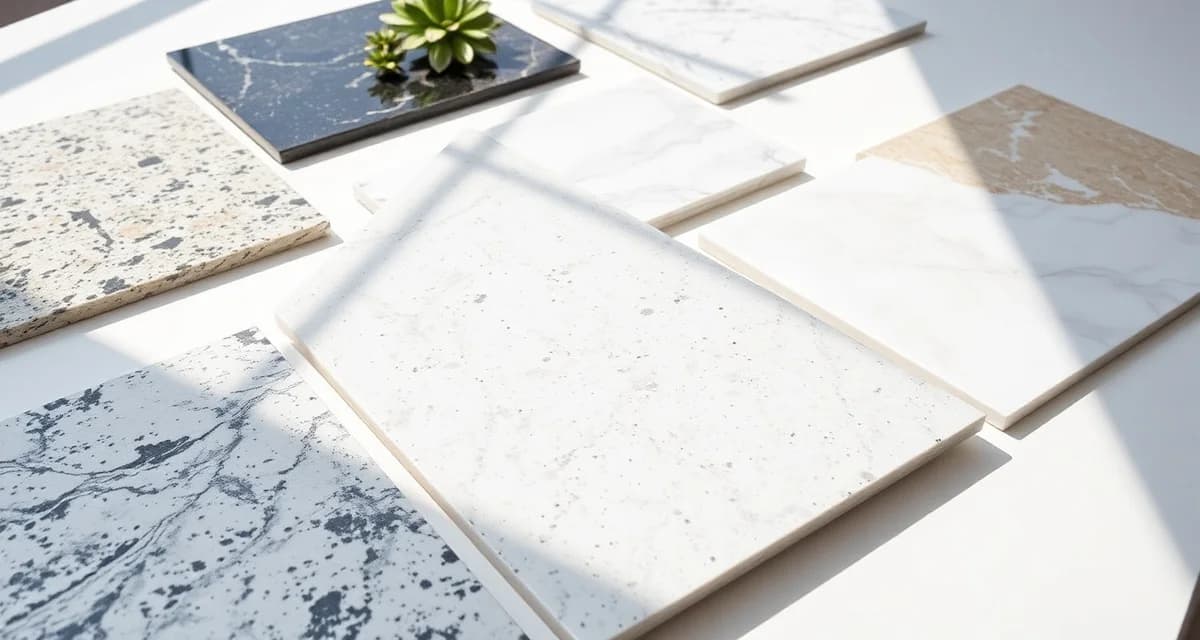
How to Get and Compare Material Samples
What You Need to Know in 60 Seconds
Countertop material samples are small pieces of stone, quartz, or other surfaces that let you evaluate color, texture, and pattern before committing to a full slab. Getting the right samples and evaluating them properly is the difference between loving your countertops for decades and living with an expensive regret. This guide covers where to get samples, how to compare them accurately, and what samples cannot tell you.
TL;DR
- Get physical samples - never choose from photos alone because screens distort color and cannot show texture
- Request samples at least 4x4 inches - smaller pieces do not show enough pattern variation
- Evaluate samples under your kitchen's actual lighting at different times of day
- View samples against your cabinets, flooring, and backsplash simultaneously
- Quartz samples are accurate representations; natural stone samples are approximations only
- Most fabricators and showrooms provide samples free or with a refundable deposit
- After narrowing choices with samples, visit the slab yard to see the actual slab for natural stone
Where to Get Countertop Samples
Fabricator Showrooms
Local countertop fabricators typically keep sample collections of the materials they work with regularly. This is your best starting point because the fabricator can also answer questions about cost, durability, and maintenance specific to each sample.
Calculate your material waste savings
See exactly how much slab material and money you could save with optimized cutting layouts.
Try the free Waste CalculatorWhat to expect: Most fabricators carry 50-200+ samples across different materials. Samples are usually free to borrow or keep. Some fabricators charge a small refundable deposit for samples taken home.
Big Box Stores
Home Depot, Lowe's, and similar retailers carry sample chips and larger sample pieces for the brands they sell (typically Silestone, Caesarstone, Cambria, and other major quartz brands, plus a selection of granite).
Limitation: Big box store samples cover their specific product lines only. You will not find every available color or material. The staff may have limited knowledge about fabrication specifics.
Manufacturer Websites
Most quartz and engineered stone manufacturers offer free sample ordering directly from their websites. Ship-to-home samples typically arrive within 5-10 business days.
Major manufacturers with online sample ordering: Caesarstone, Cambria, Silestone, MSI, Viatera, LG Hausys
Stone Yards and Distributors
For natural stone (granite, marble, quartzite), visiting a stone yard or distributor lets you see full slabs alongside samples. Some yards offer cut-off pieces from previous projects as larger samples.
How to Evaluate Samples Properly
Step 1: Gather Your Kitchen Elements
Before looking at any samples, collect the fixed elements of your kitchen that the countertop must coordinate with:
- Cabinet door (or a photo taken in natural light)
- Flooring sample or a clear photo
- Backsplash tile if already selected
- Paint swatches for walls
- Hardware samples (pulls, knobs)
- Appliance finish reference (stainless, black, white)
Step 2: View Under Your Kitchen Lighting
This is the single most important step that most people skip. The same sample looks different under showroom fluorescent lights, natural daylight, and your kitchen's LED fixtures.
Take samples home and view them:
- Under your kitchen's overhead lights
- With under-cabinet lights on (if you have or plan to install them)
- In morning light and evening light
- With overhead lights off (natural light only)
A sample that looked perfect under the showroom's broad-spectrum lights might look yellow under your warm-white kitchen LEDs, or washed out under cool-white recessed cans.
Step 3: Place Samples on Your Actual Cabinets
Lay the sample directly on top of your existing countertop (or on the cabinet if countertops are not installed yet). Hold the backsplash tile behind the sample. Place the flooring sample below or nearby.
You are looking for:
- Color coordination: Do the tones work together or clash?
- Contrast level: Is there enough visual separation between counter and cabinet?
- Undertone match: Do all elements share warm, cool, or neutral undertones?
Step 4: Live With Samples for a Few Days
Do not make a final decision during a single viewing session. Leave the top 2-3 samples on your counter for several days. You will notice things after the initial excitement fades - an undertone that bothers you, a pattern that you like more each day, or a color that clashes with morning light.
Step 5: Test Practicality
While you have samples at home:
- Place a wet glass on the surface - does condensation ring show on the material?
- Set a lemon slice on it for 5 minutes - does acid leave a mark (important for marble)?
- Try wiping with your regular kitchen cleaner - does the surface clean easily?
- Feel the texture - is this finish (polished, honed, leathered) comfortable for daily use?
What Samples Can and Cannot Tell You
What Samples Show Accurately
| Feature | Quartz Samples | Natural Stone Samples |
|---|---|---|
| Base color | Very accurate | Approximate |
| Texture/finish | Very accurate | Accurate |
| Hardness/feel | Accurate | Accurate |
| Pattern scale | Mostly accurate | Not accurate |
| Vein color | Accurate | Approximate |
| Overall appearance | Representative | Suggestive only |
The Natural Stone Sample Problem
Here is the critical distinction: quartz samples reliably represent the finished product because quartz is manufactured consistently. Every Caesarstone Calacatta Nuvo slab looks very similar to the sample.
Natural stone samples are a starting point, not a guarantee. Every granite, marble, and quartzite slab is unique. A 4x4 sample might show the background color accurately but cannot represent the full pattern variation, vein placement, or color shifts that occur across a full slab.
This is why visiting the slab yard to see and approve your actual slabs is essential for natural stone projects. The sample narrows your choices; the slab yard visit confirms them.
Sample Size Matters
- 2x2 inch chips: Only useful for basic color identification. Too small for pattern, and the edge is proportionally too prominent.
- 4x4 inch samples: The standard size. Shows color and texture. Gives a hint of pattern for quartz.
- 8x8 inch or larger: Much better for understanding how the material will look at scale. Worth requesting if available.
- Full slab viewing: The only way to truly evaluate natural stone. Essential for materials with significant pattern variation.
Comparing Multiple Samples
The Elimination Method
- Start with 5-8 samples that interest you
- Eliminate any that clash with your fixed elements (cabinets, flooring)
- Eliminate any with undertones that bother you under your kitchen lighting
- Narrow to 2-3 finalists
- Live with finalists for several days
- Choose the one that still excites you at the end
Side-by-Side Comparison Tips
- Compare samples against the same background (your actual cabinet, not a white countertop)
- View all finalists at the same time, same lighting
- Take photos, but know that phone cameras shift colors - trust your eyes over photos
- Ask someone else to look without telling them your preference - fresh eyes catch things you miss
Working with Your Fabricator After Sampling
Once you have narrowed your choices, your fabricator can help you take the next steps.
For quartz and engineered materials, confirming the color name and manufacturer is usually sufficient. The fabricator orders the slab and the result will closely match your sample.
For natural stone, ask your fabricator to help arrange a slab yard visit. Many fabricators have established relationships with distributors and can guide you to yards with the best selection in your chosen material. Some fabricators take clients to the yard as part of the design process.
SlabWise's Quick Quote feature helps fabricators generate accurate estimates for different material options quickly, which means you can compare pricing across your sample finalists without waiting days between quotes.
How many countertop samples should I get?
Start with 5-8 samples in materials and colors that interest you. Narrow to 2-3 finalists for the take-home evaluation. Getting too many samples (15+) creates decision paralysis rather than clarity.
Are countertop samples free?
Most fabricators and manufacturers provide samples at no charge. Some require a small refundable deposit ($5-$25) for samples taken home. Big box stores typically offer free samples from their in-stock brands. Online manufacturer samples are usually free with free shipping.
Do quartz samples match the actual slab?
Very closely, yes. Quartz is manufactured in batches with controlled processes, so the finished slab should match the sample closely in color, pattern, and finish. Minor batch-to-batch variation exists but is subtle. Always confirm the specific batch/lot if you are very sensitive to color.
Why does my sample look different at home than in the store?
Lighting is the primary reason. Showrooms use broad-spectrum or bright white lighting that renders colors differently than residential kitchen lighting. Your home's LED color temperature (warm, neutral, or cool) shifts how the sample appears. This is why evaluating under your actual kitchen lighting is essential.
Can I get a larger sample for natural stone?
Some stone yards and distributors sell "remnant" pieces - leftover sections from previous projects - at reduced prices. These remnants can be 1-3 sq ft, giving you a much better preview of the stone's full character. Ask your fabricator about remnant availability in your chosen material.
How long should I keep samples before deciding?
Live with your finalist samples for at least 3-5 days. View them at different times of day and under different lighting conditions. Decisions made in a single visit to the showroom are more likely to result in regret than decisions made after several days of consideration.
Should I bring my sample to the slab yard?
Yes. Bringing your quartz sample or other material samples to the slab yard helps you evaluate natural stone options against the materials they will sit beside in your kitchen. It is one of the most practical things you can do during a slab yard visit.
Do online countertop photos replace samples?
No. Screen displays vary in color accuracy, brightness, and contrast. A countertop that looks white on one screen may appear cream on another. Photos also cannot convey texture, depth, or how the material interacts with light. Always get physical samples before committing.
Make an Informed Choice
Choosing countertop materials based on samples viewed in your own kitchen, under your own lighting, alongside your actual cabinets and flooring is the surest path to a result you will love for years.
Use SlabWise's project calculator to compare pricing across your finalist materials and get an accurate cost estimate for your project. Start your 14-day free trial today.
Try These Free Tools
- Cost Calculator -- Compare material costs instantly across different countertop options.
- Compare Materials -- Side-by-side material comparison with pricing, durability, and maintenance.
- Kitchen Visualizer -- Let customers preview countertop materials in their actual kitchen.
Sources & Further Reading
- Natural Stone Institute - Stone Selection and Specification Guide
- National Kitchen & Bath Association - Countertop Material Selection Guidelines
- ASTM International - Standard Test Methods for Natural Building Stone
- International Surface Fabricators Association - Material Sampling Best Practices