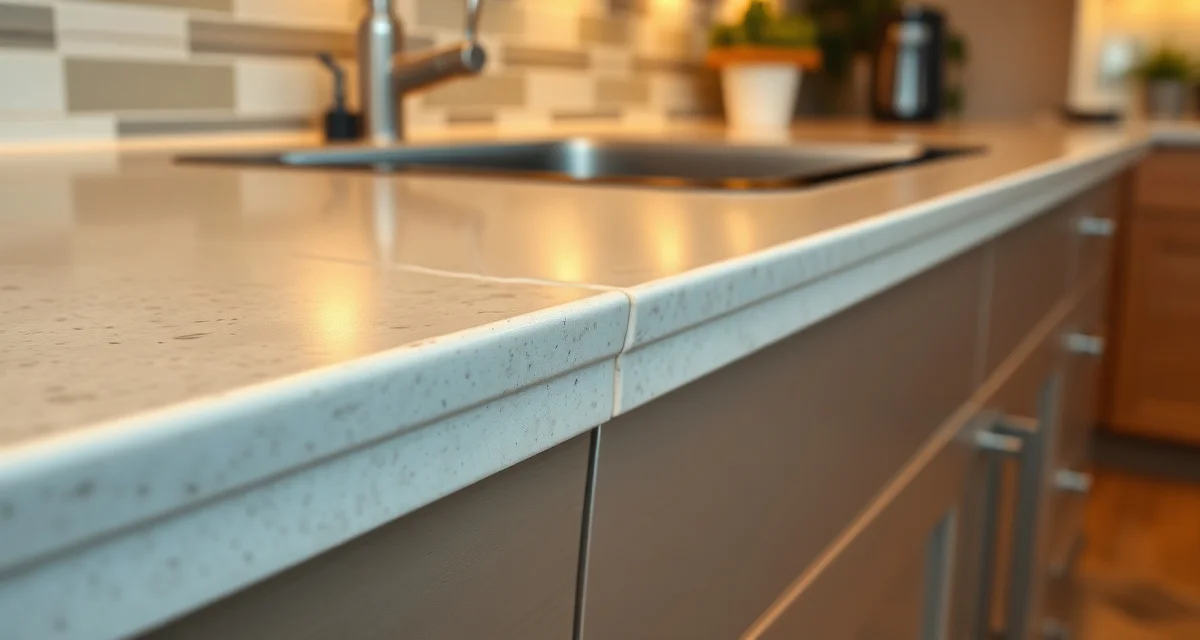
Sink Separating from Countertop: Causes, Fixes, and When to Worry
A sink pulling away from the countertop is one of the few post-installation issues that can escalate from cosmetic nuisance to water damage emergency if you ignore it. Whether you're seeing a growing gap, noticing water leaking under the counter, or hearing a shifting sound when the sink is loaded with dishes, the problem almost always traces back to failed clips, degraded adhesive, or an improperly sized cutout. Here's what's happening and what to do about it.
TL;DR
- Sink separation affects undermount sinks far more often than top-mount (drop-in) sinks
- The three main causes are adhesive failure, broken or insufficient clips, and an oversized cutout
- A small gap (under 1/16 inch) with intact clips is a minor repair - re-caulk and monitor
- A visible gap with loose clips or sinking is urgent and needs professional attention within days, not weeks
- Full undermount sink re-installation costs $200-$600; emergency repairs after water damage can exceed $3,000
- The weight of a porcelain farmhouse sink (80-150 lbs) requires stronger support than standard undermount clips provide
- Proper cutout dimensions in the fabrication phase prevent most separation issues before they start
How to Tell If Your Sink Is Separating
Visual Signs
- Gap between sink rim and countertop underside: Look under the counter with a flashlight. Any daylight between the sink flange and the stone is a problem.
- Caulk pulling away or cracking around the sink: The caulk line along the sink rim may show stretching or separation.
- Water stains on the cabinet floor below: Dark spots, warping, or mold under the sink are signs water is getting past the seal.
Physical Signs
- Sink moves when you push down on the rim: Grab the front edge of the sink and push down gently. Any movement means the clips or adhesive are failing.
- Clicking or shifting when loading heavy items: A full pot of water placed in the sink shouldn't cause audible or tactile movement.
- Slow leak with no visible plumbing issue: If the cabinet floor is wet but the drain and supply connections are dry, water is likely entering through the sink-to-countertop gap.
The Quick Test
Place a straightedge or level across the top of the sink cutout opening, resting on the countertop on both sides. Measure the distance from the straightedge down to the sink rim at several points. If the gap varies by more than 1/16 inch from one side to the other, the sink has shifted.
Calculate your material waste savings
See exactly how much slab material and money you could save with optimized cutting layouts.
Try the free Waste CalculatorUndermount vs. Top-Mount: Why Undermount Sinks Fail More
Top-mount (drop-in) sinks rest on the countertop surface with their weight supported by the rim. Gravity holds them in place. The caulk seal is compression-loaded - the weight of the sink helps maintain it.
Undermount sinks hang from below the countertop. They rely entirely on mechanical clips and adhesive to resist gravity. Every dish, every pot of water, and the sink's own weight pulls downward against that attachment. Over time, this constant loading fatigues the connection.
| Factor | Top-Mount | Undermount |
|---|---|---|
| Weight support | Gravity assists | Gravity works against |
| Primary retention | Rim rests on counter | Clips + adhesive |
| Failure mode | Caulk deterioration | Clip/adhesive failure |
| Separation risk | Low | Moderate to high |
| Typical lifespan before re-seal | 10-15 years | 5-10 years |
5 Causes of Sink Separation
1. Adhesive Failure
The silicone adhesive bonding the sink rim to the underside of the countertop degrades over time. Heat from hot water, chemical exposure from cleaners, and the constant moisture environment under a sink all accelerate this process.
Signs of adhesive failure:
- Silicone has yellowed or become brittle
- You can see gaps where silicone has pulled away from one surface
- The sink rotates or shifts even though clips are still tight
2. Broken or Insufficient Clips
Standard undermount sink installations use 6-10 clips spaced evenly around the sink perimeter. If clips are:
- Too few for the sink size and weight
- Installed in the wrong locations (missing corners or heavy-load areas)
- Made of low-quality material that corrodes or bends
- Improperly tightened (too loose or over-torqued)
...the mechanical connection fails, transferring all load to the adhesive, which then fails under the added stress.
3. Oversized Cutout
If the sink cutout in the countertop is too large, the sink flange has less surface area bonding to the stone. Standard undermount cutout specifications call for a minimum of 1/4 inch of overlap between the sink rim and the stone on all sides. Less than that reduces adhesive bond area and clip holding power.
Cutout sizing errors happen during fabrication. A cutout that's 1/2 inch too wide in any direction can reduce the bonding surface by 25% or more. This is a fabrication accuracy issue that starts at the template and carries through to CNC programming.
4. Excessive Weight or Impact
Sinks are designed for normal daily use, but certain situations overload the attachment:
- Cast iron or fireclay farmhouse sinks (80-150 lbs empty) need supplemental support beyond standard clips
- Regularly filling a large sink to capacity with water adds 40-60 lbs
- Dropping heavy pots or impact loading stresses clips and adhesive
- Sitting or leaning on the sink edge (more common than fabricators would like to believe)
5. Water Damage to the Subtop
Many undermount installations use a plywood subtop between the cabinets and the stone countertop. Sink clips often anchor into this plywood. If water infiltration has softened or rotted the plywood around the clip locations, the clips pull through the weakened material.
Signs of subtop damage:
- Soft spots in the plywood visible when looking up into the cabinet
- Discoloration or swelling around clip anchor points
- Musty smell from the cabinet interior
How to Fix a Separating Sink
Temporary Stabilization (Buy Yourself Time)
If you've discovered the separation but can't get a professional out immediately:
- Stop using the sink for heavy loads - use the bathroom or a basin for washing pots
- Place a support underneath: A 2x4 with a towel on top, wedged between the cabinet floor and the sink bottom, can prevent further dropping
- Dry the area thoroughly: Run a fan in the cabinet to dry any moisture and prevent further damage
- Don't re-caulk as a permanent fix: Caulk is a seal, not a structural connection
Professional Repair: Re-Clip and Re-Bond
This is the standard fix for most separation cases.
Process:
- Disconnect plumbing (supply lines, drain, disposal)
- Remove old clips and scrape off failed adhesive
- Lower the sink and clean both mating surfaces
- Apply fresh silicone adhesive to the sink rim
- Raise the sink back into position (using a support jack)
- Install new clips with proper spacing and torque
- Let adhesive cure for 24 hours before reconnecting plumbing
- Re-caulk the visible joint from above
Cost: $200-$600 depending on accessibility, sink type, and whether plumbing modifications are needed.
Major Repair: Subtop Replacement + Re-Installation
If the plywood subtop is damaged:
- The countertop may need to be removed (adds significant cost and risk)
- Damaged plywood is replaced
- New clip anchors are installed in solid material
- The countertop is reset and the sink re-installed
Cost: $800-$2,000+
Emergency Scenario: Water Damage Remediation
If a separating sink has been leaking undetected:
| Damage Extent | Typical Cost |
|---|---|
| Cabinet floor replacement | $200-$500 |
| Mold remediation (small area) | $500-$1,500 |
| Cabinet replacement | $800-$3,000 |
| Countertop re-installation | $300-$800 |
| Full kitchen water damage repair | $3,000-$10,000+ |
This is why catching sink separation early matters. A $400 re-clip job today prevents a $5,000 water damage bill six months from now.
Prevention: Getting the Cutout Right
For fabricators, sink separation callbacks are among the most expensive because they often involve plumbing disconnection and risk to the installed countertop.
Cutout Accuracy Is Everything
The single biggest fabrication-side prevention measure is getting the sink cutout dimensions right. That means:
- Verifying the exact sink model and spec sheet before programming the CNC
- Confirming the cutout dimensions account for the undermount clip system being used
- Ensuring minimum 1/4-inch overlap on all sides
- Cross-checking the template measurements against the physical sink (or its certified spec sheet)
SlabWise's Template Verification cross-references sink cutout dimensions against manufacturer specifications as part of its 3-layer check. If a cutout is undersized, oversized, or positioned incorrectly relative to the cabinet structure, the system flags it before the slab reaches the CNC.
Support Planning for Heavy Sinks
Farmhouse, apron-front, and cast iron sinks need more than clips. Best practice includes:
- Steel support brackets screwed into the cabinet frame
- A continuous ledger board along the back wall
- Adhesive rated for the total load (sink weight + water + dishes)
- Clip count increased by 50% over standard undermount recommendations
How do I know if my undermount sink is about to fall?
Check for any movement when you push down on the sink rim. Look underneath with a flashlight for gaps between the sink and the stone. If you see daylight or feel movement, get it inspected.
Can a separating sink damage my countertop?
If the sink drops suddenly while still partially attached, it can chip or crack the stone around the cutout edges. Gradual separation is less likely to damage the stone itself.
Is sink separation covered under warranty?
Most fabricator warranties cover installation defects for 1-2 years. If the separation is caused by an oversized cutout or insufficient clip installation, it should be covered. Adhesive degradation after several years is typically not covered.
Can I re-attach an undermount sink myself?
It's possible for a handy homeowner, but it requires a sink support jack, new clips, proper adhesive, and the ability to disconnect and reconnect plumbing. Mistakes can crack the stone. Most homeowners are better served by a professional.
How long does undermount sink adhesive last?
High-quality 100% silicone adhesive lasts 5-10 years in the wet environment under a sink. The clips should last indefinitely if properly installed in solid material.
Why is my new sink already separating?
Separation within the first year almost always indicates an installation defect - insufficient clips, wrong adhesive, or an oversized cutout. Contact your fabricator immediately.
Does the type of stone affect sink separation risk?
Not directly. Granite, quartz, marble, and quartzite all hold undermount sinks equally well. The risk factors are cutout accuracy, clip quality, and adhesive application - not the stone type.
How much weight can an undermount sink hold?
A properly installed undermount sink with 8-10 clips and structural adhesive can support 200-300 lbs. But concentrated impact loads (dropping a cast iron pot) stress the connection more than static weight.
Should I add extra clips to my sink installation?
More clips help, up to a point. The standard is 6-10 depending on sink size. For heavy sinks (over 50 lbs), increasing to 12-14 clips and adding adhesive on a larger surface area is worthwhile.
Can a plumber fix a separating sink?
Some plumbers handle undermount re-installations, but many refer this work to countertop fabricators or installers who have the sink jacks and clip systems. Ask about specific undermount experience before hiring.
Prevent Sink Separation at the Fabrication Stage
For countertop fabricators: sink cutout errors are a top-three source of warranty callbacks. SlabWise's Template Verification checks every cutout against manufacturer specs and flags sizing or positioning issues before fabrication begins.
Start your 14-day free trial and catch cutout errors before they become jobsite problems.
Try These Free Tools
- Photo to Template -- Snap a photo of an existing countertop and get an AI-generated DXF template.
- Template Compare -- Upload two templates and see every dimension change highlighted instantly.
- AI Template Verification -- Cross-check your template against manufacturer specs before cutting.
Sources & Further Reading
-
Natural Stone Institute - Sealant and Adhesive Applications for Natural Stone
-
National Kitchen & Bath Association - Countertop Installation Best Practices
-
ASTM International - Standard Practice for Installation of Caulking Compounds
-
International Surface Fabricators Association - Fabrication Standards and Troubleshooting