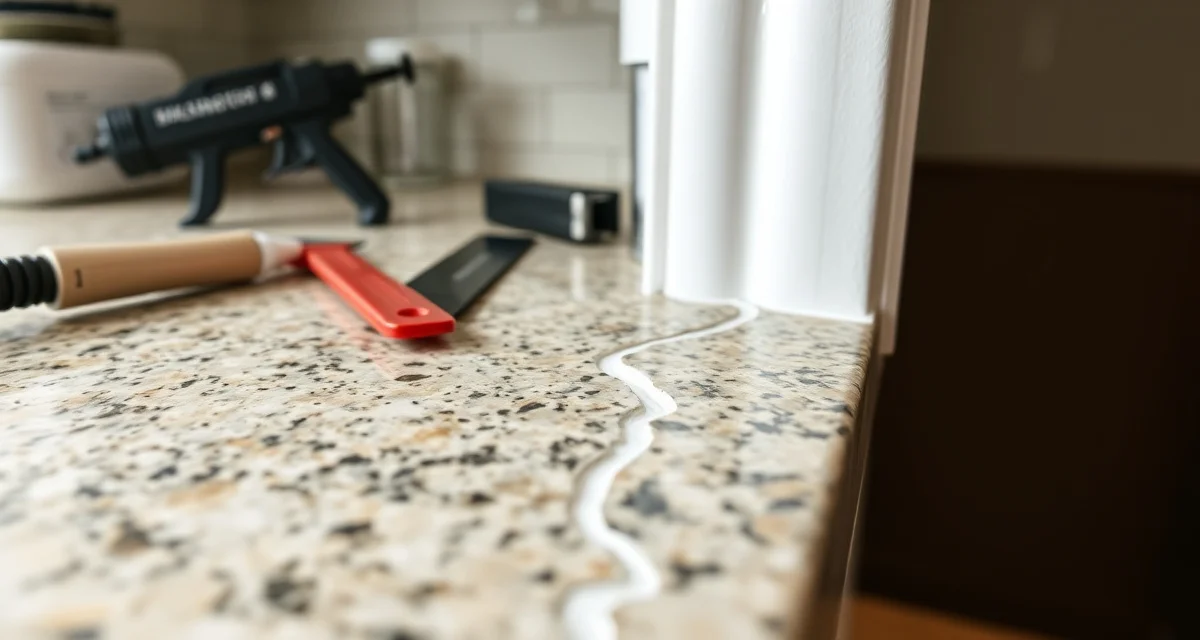
Caulk Cracking Around Countertop: Why It Happens and How to Fix It
Cracking caulk around a countertop is the most common post-installation maintenance issue in kitchens and bathrooms - and it's almost always fixable in under an hour with $15 worth of materials. But before you reach for the caulk gun, it's worth understanding why the cracking happened. Sometimes it's simple aging. Other times, it's an early warning sign of a bigger problem underneath.
TL;DR
- Caulk cracking is normal after 2-5 years, but cracking within months of installation points to a product or technique problem
- The most common cause is using the wrong caulk type - grout or rigid sealant instead of flexible silicone
- Movement between the countertop and wall (thermal expansion, settling) is the underlying mechanical cause
- Removing old caulk completely before re-applying is critical - layering new over old always fails
- 100% silicone caulk (not siliconized latex) is the correct product for the countertop-to-wall joint
- Cracking specifically around the sink may indicate the sink is pulling away - a separate and more serious issue
- The repair takes 30-60 minutes of active work plus 24 hours of cure time
Why Caulk Cracks Around Countertops
Every joint between a countertop and an adjacent surface - walls, backsplash tiles, window sills - is a movement joint. The countertop and the wall are different materials attached to different structures, and they move independently. Caulk is the flexible bridge between them.
Calculate your material waste savings
See exactly how much slab material and money you could save with optimized cutting layouts.
Try the free Waste CalculatorWhen that bridge fails, it cracks. Here's why.
Cause #1: Wrong Caulk Type
This is the single most common reason for premature cracking. There are dozens of caulk products on the shelf, and most of them are wrong for countertop joints.
| Caulk Type | Flexibility | Water Resistance | Countertop Use? |
|---|---|---|---|
| 100% silicone | High | Excellent | Yes - the right choice |
| Siliconized acrylic latex | Medium | Good | Acceptable but less durable |
| Acrylic latex | Low | Poor | No - will crack quickly |
| Polyurethane | High | Excellent | Yes, but harder to work with |
| Grout | None | Moderate | Never - it's not caulk |
Using acrylic latex caulk (the cheap, paintable kind) in a countertop joint is the equivalent of using masking tape where duct tape is needed. It dries rigid and cracks the moment the joint moves.
Cause #2: Thermal Movement
Countertop materials expand and contract with temperature changes. A granite countertop near a stove or window can see surface temperature swings of 20-40°F daily. The wall behind it stays relatively constant. That differential movement stresses the caulk joint.
Even flexible silicone has limits. If the joint is too narrow (under 1/8 inch), there isn't enough caulk volume to absorb the movement, and it tears.
Cause #3: Settling and Structural Movement
Houses settle. Cabinets shift. Walls move slightly with foundation changes. Each millimeter of movement gets transferred to the caulk joint. In new construction, significant settling occurs in the first 12-18 months, and caulk cracking during this period is nearly universal.
Cause #4: Poor Surface Preparation
Caulk adheres to clean, dry, dust-free surfaces. If the original application went over:
- Dust from construction or sanding
- Old caulk residue
- Moisture or grease
- Painted surfaces without primer
...the bond was weak from day one, and cracking was inevitable.
Cause #5: Aging
Even properly applied 100% silicone caulk has a lifespan. Expect 5-10 years in a kitchen countertop joint, less in a bathroom with daily moisture exposure. UV light, cleaning chemicals, and repeated wetting and drying cycles all degrade the material.
If your caulk is 5+ years old and cracking, it's not a defect - it's maintenance.
How to Re-Caulk a Countertop: Step-by-Step
Materials You'll Need
- 100% silicone caulk in a color matching your countertop or backsplash (not siliconized latex)
- Caulk gun
- Utility knife or oscillating tool
- Caulk remover/softener (optional but helpful)
- Denatured alcohol or mineral spirits
- Blue painter's tape
- Paper towels or rags
- Disposable gloves
Step 1: Remove All Old Caulk
This is the step most people rush, and it's the most important one. New caulk will not bond to old caulk. Period.
Method A - Manual removal: Score along both edges of the old caulk bead with a utility knife. Pull the bulk of the caulk out in strips. Use a plastic scraper to remove residue. This works well when the old caulk is silicone and comes out in ribbons.
Method B - Chemical softener: Apply a caulk remover product, wait the recommended time (usually 2-4 hours), and scrape. This is more effective for stubborn acrylic caulk that has bonded tightly.
Goal: Both surfaces should be completely clean, with no visible caulk residue remaining.
Step 2: Clean the Joint
Wipe both surfaces with denatured alcohol or mineral spirits on a clean rag. This removes grease, soap residue, and dust that would compromise adhesion. Let it dry completely - at least 15 minutes.
Step 3: Tape for a Clean Line
Apply blue painter's tape along both sides of the joint, leaving approximately 1/8 to 3/16 inch of gap exposed. Press the tape firmly so caulk doesn't bleed under it.
This step is optional but makes a dramatic difference in the finished appearance, especially for anyone who isn't experienced with a caulk gun.
Step 4: Apply the Caulk
Cut the caulk tube nozzle at a 45-degree angle, sized slightly smaller than the joint width. Apply steady, consistent pressure while moving at an even pace. Fill the joint fully - a thin, surface-level bead won't last.
Key technique: Push the caulk into the joint rather than dragging it along the surface. This forces the material into contact with both surfaces for a proper bond.
Step 5: Tool the Bead
Within 2-5 minutes (before the silicone begins to skin over), smooth the bead with a wet finger, a caulk finishing tool, or a damp paper towel. Use one continuous stroke per section.
Step 6: Remove Tape and Cure
Pull the painter's tape immediately after tooling, before the caulk sets. Pull at a 45-degree angle away from the joint.
Allow 24 hours before exposing the joint to water. Full cure takes 48-72 hours for most 100% silicone products.
When Cracking Caulk Signals a Bigger Problem
Most caulk cracking is routine maintenance. But in certain situations, the cracking is a symptom, not the disease.
Warning Signs of Structural Issues
- Cracking appears within weeks of professional installation: Something moved or was done wrong
- Caulk cracks in the same spot repeatedly: The joint is moving beyond normal range - check for cabinet settling or countertop support issues
- Cracking accompanied by a gap opening at the backsplash: The countertop may be separating from the wall, indicating support failure
- Caulk around the sink is cracking while wall joints are fine: The sink may be pulling away from the countertop (see our guide on sink separating from countertop)
- Multiple joints cracking simultaneously: Could indicate foundation movement or significant settling
What to Do If You Suspect a Structural Issue
- Check the countertop for levelness with a 4-foot level
- Look for gaps between the countertop and cabinets underneath
- Inspect under the sink for moisture, warping, or loosened clips
- Document everything with dated photos
- Contact your fabricator or installer - not just a handyman
Caulk Selection Guide
| Application | Recommended Product | Why |
|---|---|---|
| Countertop to wall/backsplash | 100% silicone, kitchen/bath rated | Maximum flexibility, mold resistance |
| Around sink (top-mount) | 100% silicone, kitchen/bath rated | Waterproof, flexible |
| Around sink (undermount) | 100% silicone, per sink manufacturer spec | Must match sink warranty requirements |
| Countertop to window sill | 100% silicone or polyurethane | UV resistance important |
| Backsplash tile to countertop | 100% silicone (not grout) | Movement joint - grout will crack |
Brands that fabricators commonly recommend: GE Silicone II, DAP 100% Silicone, Momentive (formerly GE) kitchen and bath formulas. Avoid any product labeled "siliconized" - that's a latex product with a small amount of silicone added. It won't perform the same.
Cost of Caulk Repair
| Approach | Materials | Labor | Total |
|---|---|---|---|
| DIY re-caulk | $10-$25 | Your time (1 hour) | $10-$25 |
| Handyman | $10-$25 | $75-$150 | $85-$175 |
| Fabricator warranty visit | $0 | $0 (if within warranty) | $0 |
| Fabricator non-warranty visit | $10-$25 | $100-$250 | $110-$275 |
For Fabricators: Reducing Caulk Callbacks
Caulk complaints are a low-dollar but high-frequency callback driver. Most fabricators report that caulk-related calls account for 15-25% of all post-installation service requests.
Prevention strategies:
- Use only 100% silicone on every job, no exceptions
- Ensure joints are at least 1/8 inch wide to allow flex
- Verify countertop fit before final caulk - if the slab is tight against the wall with no gap, it's going to push the caulk out when it expands
- Include caulk maintenance guidance in homeowner documentation
Accurate templates lead to proper fit, which leads to consistent joint widths, which leads to caulk that lasts. SlabWise's Template Verification ensures measurements are precise before fabrication, so joints fall within spec and caulk has room to flex.
How often should countertop caulk be replaced?
Plan to inspect annually and replace every 3-5 years in kitchens, every 2-3 years in bathrooms. High-quality silicone in a well-prepared joint can last up to 10 years.
Can I caulk over old caulk?
No. New caulk does not bond to old caulk. You must remove the existing material completely before re-applying. Layering is the number-one reason for premature caulk failure.
Why does my new caulk keep cracking?
If fresh caulk cracks within weeks, check three things: (1) Was the old caulk fully removed? (2) Are you using 100% silicone? (3) Is something moving excessively beneath the joint?
Is cracking caulk a health concern?
Cracked caulk in wet areas (around sinks, bathrooms) can allow moisture behind the countertop, promoting mold growth. Repair cracked caulk in moisture-prone areas promptly.
Should I use caulk or grout between my backsplash and countertop?
Always caulk, never grout. The backsplash-to-countertop joint is a movement joint. Grout is rigid and will crack. Every tile installation standard specifies caulk at change-of-plane transitions.
What color caulk should I use?
Match the caulk to either the countertop or the backsplash - whichever draws less attention to the joint. When in doubt, go with the lighter of the two colors. Clear silicone is another option but tends to yellow over time.
Can I use the countertop immediately after caulking?
You can use the countertop surface, but avoid getting water on the fresh caulk joint for at least 24 hours. Full cure takes 48-72 hours.
Does caulk cracking void my countertop warranty?
Caulk is typically considered a maintenance item and has a shorter warranty period (if any) than the countertop itself. Check your fabricator's warranty terms for specifics.
Why is bathroom countertop caulk cracking faster than kitchen?
Daily moisture exposure, steam from showers, and cleaning chemical contact all accelerate caulk degradation. Bathroom caulk joints have a shorter lifespan than kitchen joints.
Can a fabricator apply caulk that lasts longer?
Professional-grade silicone sealants used by fabricators are the same products available at hardware stores. The difference is in surface preparation and technique, not the product itself.
Keep Callbacks Low and Customers Happy
For countertop fabricators: caulk complaints start with fit issues, and fit issues start with template accuracy. SlabWise's Template Verification catches the measurement errors that lead to tight or inconsistent joints - the root cause of most caulk failures.
Try SlabWise free for 14 days and reduce post-install service calls.
Try These Free Tools
- Photo to Template -- Snap a photo of an existing countertop and get an AI-generated DXF template.
- Template Compare -- Upload two templates and see every dimension change highlighted instantly.
- AI Template Verification -- Cross-check your template against manufacturer specs before cutting.
Sources & Further Reading
-
Natural Stone Institute - Sealant and Adhesive Applications for Natural Stone
-
National Kitchen & Bath Association - Countertop Installation Best Practices
-
ASTM International - Standard Practice for Installation of Caulking Compounds
-
International Surface Fabricators Association - Fabrication Standards and Troubleshooting