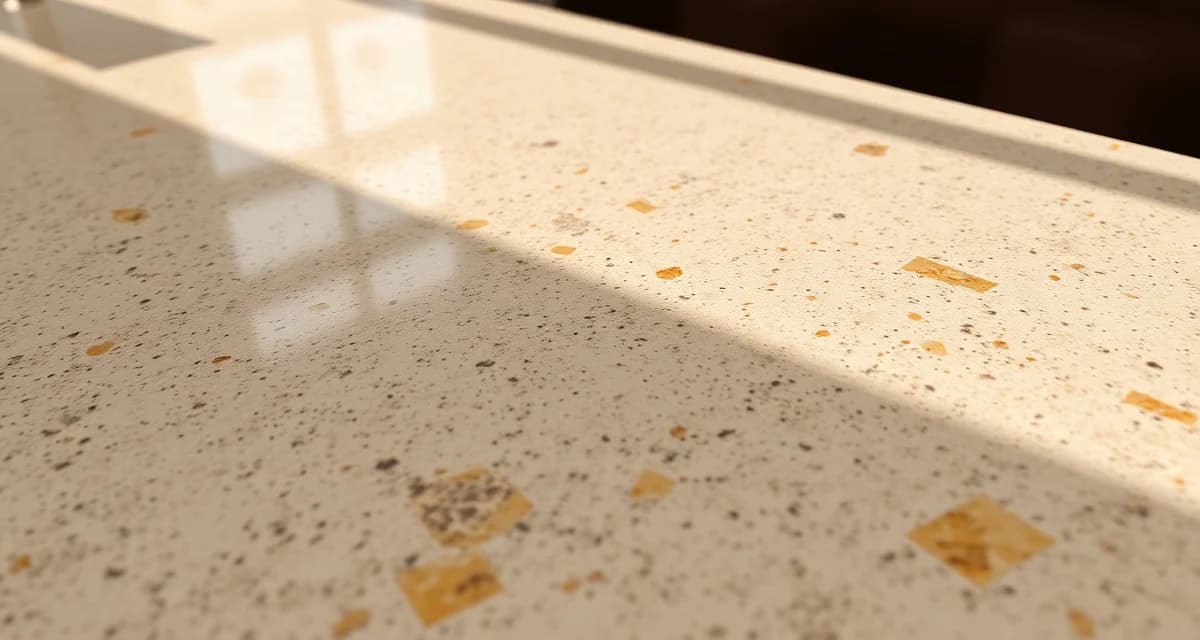
Quartz Countertop Discolored: Causes and Fixes
Quick Definition
Quartz countertop discoloration is a visible color change -- yellowing, whitening, darkening, or blotchiness -- that develops after installation. Unlike natural stone, quartz is engineered with resin binders that can react to heat, UV light, and certain chemicals. Understanding the cause of discoloration determines whether the issue is reversible, warrantable, or permanent.
TL;DR
- Heat damage (hot pans placed directly on quartz) is the most common cause of discoloration -- and it is usually permanent
- UV exposure causes yellowing over time, especially on white and light-colored quartz near windows
- Chemical damage from harsh cleaners (bleach, oven cleaner, drain cleaner) can bleach or discolor the resin
- Manufacturing defects occasionally cause uneven color or blotchiness that appears shortly after installation
- Most heat and UV discoloration cannot be fully reversed
- Chemical discoloration can sometimes be improved with specialized cleaning
- Manufacturer warranties cover defects but not damage from misuse (heat, harsh chemicals)
- Prevention is key: always use trivets, avoid harsh cleaners, and consider UV-resistant options near windows
Causes of Quartz Discoloration
Heat Damage
The problem: Quartz countertops contain 7-10% resin binder (typically polyester or acrylic). This resin can scorch, yellow, or turn white when exposed to temperatures above 300-400 degrees F. A hot pan from the stove or oven placed directly on quartz can cause permanent discoloration within seconds.
Calculate your material waste savings
See exactly how much slab material and money you could save with optimized cutting layouts.
Try the free Waste CalculatorWhat it looks like: Yellow, brown, or white marks in the shape of the hot object. The discoloration is typically sharply defined, matching the pot or pan bottom outline.
Is it fixable? Usually not fully reversible. Light heat marks can sometimes be reduced with gentle abrasive polishing, but moderate to severe heat damage permanently alters the resin structure. The affected area may need to be professionally polished or, in severe cases, the section replaced.
UV Exposure (Sunlight)
The problem: Prolonged direct sunlight causes the resin binder in quartz to yellow over time. This is most visible on white and light-colored quartz surfaces positioned near large windows, skylights, or glass doors.
What it looks like: Gradual yellowing or warming of the stone color, often uneven (darker where sunlight hits directly, original color in shaded areas).
Is it fixable? UV discoloration is permanent. The resin has chemically changed and cannot be restored to its original color. Prevention (UV-filtering window treatments) is the only effective strategy.
Timeline: Visible UV yellowing typically develops over 1-5 years depending on sun exposure intensity and quartz brand. Some manufacturers use UV-stabilized resins that resist yellowing longer.
Chemical Damage
The problem: Harsh chemicals attack the resin binder in quartz. Common offenders include:
- Bleach (sodium hypochlorite) -- causes white spots or bleaching
- Oven cleaner -- aggressive alkaline that dissolves resin
- Drain cleaner -- highly caustic, damages resin on contact
- Nail polish remover (acetone) -- dissolves some resin types
- Permanent marker / ink -- pigment absorption
What it looks like: Irregular light or dark spots, often matching the spill pattern. Chemical damage may appear immediately or develop over hours.
Is it fixable? Depends on severity. Surface-level chemical marks can sometimes be polished out. Deep chemical damage that has altered the resin structure is permanent.
Manufacturing Defects
The problem: Inconsistent resin distribution, pigment mixing errors, or curing problems during manufacturing can cause uneven color that appears after installation.
What it looks like: Blotchy color, visible swirl patterns not consistent with the design, areas that are noticeably different in tone from the rest of the slab.
Is it fixable? Manufacturing defects are typically covered under warranty. Contact your fabricator or the quartz manufacturer with photos and your slab identification number. Most manufacturers will replace defective sections at no cost.
Fix Strategies by Discoloration Type
Light Heat Marks
- Apply a paste of baking soda and water to the affected area
- Gently rub with a soft cloth in circular motions for 3-5 minutes
- Rinse and assess -- light scorch marks may lighten with this treatment
- For slightly more aggressive treatment, use a non-abrasive quartz polishing compound
- If the mark persists, professional polishing with fine diamond pads may help
Success rate: Approximately 30-40% of light heat marks improve noticeably. Severe heat marks are permanent.
Chemical Bleach Spots
- Clean the area with pH-neutral stone cleaner to remove any remaining chemical
- Apply a quartz-specific color restoration product (available from stone care suppliers)
- For white quartz with bleach spots, hydrogen peroxide applied briefly may even the color
- Professional quartz restoration services can sometimes blend color inconsistencies
Surface Staining (Not True Discoloration)
Some apparent discoloration is actually surface residue that has not been properly cleaned:
- Hard water deposits: White haze from mineral buildup -- remove with quartz-safe hard water cleaner
- Soap film: Cloudy appearance from soap residue -- clean with diluted isopropyl alcohol
- Dye transfer: Color from fruits, spices, or fabric dye -- clean with baking soda paste
These are surface issues, not true discoloration, and respond well to proper cleaning.
Prevention
| Prevention Measure | Protects Against | Cost |
|---|---|---|
| Always use trivets/hot pads | Heat damage | $5-$20 |
| UV-filtering window treatments | Sun yellowing | $100-$500 per window |
| pH-neutral cleaners only | Chemical damage | $8-$15 per bottle |
| Prompt spill cleanup | Staining | Free |
| Avoid abrasive scrubbers | Surface dulling | Free |
Recommended Cleaning Products for Quartz
| Safe | Avoid |
|---|---|
| Dish soap + warm water | Bleach |
| pH-neutral stone cleaner | Oven cleaner |
| Isopropyl alcohol (diluted) | Drain cleaner |
| Baking soda paste (gentle) | Abrasive scouring pads |
| Quartz-specific cleaner | Acetone (prolonged exposure) |
Warranty Claims for Discoloration
Most quartz manufacturers offer warranties that cover material defects but exclude user-caused damage:
| Covered (Defect) | Not Covered (Misuse) |
|---|---|
| Uneven color from manufacturing | Heat damage from hot pans |
| Cracking from material weakness | Discoloration from harsh chemicals |
| Delamination of surface | UV yellowing (varies by brand) |
| Premature color change without cause | Staining from unapproved cleaners |
How to file a warranty claim:
- Photograph the discoloration with good lighting
- Document when the issue first appeared and any potential causes
- Contact your fabricator with photos and your quartz brand, color name, and installation date
- The fabricator will typically escalate to the manufacturer's warranty department
- A manufacturer representative may inspect the installation before approving a claim
Why is my white quartz turning yellow?
The two most common causes are heat damage (hot pans) and UV exposure (sunlight). Heat yellowing appears suddenly in the shape of the hot object. UV yellowing develops gradually over months or years in sun-exposed areas.
Can you fix heat discoloration on quartz?
Light heat marks may be reduced with baking soda paste or professional polishing. Moderate to severe heat damage is permanent because the resin binder has been structurally altered. Prevention (using trivets) is the only reliable solution.
Does quartz discolor over time?
Quartz can discolor from UV exposure over years, especially white and light colors near windows. This is a known limitation of quartz materials. Some manufacturers use UV-stabilized resins that resist yellowing longer.
Is quartz discoloration covered by warranty?
Discoloration from manufacturing defects is covered. Discoloration from heat, chemicals, or UV exposure is typically not covered. Check your specific manufacturer's warranty terms for details.
How do I clean discolored quartz?
For surface discoloration: baking soda paste, pH-neutral cleaner, or quartz-specific polishing compound. For deep resin discoloration: professional assessment is recommended. Avoid harsh chemicals, which may worsen the issue.
Can a fabricator fix discolored quartz?
Fabricators can polish out some surface discoloration and replace sections of severely damaged quartz. They can also assist with warranty claims if the discoloration appears to be a manufacturing defect.
Is one quartz brand more resistant to discoloration than others?
Brands using UV-stabilized resins and higher-quality pigments tend to resist discoloration better. Premium brands generally have better color stability, though all quartz products have some vulnerability to extreme heat.
Does quartz discolor from bleach?
Yes. Bleach can cause white spots or color lightening on quartz countertops. The sodium hypochlorite in bleach attacks the resin binder. If bleach contacts your quartz, rinse immediately with water.
Can sunlight really damage quartz countertops?
Yes. Direct sunlight through windows can gradually yellow or warm the color of quartz surfaces over 1-5 years. This is most visible on white and light-colored quartz. UV-filtering window treatments prevent this issue.
Should I choose quartz or natural stone to avoid discoloration?
Natural stone (granite, quartzite) does not have resin binders and is immune to heat and UV discoloration that affects quartz. However, natural stone can stain and etch. Each material has its own maintenance trade-offs.
Quote Quartz Projects with Accurate Material Costs
Quartz selection, color, and brand affect both pricing and long-term performance. SlabWise's Quick Quote tool generates accurate quartz countertop estimates in 3 minutes, factoring in material grade, edge profiles, and installation complexity.
Try These Free Tools
- Kitchen Visualizer -- Upload a kitchen photo and preview different countertop materials in place.
- AR Overlay -- See the actual stone pattern on your customer's cabinets using AR.
- Sink Finder -- Search compatible sink models by countertop dimensions and cutout specs.
Sources & Further Reading
- Natural Stone Institute - Quartz Surface Care and Maintenance Guidelines
- International Surface Fabricators Association - Engineered Stone Discoloration Prevention
- ASTM International - Standard Test Methods for Stain Resistance of Stone Surfaces
- National Kitchen & Bath Association - Countertop Material Performance Standards
Internal Links
- Quartz Chip Repair Guide -- Fix physical damage to quartz surfaces
- Best Countertop Colors 2026 -- Current quartz color options
- Countertop Material Calculator -- Estimate quartz material needs
- Countertop Pricing Calculator -- Build accurate quartz project quotes