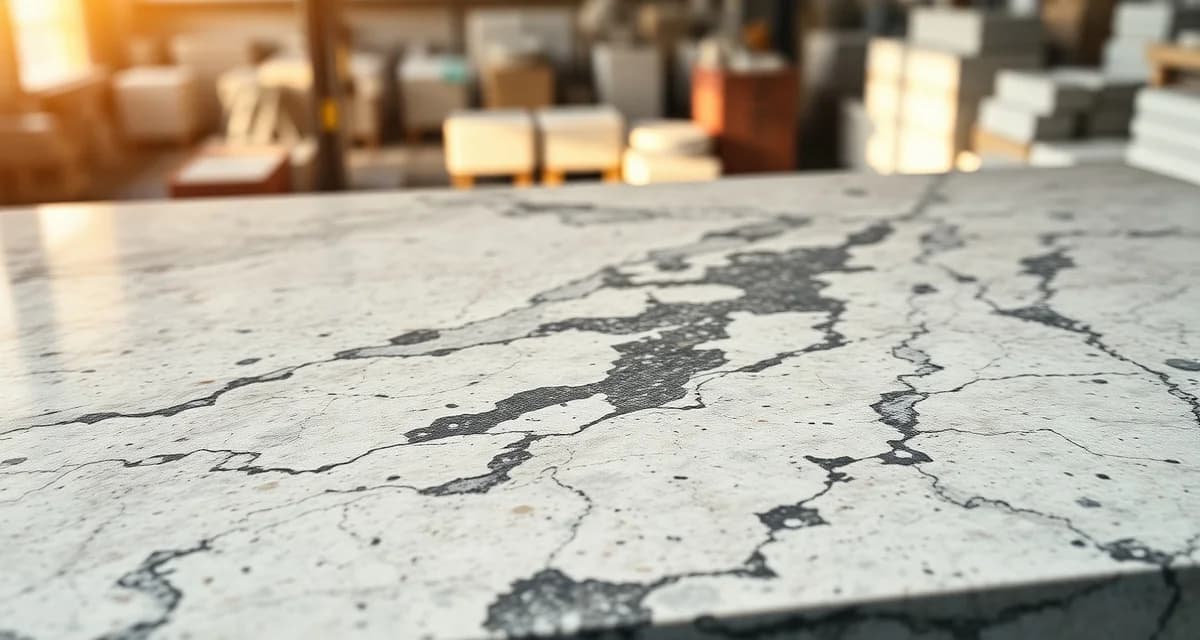
Why Are Countertops So Expensive?
Quick Definition
Why are countertops so expensive is a question that comes up in almost every countertop consultation.
Countertops are expensive because the price includes raw material (often quarried from another continent), precision fabrication using $200K-$500K+ CNC equipment, skilled labor for templating and installation, and the logistics of moving 700-1,200 lb slabs through every step. Material alone accounts for only 30-40% of the final bill. The rest covers fabrication, labor, overhead, and installation.
TL;DR
- Raw material (the slab itself) accounts for roughly 30-40% of what you pay
- Fabrication labor and equipment add another 25-35% - CNC saws, edging, polishing, and cutouts
- Templating, transportation, and installation make up the remaining 25-35%
- Stone slabs weigh 700-1,200 lbs each and require specialized handling at every stage
- A single remake due to measurement error can cost a fabricator $1,500-$4,000
- Exotic materials from Italy, Brazil, or India carry higher import and shipping costs
- The overall market for countertop fabrication in the US is valued at roughly $22.1 billion
- Understanding the cost breakdown helps you make smarter choices as a buyer
The True Cost Breakdown of a Countertop
When you see a quote for $4,000-$8,000 for a kitchen countertop, it is easy to wonder where all that money goes. Here is a realistic breakdown for a typical 40 sq ft granite or quartz kitchen project:
Calculate your material waste savings
See exactly how much slab material and money you could save with optimized cutting layouts.
Try the free Waste Calculator| Cost Component | % of Total | Dollar Range (40 sq ft) |
|---|---|---|
| Raw Material (Slab) | 30-40% | $1,200-$3,200 |
| Fabrication (Cutting, Edging, Polish) | 20-25% | $800-$2,000 |
| Templating | 5-8% | $200-$650 |
| Transportation | 5-8% | $200-$650 |
| Installation | 10-15% | $400-$1,200 |
| Overhead (Rent, Insurance, Equipment) | 10-15% | $400-$1,200 |
| Profit Margin | 8-15% | $320-$1,200 |
| Total | 100% | $3,520-$10,100 |
The range is wide because material choice, edge profiles, number of cutouts, and geographic location all swing the price significantly.
Where the Money Goes: Each Cost Factor Explained
1. Raw Material: The Slab
Stone slabs are either quarried (granite, marble, quartzite) or manufactured (quartz, Dekton, porcelain). Either way, getting the raw material to a fabrication shop involves:
- Quarrying or manufacturing - Granite is blasted or wire-cut from mountainsides. Quartz is mixed and pressed in factories. Both processes are capital-intensive.
- Shipping from origin - Much of the granite sold in the US comes from Brazil, India, Italy, or China. Quartz slabs are manufactured in the US, Israel, Spain, Turkey, and China. Ocean freight, customs, and domestic trucking all add cost.
- Distributor markup - Most fabricators buy from regional distributors (MSI, Arizona Tile, Daltile, Bedrosians), not directly from quarries. Distributors add 20-40% for warehousing, inventory risk, and delivery.
Typical slab costs to the fabricator:
| Material | Cost per Slab (wholesale) | Sq Ft per Slab | Cost per Sq Ft |
|---|---|---|---|
| Level 1 Granite | $400-$900 | 45-55 sq ft | $8-$18 |
| Level 2-3 Granite | $900-$2,500 | 45-55 sq ft | $18-$50 |
| Mid-Range Quartz | $800-$1,800 | 45-55 sq ft | $16-$35 |
| Premium Quartz (Cambria, etc.) | $1,500-$3,000 | 45-55 sq ft | $30-$60 |
| Quartzite | $1,200-$5,000+ | 40-55 sq ft | $30-$100+ |
| Marble (Calacatta, etc.) | $2,000-$8,000+ | 40-55 sq ft | $50-$160+ |
The slab you pick at the distributor yard has already been quarried, shipped across an ocean, sliced into slabs, polished, and trucked to a warehouse. Every step adds cost.
2. Fabrication: Turning a Slab Into a Countertop
A raw slab is a flat rectangle. Turning it into a countertop that fits your kitchen requires:
- CNC bridge saws ($150,000-$400,000+ per machine) to make precise cuts
- CNC routers for edge profiles, sink cutouts, and cooktop openings
- Polishing equipment to finish edges to match the slab surface
- Diamond tooling that wears out and must be replaced regularly ($500-$3,000/month depending on volume)
- Skilled operators to program, run, and quality-check every piece
A typical fabrication shop invests $500,000-$2,000,000 in equipment alone. That investment has to be recouped across every job.
Labor is the other big factor. Experienced CNC operators, template technicians, and installers are in short supply. The stone fabrication industry faces a persistent labor shortage, which puts upward pressure on wages and, consequently, on your quote.
3. Templating: Measuring Your Kitchen
Before anything gets cut, someone needs to measure your exact countertop dimensions. This happens in two ways:
- Digital laser templating (Proliner, LT-2D3D, Flexijet) - A technician visits your home with a $20,000-$50,000 laser device and captures precise measurements that feed directly into CNC software. This takes 30-60 minutes for a typical kitchen.
- Physical strip templates - The older method. Technicians use strips of material to create a physical outline of the countertop. Cheaper equipment, but more error-prone and labor-intensive.
Either way, you are paying for a skilled technician's time, their vehicle, fuel, equipment depreciation, and the overhead of scheduling the visit.
4. Transportation: Moving Heavy Slabs Safely
A standard granite slab weighs 800-1,200 lbs. Moving it requires:
- Specialized trucks with A-frame racks
- Forklifts or gantry cranes at the shop
- Careful handling - a single crack or chip means the slab is scrap
- Delivery to the job site in a truck equipped to safely transport finished pieces
Most fabricators make at least three trips per job: picking up the slab from the distributor, delivering finished pieces to the job site, and occasionally a return trip for adjustments. Fuel, truck maintenance, insurance, and driver wages add up quickly.
5. Installation: The Final Mile
Installing stone countertops is physically demanding, skilled work. A two-person crew needs to:
- Carry finished pieces (often 150-300 lbs each) through doorways and up stairs
- Level and secure cabinets before setting stone
- Make on-site adjustments for walls that are not perfectly straight
- Join seams with color-matched adhesive
- Install undermount sinks, connect plumbing cutouts, and secure backsplashes
- Clean and inspect the finished surface
Installation typically takes 2-4 hours for a standard kitchen. The labor rate for a skilled two-person crew reflects years of experience and the physical toll of the work.
6. Overhead: The Hidden Costs
Fabrication shops carry significant fixed costs that get spread across every job:
- Facility rent - shops need 5,000-15,000+ sq ft for equipment, slab storage, and workspace
- Insurance - liability, workers comp, and vehicle coverage for a business that handles heavy materials and sharp tools
- Water recycling systems - CNC saws use water for cooling and dust control; environmental regulations require treatment before discharge
- Utility costs - running large CNC machines, compressors, and overhead cranes is energy-intensive
- Software and technology - CNC programming software, accounting systems, and customer management tools
A mid-sized shop might spend $15,000-$40,000 per month on overhead before a single slab is cut.
Why Some Materials Cost Much More Than Others
The price gap between a Level 1 granite and a Calacatta marble slab can be enormous. Here is what drives premium pricing:
| Factor | Effect on Price |
|---|---|
| Rarity (limited quarry supply) | +50-300% |
| Country of origin shipping distance | +10-30% |
| Slab size (larger = more waste risk) | +10-20% |
| Pattern/color consistency demands | +15-40% |
| Vein matching or bookmatching requests | +20-50% |
| Thickness (3cm vs. 2cm) | +15-25% |
| Brand premium (Cambria, Caesarstone) | +10-30% |
Why Remakes Drive Up Costs for Everyone
One of the largest hidden costs in countertop fabrication is remakes - cutting a new piece because the first one did not fit. Industry data suggests that the average remake costs a fabricator $1,500-$4,000 when you factor in:
- Cost of a replacement slab (or slab section)
- Wasted fabrication time on the original piece
- Re-scheduling template, fabrication, and installation
- Additional delivery trips
- Lost revenue from delayed next jobs
Fabricators absorb these costs, but they build remake risk into their pricing. The industry average waste rate runs 10-15%, and a significant portion of that waste comes from measurement errors during templating.
This is where fabrication technology makes a direct impact on pricing. Shops that use digital templating with software verification - like SlabWise's 3-layer template check - reduce measurement errors before they reach the CNC. Fewer errors mean fewer remakes, which means the shop can price more competitively without squeezing margins. SlabWise users report saving $3,000-$8,000 per month by catching errors early.
How to Get Better Value as a Buyer
You cannot eliminate the fundamental costs of countertop fabrication, but you can make choices that reduce your total:
- Choose materials wisely. Level 1-2 granite or mid-range quartz delivers excellent durability at 40-60% less than exotic stones.
- Minimize seams. Simpler layouts with fewer pieces reduce fabrication and installation time.
- Pick standard edge profiles. A basic eased or beveled edge costs significantly less than an ogee or dupont.
- Get multiple quotes. Pricing varies 15-30% between fabricators in the same market.
- Ask about remnants. Smaller projects (bathroom vanities, bar tops) can often be cut from leftover slab pieces at 30-50% less.
- Be flexible on material. If you like a look but not the price, ask your fabricator for similar alternatives at a lower price point.
Why do countertops cost $50-$150 per square foot?
That price includes the raw slab (quarried or manufactured, shipped internationally, warehoused locally), precision fabrication with expensive CNC equipment, skilled labor for templating and installation, and business overhead. Each step adds cost between the quarry and your kitchen.
Is labor or material more expensive?
For most standard materials (Level 1-3 granite, mid-range quartz), labor and fabrication costs roughly equal or exceed the material cost. For exotic materials (Calacatta marble, rare quartzite), the material dominates the bill.
Why is marble so much more expensive than granite?
High-end marble (Calacatta, Statuario) comes from limited quarries in specific regions of Italy. The supply is restricted, demand is high, and the stone requires more careful handling because it is softer and more fragile. Transportation from Italian quarries adds further cost.
Can I save money by buying my own slab?
Sometimes. Some fabricators allow customer-supplied slabs, but many charge a higher fabrication rate because they lose the markup on material and take on risk for a slab they did not inspect. Ask your fabricator about this before purchasing independently.
Why does the same material cost different amounts at different shops?
Fabricators buy from different distributors at different volumes, have different overhead structures, and operate with different levels of efficiency. A shop with newer CNC equipment may fabricate faster (lower labor cost per job) but have higher equipment payments. Location matters too - shops in high-rent metro areas charge more.
How much does edge profiling add to the cost?
A standard eased or bevel edge is typically included in the base price. Upgraded profiles like ogee, bullnose, or dupont add $10-$30 per linear foot, which can mean $200-$600+ for a typical kitchen.
Is quartz cheaper than granite?
It depends on the grade. Entry-level granite is often cheaper than mid-range quartz. But premium granite and quartz overlap significantly in the $60-$100/sq ft installed range. The overall cost difference between quartz and granite is usually less than 15% for comparable quality levels.
Why does installation cost so much?
You are paying for a skilled two-person crew with specialized equipment to carry, place, level, and join heavy stone pieces in your home. The liability insurance alone for this type of work is significant. A botched installation means a costly remake.
Do fabricators make a lot of profit on countertops?
Profit margins in countertop fabrication typically run 8-15% before taxes. After accounting for remakes, warranty work, and operational issues, net margins are often in the single digits. This is not a high-margin business - it runs on volume and efficiency.
Why do quotes vary so much between fabricators?
Differences in material sourcing, equipment efficiency, overhead costs, and profit targets all create variation. A $1,000 gap between two quotes for the same job is not unusual, and the cheaper quote is not always worse. Ask what is included and compare line by line.
Will countertop prices go down?
Material costs have generally trended upward due to increased demand, shipping costs, and environmental regulations at quarries. Labor costs continue to rise due to a skilled worker shortage. Prices may stabilize but are unlikely to drop significantly.
How can fabricators reduce costs without cutting quality?
Better technology is the primary lever. Digital templating reduces errors, nesting software reduces slab waste, and production management tools reduce scheduling inefficiencies. Shops that invest in these tools - like SlabWise for template verification and slab nesting - typically save $3,000-$8,000 per month through fewer remakes and 10-15% better material yield.
The Price Reflects the Process
Countertops are expensive because every step - from quarry to your kitchen - requires specialized equipment, skilled labor, and careful handling. When you understand where the money goes, the price starts to make sense. And for fabricators looking to sharpen their pricing without cutting corners, reducing waste and remakes is the fastest path to better margins. SlabWise helps shops do exactly that. Start your 14-day free trial.
Try These Free Tools
- Nesting Optimizer -- AI-powered slab layout that maximizes yield considering vein direction and defects.
- Defect Mapping -- Upload a slab photo and AI maps every fissure, pit, and color issue.
- Value Engineering -- Find dollar-quantified suggestions to save material without cutting margin.
Sources & Further Reading
-
Natural Stone Institute - Stone Selection and Specification Guide
-
International Surface Fabricators Association - Slab Selection Best Practices
-
National Kitchen & Bath Association - Countertop Material Selection Guidelines
-
Marble Institute of America - Natural Stone Inspection and Grading Standards