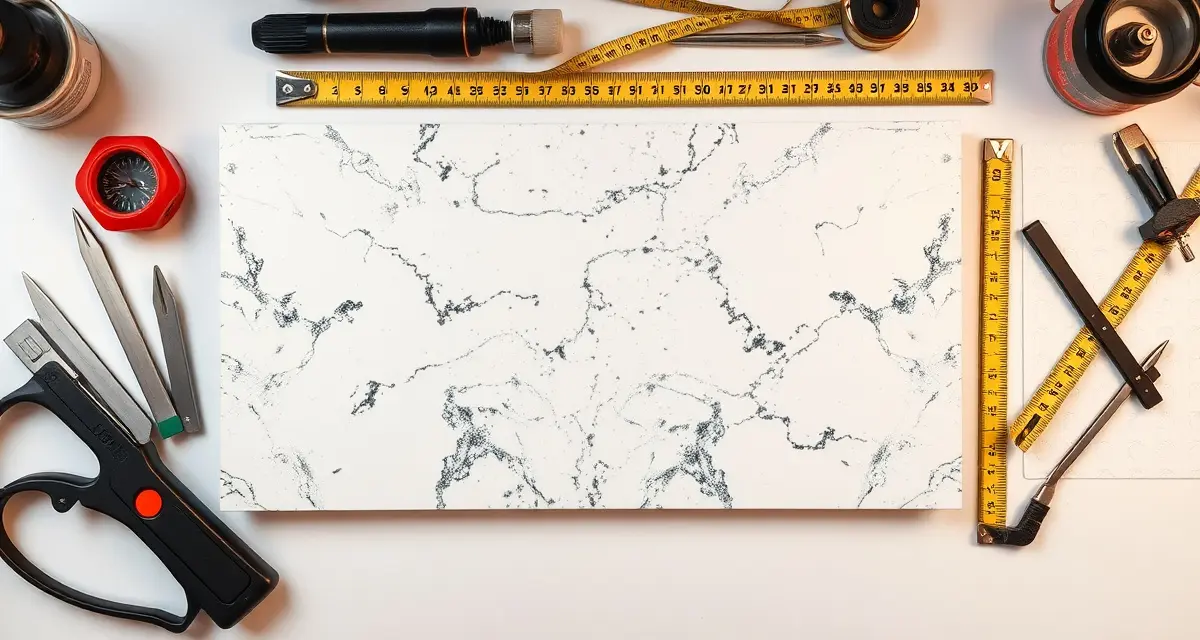
What Is a Remnant Countertop?
A remnant countertop is a piece of stone left over after a fabricator cuts a larger slab for another project. Remnants are typically smaller than a full slab, ranging from 5 to 25 square feet, and are sold at a discount of 30-60% off full slab pricing. They're an excellent option for bathrooms, laundry rooms, small bars, and other surfaces that don't require a full 45-square-foot slab.
TL;DR
- Remnants are leftover pieces from larger fabrication jobs, typically 5-25 sq ft
- Prices run 30-60% less than full slab pricing, often $15-$60 per square foot
- Best suited for bathroom vanities, laundry counters, bar tops, and small desks
- Most fabrication shops have a remnant yard or inventory you can browse
- Quality is identical to full slabs since the material comes from the same source
- Color matching between remnants is difficult, so multi-piece jobs are tricky
- Not all fabricators will install remnant-only projects due to minimum job sizes
How Remnants Are Created
Every time a fabricator cuts a kitchen countertop from a full slab, leftover pieces remain. A standard granite or quartz slab measures about 55" x 120" (roughly 45 square feet). A typical kitchen uses 30-50 square feet, and the cuts rarely consume the entire slab. The oddly shaped pieces that remain are remnants.
Calculate your material waste savings
See exactly how much slab material and money you could save with optimized cutting layouts.
Try the free Waste CalculatorHere's a typical scenario: A fabricator cuts an L-shaped kitchen countertop from a full slab of Calacatta quartz. The kitchen requires 38 square feet. After cutting, two remnant pieces remain: one that's 24" x 48" and another that's 18" x 36". Combined, those remnants total about 11 square feet of usable material.
The fabricator can either:
- Store the remnants for future small projects
- Sell them directly to customers at a discount
- Use them for bathroom vanities or other add-on surfaces in the same project
Typical Remnant Sizes and Prices
Remnant sizes and pricing vary widely based on the original slab and how it was cut:
| Remnant Size | Usable Area | Typical Price | Best For |
|---|---|---|---|
| 18" x 24" | ~3 sq ft | $50-$150 | Window sills, small shelves |
| 24" x 48" | ~8 sq ft | $120-$400 | Small bathroom vanity |
| 24" x 60" | ~10 sq ft | $150-$500 | Standard vanity top |
| 30" x 72" | ~15 sq ft | $225-$750 | Large vanity or bar section |
| 36" x 96" | ~24 sq ft | $360-$1,200 | Bar top, laundry room |
Pricing based on mid-range granite and quartz ($15-$50/sq ft for remnant material)
Premium materials like Calacatta marble or exotic quartzite command higher remnant prices, sometimes $40-$80 per square foot. But that's still 30-50% below full slab pricing for the same material.
Best Uses for Remnant Countertops
Remnants are ideal for projects where you need a single, relatively small piece of stone:
Bathroom vanities are the most common remnant project. A single-sink vanity needs 4-8 square feet, and a double-sink vanity needs 10-14 square feet. Both fit comfortably within standard remnant sizes.
Laundry room counters typically run 6-12 square feet and are perfect remnant candidates. Since laundry rooms don't need to match kitchen countertops, you have more flexibility with color and material.
Home office desks with a 24" x 60" surface (10 sq ft) make a great use of remnant stone. The hard, scratch-resistant surface is ideal for a work area.
Coffee bars and wet bars often fit within 10-20 square feet, especially if the bar is a single straight run. Remnants work well here because the surface is usually visible and benefits from premium materials.
Fireplace surrounds and hearths require flat, heat-resistant material. Granite and quartzite remnants are excellent for this application.
Outdoor grill stations with limited counter space (8-15 sq ft) can use granite remnants at a fraction of the cost of a full slab.
Where to Find Remnant Countertops
Fabrication shops are the best source. Most countertop fabricators accumulate remnants from every job and store them in racks or outdoor yards. Call ahead to ask about remnant availability and whether you can browse in person.
Slab yards and stone distributors sometimes sell remnants directly, though their primary business is full slabs. Distributors with attached fabrication facilities are more likely to have remnants.
Home improvement stores occasionally stock prefabricated remnant vanity tops, but selection is limited compared to visiting a fabricator directly.
Online marketplaces like Craigslist, Facebook Marketplace, and local classifieds sometimes list remnants from homeowners who purchased extra material. Prices are often negotiable.
Habitat for Humanity ReStores and similar resale shops occasionally receive donated remnant stone, typically priced at 50-80% below retail.
Quality Considerations
Remnant stone is not lower quality than full slab material. It's the exact same stone, simply in a smaller size. However, there are practical considerations:
Edge condition: Remnants often have rough-cut edges from the original fabrication. Your fabricator will need to finish these edges, which adds $10-$25 per linear foot to your project cost.
Shape irregularity: Remnants aren't always rectangular. L-shaped or triangular remnants may require creative layout planning to maximize usable area.
Fissures and weak points: The edge of a remnant where it was cut from the original slab is a natural stress point. Inspect remnants for hairline cracks near cut edges before purchasing.
Color consistency: If your project requires two remnant pieces (e.g., a double vanity with a seam), matching color and veining is nearly impossible unless both pieces came from the same original slab.
Remnant vs. Full Slab: Cost Comparison
Here's how remnant pricing typically compares to full slab pricing for common projects:
| Project | Full Slab Cost | Remnant Cost | Savings |
|---|---|---|---|
| Single vanity (6 sq ft) | $360-$720 | $90-$300 | $270-$420 |
| Double vanity (12 sq ft) | $720-$1,440 | $180-$600 | $540-$840 |
| Laundry counter (10 sq ft) | $600-$1,200 | $150-$500 | $450-$700 |
| Bar top (18 sq ft) | $1,080-$2,160 | $270-$900 | $810-$1,260 |
Full slab pricing includes waste factor; remnant pricing is for usable material only
The savings are substantial because you're only paying for the material you need instead of an entire 45-square-foot slab. On premium materials, remnant savings can reach $1,000 or more per project.
Tips for Buying Remnant Stone
-
Bring your measurements. Know your exact dimensions before visiting the remnant yard. Remnants don't come in standard sizes, so you need to match your project to available inventory.
-
Bring a tape measure and straight edge. Verify the remnant's actual dimensions and check for bowing or warping.
-
Inspect in natural light. Stone looks different under warehouse fluorescent lights versus daylight. Ask to move the piece outside or near a loading dock.
-
Ask about fabrication costs. The remnant itself may be cheap, but cutting, polishing, and installing it still costs money. Get a total project quote, not just the material price.
-
Check for damage. Look for chips, cracks, stains, and rough areas. Small chips on edges can be polished out, but cracks usually cannot.
-
Confirm material type. Not all stone is labeled accurately. If you're buying granite, make sure it's actually granite and not a mislabeled quartzite or gneiss.
-
Act fast. Popular remnant colors sell quickly. If you find a good match, put a deposit on it immediately.
FAQ
Are remnant countertops lower quality? No. Remnants are the same material as full slabs, just smaller. They come from the same quarry, the same block, and have the same physical properties. The only difference is size.
How cheap are remnant countertops? Remnant pricing typically runs 30-60% below full slab rates. A granite remnant might cost $15-$40 per square foot, compared to $40-$80 for a full slab of the same material. Total cost for a bathroom vanity from a remnant: $200-$600 including fabrication.
Can I use a remnant for a kitchen countertop? Only if your kitchen is very small (under 20 sq ft of counter space) or if you can find an unusually large remnant (25+ sq ft). Most kitchen projects exceed the size available from typical remnants.
Do fabricators charge less to install remnants? Labor rates are usually the same regardless of whether the material is a remnant or full slab. Some fabricators have minimum job charges ($300-$500) that may make very small remnant projects less cost-effective.
Can I get a sink cutout in a remnant? Yes. Fabricators can cut sink holes, faucet holes, and edge profiles in remnants just like full slabs. Make sure the remnant is large enough to accommodate the cutout with at least 3" of material on all sides.
How do I transport a remnant? Small remnants (under 50 lbs) can be carried by two people. Larger pieces need an A-frame cart or professional delivery. Never lay stone flat in a truck bed without support underneath, as it can crack from vibration.
Will a fabricator cut a remnant I bought elsewhere? Some will, but many fabricators prefer to supply their own material. Those who accept customer-supplied material typically won't warranty the stone itself. Expect to pay $25-$50 per square foot for fabrication and installation labor alone.
How long do fabricators keep remnants? Most shops keep remnants for 6-12 months before recycling or discarding them. Popular colors sell faster. Call ahead to check current inventory rather than assuming a remnant will still be available weeks later.
Are remnant countertops good for resale value? Absolutely. Home buyers don't know (or care) whether your bathroom vanity came from a remnant or a full slab. What matters is the material quality and installation craftsmanship.
Can I get a matching backsplash from the same remnant? If the remnant is large enough, yes. A 4" backsplash along a 5-foot vanity adds about 1.7 square feet. Make sure to account for this when sizing your remnant.
Estimate Your Remnant Project Cost
Want to know what your bathroom vanity, bar top, or small countertop project will cost? Use our free countertop cost calculator to compare remnant pricing versus full slab options for your specific dimensions and material preferences.
[Try the SlabWise Cost Calculator →]
Try These Free Tools
- Cost Calculator -- Get instant countertop cost estimates by material, edge profile, and square footage.
- Compare Materials -- Side-by-side material comparison with pricing, durability, and maintenance ratings.
- Edge Profile Selector -- Browse edge profiles with cost impact and visual previews.