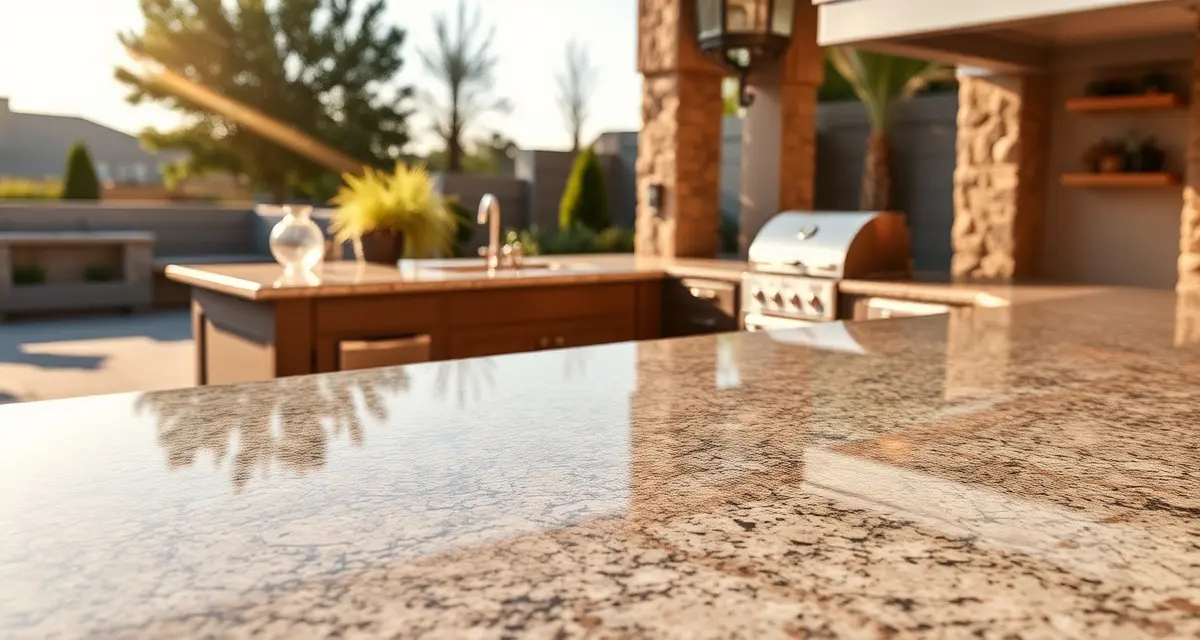
Can Granite Be Used Outdoors?
Quick Answer
Yes - granite is one of the best materials for outdoor countertops. It's 100% natural stone with no polymer resin to degrade, making it UV-stable, heat-resistant, and capable of handling temperature extremes. Granite has been used outdoors for centuries - in building facades, monuments, and public spaces - with proven long-term durability. The main requirement for outdoor granite is regular sealing (every 6-12 months) to prevent moisture absorption, which matters especially in climates with freeze-thaw cycles.
TL;DR
- Granite handles UV, heat, rain, and temperature swings without degrading
- Annual sealing (or more frequent in harsh climates) is required to prevent water absorption
- Freeze-thaw cycles can damage unsealed granite - sealed granite handles them well
- Darker granite colors absorb more heat and can get uncomfortably hot to touch in direct sun
- Lighter-colored granites may show stains more easily outdoors (grease, pollen, tree sap)
- Cost is similar to indoor granite: $45-$120/sq ft installed
- Granite is the most popular natural stone choice for outdoor kitchens
Why Granite Works Outdoors
UV Stability
Granite's color comes from its mineral composition - feldspar, mica, quartz, and other minerals that formed under extreme heat and pressure deep underground. These minerals don't react to UV radiation. A granite countertop will look the same after 20 years of direct sunlight as the day it was installed.
Calculate your material waste savings
See exactly how much slab material and money you could save with optimized cutting layouts.
Try the free Waste CalculatorThis is the primary advantage over quartz, which contains polymer resin that yellows and degrades under UV exposure.
Heat Resistance
Granite forms at temperatures exceeding 1,200°F. A 500°F grill grate or a hot pan from the smoker won't affect the stone. This makes granite ideal for placement next to outdoor grills, pizza ovens, and smokers.
Natural Durability
Granite has been used as an outdoor building material for thousands of years. Egyptian obelisks, Roman columns, and modern building facades demonstrate its ability to withstand centuries of weather exposure. A 20-30 year kitchen countertop lifespan is well within granite's capabilities.
The One Critical Requirement: Sealing
Granite is a porous natural stone. Tiny spaces between mineral grains can absorb liquids. Indoors, this means occasional sealing (every 1-2 years). Outdoors, sealing becomes more important and more frequent.
Why Sealing Matters More Outdoors
| Outdoor Factor | Risk Without Sealing |
|---|---|
| Rain | Water absorbs into the stone, carrying contaminants |
| Freeze-thaw cycles | Absorbed water expands when it freezes, causing micro-cracks |
| Tree sap and pollen | Natural organic stains penetrate unsealed stone |
| Grease and food | BBQ grease and food spills soak in quickly |
| Bird droppings | Acidic - can etch and stain unsealed granite |
| Mold and mildew | Moisture in the stone supports growth |
Recommended Sealing Schedule
| Climate | Sealing Frequency | Sealer Type |
|---|---|---|
| Hot and dry (Arizona, Nevada) | Every 12 months | Impregnating sealer |
| Hot and humid (Florida, Gulf Coast) | Every 6-9 months | Impregnating sealer with mold resistance |
| Temperate (Mid-Atlantic, Pacific NW) | Every 9-12 months | Impregnating sealer |
| Cold with freeze-thaw (Northeast, Midwest) | Every 6 months | Impregnating sealer, densifier recommended |
Best sealer type for outdoor granite: Impregnating (penetrating) sealers - these absorb into the stone and protect from within. Topical sealers that sit on the surface can peel, flake, or become slippery when wet outdoors.
Cost: $15-$40 for a quart of quality impregnating sealer (enough for 100-200 sq ft). Professional sealing runs $1-$3 per square foot.
The Water Test
To check if your outdoor granite needs sealing: pour a tablespoon of water on the surface. If it beads up and sits on top, the seal is intact. If it soaks in and darkens the stone within 5 minutes, it's time to reseal.
Choosing the Right Granite for Outdoor Use
Not all granite performs equally outdoors. Here are the selection criteria:
Color Considerations
| Color Family | Outdoor Pros | Outdoor Cons |
|---|---|---|
| Dark (Absolute Black, Black Pearl) | Hides stains well; dramatic appearance | Gets very hot in direct sun (uncomfortable to touch); shows water spots |
| Medium (Giallo Ornamentale, Santa Cecilia) | Good balance of stain hiding and heat | Moderate heat absorption |
| Light (White Ice, Colonial White) | Stays cooler in sun; bright aesthetic | Shows grease stains, pollen, and discoloration more easily |
| Blue/Green (Blue Bahia, Ubatuba) | Unique appearance; moderate heat | Premium pricing; may require more careful stain management |
Best all-around outdoor choice: Medium-toned granites with active patterns (lots of movement and variation). They stay reasonably cool, hide stains well, and the busy pattern disguises minor imperfections.
Density and Porosity
Denser granites absorb less water and require less frequent sealing. When shopping for outdoor granite, ask about the stone's absorption rate (measured as a percentage of water absorbed by weight):
- Less than 0.2% - Excellent for outdoors, less sealing needed
- 0.2-0.4% - Good for outdoors with regular sealing
- Above 0.4% - Not ideal for outdoor use, especially in freeze-thaw climates
Finish Options
| Finish | Outdoor Performance | Notes |
|---|---|---|
| Polished | Good - shows water spots; can be slippery when wet | Most popular; requires regular sealing |
| Honed (matte) | Very good - hides water spots; less slippery | More porous than polished; needs more frequent sealing |
| Leathered | Excellent - textured surface hides imperfections; not slippery | Best outdoor finish; slightly more expensive to produce |
| Flamed | Excellent - rough texture for maximum traction | Best for outdoor floors; rarely used on countertops |
Best outdoor finish: Leathered. It provides grip (not slippery when wet), hides water spots and minor stains, and adds a unique tactile quality.
Installation Considerations for Outdoor Granite
Substrate and Support
Outdoor cabinets are typically made from:
- Marine-grade polymer (most common for outdoor kitchens)
- Stainless steel framing with cement board
- Masonry/stone/brick structures
Granite sits on these substrates the same way it sits on indoor cabinets. The main difference: outdoor supports need to handle weather without rusting, rotting, or degrading.
Seam Placement
Outdoor seams face more stress from temperature changes than indoor seams. Best practices:
- Use flexible, temperature-rated epoxy for outdoor seams
- Place seams away from the grill zone (direct heat stresses the bond)
- Allow for slight thermal expansion - outdoor seams should accommodate 1/32 inch of movement
Edge Profiles
All standard edge profiles work outdoors. However:
- Eased (straight) edges are slightly more durable outdoors - fewer thin spots to chip
- Bullnose and half-bullnose work well and are comfortable to lean against
- Ogee and elaborate profiles have thin, decorative areas that are more vulnerable to impact in outdoor settings
Outdoor Granite Maintenance Schedule
| Task | Frequency | Time |
|---|---|---|
| Clean with mild soap and water | After each use | 5 minutes |
| Check sealer with water test | Every 3 months | 2 minutes |
| Apply impregnating sealer | Every 6-12 months (climate-dependent) | 20-30 minutes |
| Remove organic stains (pollen, sap) | As needed | 10 minutes per stain |
| Deep clean with stone-specific cleaner | Every 3-6 months | 15 minutes |
| Inspect seams and edges | Annually | 5 minutes |
Stain Removal for Common Outdoor Stains
| Stain Type | Removal Method |
|---|---|
| Grease/oil (BBQ) | Poultice with baking soda and acetone; cover overnight |
| Pollen | Mild soap and water; poultice if persistent |
| Tree sap | Mineral spirits applied gently; rinse thoroughly |
| Rust (from metal objects) | Rust-specific stone poultice; never use bleach |
| Bird droppings | Remove promptly (acidic); clean with pH-neutral stone cleaner |
| Mold/mildew | Diluted hydrogen peroxide; rinse well; reseal area |
Granite vs. Other Outdoor Materials
| Material | UV | Heat | Freeze-Thaw | Maintenance | Cost/sq ft |
|---|---|---|---|---|---|
| Granite | Excellent | Excellent | Good (sealed) | Moderate (sealing) | $45-$120 |
| Porcelain | Excellent | Excellent | Excellent | Very low | $50-$130 |
| Soapstone | Excellent | Excellent | Good | Low (oiling) | $70-$120 |
| Quartz | Poor | Moderate | Poor | N/A - not recommended | N/A |
| Concrete | Good | Good | Moderate | Moderate (sealing) | $65-$135 |
| Stainless steel | Excellent | Excellent | Excellent | Low | $80-$200 |
Granite and porcelain are the two leading choices. Granite offers a natural stone aesthetic and proven track record. Porcelain offers zero maintenance and slightly better freeze-thaw performance.
How often should outdoor granite be sealed?
Every 6-12 months, depending on climate. Freeze-thaw climates and high-humidity areas need more frequent sealing (every 6 months). Hot, dry climates can go 12 months between applications.
Will outdoor granite crack in the winter?
Properly sealed granite handles freeze-thaw cycles well. Unsealed granite that absorbs water can develop micro-cracks over repeated freeze-thaw cycles. The sealer is the critical factor.
Does granite get hot in the sun?
Yes. Dark-colored granite in direct summer sun can reach 140-160°F - uncomfortable to touch. Lighter colors stay cooler. Covered areas or shade sails help manage surface temperature.
Can I put a hot grill grate directly on granite?
Yes. Granite handles temperatures well above anything a grill produces. Unlike quartz, there's no resin to scorch. A 500°F grill grate on granite causes zero damage.
What's the best granite color for outdoors?
Medium-toned granites with busy patterns are the most practical. They hide stains, don't get as hot as dark colors, and the pattern camouflages minor wear. Popular choices include Giallo Ornamentale, Santa Cecilia, and New Venetian Gold.
How long does outdoor granite last?
With regular sealing and basic maintenance, outdoor granite can last 30-50+ years. The granite itself won't degrade; the sealer and seam adhesive are the components that need periodic attention.
Is outdoor granite more expensive than indoor?
The granite itself costs the same. Outdoor installations may cost slightly more due to specialized support structures, outdoor-rated adhesives, and weather-resistant cabinet systems. Expect a 10-20% premium over identical indoor granite work.
Can I use granite around a pool?
Yes, but use a honed or leathered finish rather than polished - polished granite becomes slippery when wet. Granite handles pool chemicals (chlorine, salt water) without damage when sealed.
Do I need special granite for outdoor use?
No special "outdoor granite" exists. Any granite with good density (low absorption rate) works outdoors. Ask your fabricator for granite with an absorption rate below 0.4%. Denser is better.
Should I cover my outdoor granite in winter?
In freeze-thaw climates, covering the countertop during winter (if not using the outdoor kitchen) adds extra protection. A fitted countertop cover prevents rain and snow from sitting on the surface. It's not required if the granite is well-sealed, but it's good insurance.
Quote Outdoor Jobs With the Right Specifications
Outdoor fabrication jobs require different adhesive types, sealing specifications, and edge treatments than indoor work. SlabWise's quoting tools let fabricators build outdoor-specific estimates with the right material and labor considerations built in - no forgetting the extra sealing or weather-rated epoxy.
Start your 14-day free trial to simplify your outdoor kitchen quotes.
Try These Free Tools
- Cost Calculator -- Get instant countertop cost estimates by material, edge profile, and square footage.
- Compare Materials -- Side-by-side material comparison with pricing, durability, and maintenance ratings.
- Edge Profile Selector -- Browse edge profiles with cost impact and visual previews.
Sources & Further Reading
- Natural Stone Institute - Stone Thickness Guidelines
- International Surface Fabricators Association - Countertop Specifications
- National Kitchen & Bath Association - Countertop Installation Standards
- ASTM International - Standard Test Methods for Stone Thickness