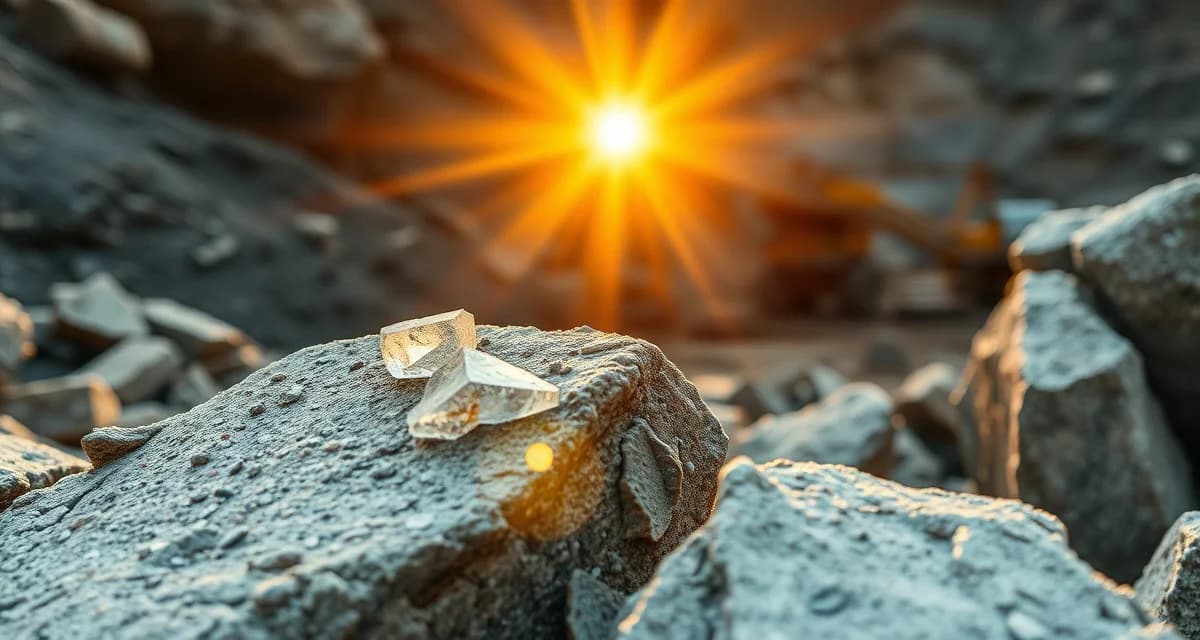
Where Does Granite Come From?
Where does granite come from is a common question among homeowners shopping for countertops.
Quick Definition: Granite forms deep underground when magma (molten rock) cools slowly over millions of years, allowing large mineral crystals to develop. It's quarried from massive deposits worldwide, with the top producing countries being Brazil, India, China, Italy, and the United States. After quarrying, raw granite blocks are shipped to processing facilities where they're cut into slabs, polished, and distributed to fabricators and slab yards.
TL;DR
- Granite is an igneous rock formed from slowly cooling magma deep in the Earth's crust
- It takes millions of years for granite to form -- the slow cooling creates visible crystals
- Brazil and India are the two largest granite exporters, together accounting for about 50% of global supply
- Granite is quarried by cutting massive blocks (typically 10-20 tons each) from the earth
- Blocks are shipped to processing plants where they're sliced into slabs (~1.2" or ~1.5" thick)
- Most granite in US kitchens is imported, with only a small percentage quarried domestically
- The journey from quarry to kitchen takes 3-6 months including quarrying, shipping, and fabrication
- Granite color and pattern are determined by its mineral composition and cooling conditions
How Granite Forms: The Geology
Granite is classified as a plutonic igneous rock, meaning it forms from magma that cools and solidifies deep beneath the Earth's surface (as opposed to volcanic rock, which cools on the surface).
Calculate your material waste savings
See exactly how much slab material and money you could save with optimized cutting layouts.
Try the free Waste CalculatorThe Formation Process
- Magma generation: Tectonic activity melts rock deep in the Earth's crust (10-30+ miles below the surface)
- Slow cooling: The magma rises into large underground chambers called plutons, where it cools very slowly -- over millions of years
- Crystal growth: The slow cooling allows individual mineral crystals to grow large enough to see with the naked eye (this is what gives granite its characteristic speckled appearance)
- Uplift and exposure: Over geological time, erosion and tectonic forces bring the granite closer to the surface where it can be quarried
What's Inside Granite
Granite is composed of several minerals, and the specific combination determines its color and pattern:
| Mineral | Percentage | Effect on Appearance |
|---|---|---|
| Feldspar | 40-65% | White, pink, gray, or red (most visible mineral) |
| Quartz | 20-40% | Clear, white, gray, or smoky crystals |
| Mica | 5-15% | Black (biotite) or silver (muscovite) flecks |
| Amphibole/hornblende | 0-10% | Dark green to black spots |
| Accessory minerals | <5% | Various colors, garnet, zircon, etc. |
Why colors vary: A granite rich in pink feldspar will be pink or salmon colored. One with white feldspar and lots of biotite mica will be black and white (like Salt and Pepper granite). Iron-rich minerals create reds and browns. The possibilities are nearly endless, which is why granite comes in such a wide range of colors.
Where Granite Is Quarried
Major Producing Countries
| Country | Key Granite Varieties | % of Global Export |
|---|---|---|
| Brazil | Giallo Ornamental, Blue Bahia, Cosmic Black, Patagonia | ~25% |
| India | Black Galaxy, Kashmir White, Tan Brown, Absolute Black | ~25% |
| China | G603, G654, G682, various grey/black granites | ~15% |
| Italy | Bianco Sardo, Rosa Beta, Grigio Sardo | ~5% |
| United States | Bethel White (VT), Deer Isle (ME), St. Cloud (MN) | ~3% |
| Norway | Blue Pearl, Emerald Pearl, Labrador | ~3% |
| Finland | Baltic Brown, Carmen Red | ~2% |
| South Africa | Belfast Black, African Red | ~2% |
| Others | Spain, Portugal, Turkey, Saudi Arabia, Angola | ~20% |
The US Granite Industry
The United States has granite quarries in several states:
- Vermont: Bethel White, Woodbury Gray
- Maine: Deer Isle, Jonesboro
- Minnesota: St. Cloud Red, Charcoal Black
- Georgia: Elberton granite (primarily used for monuments)
- New Hampshire: Conway granite
- South Dakota, Wisconsin, Texas -- smaller operations
However, US-quarried granite makes up only a small fraction of the countertop market. The vast majority of granite in American kitchens is imported, primarily from Brazil and India.
The Journey from Quarry to Kitchen
Step 1: Quarrying the Block
Granite is extracted from quarries using several methods:
Wire saw cutting: A continuous diamond-wire loop cuts through the rock. This is the most common modern method. The wire can cut along any plane, allowing precise block extraction.
Controlled drilling and splitting: A row of holes is drilled into the granite, then hydraulic splitters or small controlled charges separate the block from the surrounding rock.
Diamond chain saw: A large chainsaw with diamond-impregnated chains cuts through the granite face.
The result is a rough rectangular block weighing 10-20+ tons (approximately 5' x 5' x 10').
Step 2: Block Processing
The raw block is transported to a processing facility (sometimes at the quarry, sometimes in a different country) where it's sliced into slabs.
Gang saw or multiwire saw: The block is placed under a series of parallel blades or diamond wires that slice it into slabs simultaneously. A single block yields 15-30+ slabs.
Standard slab thicknesses:
- 2cm (~3/4") -- common in commercial applications
- 3cm (~1-1/4") -- standard for residential countertops in the US
Step 3: Surface Finishing
Raw-cut slabs are rough and gray. They're then finished to the desired surface:
| Finish | Process | Result |
|---|---|---|
| Polished | Progressive grinding with increasingly fine diamond pads (50-3000 grit) | Glossy, reflective surface showing full color depth |
| Honed | Same process but stopped before final polish | Matte, smooth surface |
| Leathered | Textured diamond brushes create a subtle surface pattern | Soft texture, muted color |
| Flamed | Intense heat causes surface crystals to pop, creating rough texture | Rough, slip-resistant surface (mostly outdoor use) |
Step 4: Export and Distribution
Finished slabs are packed in wooden crates (bundled in groups of 8-15 slabs) and shipped via container freight to destination countries. A standard shipping container holds approximately 20-25 tons of stone slabs.
Transit times from major origins to US ports:
- Brazil to US: 14-21 days by sea
- India to US: 25-35 days by sea
- China to US: 18-25 days by sea
- Italy to US: 14-20 days by sea
Step 5: Domestic Distribution
Slabs arrive at US ports (primarily Houston, Miami, Newark, and Long Beach) and are trucked to distributor warehouses and slab yards across the country.
Step 6: Fabrication and Installation
The local fabricator templates your kitchen, cuts the slab, profiles the edges, makes cutouts, and installs the finished countertop in your home.
Total time from quarry to kitchen: 3-6 months (including quarrying, processing, shipping, distribution, and fabrication)
For fabricators sourcing stone from multiple origins, tracking slab inventory and lead times is part of the daily workflow. SlabWise helps shops manage material sourcing alongside quoting and customer communication.
FAQ
Where does most kitchen granite come from? Brazil and India are the two largest sources of granite for US kitchens. Together they supply roughly 50% of the global granite trade.
Is granite a natural material? Yes. Granite is a 100% natural igneous rock formed deep in the Earth's crust over millions of years. It's quarried, cut, and polished but not manufactured.
How old is granite? Most commercial granite is between 300 million and 1 billion+ years old. Some granite formations date back over 2 billion years.
Is US-quarried granite better than imported? Not necessarily. Quality depends on the specific quarry and stone variety, not the country of origin. Some of the world's finest granites come from Brazil and Scandinavia; excellent varieties are also quarried in the US.
Why is some granite more expensive than others? Price depends on rarity (how common the stone is), quarry accessibility, processing difficulty, color demand, and transportation costs. Exotic colors from remote quarries cost more.
How much granite is quarried each year? Global granite production is estimated at over 50 million tons annually, with roughly 20-25% going to countertop applications and the remainder to building facades, flooring, monuments, and paving.
Can you visit a granite quarry? Some quarries offer tours, particularly in Vermont (Rock of Ages) and Georgia (Elberton). Most commercial quarries in Brazil and India don't offer public tours.
Is granite sustainable? Granite is a natural, abundant material that doesn't require chemical processing. However, quarrying has environmental impacts including habitat disruption, water use, and transportation emissions. The stone itself lasts virtually forever.
What's the difference between granite and marble geologically? Granite is igneous (formed from cooling magma). Marble is metamorphic (limestone transformed by heat and pressure). They have different mineral compositions, hardness levels, and performance characteristics.
Why does granite have spots and veins? The spots are individual mineral crystals (feldspar, quartz, mica) that grew during slow cooling. Veins are typically bands of different minerals that formed along fractures in the rock during or after formation.
Educate Your Customers Without Long Phone Calls
For fabricators, questions about stone origin and quality are common during the selection process. SlabWise's Customer Portal provides material education content so homeowners can learn about stone types before calling your shop -- reducing inquiry calls by up to 70%.
Try These Free Tools
- Cost Calculator -- Get instant countertop cost estimates by material, edge profile, and square footage.
- Compare Materials -- Side-by-side material comparison with pricing, durability, and maintenance ratings.
- Edge Profile Selector -- Browse edge profiles with cost impact and visual previews.
Sources & Further Reading
- Natural Stone Institute - Stone Thickness Guidelines
- International Surface Fabricators Association - Countertop Specifications
- National Kitchen & Bath Association - Countertop Installation Standards
- ASTM International - Standard Test Methods for Stone Thickness