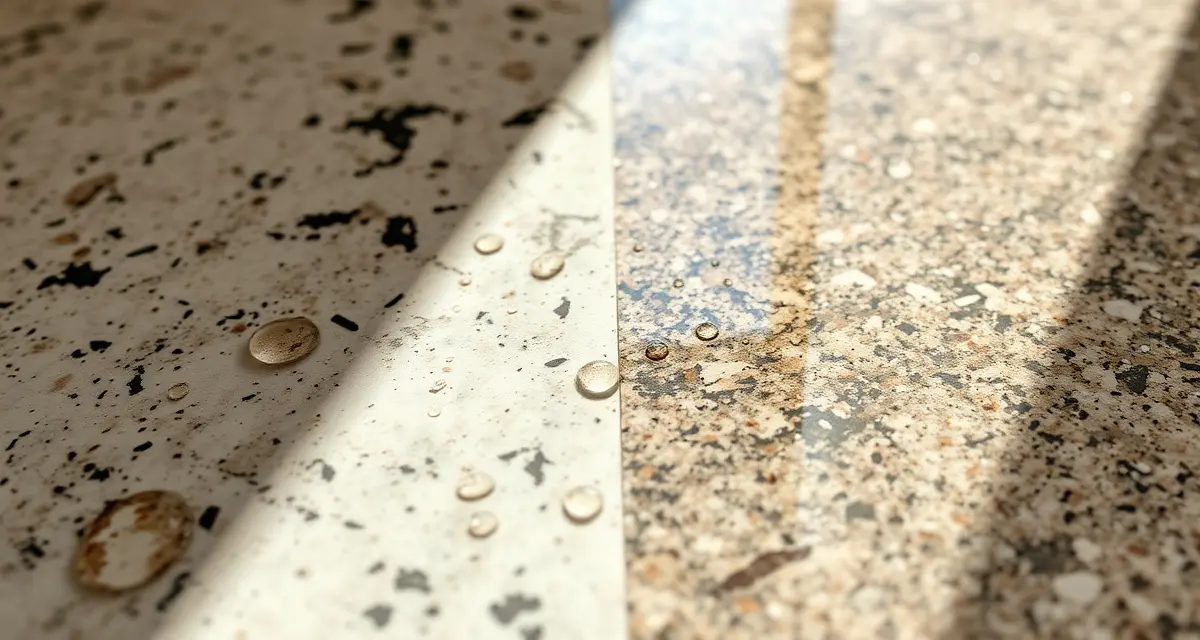
Do Granite Countertops Need Sealing?
Quick Answer
Most granite countertops benefit from sealing, but not all granite needs it equally. Lighter-colored, more porous granites (like Kashmir White or Colonial White) absorb liquids quickly and should be sealed every 6-12 months. Darker, denser granites (like Absolute Black or Uba Tuba) may barely absorb water at all and need sealing only every 2-3 years - or never. The water test tells you whether your granite currently needs sealing: pour water on the surface and see if it absorbs within 5 minutes.
TL;DR
- Most granite should be sealed every 1-2 years; some darker granites rarely or never need it
- Sealing takes 30 minutes and costs $15-$30 for a standard kitchen
- The water test (droplets on the surface for 5 minutes) tells you when resealing is needed
- Sealing prevents stains by filling microscopic pores - it doesn't make granite indestructible
- Unsealed granite can absorb oil, wine, coffee, and other liquids within minutes
- Your fabricator typically seals granite before installation; you maintain it after
- Impregnating sealers (penetrating) are far better than topical sealers (coatings)
- Sealing is DIY-friendly - no professional needed
How Granite Sealing Works
Granite is a natural stone with microscopic pores and capillaries throughout its surface. These pores are invisible to the naked eye but large enough for liquid molecules to enter. When coffee, oil, or wine sits on unsealed granite, it seeps into these pores and leaves a stain.
Calculate your material waste savings
See exactly how much slab material and money you could save with optimized cutting layouts.
Try the free Waste CalculatorA granite sealer is a liquid that penetrates those pores and deposits a barrier inside the stone. The sealer doesn't sit on top of the surface like a paint or varnish - it fills the tiny channels below the surface, blocking liquids from entering.
Two types of sealers:
| Sealer Type | How It Works | Durability | Recommended? |
|---|---|---|---|
| Impregnating (penetrating) | Absorbs into pores; creates barrier below the surface | 1-3 years | Yes - industry standard |
| Topical (coating) | Sits on top of the surface like a film | 3-12 months | No - can peel, cloud, and trap moisture |
Always use an impregnating sealer. Topical sealers change the appearance of the stone (adding shine or haziness), can peel in high-use areas, and trap moisture inside the stone.
The Water Test: Does Your Granite Need Sealing?
This takes 5 minutes and answers the question definitively.
- Pour about 2 tablespoons of water on the countertop surface
- Let it sit undisturbed for 5 minutes
- Wipe it up and observe:
| Result | What It Means | Action |
|---|---|---|
| Water beads on the surface; no darkening when wiped | Stone is well-sealed | No sealing needed now |
| Slight darkening visible after 5 minutes; fades within 10 minutes | Seal is weakening | Plan to reseal within 1-2 months |
| Immediate darkening; water absorbs within 1-2 minutes | Stone is unsealed or seal is depleted | Seal immediately |
Pro tip: Test in a high-use area (near the sink, around the stove) where the seal wears fastest, not in a corner that rarely gets used.
Which Granites Need Sealing Most
Granite porosity varies dramatically by color and variety. As a general rule, lighter-colored granites with visible grain structure are more porous than dark, fine-grained varieties.
High Porosity - Seal Every 6-12 Months
- Kashmir White
- Colonial White
- Bianco Romano
- River White
- Alaska White
- Moon White
- Dallas White
Moderate Porosity - Seal Every 12-18 Months
- Santa Cecilia
- Giallo Ornamental
- New Venetian Gold
- Typhoon Bordeaux
- Golden Oak
- Juparana
Low Porosity - Seal Every 2-3 Years (or Never)
- Absolute Black
- Uba Tuba
- Black Galaxy
- Black Pearl
- Baltic Brown
- Blue Pearl
Some very dense, dark granites are essentially non-porous and perform the water test as well as quartz. If your Absolute Black granite never absorbs water, you genuinely don't need to seal it.
How to Seal Granite Countertops (Step by Step)
What You'll Need
- Impregnating granite sealer (brands: StoneTech BulletProof, Tuff Duck, Tenax Proseal, 511 Porous Plus)
- Clean, lint-free cloths or microfiber towels
- Spray bottle (if the sealer isn't already in one)
- 30 minutes of time
The Process
-
Clean the surface thoroughly. Use a granite-safe cleaner or isopropyl alcohol to remove any residue, grease, or cleaning product buildup. The surface must be completely clean and dry.
-
Apply the sealer. Spray or pour a thin, even layer of sealer across a 3-4 foot section. Don't flood the surface - a light, even application works best.
-
Let it absorb. Wait 5-10 minutes (check your specific sealer's instructions). The sealer needs time to penetrate the pores.
-
Apply a second coat (on the same section). Most sealers recommend two coats for optimal protection. Wait another 5-10 minutes.
-
Buff off the excess. Using a clean, dry cloth, wipe away all remaining sealer from the surface. Any sealer left sitting on top will dry into a hazy film.
-
Repeat across the entire counter in manageable sections.
-
Wait 24 hours before exposing the countertop to water or spills. The sealer needs time to fully cure.
Common Sealing Mistakes
- Applying too much - More sealer doesn't mean better protection. Excess sealer leaves a hazy residue.
- Not buffing off the excess - The most common mistake; leaves a cloudy, streaky appearance.
- Sealing a dirty surface - Residue on the surface prevents the sealer from penetrating properly.
- Using a topical sealer - Creates a film that peels and traps moisture.
- Sealing when the stone is wet - Water in the pores blocks the sealer from absorbing.
What Sealing Does and Doesn't Do
What Sealing Does
- Prevents most liquid stains (oil, wine, coffee, juice)
- Gives you time to wipe up spills before they absorb
- Reduces water absorption and mineral staining
- Helps maintain the granite's appearance over time
What Sealing Doesn't Do
- Prevent etching - Granite rarely etches (it's not as sensitive as marble), but sealer wouldn't help if it did
- Make granite scratch-proof - Sealer is below the surface; it has no effect on surface hardness
- Prevent heat damage - Sealer doesn't insulate against thermal shock
- Last forever - Sealer breaks down over time from cleaning, use, and UV exposure
- Fix existing stains - Seal after removing stains, not over them
Professional vs. DIY Sealing
| Factor | DIY Sealing | Professional Sealing |
|---|---|---|
| Cost | $15-$30 per application | $100-$300 per application |
| Time | 30-45 minutes | 30-45 minutes (same process) |
| Quality | Excellent if instructions followed | Excellent |
| Convenience | Must do it yourself | They come to you |
| Recommended? | Yes - straightforward process | Only if you strongly prefer hands-off |
Sealing granite is one of the easiest DIY maintenance tasks in home improvement. The professional adds no value beyond convenience - they're using the same products and technique you would.
How do I know if my granite was sealed by the fabricator?
Most fabrication shops seal granite before installation. Ask your fabricator to confirm. If you're unsure, do the water test. If water absorbs quickly, the granite either wasn't sealed or the seal has worn off.
Can I over-seal granite?
Not in a damaging way, but excess sealer that isn't buffed off will leave a hazy, cloudy film on the surface. If this happens, wipe with isopropyl alcohol and a clean cloth to remove the residue.
Does sealed granite still stain?
Sealed granite is stain-resistant, not stain-proof. Sealing buys you time - instead of a spill absorbing in 30 seconds, it might take 30 minutes or more. You still need to wipe up spills, especially oil-based substances.
How long does granite sealer last?
Most quality impregnating sealers last 1-3 years depending on the granite's porosity, how heavily the countertop is used, and what cleaners you use. The water test is the reliable way to check.
Will sealing change the color of my granite?
A good impregnating sealer should not change the appearance of your granite. Some low-quality sealers or "enhancing" sealers are designed to darken the stone or add shine - avoid these unless you specifically want that effect.
Can I seal granite too often?
Sealing more often than needed won't damage the stone - the excess sealer simply won't absorb because the pores are already filled. It's a waste of product but not harmful. The water test prevents unnecessary applications.
What cleaners should I use on sealed granite?
Use pH-neutral stone cleaners or a simple solution of water and a few drops of dish soap. Avoid vinegar, bleach, ammonia-based cleaners (Windex), and abrasive products. Acidic and alkaline cleaners can strip the sealer faster.
Does quartz need sealing like granite?
No. Quartz is engineered with resin that makes it non-porous. Sealing quartz is unnecessary and can actually leave a residue on the surface. This is one of quartz's main advantages over natural stone.
Should I seal the granite backsplash too?
If your backsplash is the same granite as your countertops, seal it at the same time. Backsplash areas near the stove are exposed to grease and cooking splatter that can stain unsealed granite.
Is there a "seal once and forget" option?
Some premium sealers claim 10-15 year or "lifetime" protection. These work better than standard sealers but are not truly permanent. Even with premium sealers, do the water test annually to verify protection is still active.
Keep Your Granite Protected
Sealing is the single most important maintenance task for granite countertop owners. It takes 30 minutes, costs under $30, and prevents stains that could cost hundreds to remove. Put it on your calendar every 12 months and your granite will look as good in 20 years as it does today.
Considering new granite countertops? SlabWise-powered fabrication shops give you accurate quotes in 3 minutes and seal your granite before installation as standard practice.
Free to use. See granite pricing for your kitchen in minutes.
Try These Free Tools
- Cost Calculator -- Get instant countertop cost estimates by material, edge profile, and square footage.
- Compare Materials -- Side-by-side material comparison with pricing, durability, and maintenance ratings.
- Edge Profile Selector -- Browse edge profiles with cost impact and visual previews.
Sources & Further Reading
- Natural Stone Institute - Stone Thickness Guidelines
- International Surface Fabricators Association - Countertop Specifications
- National Kitchen & Bath Association - Countertop Installation Standards
- ASTM International - Standard Test Methods for Stone Thickness