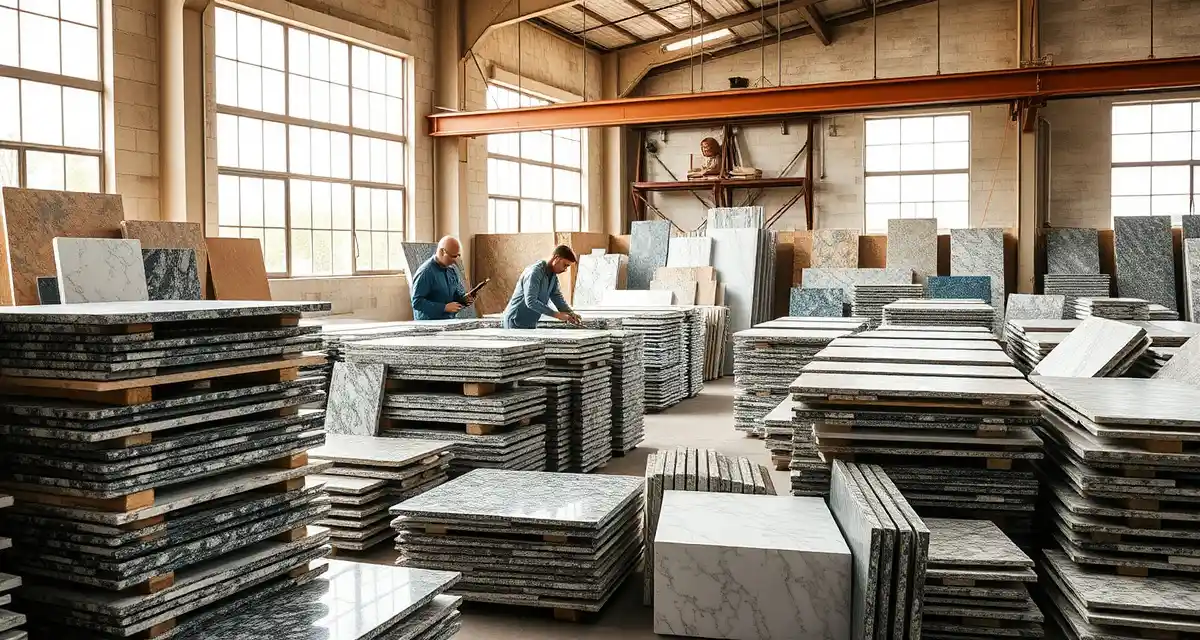
What Happens to Leftover Stone?
After your countertops are cut from a slab, the remaining stone - called remnants - gets stored, sold, repurposed, or disposed of. Most fabrication shops keep usable remnants in inventory for smaller future projects. Larger offcuts can become bathroom vanities, fireplace hearths, or tabletops. Smaller pieces may be crushed for landscaping or sent to disposal. What happens depends on the size of the leftover piece and the fabricator's storage capacity.
TL;DR
- Leftover stone from countertop cutting is called a remnant
- Usable remnants (typically over 4 sq ft) are stored and sold for smaller projects
- Remnants sell for 40-60% of full slab price per square foot
- Small offcuts get crushed for aggregate or sent to landfill
- Stone dust and slurry require proper environmental disposal
- Some homeowners request leftover pieces for cutting boards, trivets, or coasters
- Better slab nesting reduces the amount of leftover material in the first place
The Lifecycle of Leftover Stone
When a fabricator cuts your kitchen countertop from a full slab, typically 20-35% of the slab material becomes leftover. Here's what happens to each category of waste:
Calculate your material waste savings
See exactly how much slab material and money you could save with optimized cutting layouts.
Try the free Waste CalculatorLarge Remnants (Over 8 Square Feet)
These are the most valuable leftovers. A piece 24" x 48" or larger can easily become:
- Bathroom vanity tops (most vanities need 6-15 sq ft)
- Laundry room counters
- Small bar tops
- Desk surfaces
- Side tables
Fabrication shops inventory these remnants and sell them at discounted prices. For homeowners on a budget, remnant shopping is one of the best ways to get premium stone at a lower cost.
Medium Remnants (4-8 Square Feet)
Still useful, but the options narrow:
- Small bathroom vanities
- Windowsills
- Fireplace hearths
- Shelf surfaces
- Sample pieces for showroom display
Small Offcuts (Under 4 Square Feet)
These are harder to sell but not useless:
- Cutting boards and cheese boards
- Trivets and hot pads
- Coasters
- Soap dishes
- Door thresholds and saddles
- Repair patches for future chips
Dust and Slurry
The cutting process generates fine stone dust mixed with water (slurry). This material requires proper handling:
- Water is recycled through filtration systems in the shop
- Dried slurry cake gets disposed of according to local environmental regulations
- Some dried stone dust can be used as soil amendment (limestone and marble dust specifically)
How Fabrication Shops Handle Remnants
Remnant Storage
Most shops dedicate significant space to remnant storage - often an A-frame rack system in their yard or warehouse. A busy shop might have 50-200 remnants in inventory at any given time.
| Storage Factor | Details |
|---|---|
| Typical rack capacity | 50-200 pieces |
| Space required | 500-2,000 sq ft |
| Organization method | By material type, color, and size |
| Average hold time | 3-12 months |
| Insurance considerations | Remnants need coverage for theft/damage |
Remnant Pricing
Shops price remnants based on the original slab cost and the piece size:
| Original Slab Price | Remnant Discount | Remnant Price per Sq Ft |
|---|---|---|
| $40/sq ft | 40-50% off | $20-$24/sq ft |
| $60/sq ft | 40-50% off | $30-$36/sq ft |
| $80/sq ft | 40-60% off | $32-$48/sq ft |
| $100/sq ft | 50-60% off | $40-$60/sq ft |
| $120/sq ft | 50-60% off | $48-$72/sq ft |
Higher-end materials tend to see larger percentage discounts because shops need to move inventory. A remnant of Calacatta marble sitting for months ties up thousands of dollars in capital.
Remnant Sales Channels
- In-shop sales - Walk-in customers browse the remnant yard
- Online listings - Many shops list remnants on their website or platforms like Facebook Marketplace
- Contractor partnerships - Builders and remodelers buy remnants for smaller projects
- Fabricator-to-fabricator sales - Some shops sell remnants to other fabricators
Can You Keep Your Leftover Stone?
Yes - and you should ask about this when signing your fabrication contract. Many homeowners don't realize they can request leftover pieces from their slab.
What to Ask Your Fabricator
- "Can I keep any usable remnants from my slab?"
- "Can you cut me a few cutting boards or trivets from the waste?"
- "Is there a charge for custom-cutting small pieces from my leftovers?"
Common Homeowner Requests
| Item | Approximate Size | Additional Fabrication Cost |
|---|---|---|
| Cutting board | 12" x 18" | $50-$100 |
| Cheese board | 8" x 16" | $40-$80 |
| Set of 4 coasters | 4" x 4" each | $40-$80 |
| Trivet | 8" x 8" | $30-$60 |
| Soap dish | 4" x 6" | $25-$50 |
| Threshold | 4" x 36" | $40-$75 |
Some fabricators include one or two small items as a courtesy. Others charge a nominal fee for the extra cutting and polishing time. It never hurts to ask.
Important: You Paid for the Whole Slab
Here's something many homeowners don't realize: when you buy a slab for your kitchen, you're paying for the entire slab - not just the pieces that end up on your cabinets. This means the remnants technically belong to you.
In practice, most fabrication contracts state that unused material becomes the property of the fabricator. Read your contract carefully. If keeping remnants matters to you, negotiate this before signing.
The Environmental Side of Leftover Stone
Water and Slurry Management
Stone cutting uses large amounts of water to control dust and cool the saw blade. A busy shop may use 500-1,000 gallons per day. Modern shops recycle 80-95% of this water through clarification and filtration systems.
The remaining slurry - a mix of water and fine stone particles - must be disposed of properly. Dumping slurry into storm drains is illegal in most jurisdictions and can result in significant fines.
Solid Waste Disposal
Small stone offcuts that can't be sold or repurposed go to landfill. Stone is inert (it doesn't leach chemicals), so it's classified as construction and demolition waste in most states.
Creative Reuse Ideas
Some shops and communities have found creative uses for stone waste:
- Landscaping: Crushed stone makes attractive ground cover and drainage material
- Mosaic art: Small pieces of granite and marble are used in mosaic projects
- Concrete aggregate: Crushed stone adds strength and visual interest to concrete
- Garden stepping stones: Flat offcuts become functional garden paths
- Donation: Some shops donate remnants to schools, community workshops, or Habitat for Humanity
How Technology Reduces Leftover Stone
The best way to deal with leftover stone is to create less of it. Modern fabrication technology attacks the waste problem at several levels:
Better Nesting Software
AI-powered nesting software like SlabWise analyzes the slab dimensions, defect locations, and job requirements to find the optimal cutting layout. This typically achieves 10-15% better material yield compared to manual layout - meaning significantly less leftover material per slab.
Multi-Job Nesting
Instead of nesting one job on one slab, advanced software can nest pieces from multiple jobs onto the same slab. This fills in the gaps that single-job nesting leaves behind.
Remnant Tracking
Software that tracks remnant inventory helps shops match upcoming small jobs with existing remnants, reducing the need to cut new slabs for small projects.
Digital Templating
Precise digital templates mean pieces are cut to exact dimensions the first time. Inaccurate templates create waste through remakes - each remake wastes an entire set of countertop pieces.
FAQ
Does the fabricator keep my leftover stone?
By default, most fabrication contracts give the shop ownership of unused material. If you want to keep remnants, negotiate this before signing your contract.
Can I buy remnant stone for a bathroom vanity?
Absolutely. Remnant shopping is one of the best ways to get quality stone at 40-60% below full slab pricing. Call local fabrication shops and ask about their remnant inventory.
How much leftover stone is typical for a kitchen project?
For a standard kitchen (40 sq ft of countertop), expect 15-30 sq ft of leftover material, depending on the slab size and how the pieces nest.
Can the fabricator make me a cutting board from my leftovers?
Many fabricators offer this service. Expect to pay $50-$100 for the additional cutting and edge polishing. Ask when you sign your fabrication contract.
Is leftover stone bad for the environment?
Stone is inert and doesn't leach chemicals. The main environmental concerns are slurry disposal (water mixed with stone dust) and the energy used in processing. Responsible shops recycle water and dispose of waste properly.
How long do fabrication shops keep remnants?
Typically 3-12 months. If a remnant doesn't sell within a year, many shops either discount it heavily or dispose of it.
Can I visit a fabrication shop to look at remnants?
Most shops welcome remnant shoppers. Call ahead - some have specific hours or require an appointment to browse the remnant yard.
Are remnants the same quality as a full slab?
Yes. A remnant is simply a leftover piece from a full slab. The material quality is identical. Just inspect for any edge damage from the cutting process.
What's the smallest useful remnant size?
For countertop projects, most fabricators consider anything under 4 square feet too small to stock. For specialty items like thresholds or cutting boards, even smaller pieces have value.
Can leftover stone be used for outdoor projects?
Some stones (granite, quartzite) handle outdoor exposure well. Others (marble, some engineered quartz) can be damaged by UV exposure or freeze-thaw cycles. Ask your fabricator about the specific material.
Do fabricators donate leftover stone?
Some do. Habitat for Humanity ReStores, community workshops, and vocational schools sometimes accept stone remnants. It's worth asking your fabricator.
How do I find remnants for sale near me?
Search "[your city] stone remnants" or call local fabrication shops directly. Some shops list remnants on Facebook Marketplace or Craigslist.
Minimize Waste, Maximize Profit
SlabWise's AI Slab Nesting reduces leftover material by 10-15% compared to manual layout - turning waste into profit for fabrication shops. Try it free for 14 days at slabwise.com.
Try These Free Tools
- Nesting Optimizer -- AI-powered slab layout that maximizes yield considering vein direction and defects.
- Defect Mapping -- Upload a slab photo and AI maps every fissure, pit, and color issue.
- Value Engineering -- Find dollar-quantified suggestions to save material without cutting margin.