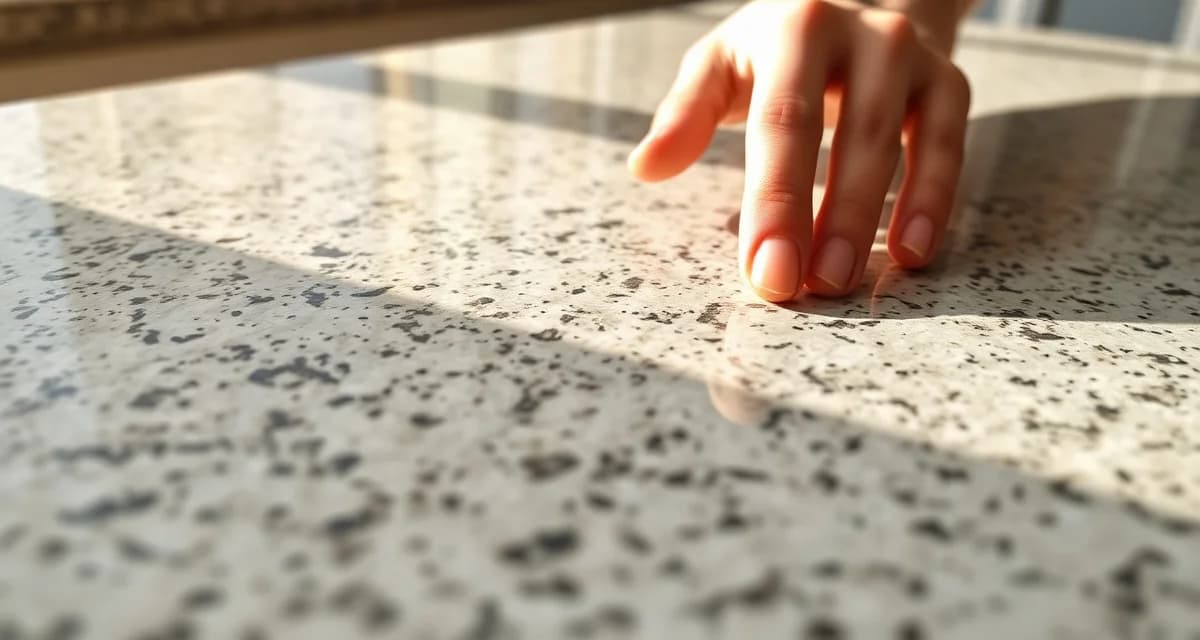
What Is Leathered Granite?
Leathered granite is a surface finish that gives the stone a soft, textured feel similar to leather. The finish is created by running diamond-tipped brushes across a honed (matte) granite surface to produce a slightly dimpled, pebbled texture. Unlike polished granite's mirror-like sheen, leathered granite has a low-luster, matte appearance that hides fingerprints, water spots, and smudges while retaining the stone's natural color depth. It's become increasingly popular for kitchens that want a natural, less formal look.
TL;DR
- Leathered finish gives granite a soft, textured surface with a subtle sheen
- Created by brushing diamond-tipped tools across honed granite
- Hides fingerprints, water marks, and smudges better than polished granite
- Colors appear slightly muted compared to polished but richer than honed
- Costs $5-$15 more per square foot than polished finish due to extra processing
- Works best on dark, coarsely-grained granites (Black Pearl, Cosmic Black, Steel Gray)
- Requires sealing since the textured surface increases porosity slightly
- Growing in popularity for transitional and modern farmhouse kitchens
How Leathered Finish Is Created
The leathering process starts with a honed (matte) granite surface:
Calculate your material waste savings
See exactly how much slab material and money you could save with optimized cutting layouts.
Try the free Waste Calculator- Honing: The slab is ground smooth using progressively finer diamond pads until the surface is flat but not reflective
- Brushing: Industrial diamond-tipped brushes or silicon carbide brushes are run repeatedly over the honed surface
- Texturing: The softer minerals in the granite wear away slightly faster than the harder minerals, creating the characteristic dimpled, textured feel
- Finishing: The surface is cleaned and inspected for consistency across the entire slab
The result depends heavily on the granite's mineral composition. Granites with coarse, varied mineral content produce more dramatic leather texturing. Fine-grained, uniform granites produce a more subtle effect.
Leathered vs. Polished vs. Honed: Complete Comparison
| Characteristic | Polished | Honed | Leathered |
|---|---|---|---|
| Appearance | Mirror-like, glossy | Matte, smooth | Matte, textured |
| Texture | Smooth, glass-like | Smooth, velvety | Dimpled, pebbled |
| Color depth | Maximum | Muted/lighter | Moderate (between polished and honed) |
| Fingerprint visibility | High | Low | Very low |
| Water spot visibility | High | Moderate | Low |
| Scratch visibility | High | Low | Very low |
| Stain resistance | Good (pores sealed by polishing) | Lower (more porous) | Lower (textured surface) |
| Maintenance | Moderate | Higher | Higher |
| Cost per sq ft | Base price | Same as polished | $5-$15 more |
| Best for | Formal/traditional kitchens | Casual/contemporary | Transitional/modern farmhouse |
Which Granites Look Best Leathered?
The leathered finish doesn't work equally well on all granites. The best candidates have coarse grain structure and dark or medium coloring:
Excellent Candidates
- Black Pearl - The gold and silver flecks become subtle shimmer points against the textured black background
- Cosmic Black - The flowing pattern gains a natural, organic quality
- Steel Gray - The uniform gray becomes warm and inviting with texture
- Titanium - Bold veining stands out dramatically against the textured surface
- Asterix - The black and white mineral contrast is enhanced
- Matrix - Brown and black tones create a rich, earthy feel
Good Candidates
- Absolute Black - Subtle texture on a uniform dark surface; understated
- Blue Pearl - The blue iridescence is muted but still present
- Tan Brown - Warm browns gain an organic, natural feel
- Uba Tuba - Dark green-black with gold flecks; texture adds depth
Poor Candidates
- Kashmir White - Light colors wash out; texture looks rough rather than refined
- Colonial White - Too pale and uniform for leathering to add interest
- River White - The subtle gray veining gets lost in the matte texture
- Most white or cream granites - Leathering makes them look unfinished
Rule of thumb: If the granite has bold mineral contrast and medium-to-dark coloring, leathering will enhance it. If it's light, subtle, and uniform, stick with polished or honed.
Practical Advantages of Leathered Granite
Hides daily wear: The textured surface masks fingerprints, water rings, and light scratches that would be obvious on polished granite. For busy kitchens with frequent use, this means the countertop looks cleaner with less effort.
Non-slip feel: The dimpled texture provides better grip than polished surfaces. This is particularly valuable around the sink area where wet hands are common.
Natural aesthetic: Leathered granite looks and feels like what you'd expect natural stone to look like. It pairs well with natural wood cabinets, matte hardware, and organic kitchen designs.
Warm to the touch: While all stone countertops are room temperature, the leathered texture feels warmer than the cool, slick surface of polished stone.
Maintenance Considerations
Leathered granite requires slightly more maintenance than polished:
Sealing: The textured surface creates micro-peaks and valleys that slightly increase the stone's effective surface area, making it marginally more porous. Seal every 6-12 months versus every 1-3 years for polished.
Cleaning: Food can settle into the texture's low points. A brush or textured cloth works better than a flat wipe. Use a pH-neutral stone cleaner and scrub gently in circular motions.
Stain risk: Spills sit in the texture longer than on a smooth surface, giving them more time to absorb. Wipe up spills promptly, especially oil and wine.
Color-enhancing sealer: Many homeowners apply a color-enhancing sealer to leathered granite. This darkens the stone slightly and brings out the natural color that the leathering process mutes. It's optional but popular, especially on medium-toned granites.
Cost of Leathered Granite
Leathered granite costs more than polished because the leathering process adds an extra fabrication step:
| Cost Component | Polished | Leathered | Difference |
|---|---|---|---|
| Slab material | $40-$100/sq ft | $40-$100/sq ft | Same |
| Fabrication | $25-$45/sq ft | $30-$60/sq ft | $5-$15 more |
| Total installed | $65-$145/sq ft | $70-$160/sq ft | $5-$15 more |
| 40 sq ft kitchen | $2,600-$5,800 | $2,800-$6,400 | $200-$600 more |
Not all fabricators offer leathered finishing. The process requires specific diamond-tipped brushing equipment that some smaller shops don't have. Ask about leathering capabilities before selecting a fabricator.
FAQ
Is leathered granite harder to clean? Somewhat. The textured surface can trap crumbs and residue in its dimples. Use a brush or textured cloth instead of a flat wipe. Overall, daily cleaning takes an extra minute compared to polished granite.
Does leathered granite stain more easily? The textured surface gives spills slightly more time to absorb, but with proper sealing, stain resistance is comparable to polished granite. The key is regular sealing (every 6-12 months) and prompt spill cleanup.
Can any granite be leathered? Technically yes, but not all granites look good leathered. Dark, coarse-grained granites produce the best results. Light, fine-grained granites tend to look washed out or rough after leathering.
Is leathered the same as brushed? The terms are often used interchangeably, but there's a subtle difference. "Leathered" typically refers to a more uniform, pebbled texture created with diamond brushes. "Brushed" can describe a more linear, directional texture. In practice, most fabricators treat them as the same finish.
Can I change a polished countertop to leathered? Technically possible but impractical for installed countertops. The slab would need to be removed, sent back to the fabrication shop, honed, then brushed. The cost would approach that of a new countertop. It's better to choose your finish during the initial fabrication.
Does leathered granite show etching? Granite rarely etches (unlike marble). On the rare occasion it does, the leathered texture makes etch marks much less visible than on a polished surface. This is one of the practical advantages of the finish.
Is leathered granite trendy or timeless? Leathered finishes have been growing in popularity since the early 2010s and are now considered a mainstream option. They pair well with both modern and traditional kitchens. While they're more fashionable than they were 20 years ago, there's no sign they're a short-lived trend.
Can you leather quartz countertops? Some quartz manufacturers offer textured finishes similar to leathering, but the process is different since quartz is engineered. Caesarstone offers "Rough" textures, and Silestone has "Suede" finish options. Check with your quartz brand for available surface textures.
Does leathered granite increase home value? Leathered granite is a premium finish that appeals to design-conscious buyers. However, some buyers prefer the classic look of polished granite. In resale terms, leathered is neutral to slightly positive for home value.
Estimate Your Countertop Project
Considering leathered granite for your kitchen? Use our cost calculator to compare leathered versus polished pricing for your specific layout and material choice.
[Try the SlabWise Cost Calculator →]
Try These Free Tools
- Cost Calculator -- Get instant countertop cost estimates by material, edge profile, and square footage.
- Compare Materials -- Side-by-side material comparison with pricing, durability, and maintenance ratings.
- Edge Profile Selector -- Browse edge profiles with cost impact and visual previews.