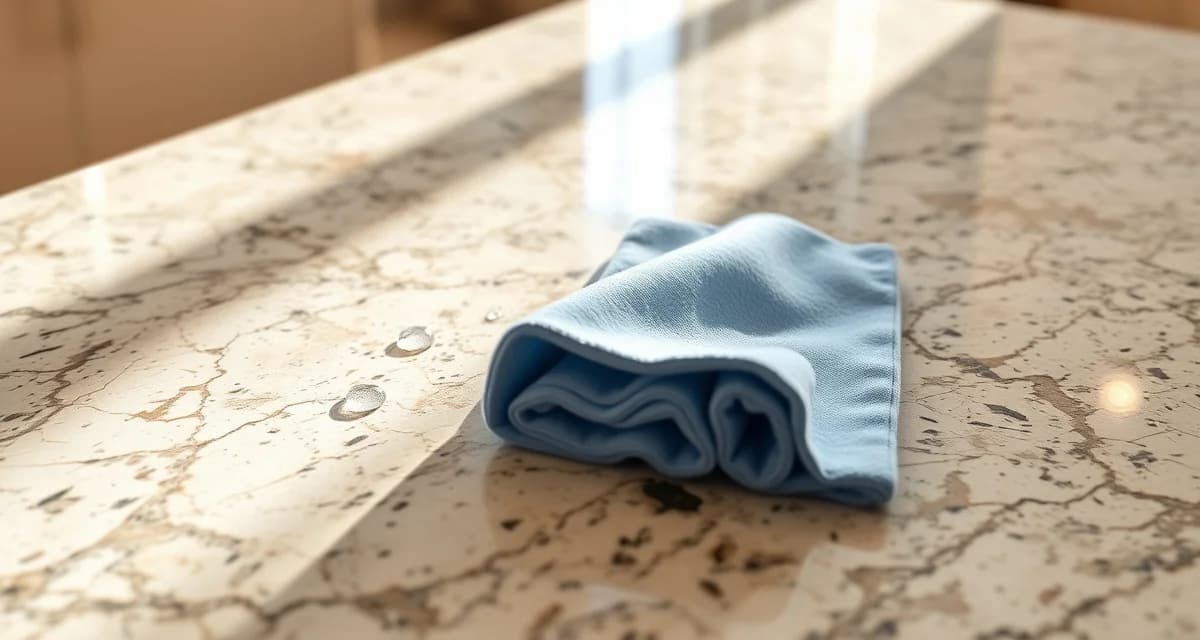
Clorox Wipes on Stone Countertops?
Quick Definition
Clorox Disinfecting Wipes are not safe for natural stone countertops like marble, granite, or limestone. They contain citric acid, which etches calcium-based stone and strips granite sealers. For engineered quartz, Clorox wipes are less risky but still not ideal for daily use - the chemical residue can dull the surface over time. The safest disinfecting option for all countertop types is 70% isopropyl alcohol or a pH-neutral stone-specific cleaner.
TL;DR
- Clorox wipes contain citric acid - this etches marble, limestone, and travertine on contact
- On granite, Clorox wipes strip the protective sealer, leaving the stone vulnerable to stains
- On quartz, occasional use is less likely to cause immediate damage, but daily use can dull the finish over time
- On marble, even a single use can cause visible etching (dull spots)
- The active ingredient varies by product - not all Clorox wipes contain bleach, but most contain acids
- Better alternatives exist - isopropyl alcohol wipes, pH-neutral stone cleaners, or plain soap and water
- Post-COVID cleaning habits increased Clorox wipe usage and countertop damage claims significantly
What Is Actually in Clorox Wipes?
Understanding the ingredients explains why these wipes damage stone. There are several Clorox wipe products, and their ingredients differ:
Calculate your material waste savings
See exactly how much slab material and money you could save with optimized cutting layouts.
Try the free Waste CalculatorClorox Disinfecting Wipes (Original)
The most common product - the canister you see everywhere.
Active ingredient: Quaternary ammonium compound (alkyl dimethyl benzyl ammonium chloride) at 0.184%
Other ingredients that matter for countertops:
- Citric acid (acidic - damages stone)
- Sodium lauryl sulfate (surfactant - generally safe)
- Propylene glycol (solvent - generally safe)
The citric acid is the main problem for natural stone. It has a pH low enough to etch marble and degrade granite sealer.
Clorox Disinfecting Wipes with Bleach
A separate product that actually contains sodium hypochlorite.
Active ingredient: Sodium hypochlorite (bleach)
This product poses a dual threat: both the bleach and the accompanying acid ingredients can damage countertops. The bleach component adds the risk of discoloration, especially on darker materials.
Clorox Compostable Cleaning Wipes
A newer product line with plant-based ingredients. These may contain citric acid or other acids depending on the specific formulation. Always check the label.
Impact by Countertop Material
Marble: Do Not Use (High Risk)
Clorox wipes are the single worst common household product for marble countertops.
What happens:
- Citric acid in the wipes reacts with the calcium carbonate in marble instantly
- Visible etching (dull, rough spots) can appear after a single use
- The damage is a chemical reaction - it cannot be cleaned away
- Each subsequent use creates more etch marks
The damage looks like: Hazy, lighter patches where the wipe contacted the surface. On a polished marble countertop, these spots are clearly visible because they contrast with the surrounding gloss.
Repair options: Professional honing and re-polishing ($200-$500+). Minor etch marks can sometimes be addressed with marble polishing powder and a soft cloth, but deep etching requires professional work.
Granite: Do Not Use (Moderate-High Risk)
Granite is harder than marble and less susceptible to etching, but Clorox wipes still cause damage.
What happens:
- Citric acid degrades the granite sealer with each use
- Once the sealer is compromised, the granite absorbs liquids and stains
- Some granite types with calcium-rich mineral inclusions will also etch
- Lighter colored granites tend to be more vulnerable
The damage looks like: Initially invisible (sealer degradation). Over weeks of use, you may notice the granite absorbing water rather than beading it up. Staining from coffee, wine, or oil follows because the stone is no longer protected.
Repair options: Stop using Clorox wipes, deep clean the surface with a pH-neutral cleaner, and reseal the granite ($15-$30 for DIY resealing).
Quartzite: Do Not Use (Moderate Risk)
True quartzite is harder than granite and resists etching well, but it is still sealed - and the sealer is vulnerable.
What happens:
- Citric acid strips the sealer, similar to granite
- The quartzite stone itself is resistant to acid etching
- Once unsealed, quartzite can absorb stains (it is less porous than granite but not stain-proof)
Repair options: Reseal the quartzite surface after stopping Clorox wipe use.
Engineered Quartz: Use Cautiously (Lower Risk)
Engineered quartz (Caesarstone, Cambria, Silestone) is the most tolerant of Clorox wipes, but it is not immune to problems.
What happens with occasional use:
- Minimal to no visible damage from infrequent use
- The quaternary ammonium compound in the wipes is effective at killing germs without much chemical harm to the resin
What happens with daily use:
- Chemical residue builds up on the surface, creating a hazy film
- The citric acid may begin to interact with the resin binder over time
- Darker quartz colors may develop lighter patches from the combined chemical exposure
- Surface gloss can diminish
The bottom line: Occasional use (once a week or less) is unlikely to cause problems on quartz. Daily use as your primary cleaner is not recommended.
Other Materials
| Material | Clorox Wipes Safe? | Notes |
|---|---|---|
| Laminate (Formica) | Generally safe | Wipe dry to prevent moisture damage at seams |
| Solid surface (Corian) | Generally safe | Check manufacturer guidelines |
| Porcelain slabs | Generally safe | Resistant to acids |
| Butcher block | Not recommended | Can discolor and dry out wood |
| Concrete | Not recommended | Acid can etch and strip sealer |
| Stainless steel | Safe | Wipe in direction of grain, dry after |
| Tile with grout | Risky | Safe for tile, may discolor grout |
Why This Problem Got Worse After 2020
During the COVID-19 pandemic, Clorox wipe usage skyrocketed. People who had never used disinfecting wipes started wiping down their countertops multiple times daily. The result was a surge in countertop damage:
- Fabricators reported increased calls about dulling, staining, and etching
- Stone restoration companies saw 3-5x increases in etch removal requests
- Customers often did not connect the damage to the Clorox wipes because the damage accumulated gradually
This trend continued even after the pandemic because the daily wipe-down habit persisted. Many homeowners still use Clorox wipes as their primary countertop cleaner without realizing the cumulative harm.
Safe Alternatives That Actually Disinfect
You do not need to sacrifice hygiene to protect your countertops. These options kill germs without damaging stone:
For All Stone Types
Isopropyl alcohol (70%) spray:
- Fill a spray bottle with 70% isopropyl alcohol (available at any drugstore)
- Spray directly on the countertop surface
- Let sit for 3-5 minutes (this is the CDC-recommended contact time)
- Wipe clean with a microfiber cloth
This kills bacteria, most viruses, and common kitchen pathogens. It evaporates cleanly with zero residue and no chemical reaction with stone.
pH-neutral stone cleaner + disinfecting: Use a stone-specific cleaner for regular cleaning. For disinfecting after raw meat handling, follow up with an isopropyl alcohol spray.
For Quartz Specifically
Quartz-specific disinfecting wipes: Some manufacturers have approved specific wipe products. Check your quartz brand's care guide.
Dish soap and warm water + alcohol: Clean with soap and water first, then follow with an alcohol spray for disinfection.
Wipe Alternatives
If you prefer the convenience of a pre-moistened wipe, these are safer options:
| Product | Stone-Safe? | Disinfects? | Notes |
|---|---|---|---|
| Seventh Generation Disinfecting Wipes | Better than Clorox (check pH) | Yes | Thymol-based, verify current formula |
| Method All-Purpose Wipes | Generally safer | Light cleaning only | Not a strong disinfectant |
| DIY alcohol wipes (paper towels + 70% IPA) | Yes, all stone types | Yes | Most cost-effective and reliable |
| Weiman Granite Wipes | Yes, designed for stone | Light cleaning | Not a strong disinfectant |
What Fabricators Should Communicate
The Clorox wipe conversation needs to happen at installation. Here is how to handle it:
Name the product specifically. Saying "avoid harsh chemicals" is too vague. Customers do not think of Clorox wipes as harsh chemicals - they think of them as normal cleaning products. Say "Do not use Clorox wipes on this countertop" directly.
Explain why. A brief explanation (the wipes contain acid that damages stone) is more convincing than a simple "do not use." Customers are more likely to follow advice they understand.
Provide alternatives. Hand the customer a spray bottle of 70% isopropyl alcohol or a stone-specific cleaner. Giving them a physical replacement product is more effective than telling them to go buy something.
Document it. Include the cleaning restrictions in your written care guide. If a warranty claim arises, written documentation of the care instructions you provided matters.
Use digital delivery. SlabWise's Customer Portal lets you attach care instructions directly to each customer's project file - accessible from their phone, always available, never lost. This alone can prevent dozens of damage-related callbacks per year.
Frequently Asked Questions
Can I use Clorox wipes on my granite countertop? No. The citric acid in Clorox Disinfecting Wipes degrades granite sealer and can etch certain granite types. Use a pH-neutral stone cleaner or 70% isopropyl alcohol instead.
Are Clorox wipes safe on quartz countertops? Occasional use is unlikely to cause visible damage, but daily use can build up chemical residue and dull the surface over time. Use soap and water or quartz-specific cleaners for daily cleaning.
Will one Clorox wipe ruin my marble countertop? It can. Marble is highly reactive to the citric acid in Clorox wipes. Even a single use can leave visible etch marks on polished marble. The damage is permanent without professional repair.
What disinfecting wipes are safe for stone countertops? DIY wipes made with 70% isopropyl alcohol on paper towels are the safest option for all stone types. Some pH-neutral cleaning wipes are also safe, but always verify the ingredients.
Do Clorox wipes contain bleach? Standard Clorox Disinfecting Wipes do not contain sodium hypochlorite (bleach). They use quaternary ammonium compounds. However, "Clorox Disinfecting Wipes with Bleach" is a separate product that does contain bleach. Both contain acids that damage stone.
My countertop has dull spots after using Clorox wipes. What happened? The citric acid in the wipes etched your countertop surface. This is a chemical reaction that removed material from the stone - it cannot be wiped or cleaned away. Professional honing and polishing can restore the surface on marble and granite.
How much does it cost to repair Clorox wipe damage? DIY resealing of granite costs $15-$30. Professional etch removal on marble costs $200-$500+. Severe damage may require section replacement ($500-$2,000+) depending on the material and extent.
Can I use Lysol wipes instead of Clorox wipes on stone? Most Lysol wipes also contain acids (often citric acid). Check the ingredients. If citric acid, phosphoric acid, or any acid is listed, do not use on natural stone.
Is there any countertop material where Clorox wipes are completely safe? Stainless steel, laminate (Formica), and porcelain slab countertops tolerate Clorox wipes well. Solid surface materials like Corian also handle them without damage in most cases.
Why do Clorox wipes contain citric acid? Citric acid acts as a pH adjuster and cleaning enhancer in the formulation. It helps the quaternary ammonium compound work more effectively as a disinfectant. Unfortunately, it also makes the product incompatible with calcium-based stone.
Should I throw away my Clorox wipes if I have stone countertops? You do not need to throw them away. Clorox wipes are still useful for other surfaces - bathroom fixtures, stainless steel appliances, door handles, light switches, and non-stone surfaces. Just keep them away from your stone countertops.
Prevent Costly Customer Callbacks
Every call about countertop damage costs your shop time and reputation. SlabWise's Customer Portal automatically delivers material-specific care instructions to every customer - including exactly which products are safe and which are not. Cut post-installation support calls by 70% and protect the surfaces you worked hard to fabricate. Start your 14-day free trial at $199/month.
Try These Free Tools
- Cost Calculator -- Get instant countertop cost estimates by material, edge profile, and square footage.
- Compare Materials -- Side-by-side material comparison with pricing, durability, and maintenance ratings.
- Edge Profile Selector -- Browse edge profiles with cost impact and visual previews.
Sources & Further Reading
- Natural Stone Institute - Stone Thickness Guidelines
- International Surface Fabricators Association - Countertop Specifications
- National Kitchen & Bath Association - Countertop Installation Standards
- ASTM International - Standard Test Methods for Stone Thickness