Installation FAQ
Quick Definition
This installation FAQ answers the most common questions from fabricators and homeowners.
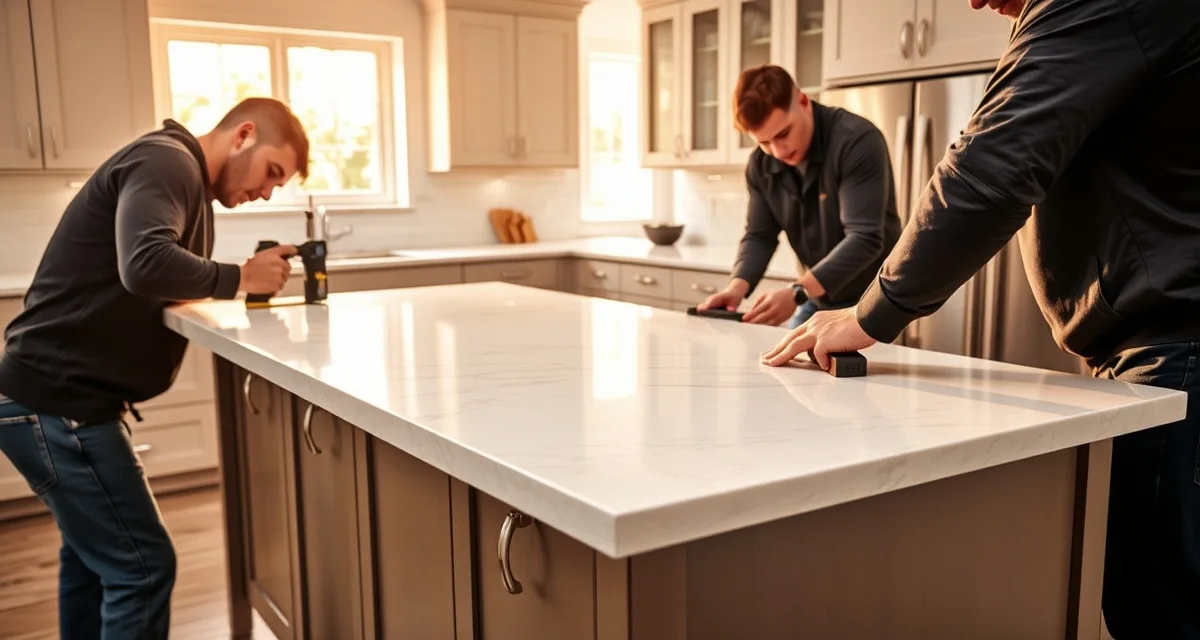
Countertop installation is the final step in the fabrication process - physically placing, leveling, securing, and finishing cut stone pieces in the customer's home or commercial space. For fabricators, installation quality directly affects customer satisfaction, warranty claims, and referral rates. For homeowners, it's the day everything comes together.
TL;DR
- A typical kitchen countertop installation takes 2-4 hours with a two-person crew
- Site prep (removing old tops, disconnecting plumbing) should happen before the install crew arrives
- Seam placement is decided during templating, not installation - ask about it early
- Most issues on install day come from site not being ready, not fabrication problems
- Countertops need 24-48 hours for adhesive curing before heavy use
- SlabWise automates install scheduling, crew assignment, and customer notifications
- Post-install care instructions vary by material - marble needs the most attention
Before Installation
How should I prepare my home for countertop installation?
The install crew expects to arrive to a ready site. Here's the prep checklist:
Calculate your material waste savings
See exactly how much slab material and money you could save with optimized cutting layouts.
Try the free Waste Calculator- Old countertops removed - Either by your contractor or the fabrication shop (confirm who handles this)
- Plumbing disconnected - Sink supply lines and drain disconnected, garbage disposal removed
- Appliances moved - Dishwasher pulled out, cooktop removed (if being replaced)
- Cabinets in place and level - New cabinets should be fully installed, level, and secured to walls
- Clear path - The crew needs a clear route from the driveway/truck to the kitchen. Slabs weigh 600-1,000+ lbs each.
- Backsplash area ready - If you're getting a stone backsplash, the area behind should be clean and clear
- Someone home - An adult needs to be present for the entire installation
What if my cabinets aren't level?
Fabricators can shim up to about 1/4 inch to correct minor level issues. Anything beyond that needs to be addressed by your cabinet installer before the countertop crew arrives. Out-of-level cabinets cause:
- Uneven countertop surfaces
- Visible gaps between the countertop and wall
- Stress on seams that can lead to cracking
- Water pooling in low spots
Your fabricator should check cabinet level during the template visit and flag any issues.
How long before installation should I schedule the template?
Standard timeline from template to installation:
| Phase | Duration |
|---|---|
| Template visit | 1 day (30-60 minutes on site) |
| Template verification | 1-2 days |
| Slab selection and nesting | 1-2 days |
| Fabrication | 3-5 business days |
| Total: Template to install | 7-14 business days |
Rush timelines are sometimes possible (3-5 business days) at additional cost. Discuss urgency with your fabricator upfront.
The Installation Process
What happens on installation day?
Here's the typical sequence for a kitchen countertop installation:
1. Crew arrival and inspection (15-20 minutes) The crew inspects the site, verifies cabinet level, checks that old countertops are removed and plumbing is disconnected. They plan their approach - which pieces go in first, where seams align.
2. Countertop placement (30-60 minutes) Pieces are carried in (carefully - each section weighs 200-500+ lbs depending on size and thickness) and dry-fitted on the cabinets. The crew checks fit against walls, verifies overhang distances, and ensures seams align properly.
3. Leveling and securing (30-45 minutes) The crew shims as needed, applies adhesive to cabinet surfaces, and secures the countertop. For undermount sinks, the sink is positioned and clamped from below.
4. Seam work (20-40 minutes per seam) Seams are joined using color-matched epoxy. The epoxy is applied, pieces are drawn tight, and excess is cleaned. Good seam work makes the joint nearly invisible. This is where crew skill matters most.
5. Sink and fixture cutout finishing (20-30 minutes) The crew ensures sink cutouts are clean, applies silicone sealant around undermount sinks, and verifies faucet holes are properly positioned.
6. Caulking and cleanup (15-20 minutes) Silicone caulk is applied along the backsplash line (where countertop meets wall) and around sinks. The crew cleans up adhesive residue, wipes down the surface, and does a final inspection.
7. Walk-through with homeowner (10 minutes) The crew shows the homeowner the finished installation, points out seam locations, demonstrates any care requirements, and answers questions.
Total time: 2-4 hours for a standard kitchen. Bathroom vanities take 45 minutes to 1.5 hours. Large kitchens with islands, multiple seams, and complex layouts can take 4-6 hours.
How many people does installation require?
Minimum two for any job. Stone is heavy and the pieces are fragile until they're supported on cabinets. Most install crews are 2-3 people:
- Two-person crew - Standard for bathrooms and simple kitchens
- Three-person crew - Preferred for kitchens with islands, heavy slabs (3cm quartzite can exceed 800 lbs per piece), or tight access
Can I use my kitchen during installation?
No. The kitchen is out of commission during the installation (2-4 hours) and for 24-48 hours after for adhesive and caulk to cure. You can use the sink once the plumber reconnects it (usually the next day), but avoid placing heavy items or applying pressure to seams during the curing period.
Common Installation Issues
What causes gaps between the countertop and wall?
Several factors:
- Walls aren't perfectly straight or plumb - Most walls have slight curves and bulges. The fabricator accounts for this during templating by scribing the countertop edge to match the wall profile. Gaps indicate a scribing issue.
- Cabinets shifted after template - If cabinets were adjusted, repaired, or bumped between template and install, the fit changes.
- Settling - In new construction, minor settling can shift walls and cabinets.
Small gaps (1/16" or less) are normal and are filled with caulk. Larger gaps may require adjustment or shimming.
What if the countertop doesn't fit?
This is rare with digital templating and verification, but it happens. Causes include:
- Template error (wrong measurements)
- Cabinet changes after templating
- Walls that moved (new construction settling)
If fit issues are minor (1/8" or less), the crew can usually resolve them on-site with shims, scribing, or seam adjustment. Major fit issues may require taking the piece back to the shop for modification or, in worst cases, remaking the section.
SlabWise's template verification is specifically designed to prevent this. The 3-layer check catches dimension mismatches before fabrication, so what arrives at the home should fit.
How do I know if the installation was done correctly?
Signs of a good installation:
- Countertop sits flat with no rocking
- Seams are tight with minimal visible lines
- Overhang is consistent along the front edge
- Sink is properly supported and sealed
- Caulk lines are clean and continuous
- No adhesive residue visible on surfaces
- Level check shows minimal deviation
What about plumbing and electrical reconnection?
The countertop crew handles the stone only. Plumbing reconnection (sink, dishwasher, garbage disposal) and electrical work (cooktop wiring) are handled by the homeowner's plumber and electrician - typically scheduled for the same day or the day after install.
Some fabrication shops offer plumbing reconnection as an add-on service, either through their own team or a partnered plumber. Ask your fabricator about this during quoting.
Scheduling and Coordination
How does SlabWise handle install scheduling?
SlabWise's scheduling module manages the entire installation workflow:
- Job reaches "ready for install" status - Fabrication complete, quality check passed
- Crew assignment - System suggests optimal crew based on geography, capacity, and skills
- Customer notification - Automated message with date, time window, and prep checklist
- Day-before reminder - Automated reminder to customer and crew
- Day-of tracking - Crew updates status from the field (en route, on site, complete)
- Completion notification - Customer receives confirmation with care instructions
This eliminates the phone tag that typically surrounds install scheduling and reduces no-show and site-not-ready incidents.
What's the best time of day for installation?
Most shops schedule first installations at 7:30-8:00 AM. Morning installations have several advantages:
- Fresh crew with maximum energy
- Full daylight for color and seam inspection
- Time for unexpected complications without pushing into overtime
- Plumber can reconnect in the afternoon
Second installations typically start at noon or 1 PM, giving buffer time from the morning job.
What happens if it rains on installation day?
Rain doesn't directly affect indoor installation, but:
- Carrying slabs from truck to house through rain creates safety risks (wet stone is slippery)
- Wet conditions can affect adhesive curing
- Muddy paths make transport difficult
Most crews proceed with indoor installations during light rain, using protective covering for the transport path. Heavy rain may trigger rescheduling. SlabWise's Customer Portal allows the crew lead to flag weather delays, automatically notifying the customer.
After Installation
How long until I can use my countertops?
- Light use (setting items down, wiping surface) - Immediately after installation
- Sink use - After plumber reconnects (usually same day or next day)
- Normal use - 24 hours after installation (allows adhesive and caulk to cure)
- Heavy use (placing heavy appliances, sitting on overhangs) - 48 hours after installation
Do new countertops need to be sealed?
Depends on the material:
- Granite - Yes, seal upon installation. Most fabricators apply the first seal before or during install.
- Marble - Yes, seal immediately and reseal every 6-12 months
- Quartzite - Yes, seal upon installation and annually thereafter
- Quartz (engineered) - No. Non-porous, never needs sealing
- Porcelain - No. Non-porous, no sealing needed
What warranty should I expect?
Industry standard warranties:
- Fabrication defects - 1-2 years (covers cracks from cutting, improper seam work, structural failure)
- Material defects - Varies by manufacturer (major quartz brands offer 10-15 year warranties)
- Installation issues - 1 year (covers leveling, adhesion, seam separation)
Warranties typically don't cover:
- Normal wear and tear
- Damage from impacts, excessive heat, or chemical exposure
- Chips caused by dropping objects
- Staining from lack of sealing (natural stone)
- Thermal shock (placing extremely hot items on quartz)
How much does countertop installation cost?
Installation is typically included in the per-square-foot price quoted by your fabricator. If priced separately, expect $8-$15/sqft for standard installation, plus additional charges for complex layouts, second-floor carry, or long distances from the shop.
Can I install countertops myself?
Technically possible for very small pieces (bathroom vanity), but strongly discouraged for kitchen countertops. The weight (a kitchen section can weigh 300-500 lbs), seam work skill, and leveling precision make professional installation worth the cost.
Will the installation damage my cabinets?
Properly installed countertops don't damage cabinets. The crew uses adhesive (not screws through the top) and shims for leveling. Minor marks on cabinet surfaces where they're hidden (under the countertop overhang) are normal.
Do I need to be home during installation?
Yes. An adult should be present from start to finish. The crew needs to verify your preferences on seam visibility, overhang amounts, and sink positioning. They'll also do a walk-through at the end.
What if I want to change something during installation?
Minor adjustments (shifting a seam slightly, adjusting overhang by 1/4") can usually be accommodated. Major changes (different sink cutout, additional sections) generally can't be done on-site and would require taking pieces back to the shop.
How do I schedule a plumber for the same day?
Book your plumber for 2-3 hours after your scheduled install start time. For example, if install is at 8 AM, schedule the plumber for 11 AM or noon. Communicate with both parties about timing.
Can countertops be installed in cold weather?
Yes, but temperatures below 50F can slow adhesive curing. The install area should be at room temperature (65-75F) for 24 hours after installation if possible.
What's the heaviest countertop you can install?
Individual pieces rarely exceed 800 lbs (a very large 3cm quartzite section). Sections are sized during fabrication to be manageable for the crew and navigable through doorways and hallways. Very large islands may be fabricated in multiple pieces and seamed on-site.
Smoother Installs Start with Better Planning
SlabWise coordinates every step from scheduling to crew dispatch to customer notification - so your installations run on time and your customers know exactly what to expect.
Start your 14-day free trial → No credit card required. Schedule your first install in minutes.
Try These Free Tools
- Nesting Optimizer -- AI-powered slab layout that maximizes yield considering vein direction and defects.
- Defect Mapping -- Upload a slab photo and AI maps every fissure, pit, and color issue.
- Value Engineering -- Find dollar-quantified suggestions to save material without cutting margin.
Sources & Further Reading
- Natural Stone Institute - Natural Stone Care and Maintenance Guide
- National Kitchen & Bath Association - Countertop Selection Guidelines
- ASTM International - Standards for Stone and Countertop Materials
- International Surface Fabricators Association - Countertop Material Properties
Internal Links
- Track Installation Crews - Crew scheduling and field tracking
- Template Verification FAQ - How verified templates prevent install-day problems
- Seams FAQ - Everything about seam placement and finishing
- Edges FAQ - Edge profile options and installation considerations
- Countertop Care FAQ - Post-installation care by material type